Modular Wiring Foundation for POINT I/O Distributed Control Systems
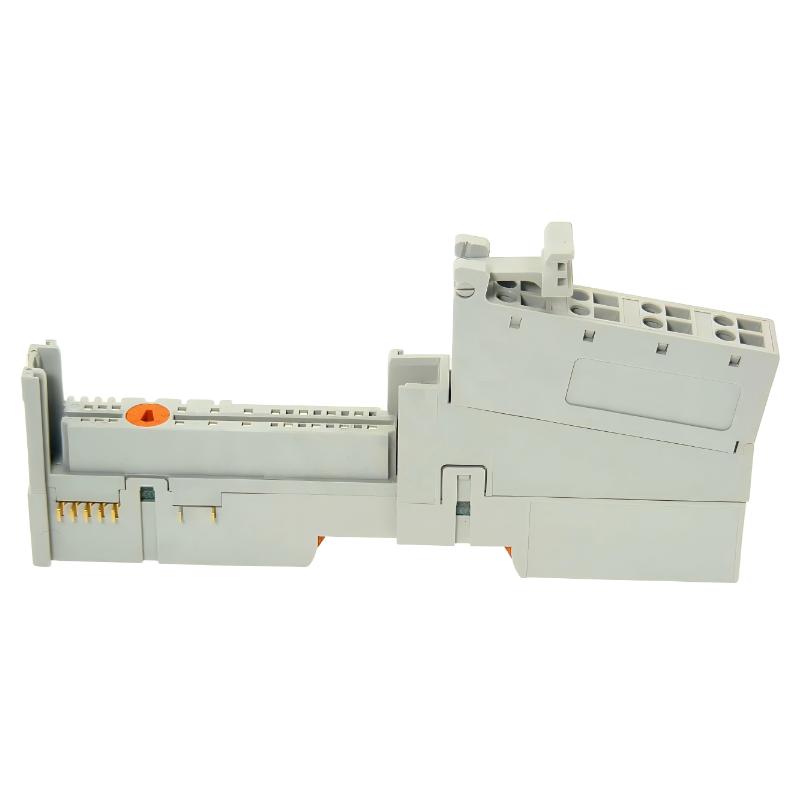
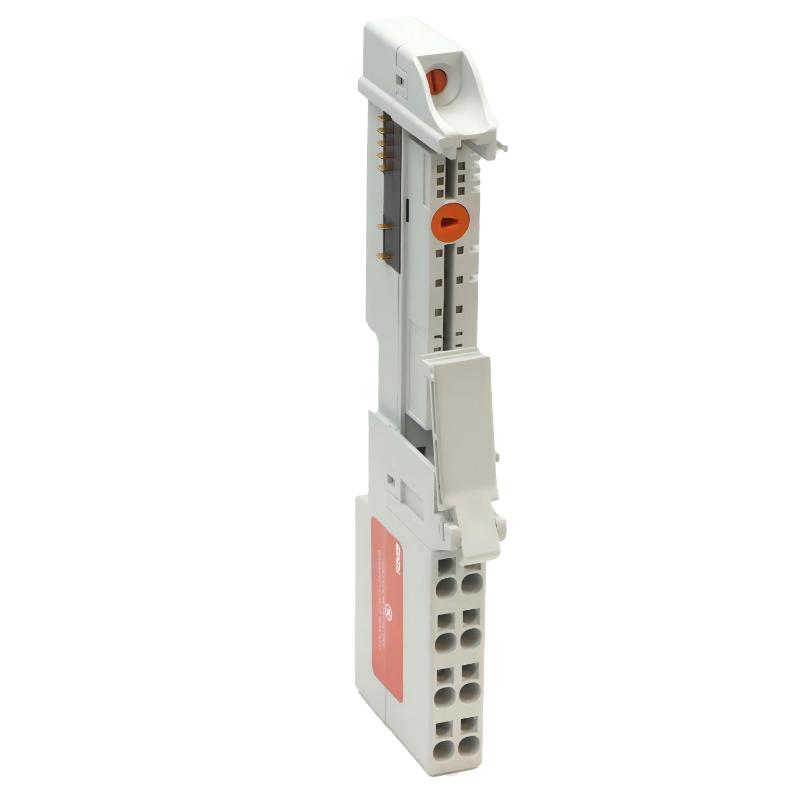
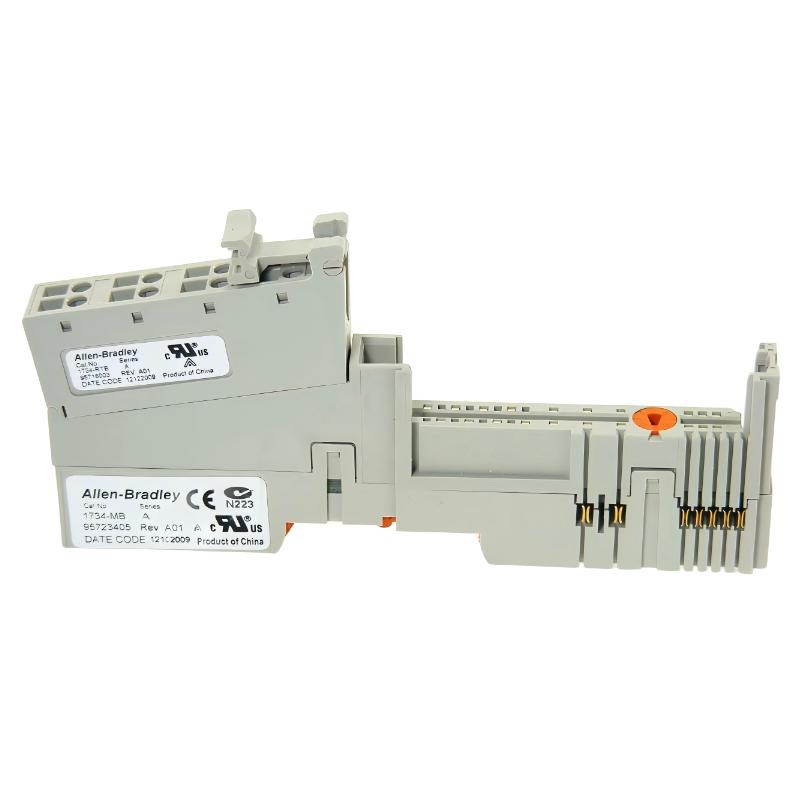
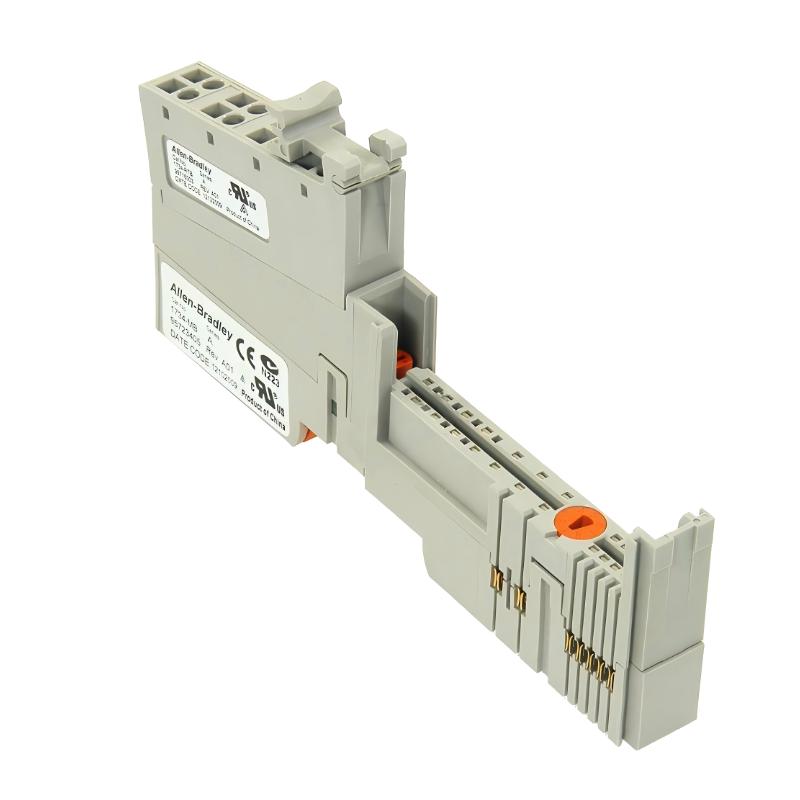
The Allen Bradley 1734-TB Terminal Base is a core structural and electrical component of the POINT I/O platform, designed to provide secure field wiring termination and reliable backplane connectivity for modular I/O systems. It serves as the mounting foundation for POINT I/O modules, enabling fast installation, simplified maintenance, and flexible system expansion in industrial automation environments.
Engineered for DIN rail installation, the 1734-TB supports removable terminal blocks that allow technicians to replace I/O modules without disturbing field wiring. This improves system uptime and reduces maintenance effort in high-demand production environments such as manufacturing, packaging, and process automation systems.
Its compact and modular design makes it a standard choice for distributed control architectures where scalability, wiring efficiency, and operational reliability are essential. (plcexchange.net )
Technical Specifications
| Parameter | Specification |
|---|
| Manufacturer | Allen Bradley |
| Product Family | POINT I/O |
| Model Number | 1734-TB |
| Module Type | Terminal Base Assembly |
| Terminal Style | Screw-clamp / Cage-clamp (variant dependent) |
| Number of Terminals | 8 positions |
| Wire Size Range | 22–14 AWG (typical) |
| Field Power Voltage | Up to 28.8V DC / 120–240V AC (system dependent) |
| Field Power Current | Up to 10A (distribution dependent) |
| Backplane Voltage | 5V DC (POINTBus) |
| Mounting Method | DIN rail |
| Compatible Modules | Allen Bradley 1734 POINT I/O series |
| Operating Temperature | Industrial range (typically -20°C to 55°C) |
| Isolation Voltage | Up to 50V system isolation |
| Dimensions | Approx. 13.3 cm × 1.2 cm × 6.5 cm |
| Weight | Approx. 0.08 kg |
Applications
The 1734-TB is used across a wide range of industrial automation systems where modular I/O expansion and reliable wiring infrastructure are required.
Typical applications include:
-
Distributed machine control systems
-
Packaging and assembly automation lines
-
Conveyor and logistics control systems
-
OEM machine building platforms
-
Process monitoring and control panels
-
Remote I/O cabinet architectures
-
Factory automation networks
-
Scalable EtherNet/IP control systems
Its main role is to act as the stable wiring and mounting backbone for POINT I/O modules in modular control systems.
Advantages
Stable Modular Wiring Architecture
The terminal base separates field wiring from electronics, allowing safer and more structured system maintenance.
Fast Module Replacement
POINT I/O modules can be removed and replaced without rewiring field connections, reducing downtime during service.
Compact Industrial Design
Its slim form factor supports high-density installation inside modern control cabinets.
Flexible System Expansion
Enables scalable architecture where I/O modules can be added or replaced without redesigning the entire panel.
Reliable Industrial Connection
Designed for stable performance in vibration-prone and electrically noisy industrial environments.
Technical FAQs
1. What is the main function of the 1734-TB?
It provides the mounting base and wiring interface for Allen Bradley POINT I/O modules.
2. How many terminals does it include?
It typically includes 8 wiring terminals for field connections.
3. Is the 1734-TB a standalone I/O module?
No. It is a base component used with POINT I/O modules.
4. What type of mounting does it use?
It mounts on a standard DIN rail system.
5. Can modules be replaced without rewiring?
Yes. Field wiring remains connected to the terminal base during module replacement.
6. What type of wiring connection is used?
It supports screw-clamp or cage-clamp terminals depending on variant.
7. What systems is it compatible with?
It is designed for Allen Bradley POINT I/O distributed control systems.
8. What voltage levels does it support?
It supports system-level field power up to industrial DC/AC ranges depending on configuration.
9. Why is it important in POINT I/O systems?
It forms the electrical and mechanical foundation of every I/O module installation.
10. What industries commonly use it?
Manufacturing, logistics, automotive, packaging, and process automation industries.
 A DCS Q Co., Ltd. - PLC and DCS Industrial Control Equipment Wholesale