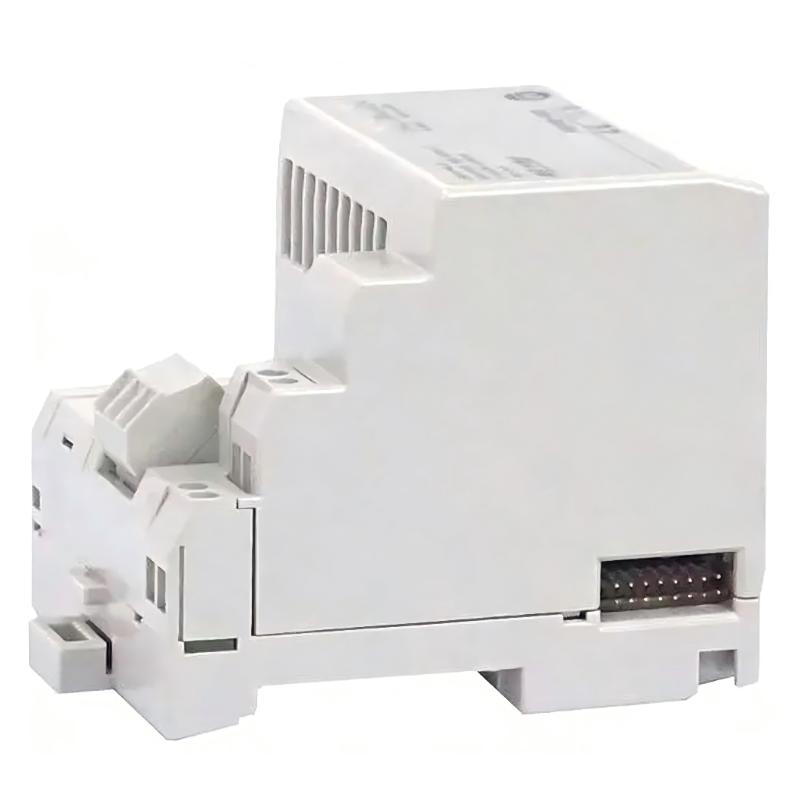
Compact Remote I/O Connectivity for Legacy FLEX I/O Systems
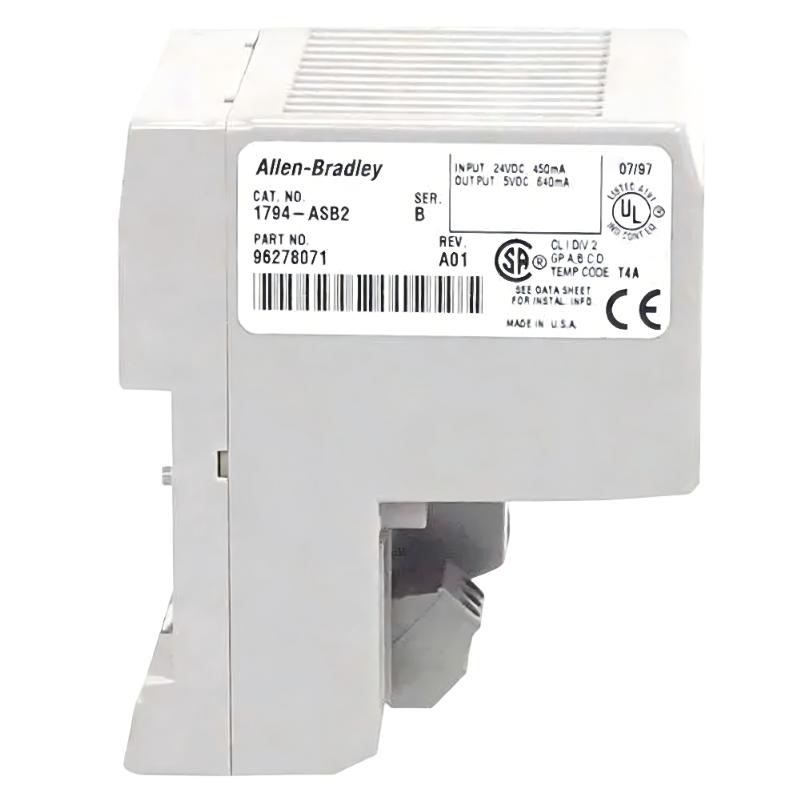
The Allen Bradley 1794-ASB2 Flex Remote I/O Adapter Module is a compact communication interface designed to connect FLEX I/O systems to Remote I/O (RIO) networks. As a smaller-capacity variant of the ASB family, it is optimized for cost-efficient, space-saving distributed I/O applications where fewer FLEX I/O modules are required while maintaining reliable deterministic communication.
Engineered for legacy industrial automation systems, the 1794-ASB2 enables stable integration between PLC-based Remote I/O scanners and FLEX I/O racks. Its streamlined architecture makes it particularly suitable for retrofit projects, small machine control systems, and applications where simplicity and dependable performance are key priorities.
Technical Specifications & Physical Characteristics
| Specification Item | Details |
|---|
| Product Series | FLEX I/O |
| Module Type | Remote I/O Adapter Module |
| Manufacturer | Allen Bradley |
| Model Number | 1794-ASB2 |
| Communication Protocol | Remote I/O (RIO) |
| Supported Baud Rates | 57.6 kbps / 115.2 kbps / 230.4 kbps |
| I/O Capacity | Up to 2 FLEX I/O modules |
| Input Voltage | 24V DC nominal |
| Voltage Range | 19.2 – 31.2V DC |
| Power Consumption | ~175 mA @ 24V DC |
| Inrush Current | Up to 23 A for 2 ms |
| FlexBus Output Current | Up to 640 mA |
| Isolation Voltage | ~750 V (test rating) |
| Communication Interface | Remote I/O Port |
| Mounting Type | DIN Rail / Panel Mount |
| Enclosure Material | Industrial Thermoplastic |
| Protection Rating | IP20 |
| Operating Temperature | 0°C to 55°C |
| Storage Temperature | -40°C to 85°C |
| Status Indicators | Power / Adapter / Fault LEDs |
| Dimensions | Approx. 87 x 68 x 69 mm |
| Weight | Approx. 0.3 kg |
Industrial Application Areas
The 1794-ASB2 module is primarily used in smaller-scale or legacy automation systems where Remote I/O communication is still in operation.
Typical applications include:
-
Legacy PLC retrofit systems
-
Small machine automation setups
-
Factory Remote I/O networks
-
Packaging equipment control systems
-
Conveyor system control points
-
Material handling subsystems
-
Industrial upgrade and migration projects
-
Compact distributed I/O installations
-
Process control auxiliary systems
-
Low I/O density automation panels
Key Features & Operational Advantages
Compact Low-Capacity Design
Supports up to 2 FLEX I/O modules, making it ideal for compact systems and cost-sensitive installations.
Reliable Remote I/O Communication
Provides stable deterministic communication over legacy Remote I/O networks for proven industrial compatibility.
Simplified System Architecture
Reduces wiring and control complexity by centralizing I/O communication through a single adapter.
Ideal for Retrofit Projects
Well-suited for upgrading or maintaining existing installations without replacing the full control architecture.
Industrial-Grade Durability
Designed for continuous operation in harsh industrial environments with stable long-term performance.
LED-Based Diagnostics
Built-in status indicators allow quick identification of power, communication, and fault conditions.
Space-Efficient Installation
Compact form factor supports efficient cabinet layouts and tight machine integration.
Technical FAQs
1. What is the main function of the 1794-ASB2 module?
It connects FLEX I/O modules to a Remote I/O (RIO) network for legacy industrial control systems.
2. How many FLEX I/O modules does it support?
It supports up to 2 FLEX I/O modules.
3. What communication protocol does it use?
It uses the Remote I/O (RIO) communication protocol.
4. What is the typical communication speed?
It supports 57.6 kbps, 115.2 kbps, and 230.4 kbps.
5. What type of systems is it used with?
It is commonly used with legacy PLC systems and small distributed I/O architectures.
6. What voltage does the module require?
It operates on 24V DC with a range of 19.2–31.2V DC.
7. Is it suitable for modern Ethernet-based systems?
No, it is designed for legacy Remote I/O networks rather than Ethernet systems.
8. Can it be used in system upgrades?
Yes, it is often used in retrofit and migration projects.
9. Does it include diagnostic indicators?
Yes, it has LED indicators for power, adapter status, and faults.
10. Is it suitable for industrial environments?
Yes, it is designed for reliable operation in industrial conditions.
 A DCS Q Co., Ltd. - PLC and DCS Industrial Control Equipment Wholesale