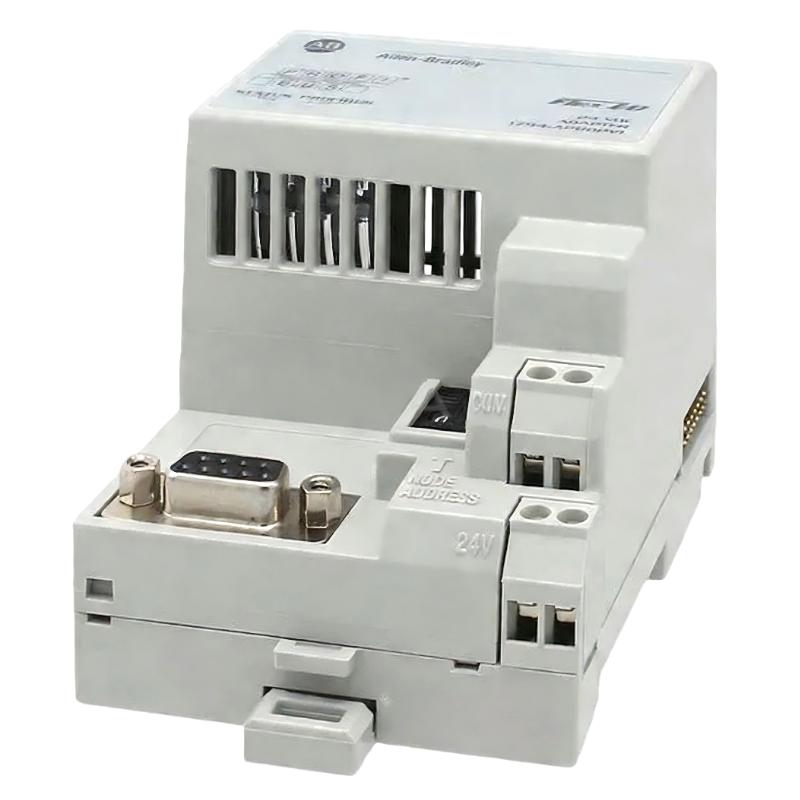
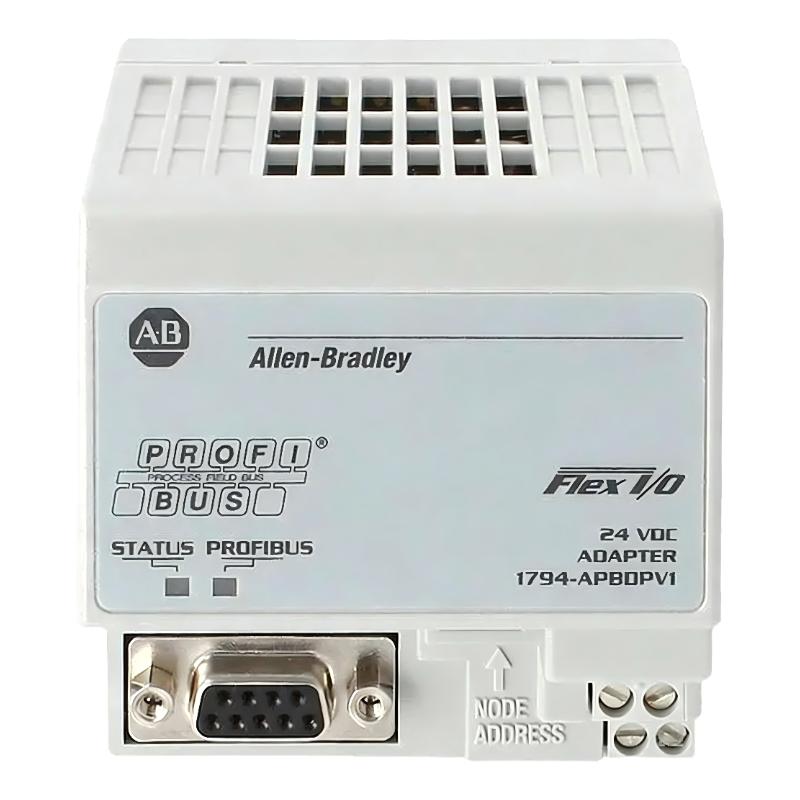
Advanced PROFIBUS DPV1 Connectivity for Distributed FLEX I/O Systems
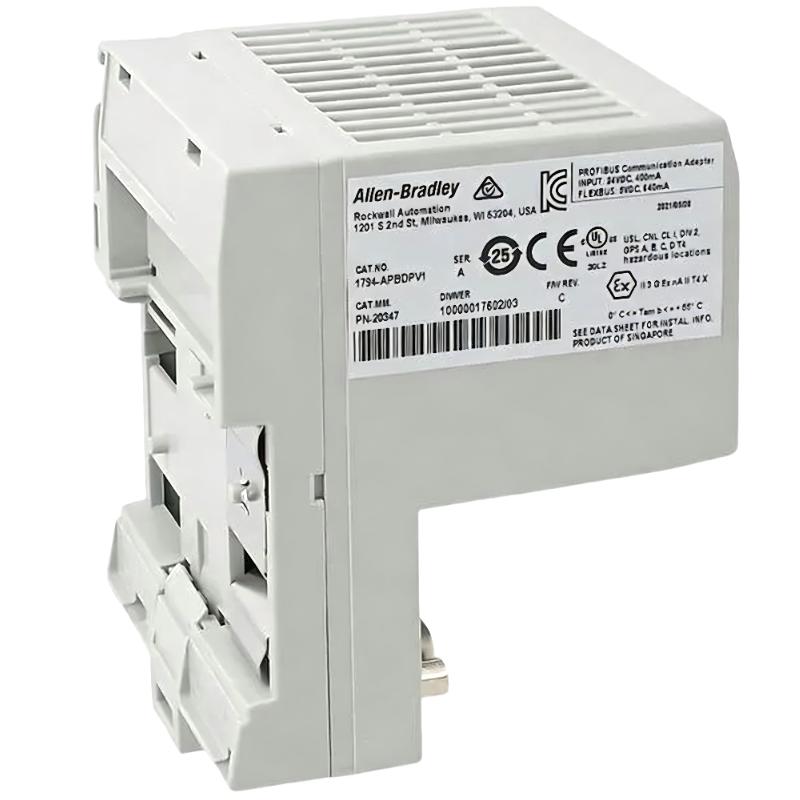
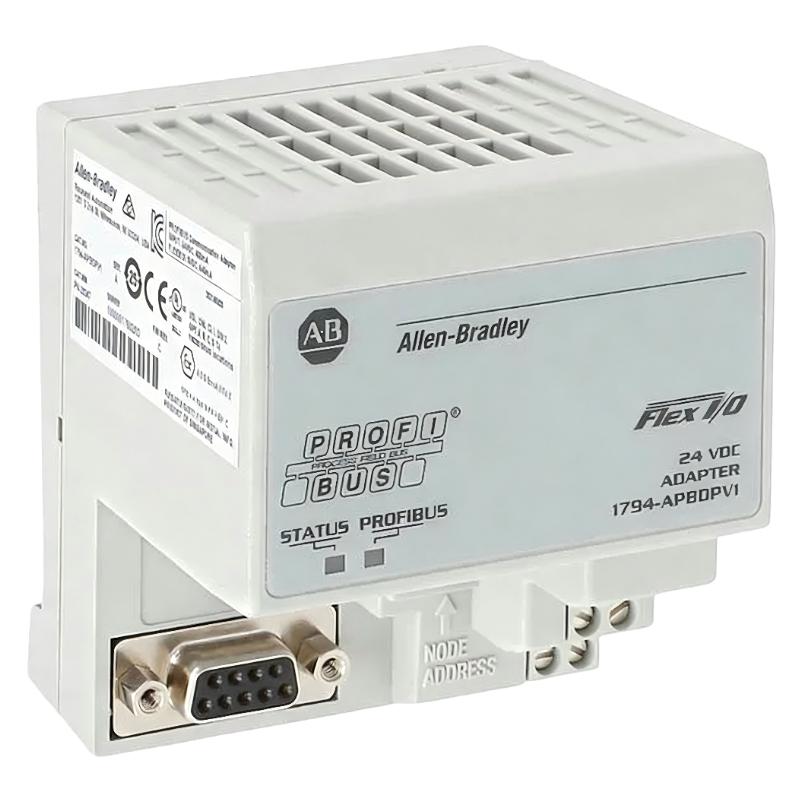
The Allen Bradley 1794-APBDPV1 Flex I/O PROFIBUS DPV1 Adapter Module is designed to deliver high-performance communication between FLEX I/O systems and PROFIBUS DPV1 industrial networks. As an upgraded version of the standard DP adapter, it supports enhanced diagnostics and extended device communication capabilities, making it ideal for modernized industrial automation environments requiring stable and deterministic fieldbus integration.
Built for scalable distributed control systems, the 1794-APBDPV1 enables efficient I/O data exchange between PLC controllers and remote FLEX I/O modules. Its compact modular design simplifies system wiring, improves installation efficiency, and supports reliable long-term operation in demanding industrial applications.
Technical Specifications & Physical Characteristics
| Specification Item | Details |
|---|
| Product Series | FLEX I/O |
| Module Type | PROFIBUS DPV1 Adapter Module |
| Manufacturer | Allen Bradley |
| Model Number | 1794-APBDPV1 |
| Communication Protocol | PROFIBUS DPV1 |
| Network Speed | Up to 12 Mbps |
| I/O Capacity | Up to 8 FLEX I/O modules |
| Network Interface | 9-pin D-sub PROFIBUS connector |
| Input Voltage | 24V DC nominal |
| Voltage Range | 19.2 – 31.2V DC |
| Power Consumption | Approx. 9.6 W |
| FlexBus Output Current | Up to 640 mA |
| Inrush Current | Up to 23 A (2 ms) |
| Mounting Type | DIN Rail / Panel Mount |
| Housing Material | Industrial Thermoplastic |
| Protection Rating | IP20 |
| Operating Temperature | 0°C to 55°C |
| Storage Temperature | -40°C to 85°C |
| Diagnostics | Status and PROFIBUS LED indicators |
| Dimensions | Approx. 87 x 94 x 69 mm |
| Weight | Approx. 0.26–0.30 kg |
Industrial Application Areas
The 1794-APBDPV1 module is widely used in industrial automation systems where PROFIBUS DPV1 communication is required for distributed control and high-reliability data exchange.
Typical applications include:
-
Automotive manufacturing systems
-
Factory automation lines
-
Packaging and processing machinery
-
Material handling systems
-
Conveyor control networks
-
Industrial assembly machines
-
Process control environments
-
Remote I/O expansion systems
-
Legacy PLC integration projects
-
High-speed production monitoring systems
Key Features & Operational Advantages
Enhanced DPV1 Communication Protocol
Supports PROFIBUS DPV1 functionality with improved diagnostics and expanded device information handling compared to standard DP systems.
Deterministic High-Speed Network Performance
Provides stable communication up to 12 Mbps, ensuring reliable real-time industrial control.
Flexible FLEX I/O Expansion
Supports up to 8 FLEX I/O modules, enabling modular and scalable system design.
Compact Industrial Design
Reduces cabinet space requirements while maintaining full distributed I/O functionality.
Simplified System Integration
Acts as a seamless interface between PROFIBUS networks and FLEX I/O backplanes, reducing wiring complexity.
Advanced Diagnostics Capability
DPV1 enhancements provide improved device identification and maintenance features for easier troubleshooting.
Industrial Reliability
Designed for continuous operation in demanding environments with strong resistance to vibration and temperature variation.
Technical FAQs
1. What is the main function of the 1794-APBDPV1 module?
It is a PROFIBUS DPV1 adapter that connects FLEX I/O systems to PROFIBUS industrial networks.
2. What is the difference between APB and APBDPV1?
The DPV1 version supports enhanced diagnostics and improved device management features compared to standard PROFIBUS DP.
3. How many FLEX I/O modules does it support?
It supports up to 8 FLEX I/O modules per adapter.
4. What communication speed does it support?
The module supports communication speeds up to 12 Mbps.
5. What type of connector is used?
It uses a 9-pin D-sub connector for PROFIBUS communication.
6. What voltage does the module require?
It operates on 24V DC with a range of 19.2–31.2V DC.
7. Is it suitable for distributed automation systems?
Yes, it is designed specifically for distributed FLEX I/O architectures.
8. Does it support modern diagnostics features?
Yes, DPV1 provides enhanced identification and maintenance functions.
9. Can it reduce wiring complexity?
Yes, fieldbus communication significantly reduces traditional hardwiring.
10. Is it suitable for industrial environments?
Yes, it is built for reliable operation in harsh industrial conditions.
 A DCS Q Co., Ltd. - PLC and DCS Industrial Control Equipment Wholesale