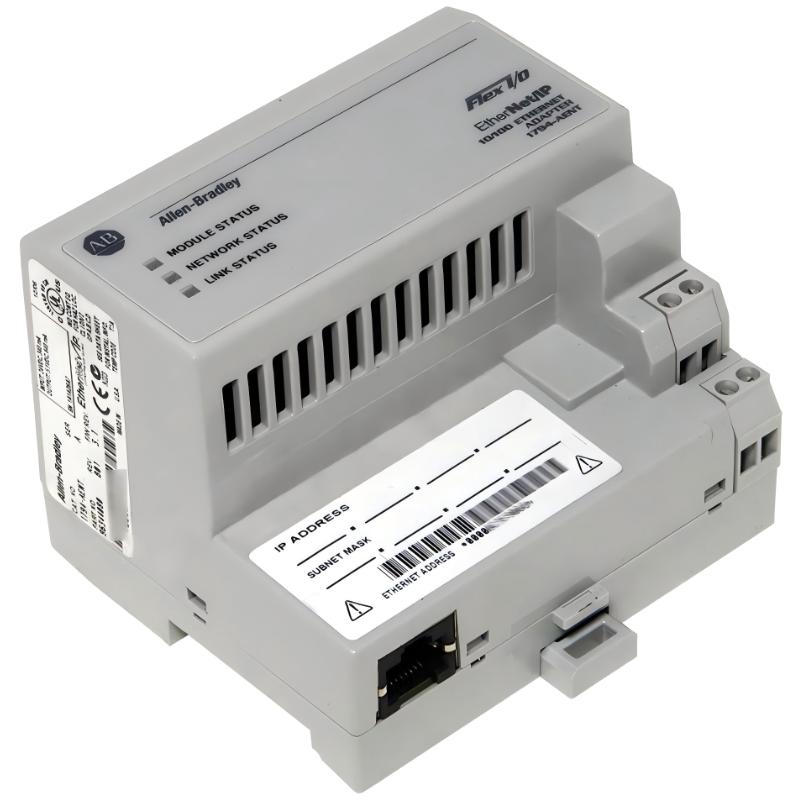
High-Speed EtherNet/IP Connectivity for Scalable FLEX I/O Architectures
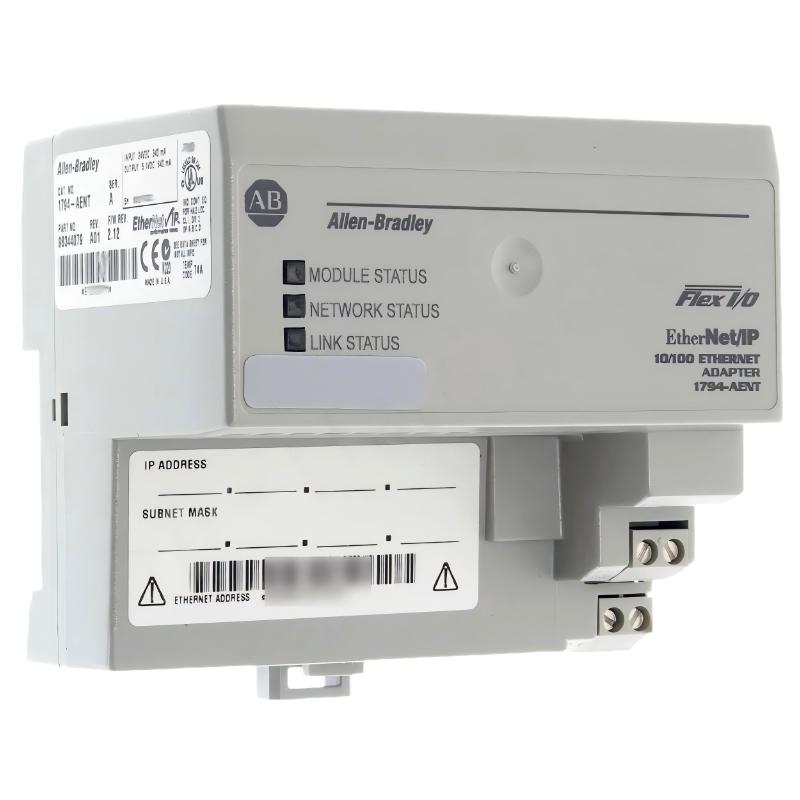
The Allen Bradley 1794-AENT Flex I/O EtherNet/IP Adapter Module is a powerful communication interface designed to connect distributed FLEX I/O systems to modern EtherNet/IP industrial networks. It enables seamless data exchange between remote I/O racks and programmable logic controllers (PLCs), supporting real-time control, monitoring, and system expansion in demanding automation environments.
Engineered for flexibility and performance, the 1794-AENT helps simplify industrial network design while maintaining high-speed communication and reliable system integration. Its compact modular design makes it ideal for machine-level distributed control applications where scalability, diagnostics, and network efficiency are essential.
Technical Specifications & Physical Characteristics
| Specification | Details |
|---|
| Product Series | FLEX I/O |
| Module Type | EtherNet/IP Adapter Module |
| Manufacturer | Allen Bradley |
| Model Number | 1794-AENT |
| Communication Protocol | EtherNet/IP |
| Network Speed | 10/100 Mbps |
| I/O Capacity | Up to 8 FLEX I/O modules |
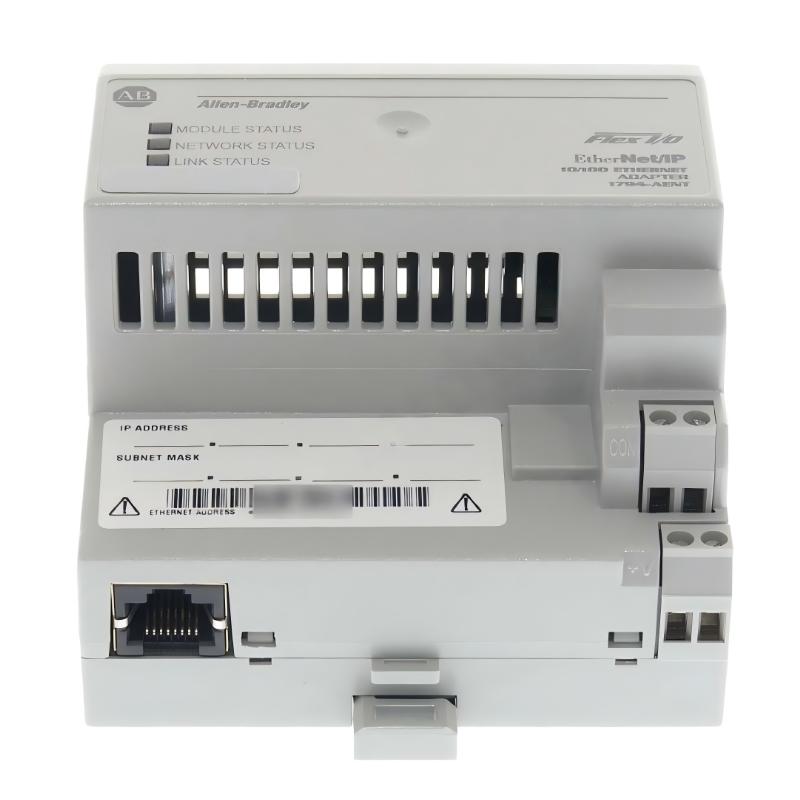
| Network Interface | Single RJ45 Ethernet Port |
| Input Voltage | 24V DC |
| Operating Voltage Range | 19.2 – 31.2V DC |
| Power Consumption | ~550 mA max @ 24V DC |
| Power Dissipation | ~7.3 W max |
| FlexBus Current | Up to 640 mA |
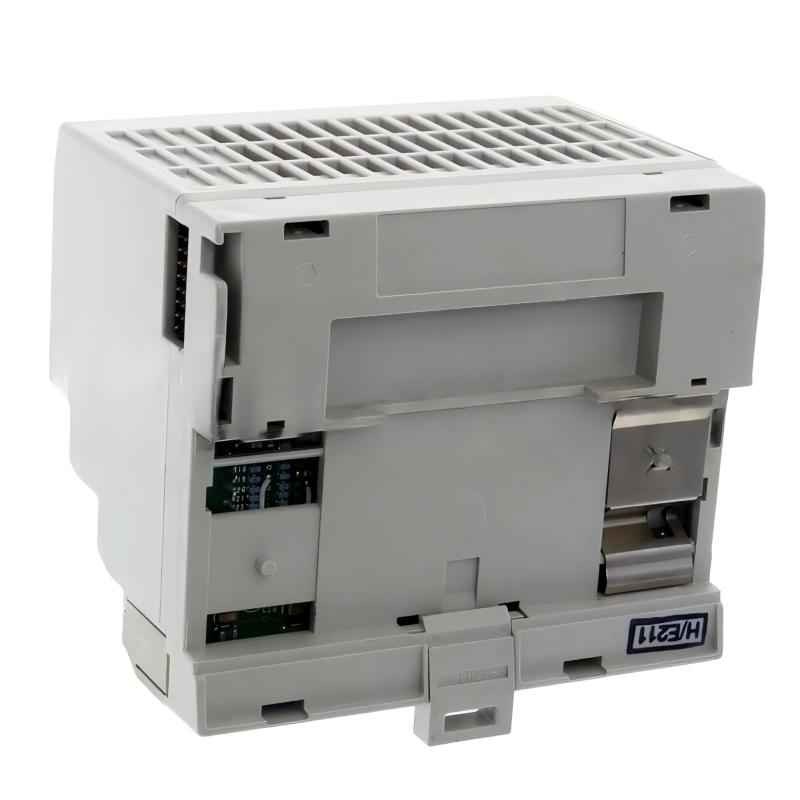
| Mounting Type | DIN Rail Mount |
| Enclosure Type | Open-style industrial module |
| Operating Temperature | 0°C to 55°C |
| Storage Temperature | -40°C to 85°C |
| Dimensions | Approx. 87 x 94 x 69 mm |
| Weight | Approx. 0.89–2.0 kg (varies by configuration) |
Industrial Applications
The 1794-AENT module is widely used in distributed automation systems where EtherNet/IP communication and remote I/O expansion are required.
Typical applications include:
-
Factory automation systems
-
Automotive production lines
-
Packaging and filling machines
-
Conveyor and material handling systems
-
Industrial robotics integration
-
Process control environments
-
Machine-level distributed I/O systems
-
High-speed production monitoring
-
Warehouse automation systems
-
OEM machine control platforms
Key Features & Operational Advantages
EtherNet/IP High-Speed Communication
Supports deterministic industrial Ethernet communication, enabling fast and reliable data transfer between PLCs and distributed I/O systems.
Flexible I/O Expansion
Supports up to 8 FLEX I/O modules, allowing scalable system configuration for both simple and complex automation architectures.
Compact and Modular Design
Its small footprint helps reduce cabinet space requirements while maintaining full functional capability.
Simplified Network Architecture
Replaces complex hardwired control schemes with streamlined Ethernet-based communication.
Strong Industrial Reliability
Designed for continuous operation in industrial environments, ensuring stable long-term performance.
Easy Installation and Configuration
Supports straightforward IP configuration and quick system commissioning in modern control networks.
Efficient Diagnostics
Built-in status indicators provide quick visibility into network and module health for faster troubleshooting.
Technical FAQs
1. What is the primary function of the 1794-AENT module?
It acts as an EtherNet/IP adapter connecting FLEX I/O modules to industrial Ethernet networks and PLC systems.
2. How many FLEX I/O modules can it support?
It supports up to 8 FLEX I/O modules depending on system configuration.
3. What communication protocol does it use?
The module uses EtherNet/IP for industrial communication.
4. What is the network speed of the module?
It supports 10/100 Mbps Ethernet communication.
5. What type of connector is used?
A single RJ45 Ethernet port is used for network connectivity.
6. What voltage does the module require?
It operates on 24V DC power with a range of 19.2–31.2V DC.
7. Is it suitable for distributed I/O systems?
Yes, it is specifically designed for distributed industrial control architectures.
8. Can it reduce wiring complexity?
Yes, EtherNet/IP integration significantly reduces traditional hardwiring requirements.
9. Is the module suitable for industrial environments?
Yes, it is built for continuous operation in demanding industrial conditions.
10. Does it support diagnostics?
Yes, it includes LED indicators for network and module status monitoring.
 A DCS Q Co., Ltd. - PLC and DCS Industrial Control Equipment Wholesale