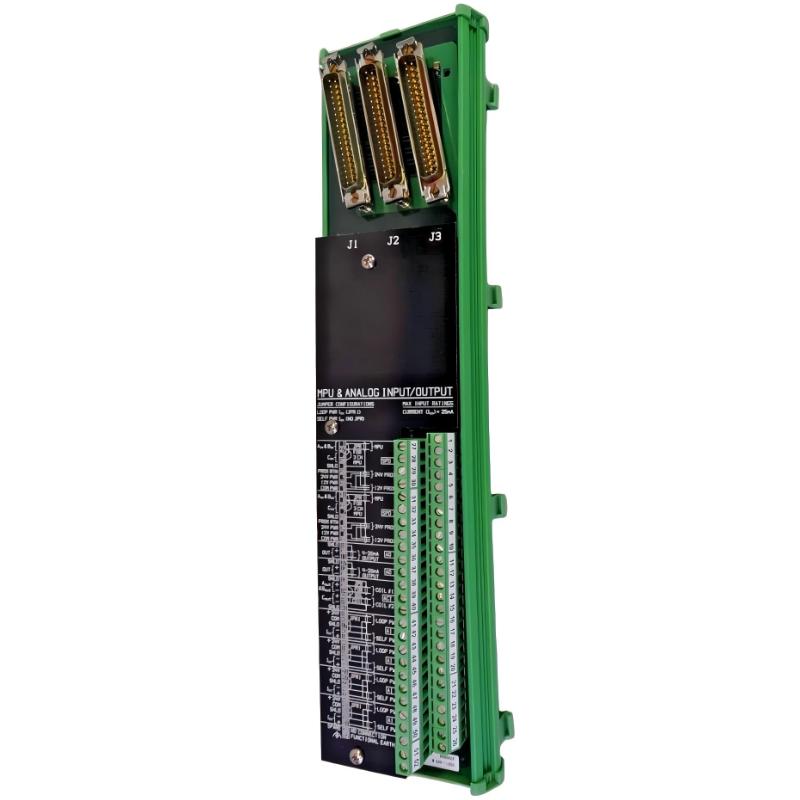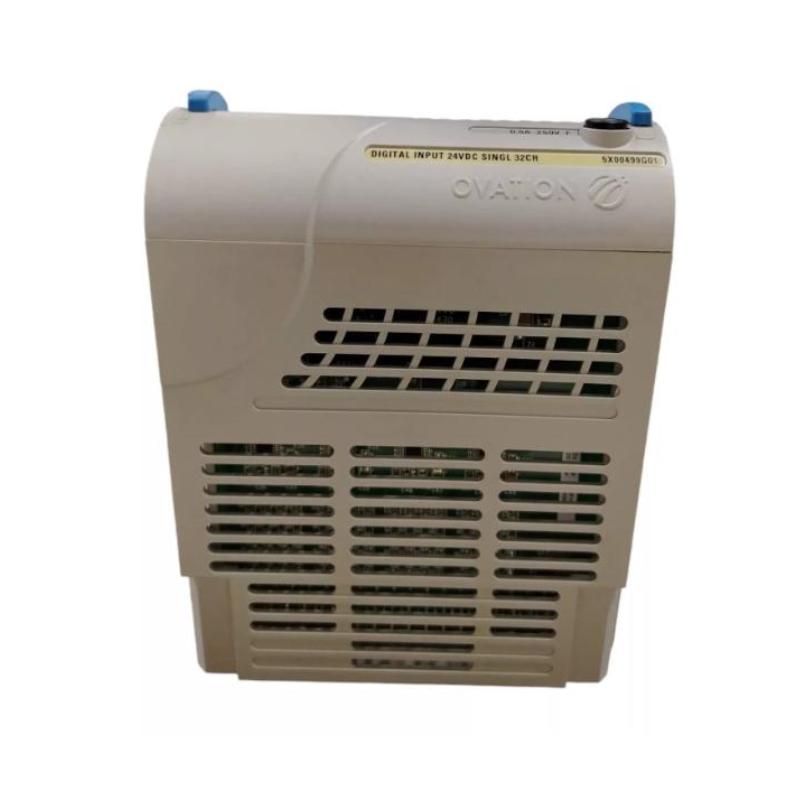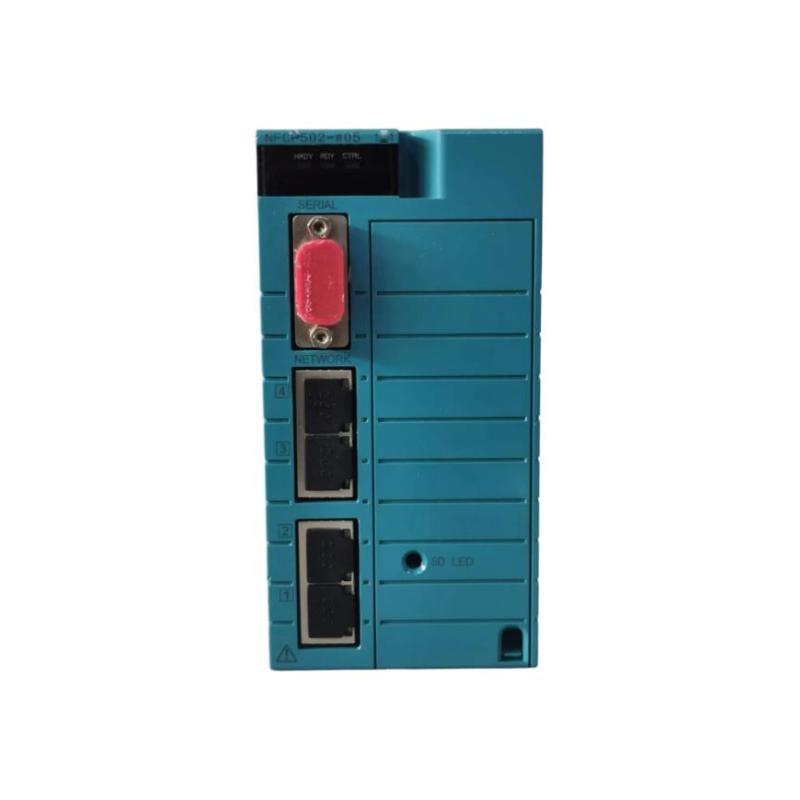
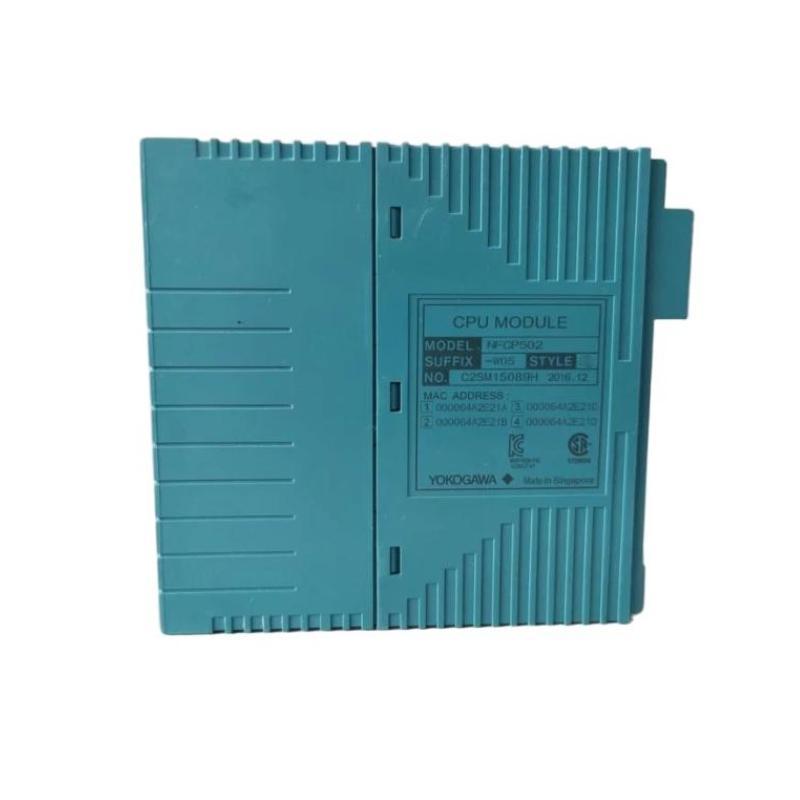
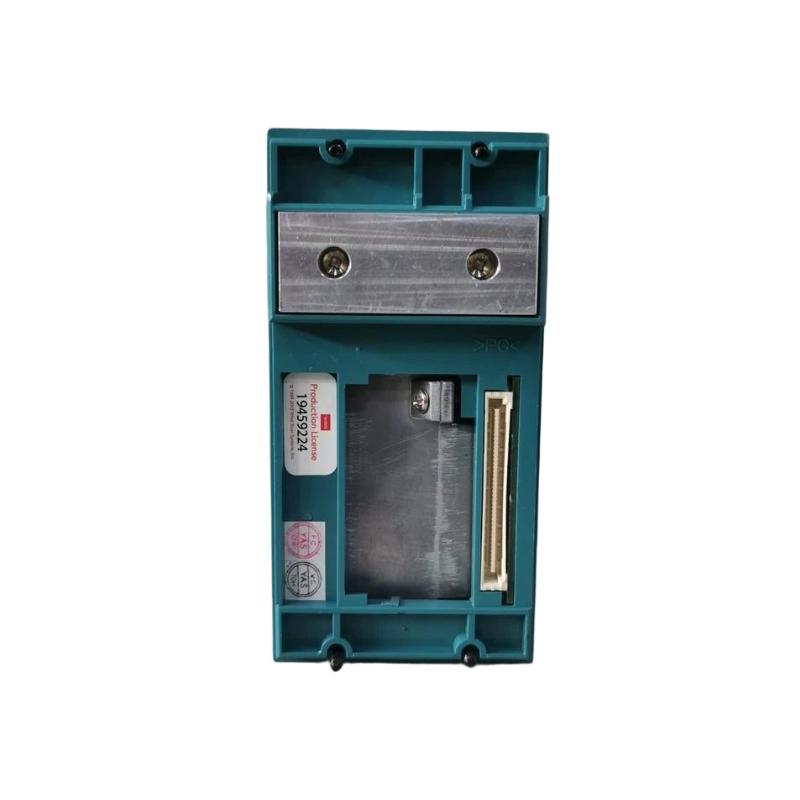
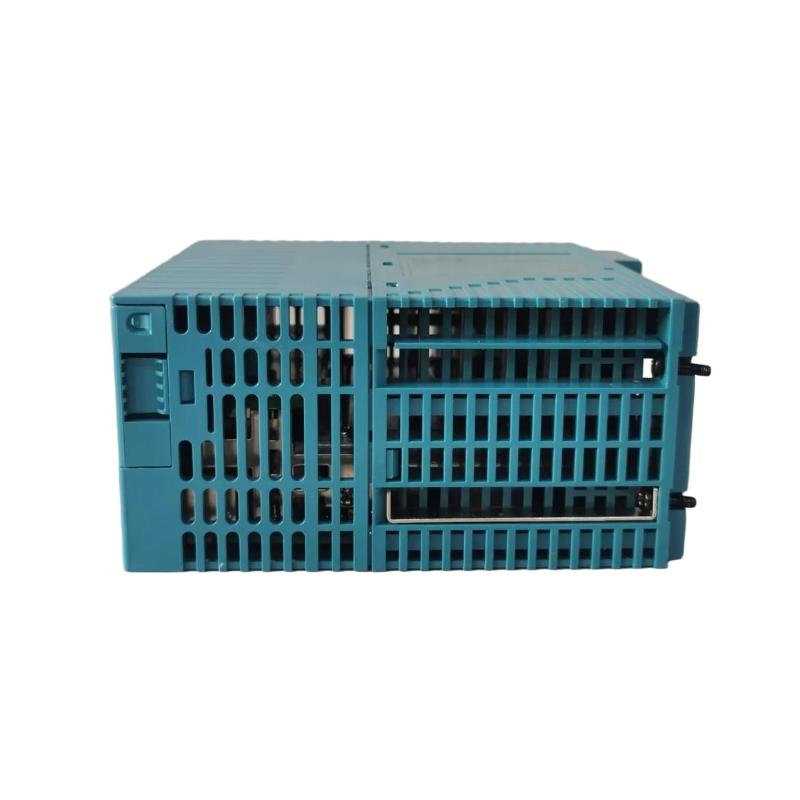
The Yokogawa NFCP502‑W05 CPU Module is a high‑performance processing unit designed for the STARDOM FCN‑500 series autonomous controllers. Serving as a central controller engine, it executes real‑time logic, coordinates I/O communications, and supports network connectivity across distributed automation architectures. Built with industrial‑grade robustness, this module offers enhanced processing capabilities, expanded communication support, and high system reliability—making it suitable for mission‑critical applications where uptime, flexibility, and deterministic control are essential.
Technical Specifications
| Specification | Details |
|---|
| Manufacturer | Yokogawa Electric Corporation |
| Model Number | NFCP502‑W05 |
| Module Type | Autonomous Controller CPU Module |
| System Compatibility | STARDOM FCN‑500 Series Controllers |
| Processor | Industrial‑grade high‑speed CPU core |
| Memory | ECC RAM (Error‑correcting memory) |
| Internal Storage | Onboard non‑volatile Flash memory |
| Communication Interfaces | Ethernet, RS‑232/485, SB Bus |
| Supported Protocols | Modbus RTU/TCP, OPC, Ethernet/IP (system dependent) |
| Redundancy Support | CPU and power supply redundancy capable |
| Power Supply | 24 V DC industrial input |
| Power Consumption | Low‑power industrial design |
| Operating Temperature | –20 °C to +70 °C |
| Storage Temperature | –40 °C to +85 °C |
| Humidity | 5 % – 95 % RH (non‑condensing) |
| Mounting | Installed within base module rack |
| Dimensions | Approx. 72 × 120 × 105 mm |
| Weight | Approx. 0.6 – 0.8 kg |
Applications
The NFCP502‑W05 CPU Module is ideal for use in systems requiring reliable autonomous control and flexible communication:
-
Distributed Control Systems (DCS) in chemical, energy, and manufacturing environments
-
Remote Automation Systems such as unmanned facilities or wellhead controllers
-
Utility Infrastructure including power, water, and wastewater systems
-
Machine Automation needing deterministic control and field interface coordination
-
Smart Factory and Industry 4.0 Deployments with networked device integration
By combining real‑time processing with broad protocol support, this CPU enables responsive automation operations across diverse industries.
Advantages
-
Enhanced Processing Capacity: Designed to support larger control logic and complex operations
-
Built‑In Network Flexibility: Multiple communication interfaces support integration across networks
-
Redundancy Ready: Supports CPU and power supply redundancy for critical uptime requirements
-
Robust Industrial Design: Wide temperature and humidity tolerance for harsh environments
-
Modular Integration: Works seamlessly with base modules and I/O cards to expand system capabilities
-
Low Power Consumption: Efficient design suitable for remote and power‑sensitive deployments
These features make the NFCP502‑W05 a dependable choice for advanced automation systems requiring both flexibility and resilience.
Technical FAQs
1. What is the primary function of the NFCP502‑W05 CPU module?
It serves as the central processing unit in autonomous controller systems, handling logic execution, I/O coordination, and communication.
2. Which systems is this module compatible with?
It is designed for the Yokogawa STARDOM FCN‑500 autonomous controller platform.
3. Does it support redundancy?
Yes — configurations can support redundant CPU and power supply setups.
4. What communication ports are available?
Ethernet, RS‑232, and RS‑485 interfaces are typically supported.
5. Which protocols does it support?
Industrial protocols such as Modbus RTU/TCP, OPC, and Ethernet‑based standards may be supported, depending on system configuration.
6. What power requirement does it use?
It uses a 24 V DC industrial power input.
7. What is the operating temperature range?
–20 °C to +70 °C under typical industrial conditions.
8. Is it suitable for remote installations?
Yes — low power consumption and flexible communication make it suitable for remote or distributed automation.
9. Does it interface with I/O expansion modules?
Yes — when installed in a compatible base module, it supports a wide range of I/O modules.
10. What industries commonly use this module?
It’s widely used in energy, manufacturing, utilities, water/wastewater, and process automation sectors.
 A DCS Q Co., Ltd. - PLC and DCS Industrial Control Equipment Wholesale