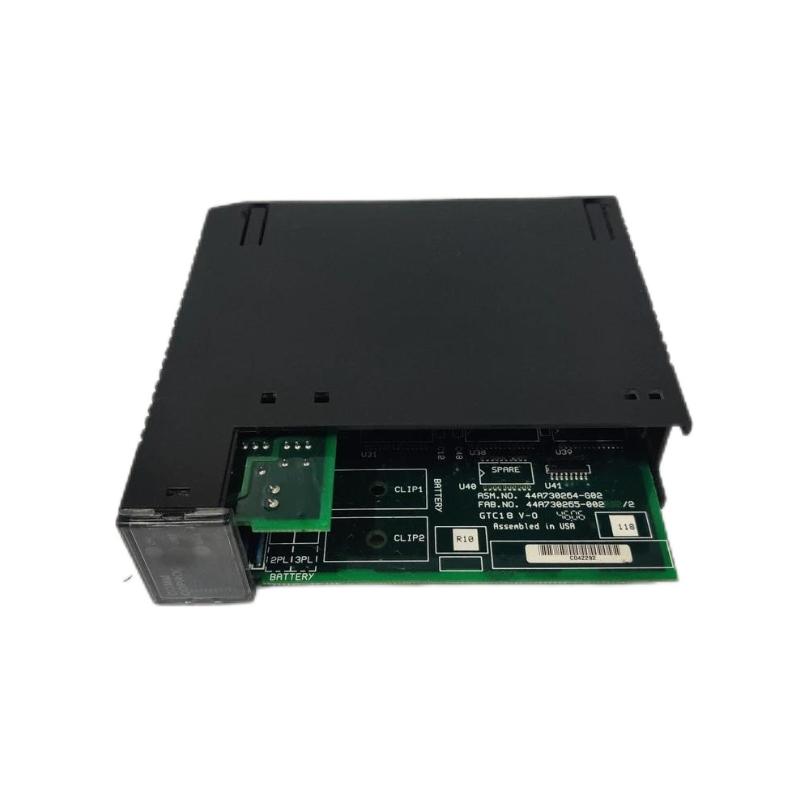
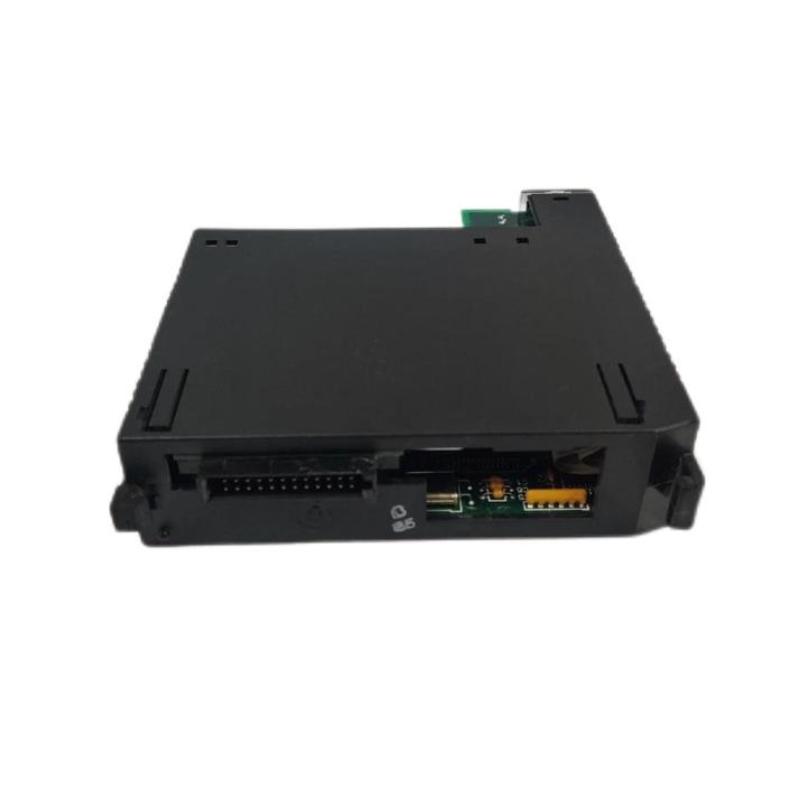
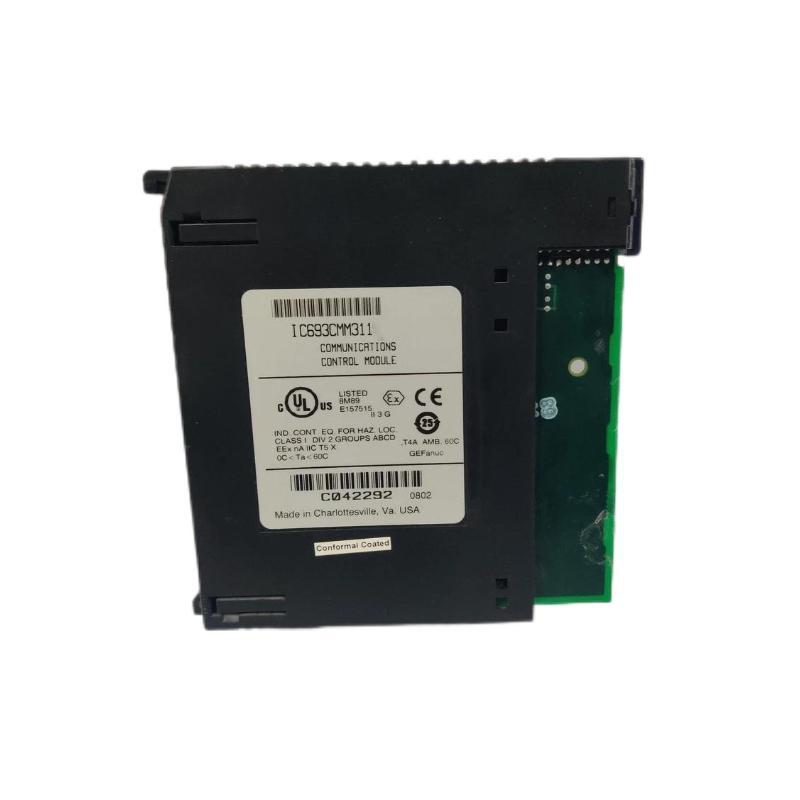
Product Overview (Introduction)
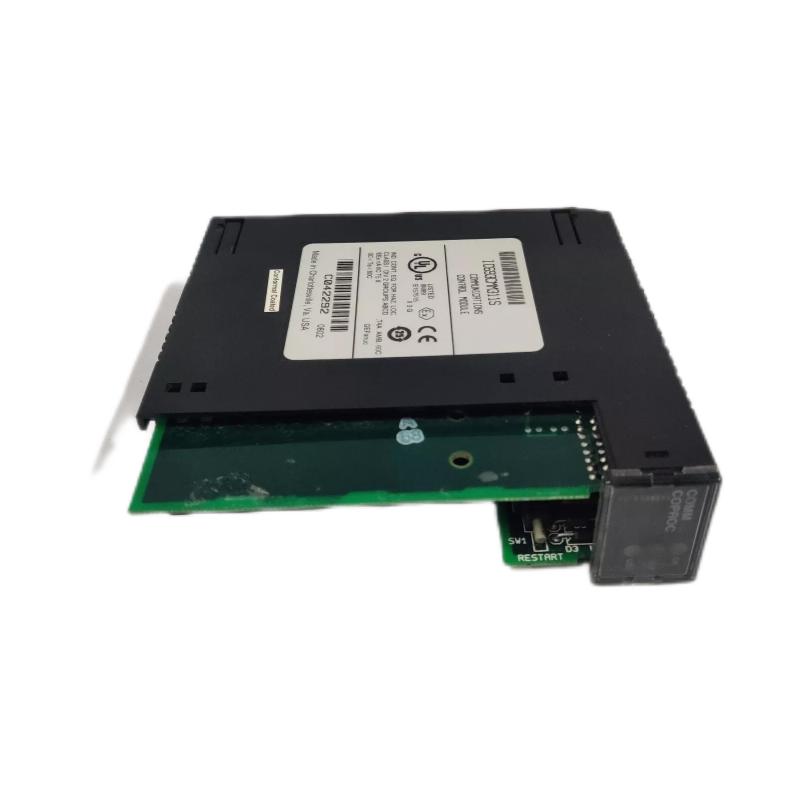
The GE IC693CMM311 Communication Coprocessor Module is a specialized communication processor designed for GE Series 90-30 PLC systems. It enhances system performance by handling communication tasks independently, allowing the main controller to focus on executing control logic.
This module is particularly valuable in systems with high communication demands, where data exchange between multiple devices can impact CPU performance. Its robust design ensures reliable operation in industrial environments, while its compact form factor allows easy integration into existing PLC racks.
By improving communication efficiency and reducing system bottlenecks, the IC693CMM311 contributes to faster response times, better system coordination, and enhanced automation performance.
Technical Specifications
| Specification | Details |
|---|
| Manufacturer | GE |
| Model Number | IC693CMM311 |
| Product Type | Communication Coprocessor Module |
| Function | Offloads communication processing from PLC CPU |
| System Compatibility | GE Series 90-30 PLC |
| Communication Type | Serial communication processing |
| Installation | PLC rack mount |
| Interface | Backplane connection |
| Performance Role | Dedicated communication processor |
| Environmental Tolerance | Industrial-grade (vibration, electrical noise resistance) |
| Operating Temperature | 0°C to 60°C |
| Storage Temperature | -40°C to 85°C |
| Dimensions (H × W × D) | 125 mm × 160 mm × 25 mm |
| Weight | 0.4 kg (0.88 lb) |
Applications in Advanced Communication Processing (Applications)
The GE IC693CMM311 Communication Coprocessor Module is designed to offload communication tasks from the main PLC CPU, enabling efficient data handling in complex automation systems. By acting as a dedicated communication processor, it enhances system responsiveness and ensures reliable data exchange across multiple devices and networks.
Typical deployment scenarios include:
-
Large-scale manufacturing systems with high communication traffic between PLCs and SCADA
-
Oil & gas operations managing distributed control across multiple remote sites
-
Power generation facilities integrating multiple subsystems and monitoring platforms
-
Water treatment plants requiring continuous data acquisition and reporting
-
Industrial networks with multiple HMIs, controllers, and communication nodes
-
Automation systems requiring optimized CPU performance and reduced communication latency
By separating communication processing from control logic execution, this module improves overall system efficiency and stability.
Operational Advantages in Communication Optimization (Advantages)
Dedicated Communication Processing
Offloads network communication tasks from the main CPU, improving control performance.
Enhanced System Throughput
Handles large volumes of data efficiently, reducing communication bottlenecks.
Improved Real-Time Performance
Ensures faster response times for both control logic and data exchange operations.
Seamless Integration with GE PLC Systems
Designed for GE Series 90-30 PLC architecture, ensuring compatibility and ease of deployment.
Reliable Operation in Industrial Environments
Maintains stable communication performance under electrical noise and environmental stress.
Technical FAQs (Technical FAQs)
-
What is the primary role of the IC693CMM311 module?
It acts as a communication coprocessor, handling data exchange tasks independently from the main CPU.
-
How does it improve PLC performance?
By offloading communication tasks, it allows the CPU to focus on control logic, improving overall efficiency.
-
Which PLC systems is it compatible with?
It is designed for GE Series 90-30 PLC systems.
-
What types of communication does it support?
It supports serial-based industrial communication protocols.
-
Can it handle high communication loads?
Yes, it is specifically designed for systems with heavy communication requirements.
-
How is it installed?
It mounts in the PLC rack and connects via the system backplane.
-
Is it suitable for real-time applications?
Yes, it improves real-time system performance by reducing communication delays.
-
Can it be used in system upgrades?
Yes, it is commonly used to enhance communication capabilities in existing PLC systems.
-
Which industries commonly use this module?
Manufacturing, oil & gas, power generation, water treatment, and industrial automation.
-
What is the key advantage of using this module?
It improves communication efficiency and reduces CPU load, leading to better overall system performance.
 A DCS Q Co., Ltd. - PLC and DCS Industrial Control Equipment Wholesale