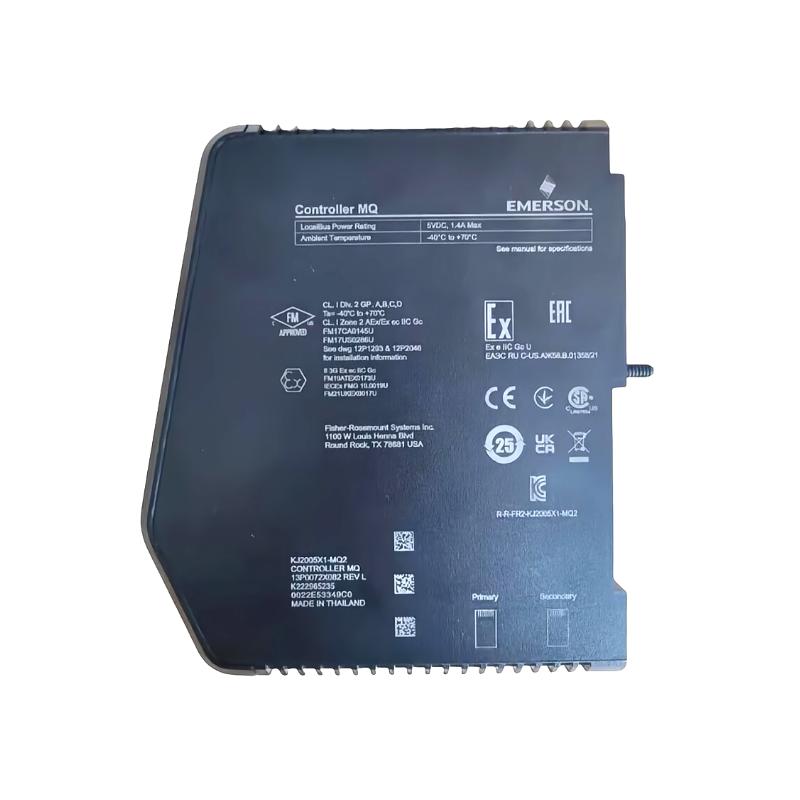
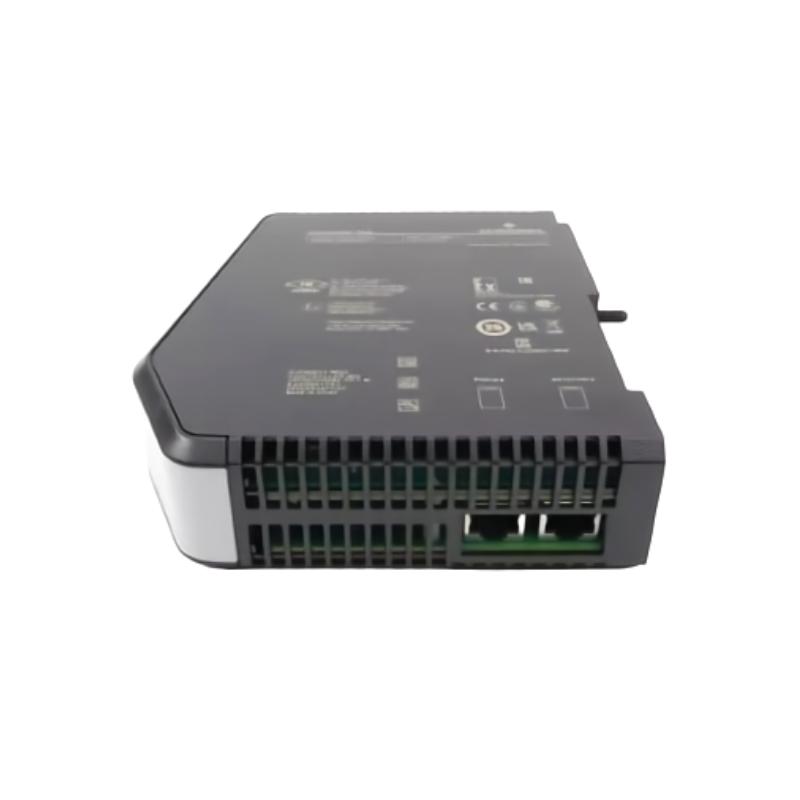
Product Overview (Introduction)
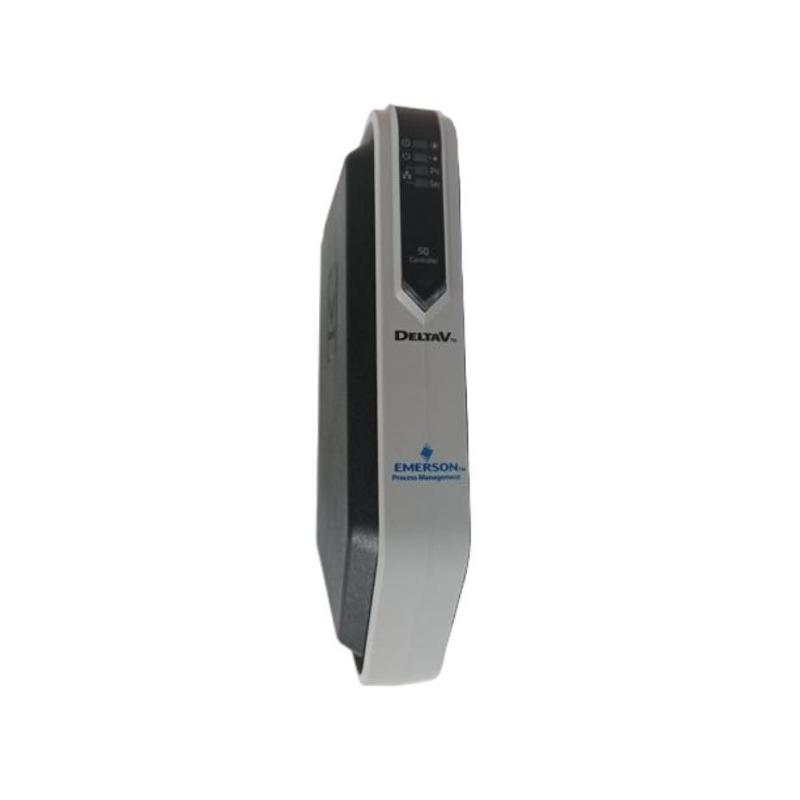
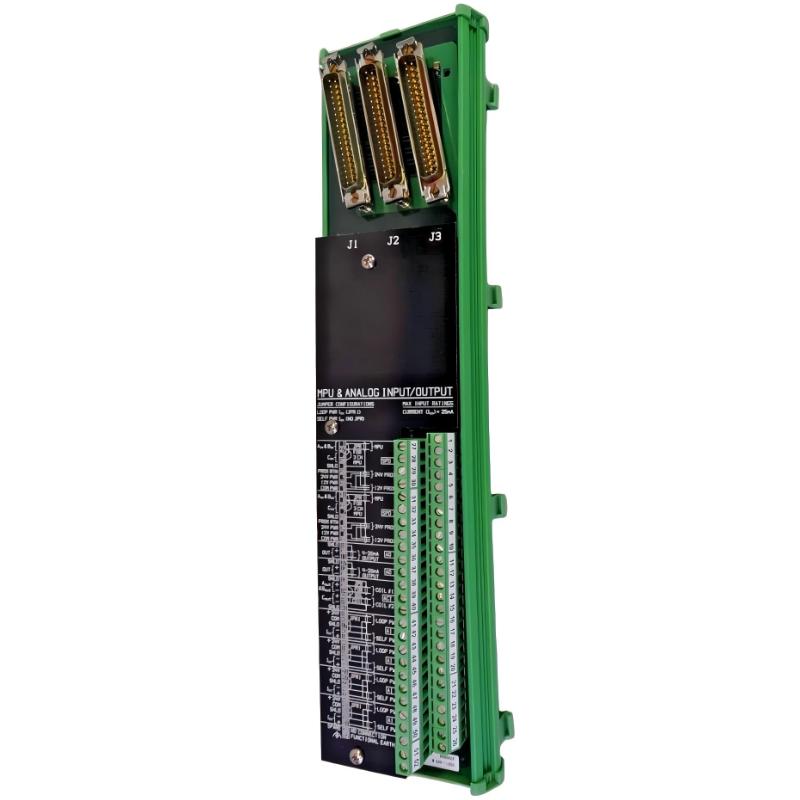
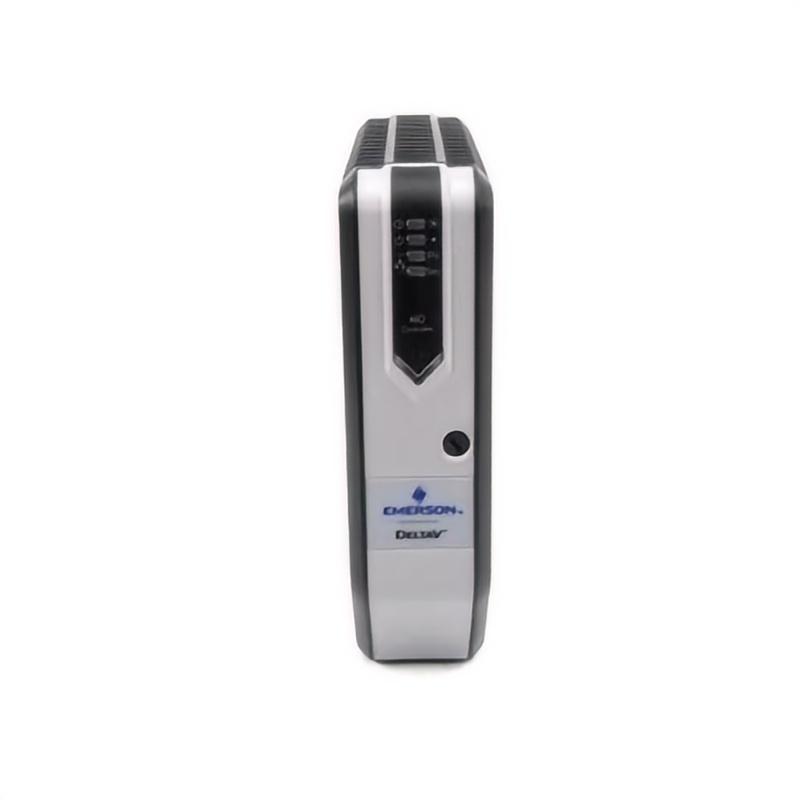
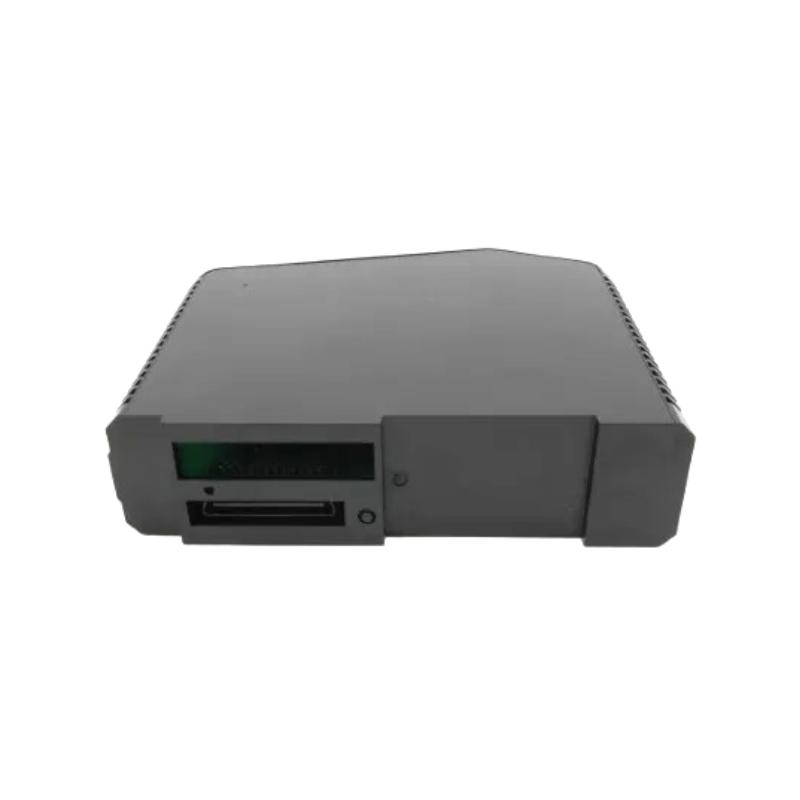
The Emerson CE3008 KJ2005X1-MQ2 Controller is a central processing unit for distributed control systems, providing real-time execution of control strategies and reliable communication with I/O and peripheral modules. Its robust design ensures stable performance in industrial environments, including conditions with electrical interference and temperature fluctuations.
The controller’s modular and compact construction allows for flexible installation and integration into Emerson DeltaV systems. By delivering precise control and data processing, it supports high system availability, operational safety, and process optimization.
This controller is essential for industries that require centralized, coordinated, and responsive control over complex automation networks.
Technical Specifications
| Specification | Details |
|---|
| Manufacturer | Emerson |
| Model Number | CE3008 KJ2005X1-MQ2 |
| Product Type | Controller |
| Function | Central processing and control for distributed automation systems |
| System Compatibility | Emerson DeltaV Distributed Control Systems |
| Installation | Control rack or I/O carrier mount |
| I/O Management | Analog, digital, and communication signals |
| Processing Capability | Real-time execution of control logic |
| Environmental Tolerance | Electrical noise, vibration, temperature variations |
| Operating Temperature | 0°C to 60°C |
| Storage Temperature | -40°C to 85°C |
| Dimensions (H × W × D) | 107 mm × 41 mm × 105 mm |
| Weight | 0.454 kg (1.00 lb) |
Applications in Distributed Process Control (Applications)
The Emerson CE3008 KJ2005X1-MQ2 Controller is a high-performance central processing module designed for managing distributed control systems. It executes control strategies, processes real-time data from I/O modules, and communicates with other system components to ensure coordinated operation across industrial processes.
Typical deployment scenarios include:
-
Chemical and petrochemical plants implementing real-time process control
-
Oil & gas facilities coordinating field devices, sensors, and actuators
-
Power generation plants managing distributed control loops and safety systems
-
Water and wastewater treatment facilities executing complex control strategies
-
Manufacturing operations requiring precise and synchronized process automation
-
Industrial facilities integrating multiple subsystems under a unified control architecture
By serving as the central decision-making unit, the controller ensures operational efficiency, process stability, and timely response to changing process conditions.
Operational Advantages in Industrial Control (Advantages)
Real-Time Process Control
Executes control logic with high-speed data processing for accurate and responsive operations.
Seamless Integration with Emerson Systems
Interfaces efficiently with DeltaV I/O modules, communication networks, and redundant controllers.
Reliable Performance in Harsh Conditions
Maintains stable operation under electrical noise, vibration, and industrial temperature variations.
Compact and Modular Design
Optimized footprint allows flexible installation in control racks without consuming excessive space.
Supports System Scalability and Redundancy
Enables addition of modules and redundant controllers without disrupting ongoing operations.
Technical FAQs (Technical FAQs)
-
What is the primary function of the CE3008 controller?
It serves as the central processing unit for distributed control systems, executing control logic and managing I/O data.
-
Which systems is it compatible with?
It is designed for Emerson DeltaV distributed control systems.
-
Does it support real-time data processing?
Yes, it handles high-speed control loops and immediate signal processing.
-
Can it operate in industrial environments?
Yes, it is designed to withstand electrical noise, temperature variation, and vibration.
-
Does it support redundant operation?
Yes, it can work in a redundant controller configuration for high-availability systems.
-
How is it installed?
It mounts on a control rack or carrier and connects to other modules via the system backplane.
-
What types of I/O can it manage?
It manages analog, digital, and communication I/O from field devices and other modules.
-
Can multiple controllers be networked?
Yes, multiple controllers can communicate to coordinate distributed processes.
-
Which industries commonly deploy this controller?
Oil & gas, chemical processing, power generation, water treatment, and manufacturing.
-
What is the key benefit of using this controller?
It ensures precise, reliable, and coordinated control of complex industrial processes.
 A DCS Q Co., Ltd. - PLC and DCS Industrial Control Equipment Wholesale