Product Overview (Introduction)
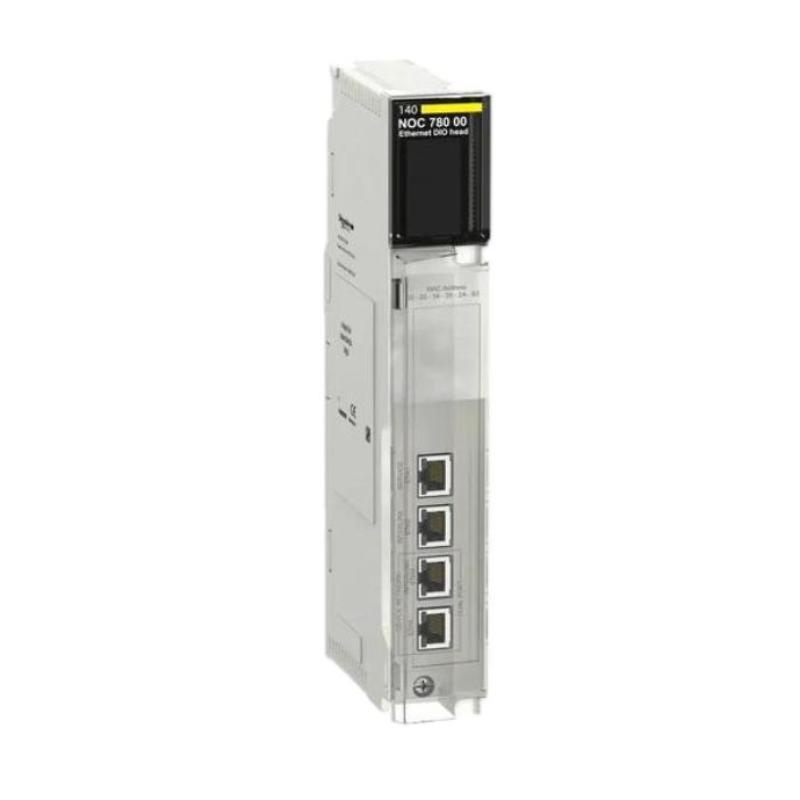
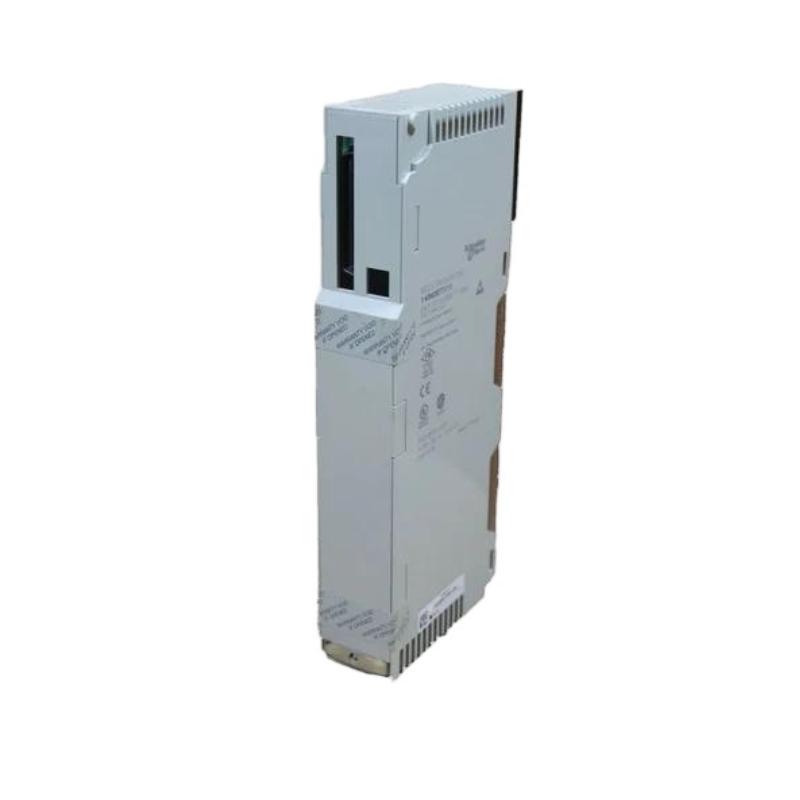
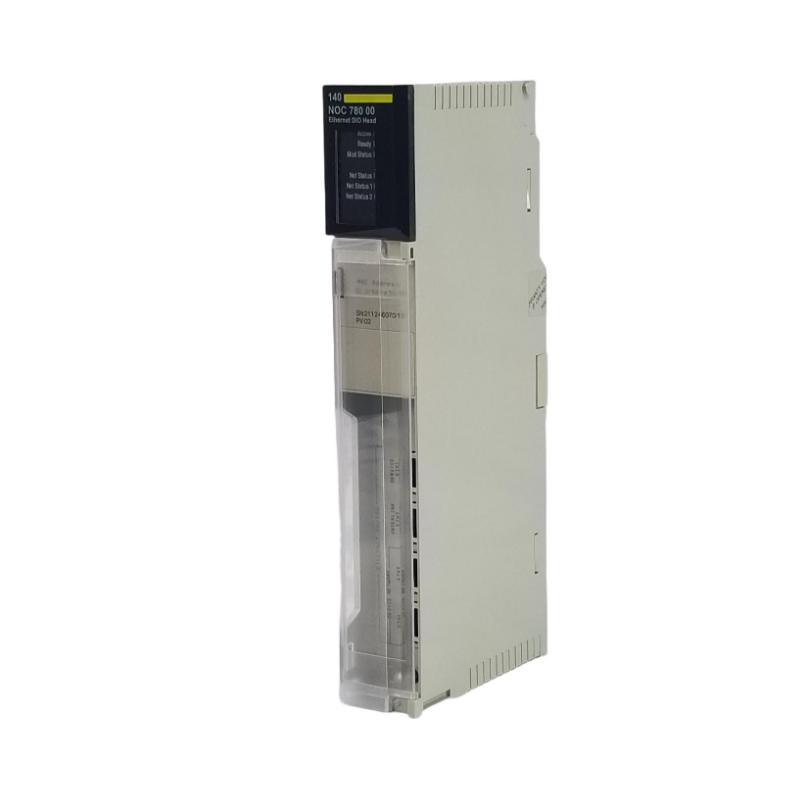
The Schneider 140NOC78000 Ethernet I/O Master Module is a high-performance interface for managing distributed I/O in Modicon automation systems. It acts as the network master, coordinating communication between controllers and remote I/O devices with deterministic timing and low latency.
Its industrial-grade design ensures reliable performance in challenging environments, including temperature extremes, vibration, and electrical noise. By supporting modular expansion and flexible network topologies, the 140NOC78000 allows plants to scale their automation systems while maintaining high availability, real-time monitoring, and precise process control.
Technical Specifications
| Specification | Details |
|---|
| Manufacturer | Schneider Electric |
| Model Number | 140NOC78000 |
| Module Type | Ethernet I/O Master Module |
| Function | Centralized I/O Control and Network Management |
| System Compatibility | Modicon PLC and Ethernet I/O Modules |
| Installation | Rack/Carrier Backplane Mount |
| Signal Type | Digital, Analog, and Message-Based Ethernet I/O Data |
| Operating Temperature | 0°C to 60°C |
| Storage Temperature | -40°C to 85°C |
| Dimensions (H × W × D) | 103.9 mm × 40.3 mm × 250 mm |
| Weight | 0.345 kg |
Applications in Industrial Automation Networks (Applications)
The Schneider 140NOC78000 Ethernet I/O Master Module is designed to manage high-speed communication between Modicon controllers and distributed I/O devices. Acting as the master node on an Ethernet network, it coordinates data exchange, control commands, and status monitoring across multiple remote devices in industrial automation systems.
Typical deployment scenarios include:
-
Manufacturing plants requiring centralized control over distributed I/O modules
-
Water and wastewater treatment facilities for real-time process supervision
-
Oil and gas facilities integrating multiple remote I/O stations
-
Food and beverage processing lines with modular automation setups
-
Energy management systems requiring deterministic network communication
-
Industrial facilities with complex, scalable I/O architectures
By centralizing I/O control and enabling deterministic communication, the 140NOC78000 ensures reliable process execution, reduces latency, and supports system scalability.
Operational Advantages (Advantages)
Deterministic Ethernet I/O Control
Provides real-time communication and ensures timely execution of commands across all connected I/O modules.
Seamless Modicon Integration
Works natively with Modicon PLCs and Ethernet-enabled I/O devices for plug-and-play operation.
Robust Industrial Performance
Maintains reliable operation under electrical noise, vibration, and standard industrial temperatures.
Scalable Network Topology
Supports line, star, and ring network configurations, enabling flexible and fault-tolerant designs.
Supports Modular Expansion
Allows additional I/O modules to be integrated without disrupting ongoing operations or PLC coordination.
Technical FAQs (Technical FAQs)
-
What is the primary function of the 140NOC78000 module?
It serves as an Ethernet I/O master, managing communication and control for distributed I/O devices.
-
Which systems is it compatible with?
It is designed for Schneider Electric Modicon PLCs and Ethernet-enabled I/O modules.
-
Does it support real-time I/O data transfer?
Yes, the module ensures deterministic, low-latency communication for critical operations.
-
Can it operate in harsh industrial environments?
Yes, it is rated for reliable operation under temperature fluctuations, electrical interference, and vibration.
-
Is network expansion supported?
Yes, additional I/O modules can be added seamlessly without disrupting the network.
-
Does the module provide diagnostic features?
Yes, it monitors link status, module connectivity, and network traffic for proactive troubleshooting.
-
How is the module installed?
It mounts directly on a Modicon PLC rack or carrier via the backplane connection.
-
What types of data does it handle?
It handles digital, analog, and message-based I/O data over Ethernet networks.
-
Which industries commonly deploy this module?
Manufacturing, water treatment, oil & gas, food & beverage, and energy management systems.
-
What is the main benefit of using this module?
It provides centralized control, reliable I/O communication, and scalable network management for complex industrial systems.
 A DCS Q Co., Ltd. - PLC and DCS Industrial Control Equipment Wholesale