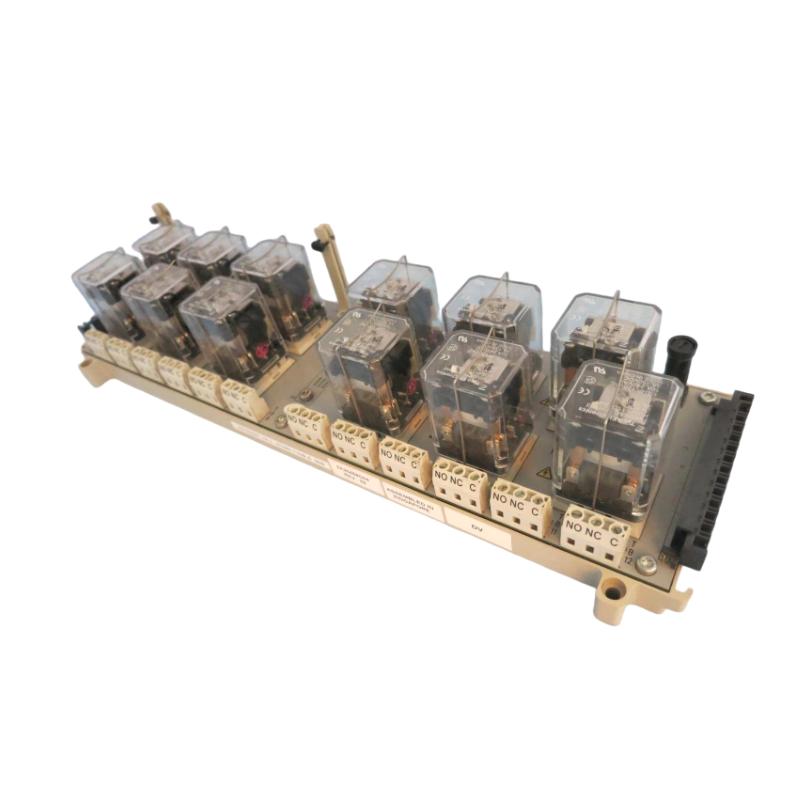
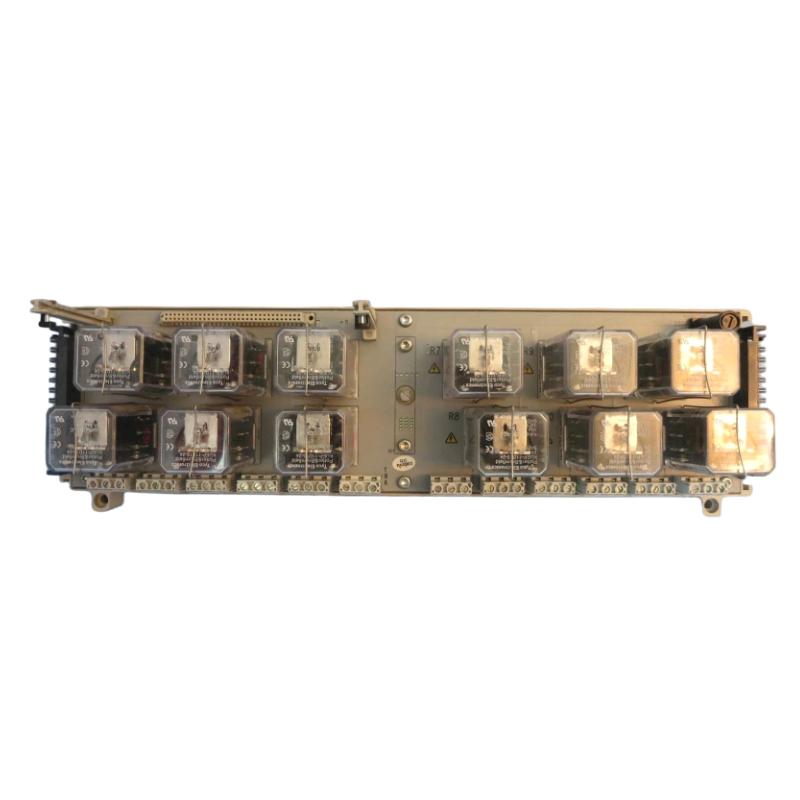
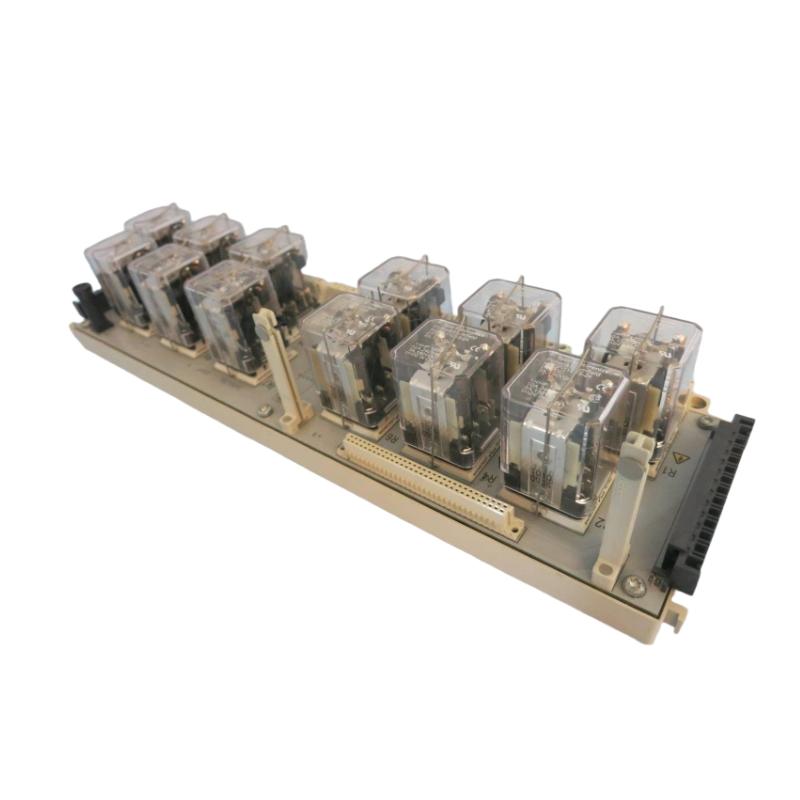
Product Introduction
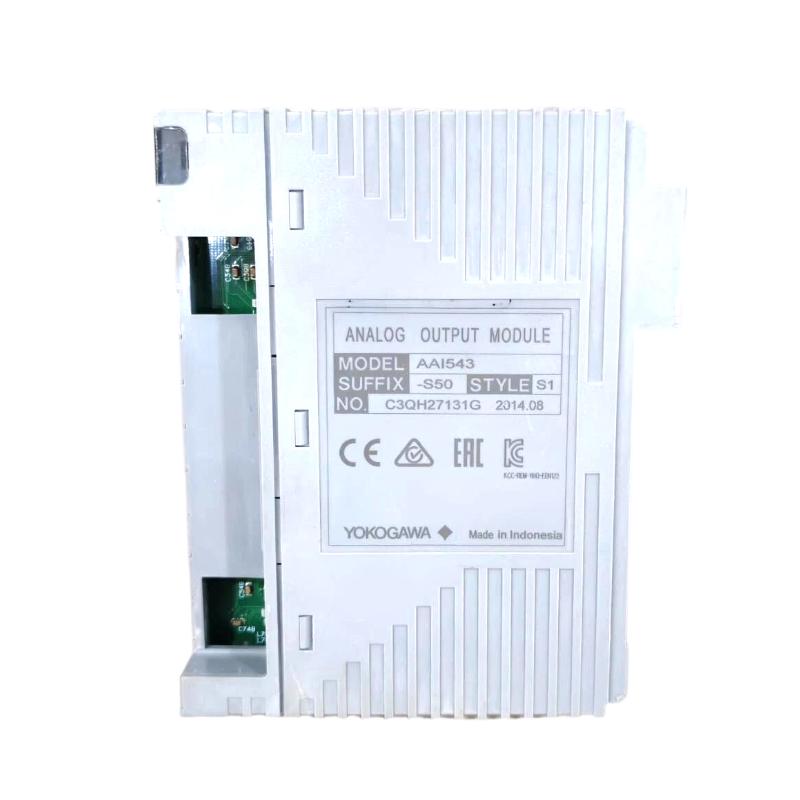
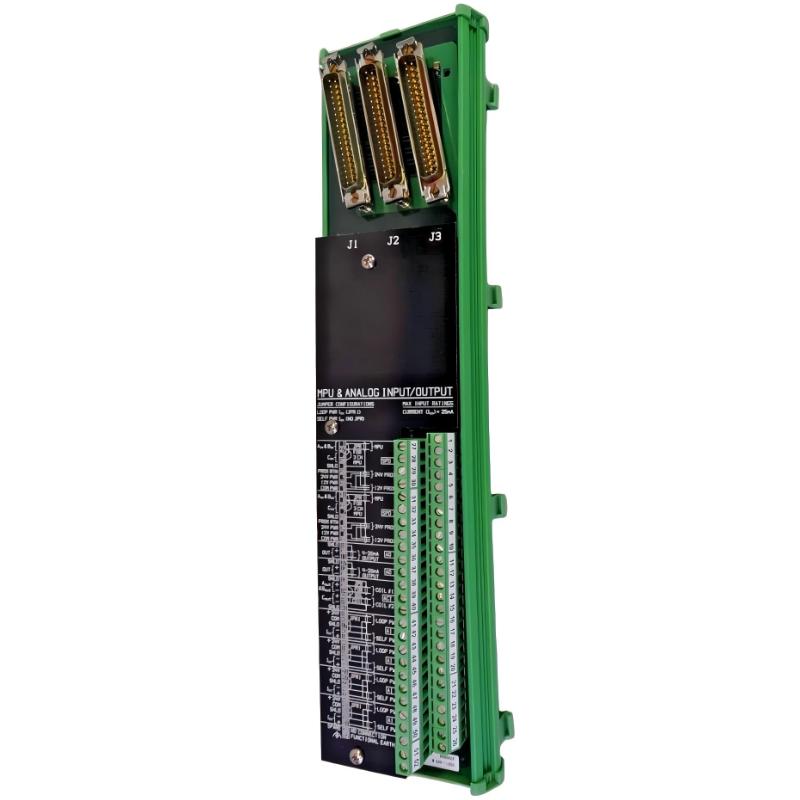
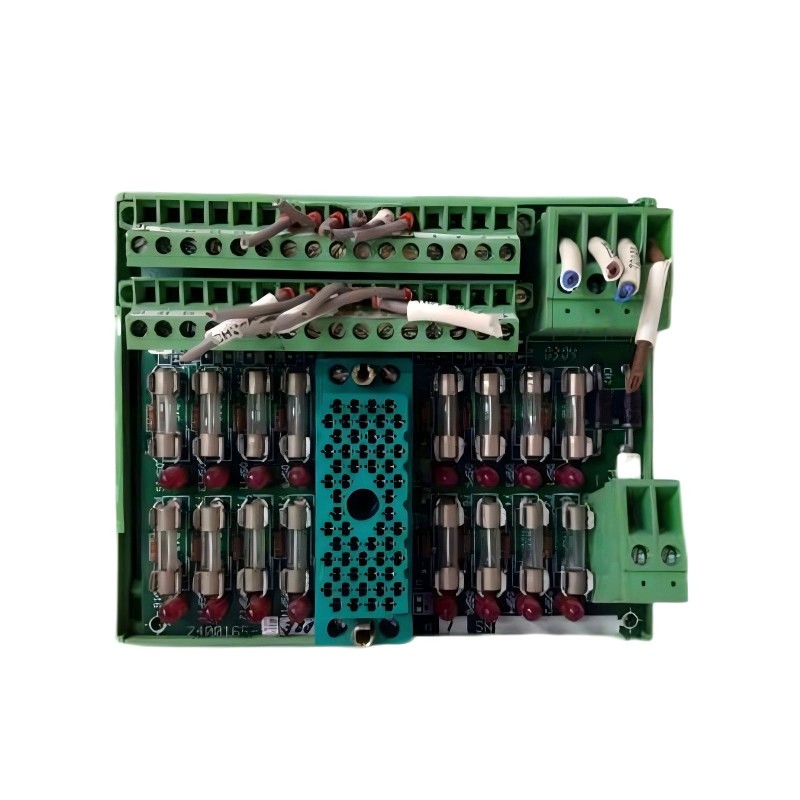
The Allen Bradley Ovation 5A26457G01 Relay Output Base is a modular interface for relay modules within Ovation distributed control systems. It ensures secure and reliable connections for output signals to field devices while maintaining organized and accessible control cabinet layouts.
Its compact size, durability, and modular design make it suitable for industrial automation applications that require consistent performance, easy maintenance, and flexible system upgrades.
Technical Specifications
| Parameter | Specification |
|---|
| Control Platform | Ovation Distributed Control System |
| Model Number | 5A26457G01 |
| Module Type | Relay Output Base |
| Function | Provides electrical and physical interface for relay modules |
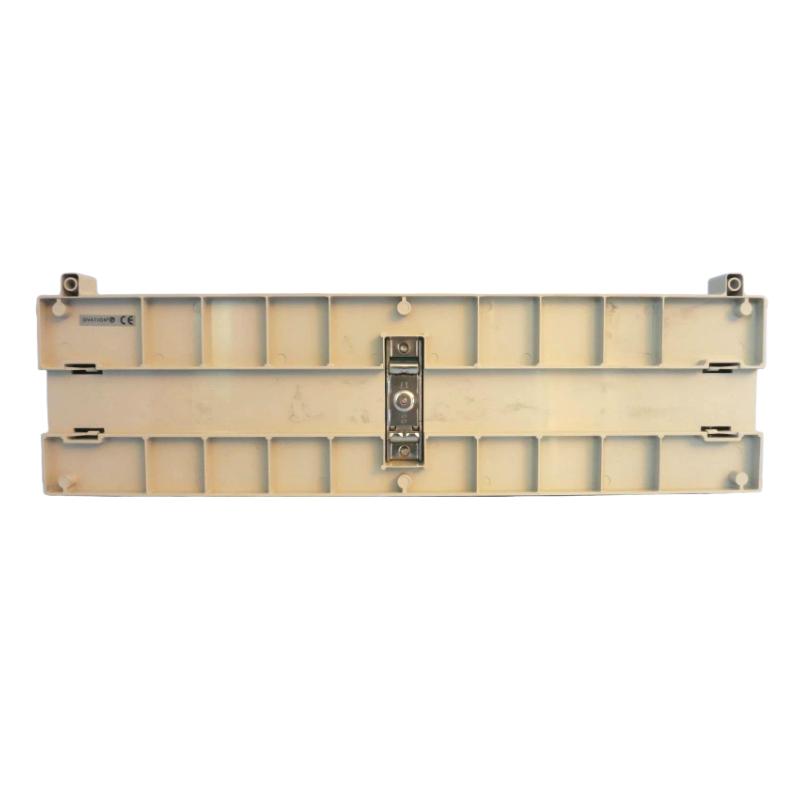
| Installation | Rack or panel-mounted in control cabinets |
| Industrial Application | Process control, power generation, and manufacturing automation |
| Dimensions | 150 mm × 80 mm × 30 mm |
| Weight | 0.35 kg (0.77 lb) |
Industrial Applications
The Allen Bradley Ovation 5A26457G01 Relay Output Base is designed to provide a reliable interface for relay modules within Ovation distributed control systems. It is widely used in industrial plants, including power generation, water treatment, and process manufacturing facilities, to manage outputs from controllers to field devices such as solenoids, motors, and alarms.
This base facilitates secure and organized installation of relay modules in control cabinets, ensuring that output signals are reliably transmitted to connected equipment. It is particularly beneficial in applications where modularity, easy maintenance, and consistent signal routing are required.
Technical FAQs
1. What is the primary function of this relay output base?
It provides the physical and electrical interface for relay modules to connect to field devices.
2. Can it handle multiple types of relays?
Yes, it is compatible with standard Ovation relay modules.
3. Is it suitable for high-current outputs?
It is designed for typical industrial relay output loads but must comply with module ratings.
4. How does it contribute to system reliability?
By ensuring consistent electrical connections and reducing the risk of loose or faulty wiring.
5. Can it be used in redundant systems?
Yes, it supports configurations that require multiple relay outputs for critical applications.
6. What are the installation requirements?
It mounts in standard control racks or panels and connects directly to Ovation control modules.
7. Is maintenance complicated?
No, its modular design allows easy inspection and replacement of individual relays.
8. How does it handle industrial environmental conditions?
It is constructed to resist vibration, temperature variations, and typical cabinet-level conditions.
9. Can it be integrated into existing Ovation systems?
Yes, it is compatible with legacy and current Ovation relay modules.
10. What kind of field devices can be connected?
Motors, solenoids, alarms, indicator lights, and other devices that require relay-controlled outputs.
 A DCS Q Co., Ltd. - PLC and DCS Industrial Control Equipment Wholesale