Introduction
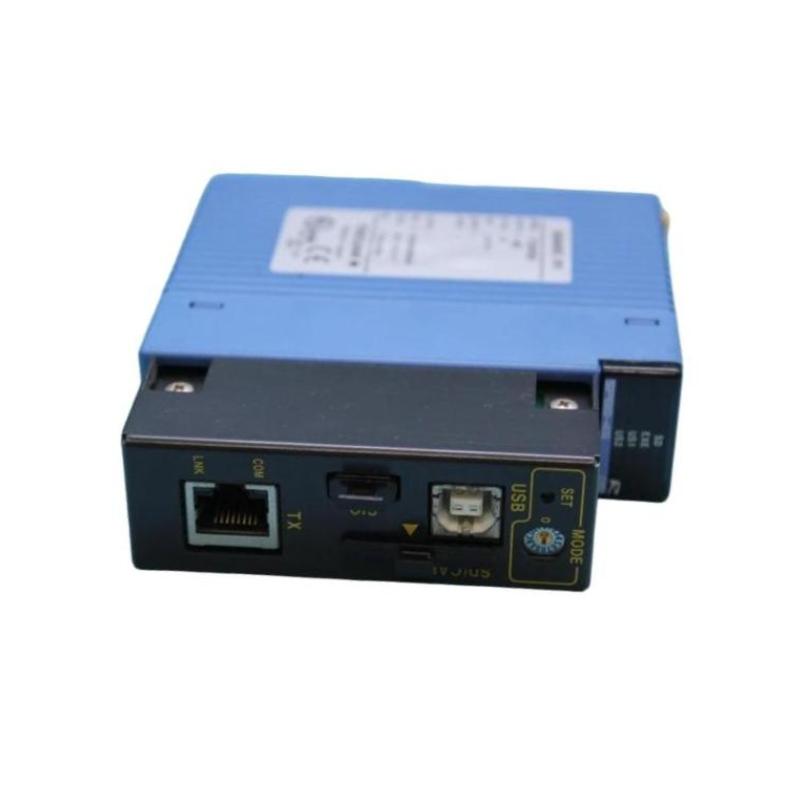
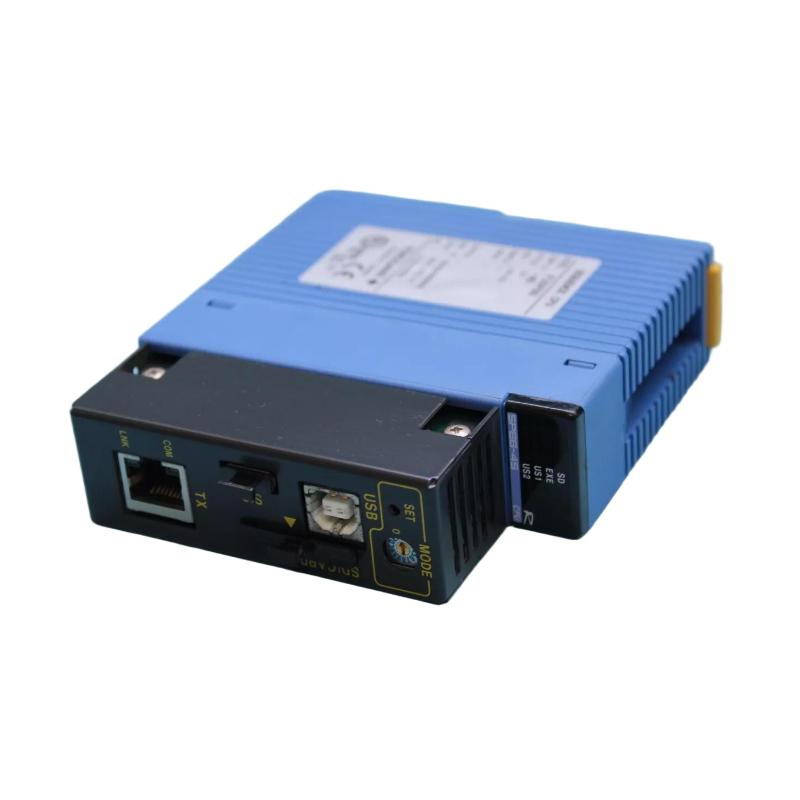
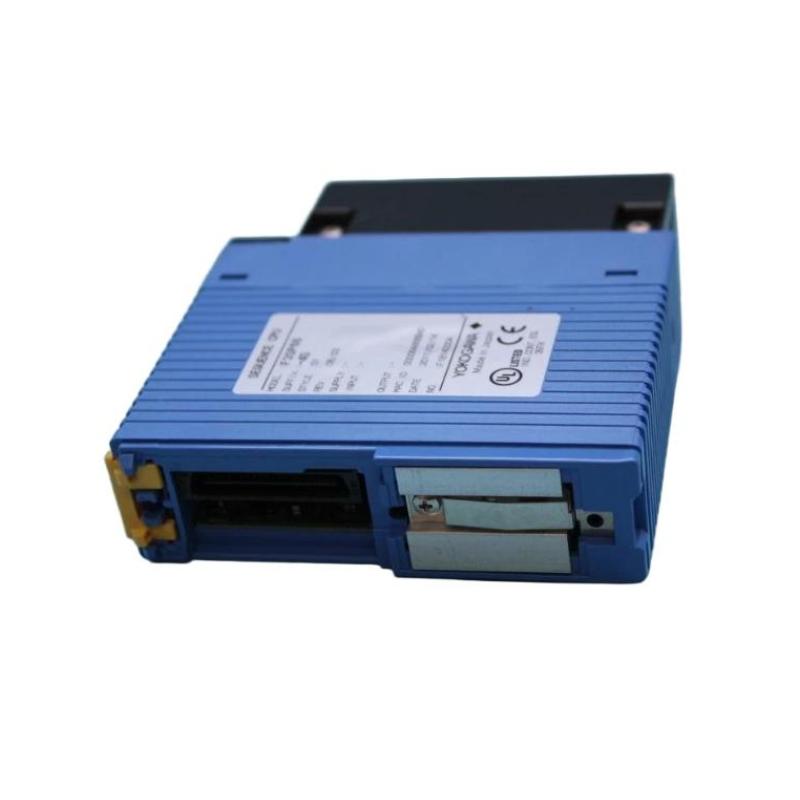
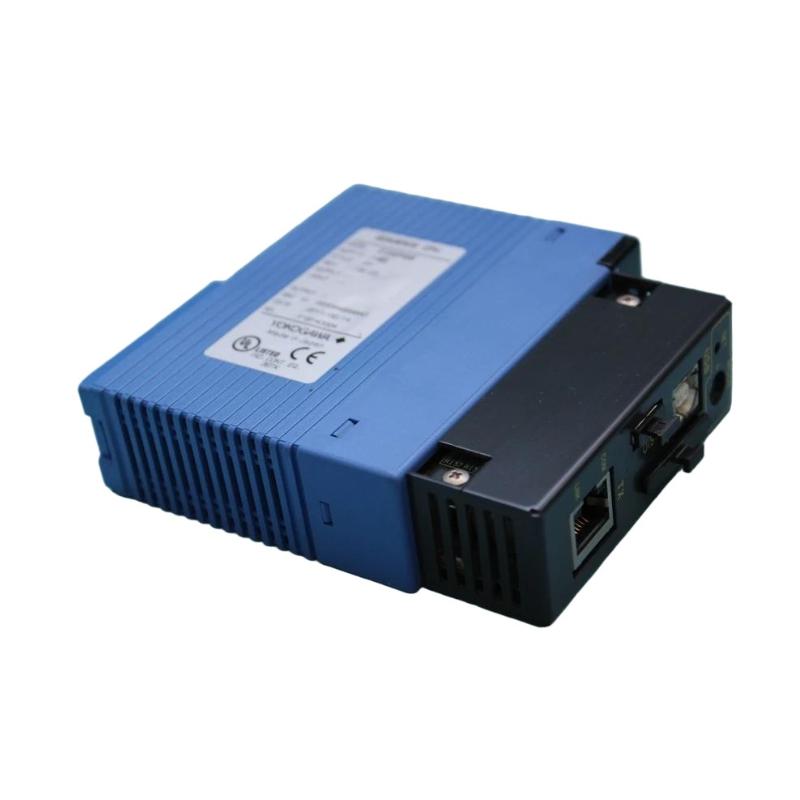
The Yokogawa F3SP66-4S Sequence CPU Module is a high-performance, network-enabled core controller designed for FA-M3 PLC systems. It is engineered for large-scale industrial automation environments that demand ultra-fast logic execution, high data throughput, and integrated communication capabilities in a single CPU platform.
This model stands out as an advanced generation FA-M3 processor, combining high-speed sequence control with built-in Ethernet networking, SD storage expansion, and improved system diagnostics. It is widely deployed in complex manufacturing and process control systems where stability and responsiveness are mission-critical.
Technical Specifications
| Parameter | Specification |
|---|
| Model | F3SP66-4S |
| Module Type | Sequence CPU Module (with network functions) |
| Series | FA-M3 |
| Processor | High-speed 32-bit RISC CPU |
| Instruction Speed | Down to 0.0175 μs per basic instruction |
| Program Capacity | Up to 120K steps |
| Scan Cycle | Approx. 1 ms (20K steps typical) |
| I/O Capacity | Large-scale system support (high-density FA-M3 architecture) |
| Internal Memory | RAM disk + battery-backed memory |
| Storage Expansion | SD card slot supported |
| Communication Ports | Ethernet (10/100BASE-TX), RS-232C, RS-485 |
| Network Functions | TCP/IP, UDP/IP, FTP, socket communication |
| Data Handling | Large file & recipe data processing |
| Sensor Control Mode | Independent high-speed scan processing |
| Diagnostics | CPU, memory, I/O self-diagnostics + logging |
| Power Supply | 5 V DC via FA-M3 backplane |
| Power Consumption | Approx. 0.8–1.0 A |
| Mounting | FA-M3 base unit slot |
| Operating Temperature | 0°C to 55°C |
| Storage Temperature | -20°C to 75°C |
| Humidity | 10–90% RH (non-condensing) |
| Dimensions | 28.9 × 100 × 83.2 mm |
| Weight | Approx. 0.3 kg |
Applications
The F3SP66-4S is designed for high-load industrial automation systems requiring both fast control execution and integrated data networking. It is commonly used in:
-
Large-scale factory automation systems
-
Semiconductor and electronics manufacturing lines
-
Automotive production control systems
-
Process control in energy and chemical plants
-
Smart factory and IIoT-enabled production systems
-
Multi-machine synchronized control architectures
Its built-in networking capabilities make it especially suitable for systems that require real-time data exchange and remote monitoring.
Advantages
One of the key advantages of the F3SP66-4S is its extremely fast instruction execution speed (0.0175 μs class), enabling near real-time responsiveness in complex automation tasks.
It includes built-in Ethernet communication (10/100BASE-TX), allowing seamless integration with SCADA, MES, and higher-level industrial systems without additional communication modules.
A major benefit is its multi-storage architecture (RAM disk + SD card support), which enables large-scale data logging, recipe management, and traceability functions directly inside the CPU.
The module also provides enhanced sensor control mode, allowing parallel high-speed scanning independent of the main cycle for improved I/O responsiveness.
Additionally, its integrated network + control architecture reduces system complexity, wiring cost, and engineering effort while improving scalability.
Technical FAQs
1. What is the main function of the F3SP66-4S?
It acts as a high-speed sequence CPU controlling FA-M3 PLC systems with built-in networking.
2. What is its instruction speed?
Down to approximately 0.0175 μs per basic instruction.
3. How large is its program capacity?
Up to 120,000 steps.
4. Does it support Ethernet communication?
Yes, it has built-in 10/100BASE-TX Ethernet.
5. What storage options are available?
RAM disk and SD card slot support large data handling.
6. Is it suitable for large systems?
Yes, it is designed for high-scale industrial automation.
7. What communication protocols are supported?
TCP/IP, UDP/IP, FTP, and socket-based communication.
8. Can it handle real-time control?
Yes, it is optimized for high-speed deterministic control.
9. What industries use it most?
Manufacturing, energy, semiconductor, and process industries.
10. Does it support remote programming?
Yes, through Ethernet and serial communication interfaces.
 A DCS Q Co., Ltd. - PLC and DCS Industrial Control Equipment Wholesale