Product Overview
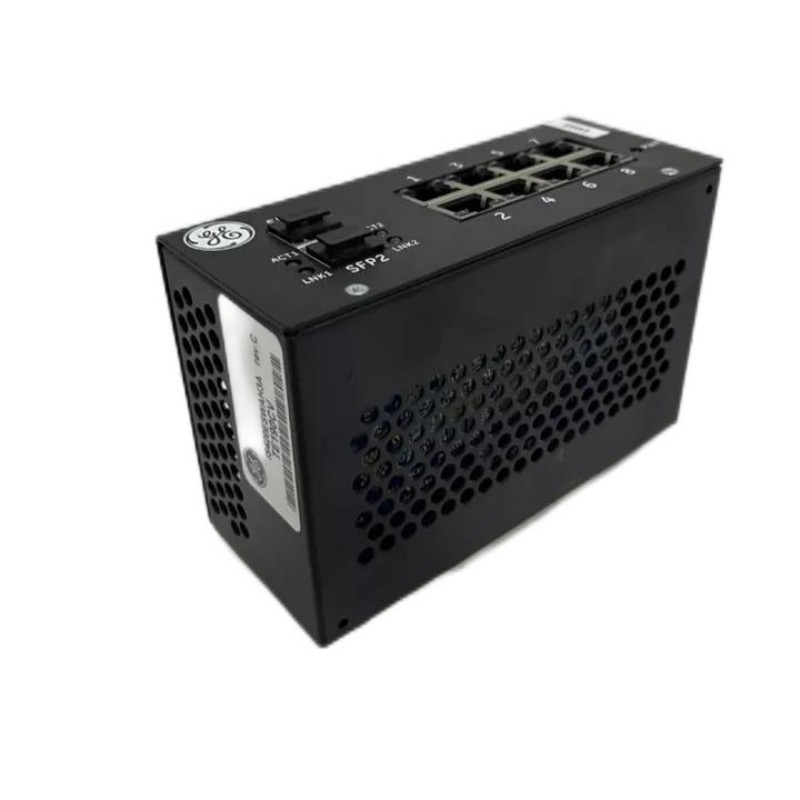
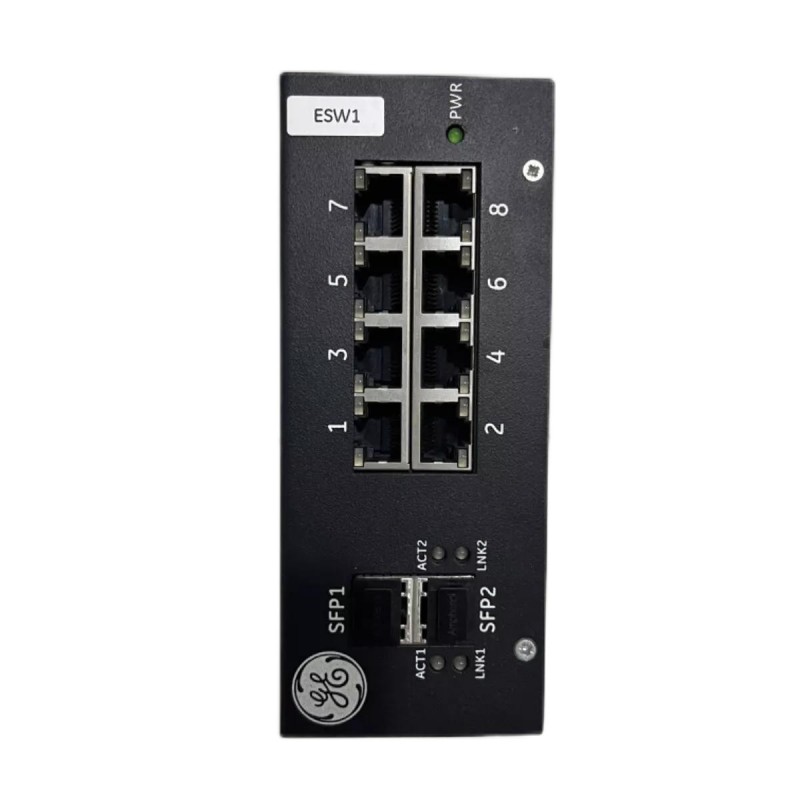
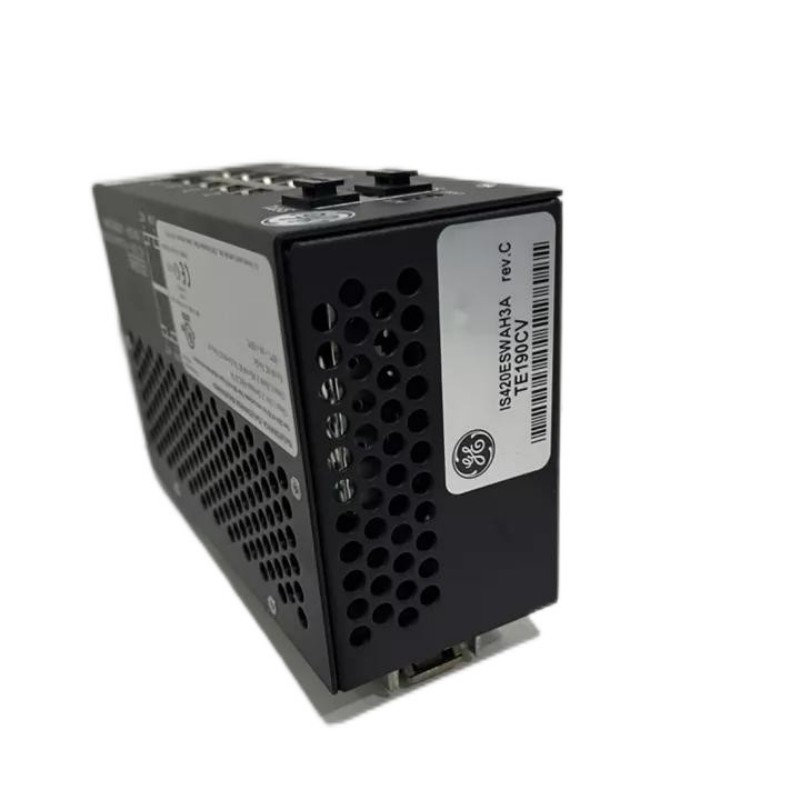
The GE IS420ESWAH3A IONet Ethernet Switch is a high‑performance industrial network module designed for General Electric Mark VIe and Mark VIeS control systems. It serves as a central Ethernet switch within the control architecture, enabling reliable high‑speed communication between controllers, I/O modules, gateways, operator interfaces, and external networked systems.
Built for robust industrial environments, this Ethernet switch supports hardened communication, deterministic data flow, and managed network capabilities—ensuring that control data is delivered quickly and securely across the automation network.
Technical Specifications
| Parameter | Details |
|---|
| Model | IS420ESWAH3A |
| Brand | GE |
| Module Type | IONet Ethernet Switch |
| System Series | Mark VIe / Mark VIeS Control Systems |
| Network Type | Industrial Ethernet |
| Port Count | 8–10 Ethernet ports (managed) |
| Speed | 10/100/1000 Mbps with auto‑negotiation |
| Switching | Managed Layer‑2 (VLAN, QoS) |
| Protocol Support | Standard Ethernet / TCP/IP protocols |
| Redundancy | Support for ring/mesh network redundancy |
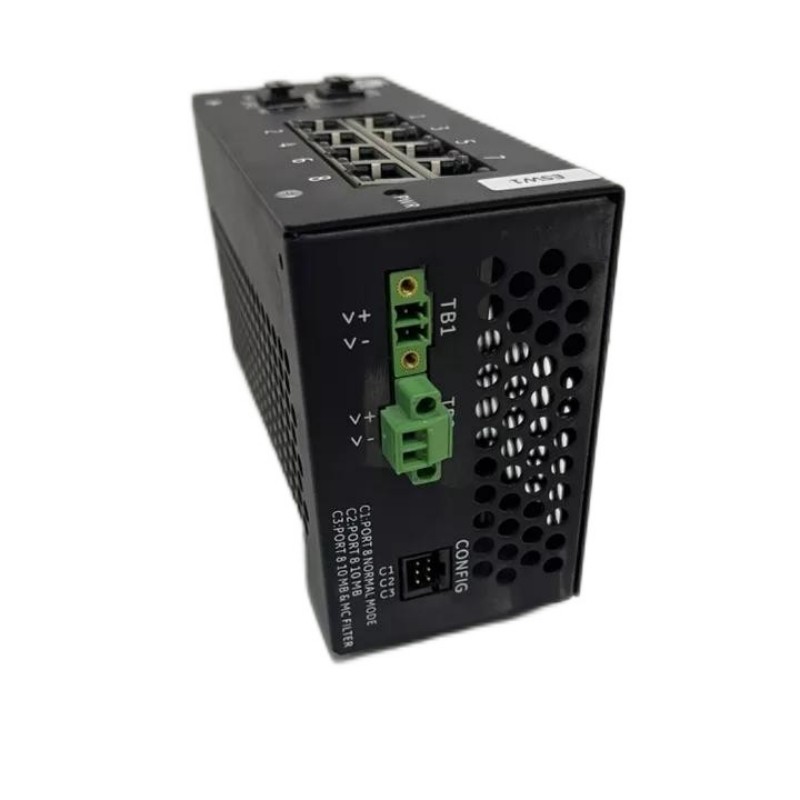
| Power Supply | Backplane‑sourced (24 V DC nominal) |
| Operating Temp | Industrial rating |
| Storage Temp | Extended industrial range |
| Mounting | Mark VIe/VIeS backplane rack slot |
| Weight | Approx. 0.5–0.8 kg |
Application Scenarios
The IS420ESWAH3A IONet Ethernet Switch is commonly deployed in automation environments requiring high‑speed network connectivity:
-
Distributed Control Systems – linking controllers, I/O modules, and communication gateways
-
Power Generation Plants – communication backbone for turbine control data
-
Industrial Process Automation – Ethernet connections for monitoring and control systems
-
Remote Diagnostics and Engineering Access – secure plant network communications
-
Redundant Network Architectures – ring or mesh topologies for high availability
Its managed switch features help ensure reliable data delivery, reduce network latency, and support complex plant communication strategies.
Key Advantages
This Ethernet switch delivers several benefits essential for modern industrial networks:
-
High‑Speed Connectivity: Gigabit Ethernet support (10/100/1000 Mbps) enables efficient data transfer.
-
Managed Network Features: VLAN, Quality of Service (QoS), and protocol control improve performance and security.
-
Scalable Architecture: Supports a growing number of devices and distributed control modules.
-
Redundancy Support: Enables network redundancy protocols for failover and high system uptime.
-
Industrial‑Grade Durability: Engineered for vibration, electrical noise, and extended temperature conditions typical in plant environments.
These capabilities make it suitable for large‑scale automation networks and critical industrial systems.
Technical FAQs
1. What is the primary purpose of this product?
It functions as a managed Ethernet switch to route high‑speed data between control modules and network devices in Mark VIe/VIeS systems.
2. How many Ethernet ports does it provide?
It typically offers 8 to 10 managed Ethernet ports with auto‑negotiation for speed.
3. What network speeds are supported?
Supports 10/100/1000 Mbps Ethernet.
4. Does it support managed switch features?
Yes—features such as VLAN segmentation, QoS, and traffic filtering are supported.
5. What redundancy features are available?
It supports ring/mesh redundancy protocols suited to industrial network designs.
6. How is it powered?
The device is powered via the Mark VIe/VIeS backplane at a 24 V nominal supply.
7. Where is this module mounted?
It is mounted in a dedicated backplane rack slot within the control cabinet.
8. Can it integrate with external networks?
Yes, it can interface with external Ethernet systems for diagnostics, SCADA, or plant networking.
9. Is it suitable for harsh environments?
Yes—industrial ratings account for temperature, vibration, and electrical noise.
10. Why is it important in automation systems?
It provides the high‑speed communication backbone needed for real‑time control data exchange across distributed control architectures.
 A DCS Q Co., Ltd. - PLC and DCS Industrial Control Equipment Wholesale