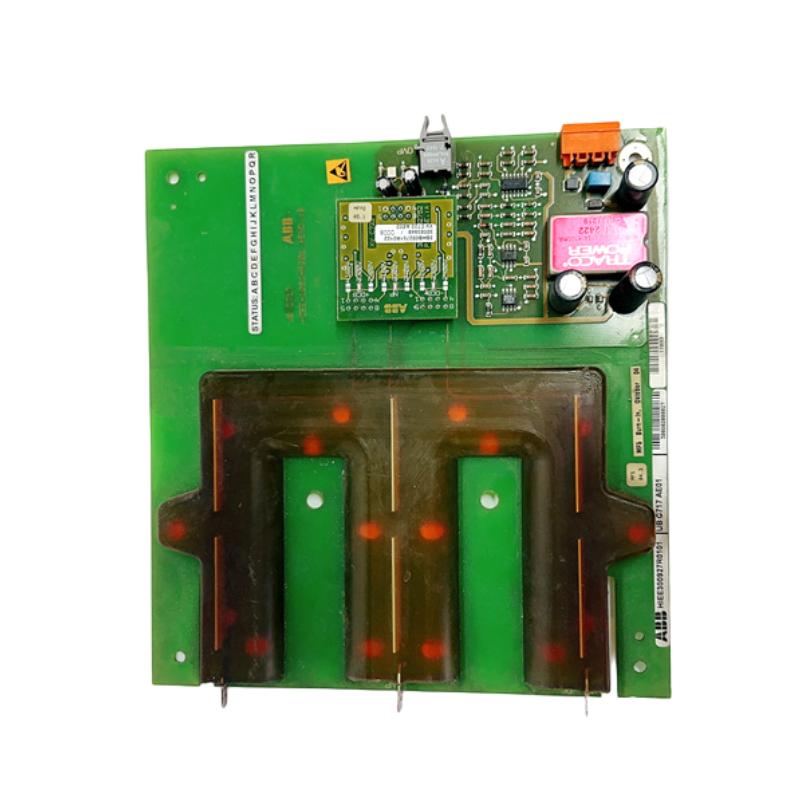
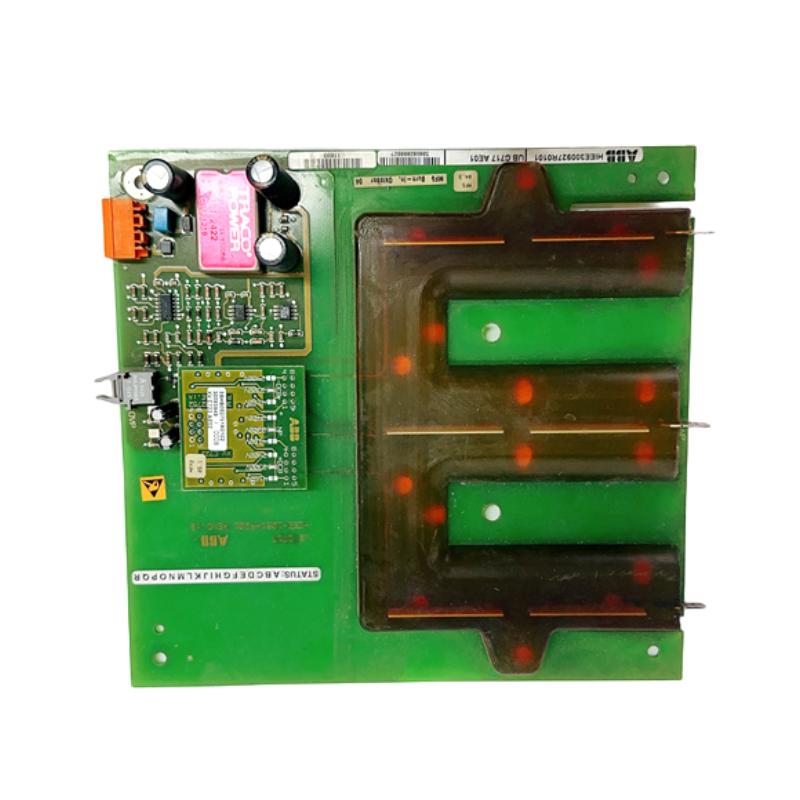
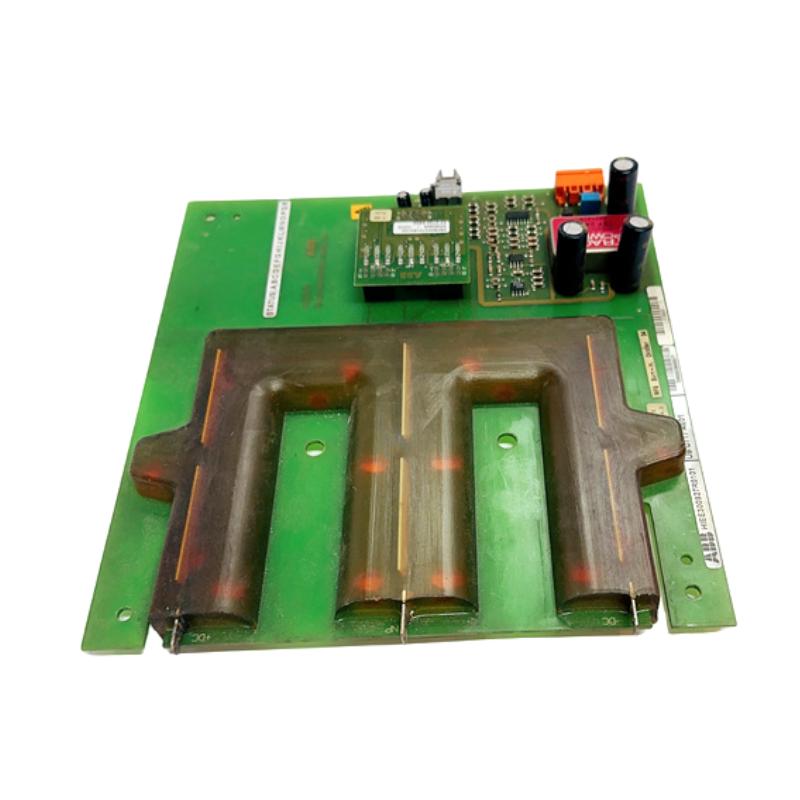
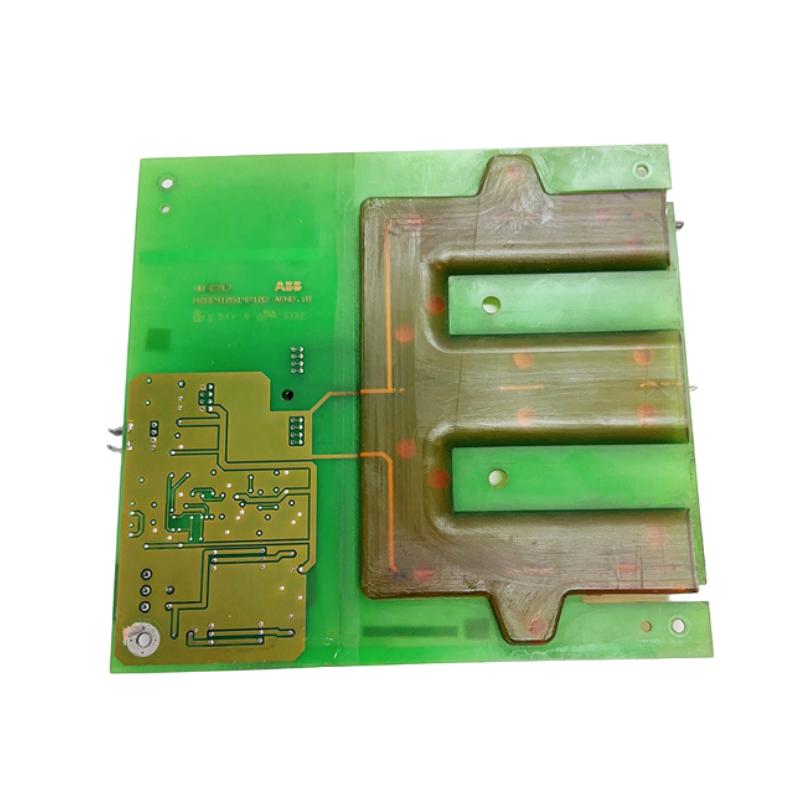
High-Performance Power Conversion Core for Industrial Inverter Systems
The ABB UB C717 AE101 HIEE300927R0101 High Voltage Inverter Main Board is an advanced industrial control module designed for high-efficiency DC–AC power conversion and inverter system management. It serves as a central processing and power regulation board within ABB high-voltage inverter architectures, enabling precise control of switching operations, energy conversion stability, and system-level protection.
Built for demanding industrial environments, this main board integrates power electronics control, signal processing, and protection logic into a compact and reliable platform, ensuring stable inverter performance in applications such as renewable energy systems, industrial drives, and power conversion units.
Technical Specifications
| Parameter | Specification |
|---|
| Manufacturer | ABB |
| Model | UB C717 AE101 |
| Part Number | HIEE300927R0101 |
| Product Type | High Voltage Inverter Main Board |
| System Role | Core control & power conversion interface |
| Function | DC–AC conversion control & inverter regulation |
| Application | Industrial inverter systems |
| Input Voltage | High-voltage DC bus (system dependent, up to industrial range) |
| Output Function | AC power conversion control |
| Efficiency | High-efficiency power processing design |
| Protection Functions | Overvoltage, overcurrent, thermal protection |
| Control Architecture | Embedded inverter control logic |
| Operating Temperature | -20°C to +70°C |
| Storage Temperature | -40°C to +85°C |
| Humidity Range | 5%–95% non-condensing |
| Installation Type | Rack-mounted inverter system module |
| Cooling Method | Cabinet-based passive/forced airflow |
| Weight | Approx. 0.1–10 kg (system configuration dependent) |
| Dimensions | Industrial PCB / frame-mounted module (varies by system) |
Industrial Applications
The ABB UB C717 AE101 inverter main board is widely used in high-power conversion and industrial automation systems:
-
Industrial inverter systems
-
Solar and renewable energy conversion platforms
-
Wind turbine power conversion units
-
UPS (Uninterruptible Power Supply) systems
-
Heavy industrial motor drive systems
-
Power plant auxiliary conversion systems
-
Energy storage and grid interface systems
-
High-voltage DC/AC conversion infrastructure
Its core function is to ensure efficient energy transformation while maintaining system stability and protection.
Key Advantages
High-Efficiency Power Conversion Control
Optimizes DC-to-AC conversion processes, reducing energy losses and improving system efficiency.
Centralized Inverter Intelligence
Acts as the core control board managing switching logic, signal processing, and system coordination.
Strong Industrial Reliability
Designed for continuous operation in high-voltage, high-load environments with minimal performance degradation.
Advanced Protection Logic
Integrated safeguards against overvoltage, overcurrent, and thermal stress enhance system safety.
ABB Engineering Integration
Seamlessly integrates into ABB inverter and automation architectures for stable system-level operation.
Durable Industrial Construction
Built with high-grade components to ensure long lifecycle performance in harsh environments.
Technical FAQs
1. What is the main function of this ABB inverter board?
It controls and manages DC–AC power conversion in industrial high-voltage inverter systems.
2. Where is it typically used?
It is used in industrial drives, renewable energy systems, UPS systems, and power plants.
3. Is it a control board or power board?
It is a hybrid inverter main board combining control logic and power conversion management.
4. Does it support protection functions?
Yes, it includes overvoltage, overcurrent, and thermal protection mechanisms.
5. What is its role in an inverter system?
It acts as the central processing unit coordinating power conversion and system regulation.
6. Is it suitable for continuous operation?
Yes, it is designed for 24/7 industrial use.
7. What temperature range can it handle?
It operates between -20°C and +70°C.
8. Does it support renewable energy systems?
Yes, it is commonly used in solar and wind power conversion systems.
9. What makes it reliable in industrial environments?
Its robust PCB design, protection logic, and ABB-grade engineering standards.
10. Why is an inverter main board important?
It ensures efficient energy conversion, system stability, and safe operation of high-power electrical systems.
 A DCS Q Co., Ltd. - PLC and DCS Industrial Control Equipment Wholesale