Introduction
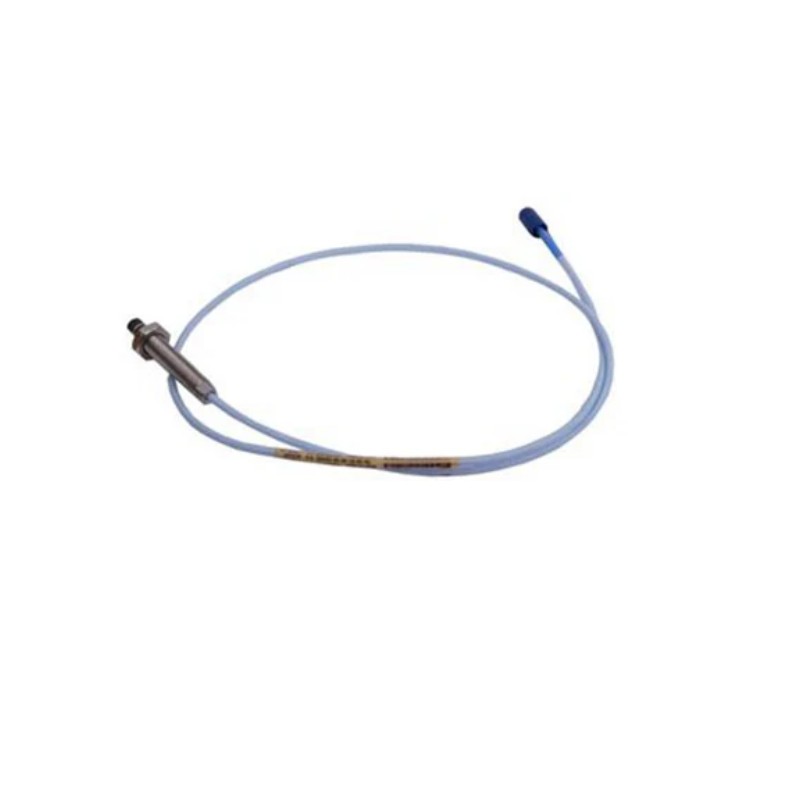
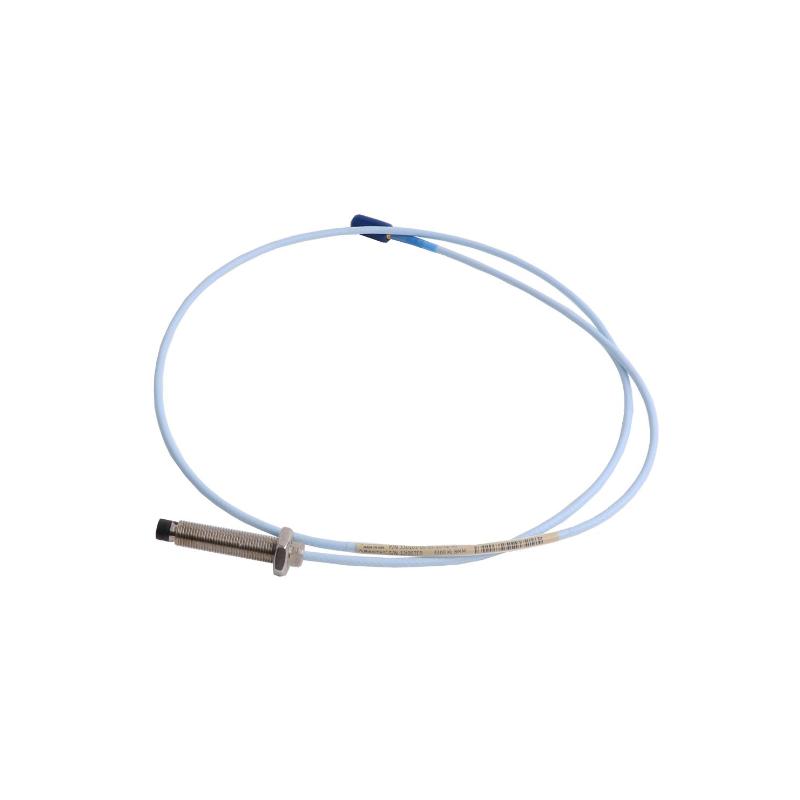
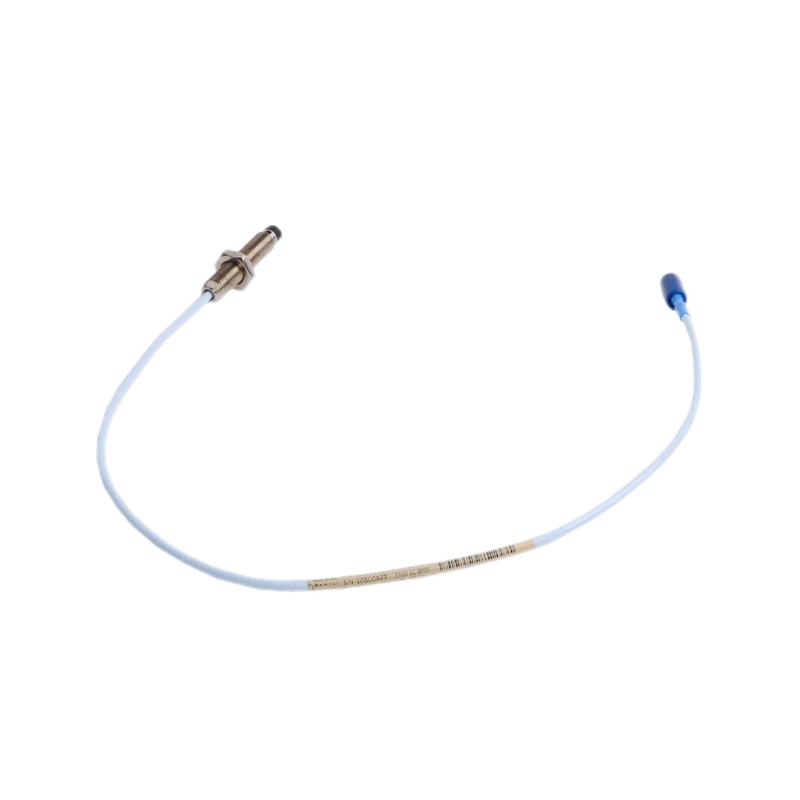
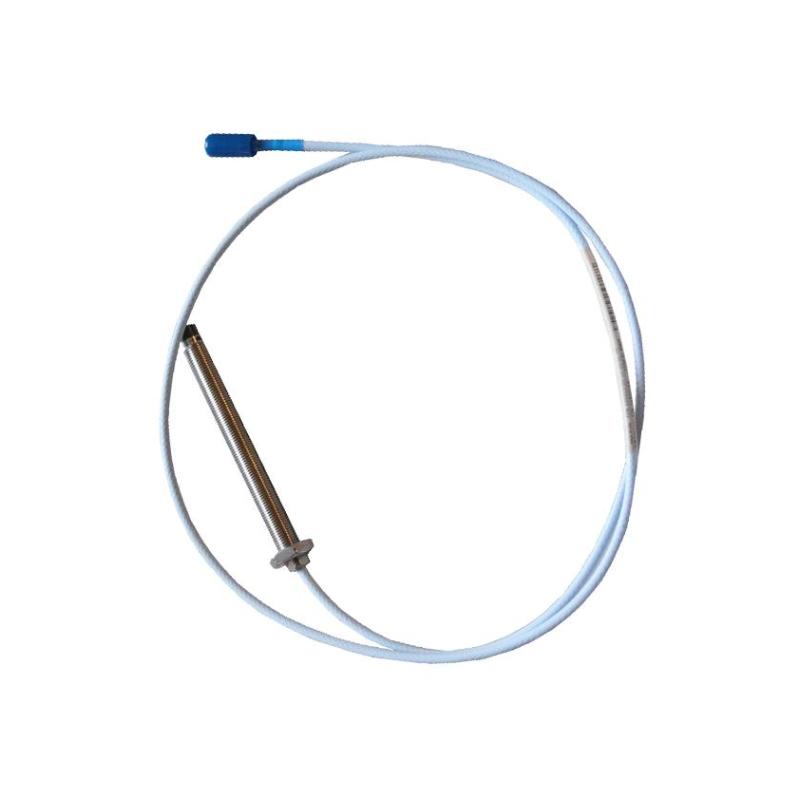
The Bently Nevada 146054-12-05-02-05 is a specialized 3300 Ceramic Capped Proximity Probe developed for machinery monitoring in aggressive chemical and high-pressure environments. Unlike a conventional metallic probe tip, this configuration uses an alumina ceramic sensing cap combined with an AISI 304 stainless steel probe case, providing enhanced protection at the front of the probe where corrosive gases or liquids may be present.
Configured with a 3/8-24 UNF thread, 1.2-inch overall case length, 0.5-meter cable, miniature coaxial ClickLoc connector, and multiple agency approvals, the 146054-12-05-02-05 is a compact sensing solution for applications that demand more environmental resistance than a standard proximity probe can provide.
The ceramic-capped design is particularly valuable in machinery exposed to anhydrous ammonia, extreme-pH environments, and other corrosive process conditions. Its front ceramic-to-metal interface is helium leak tested to provide a hermetic seal, helping protect the probe's front end from corrosive media.
For maintenance teams supporting critical rotating equipment, this model offers a purpose-built alternative when conventional proximity probes are not well suited to the surrounding process environment. It combines the established 3300 measurement architecture with specialized materials designed for demanding service.
Technical Specifications
The complete ordering code identifies the probe's case length, cable length, connector configuration, and approval package. For 146054-12-05-02-05, the 12 indicates a 1.2-inch case length, 05 indicates a 0.5-meter total cable length, 02 specifies the standard miniature coaxial ClickLoc connector, and the final 05 identifies the multiple-approval configuration.
| Specification | Details |
|---|
| Manufacturer | Bently Nevada |
| Part Number | 146054-12-05-02-05 |
| Product Type | 3300 XL Ceramic Capped Proximity Probe |
| Probe Family | 3300 Ceramic Capped Probe |
| Mounting Thread | 3/8-24 UNF |
| Probe Configuration | Standard forward-mount ceramic-capped probe |
| Overall Case Length | 1.2 in / approximately 30.5 mm |
| Total Cable Length | 0.5 m / approximately 1.6 ft |
| Connector | Miniature coaxial ClickLoc connector |
| Cable Type | Standard 75 Ω coaxial cable |
| Cable Insulation | FEP |
| Armor | None |
| Probe Tip Material | Alumina ceramic (Al₂O₃) |
| Probe Case Material | AISI 304 stainless steel |
| Linear Range | 1.52 mm / 60 mils |
| Recommended Gap | 1.0 mm / 40 mils |
| Incremental Scale Factor | 7.87 V/mm / 200 mV/mil |
| Pressure Rating | 34 bar / 500 psi nitrogen |
| Operating / Storage Temperature | -51°C to +177°C |
| Agency Approvals | CSA, ATEX, IECEx |
| Cable Minimum Bend Radius | 25.4 mm / 1.0 in |
| Approximate Product Weight | Approximately 0.04–0.5 kg depending on supplied configuration and packaging |
| Primary Application | Non-contact shaft vibration and displacement monitoring |
Applications
Corrosive Process Environments
The 146054 series is designed for situations where the front of the probe may be exposed to corrosive gases or liquids. The alumina ceramic cap provides a more chemically resistant sensing interface than conventional exposed metallic probe construction.
Ammonia Machinery Monitoring
One of the key applications for ceramic-capped probes is machinery operating in anhydrous ammonia environments. The ceramic front-end construction is intended to improve service life where ammonia exposure could challenge conventional materials.
Extreme-pH Process Equipment
Chemical processing equipment can expose monitoring sensors to aggressive media. The ceramic cap and stainless-steel case provide a specialized sensing arrangement for applications where chemical resistance is an important design requirement.
High-Pressure Machinery
The pressure-rated construction makes the probe suitable for selected high-pressure machinery-monitoring applications. The standard configuration is rated for 34 bar / 500 psi nitrogen pressure.
Turbine and Compressor Monitoring
Where process conditions are particularly demanding, the ceramic-capped probe can be incorporated into vibration and shaft-displacement monitoring systems on turbines and compressors.
Pump and Rotating Equipment Protection
Chemical-processing pumps and other rotating assets can benefit from non-contact shaft monitoring when the probe installation point is exposed to aggressive process conditions.
Existing 3300 Monitoring Systems
The ceramic-capped probe is compatible with the 3300 Proximitor Sensor and extension cable, allowing it to be incorporated into established Bently Nevada monitoring architectures.
Advantages
Alumina Ceramic Protection
The Al₂O₃ alumina ceramic cap is the defining feature of this probe. It provides enhanced protection against aggressive chemical environments while maintaining the non-contact sensing principle required for proximity measurement.
Corrosion-Resistant Probe Case
The probe case is manufactured from AISI 304 stainless steel, providing a durable mechanical enclosure around the sensing assembly.
Hermetically Tested Front Interface
The ceramic-to-metal interface at the front of the probe is helium leak tested. This provides an additional level of confidence when the front of the probe is exposed to corrosive gases or liquids.
34 Bar Pressure Rating
The probe is rated to seal against 34 bar / 500 psi nitrogen pressure, making it a strong option for selected high-pressure applications.
Compact 1.2-Inch Case
The 1.2-inch case length provides a compact installation footprint while retaining the specialized ceramic-capped construction.
Standard ClickLoc Connection
The miniature coaxial ClickLoc connector provides a defined connection interface and can be installed without specialized connector-tightening tools. The connector locking mechanism is designed to prevent loosening during service.
Multiple Hazardous-Area Approvals
The 05 approval configuration provides CSA, ATEX, and IECEx approvals, making this model attractive for installations with specific hazardous-area requirements when the complete system installation satisfies the applicable approval conditions.
Proven 3300 Architecture
The probe works within the established 3300 proximity-monitoring ecosystem, providing a practical way to extend shaft-monitoring capability into environments where standard probes may be less suitable.
Purpose-Built for Difficult Service
Rather than using a generic protective coating or accessory, the ceramic-capped design integrates specialized materials directly into the probe construction. This makes it a particularly valuable option for demanding chemical and process applications.
Technical FAQs
1. What is the Bently Nevada 146054-12-05-02-05?
It is a 3300 Ceramic Capped Proximity Probe with a 3/8-24 UNF thread, 1.2-inch case length, 0.5-meter cable, miniature coaxial ClickLoc connector, and multiple agency approvals.
2. Why does this probe use a ceramic tip?
The alumina ceramic tip is designed to provide increased resistance to aggressive chemical environments. It is particularly useful where the front of the probe may encounter corrosive gases or liquids.
3. What is the probe case length?
The case length is 1.2 inches, equivalent to approximately 30.5 mm.
4. How long is the cable?
The -05 cable option specifies 0.5 meter, or approximately 1.6 feet, of total probe cable.
5. What connector does it use?
The model uses a miniature coaxial ClickLoc connector with standard cable. The connector configuration is identified by the 02 portion of the ordering code.
6. What is the probe's linear range?
The ceramic-capped probe provides a 1.52 mm (60 mil) linear range, approximately from 0.25 mm to 1.78 mm from the target.
7. What is the recommended probe gap?
The recommended electrical gap is 1.0 mm (40 mils). Proper electrical gapping is especially important because the response curve of the ceramic-capped probe is shifted compared with a standard 3300 XL probe.
8. What is the pressure rating?
The standard ceramic-capped probe is rated to seal at 34 bar (500 psi) nitrogen pressure. Specialized modifications are available for applications requiring higher pressure ratings.
9. Can the rear of the probe be exposed to corrosive chemicals?
No. This is an important installation consideration. The 146054 configuration seals the front of the probe but does not seal the rear. The rear must not be exposed to destructive environments such as water, ammonia, ammonium hydroxide, or hydrogen sulfide.
10. Can it directly replace a standard 3300 XL proximity probe?
It should not be treated as a drop-in replacement based only on physical dimensions. The ceramic-capped probe has a shifted linear response, so monitor configuration and gapping require additional attention. The complete probe, Proximitor, extension cable, target material, and monitoring setup should be evaluated before substitution.
 A DCS Q Co., Ltd. - PLC and DCS Industrial Control Equipment Wholesale