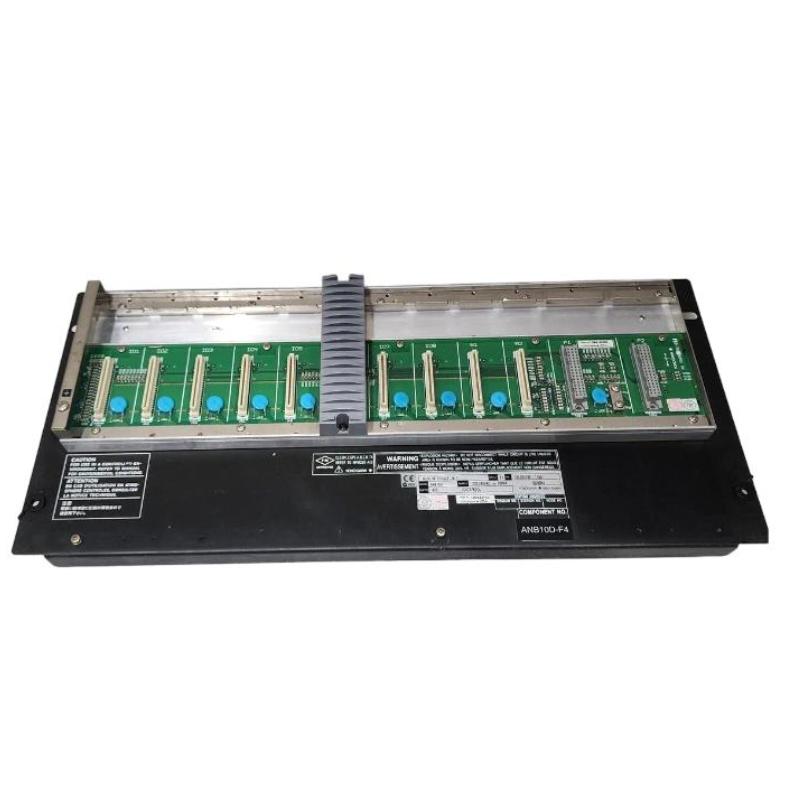
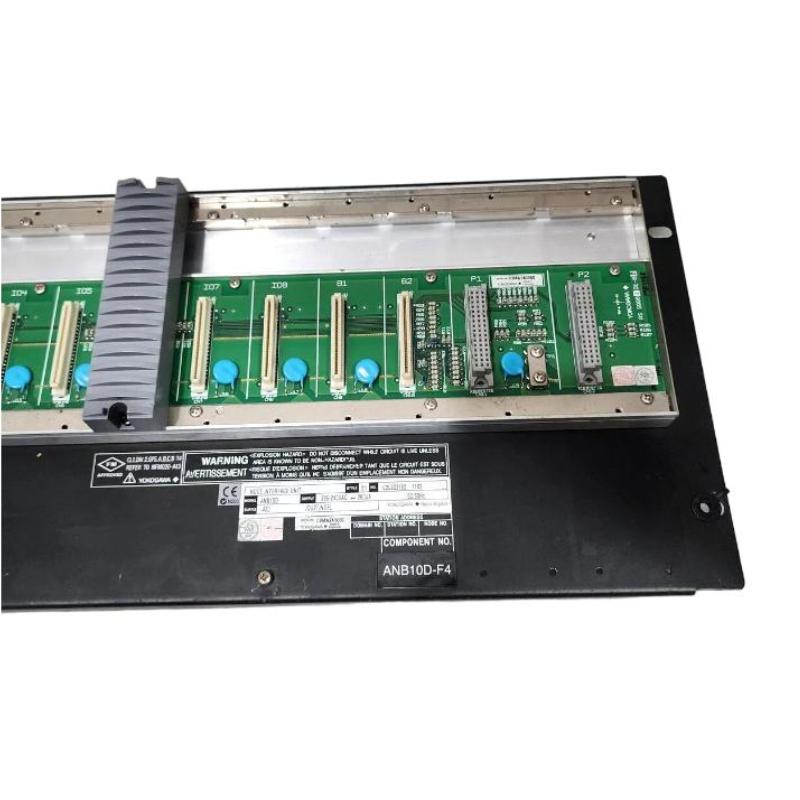
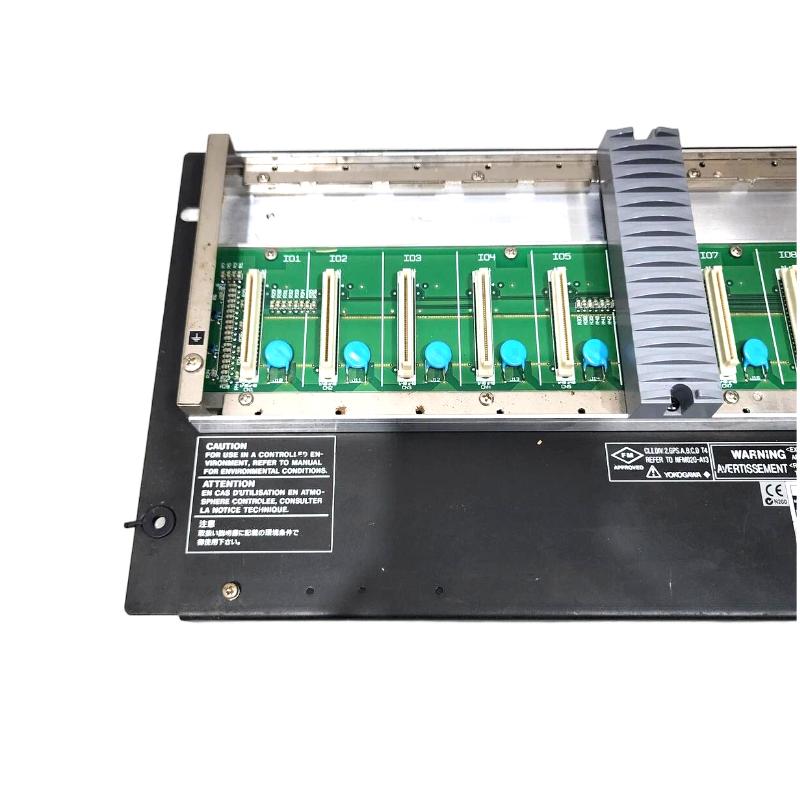
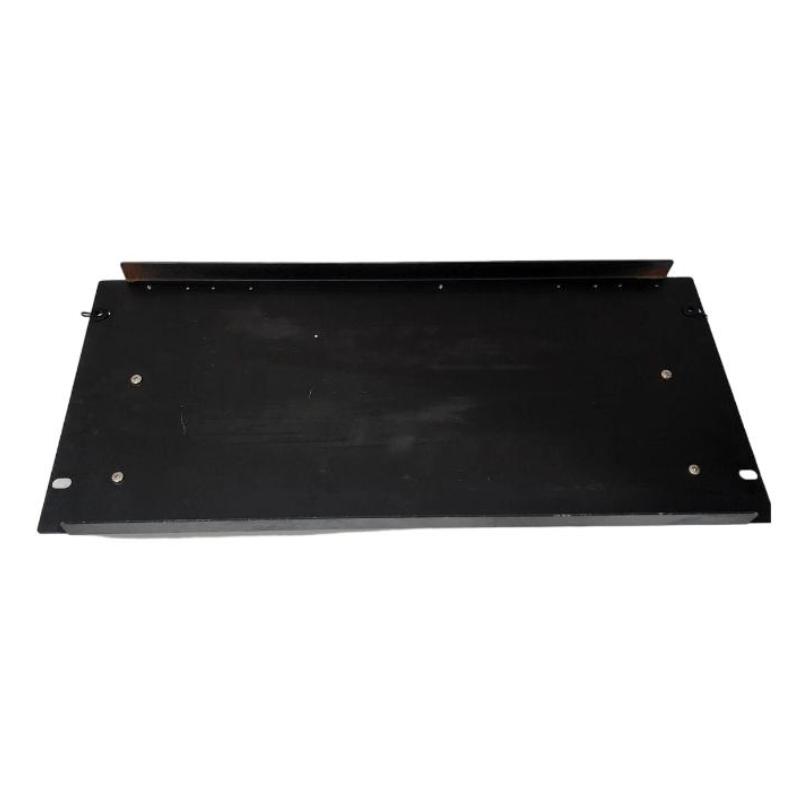
Product Overview and Design Philosophy
The ANB10N-410/CU2T reflects Yokogawa’s approach to building highly reliable and deterministic communication systems for industrial automation. Rather than focusing on general networking flexibility, this unit is purpose-built for ESB-based architectures where timing accuracy and system stability are critical.
Its architecture supports structured communication across distributed control systems, ensuring that process data is transmitted consistently and without delay. This is particularly important in large plants where thousands of signals must be processed simultaneously.
The module is also engineered for long lifecycle operation. Many installations using this unit are expected to run continuously for over a decade, making durability and firmware stability key design priorities.
Technical Specifications
| Parameter | Specification |
|---|
| Model | ANB10N-410/CU2T |
| Module Type | ESB Bus Node Unit |
| System Compatibility | Yokogawa CENTUM VP |
| Communication Protocol | ESB (Enhanced Serial Bus) |
| Redundancy Support | Yes |
| Installation | Rack-mounted |
| Operating Environment | Industrial control systems |
| Dimensions | 482.6 × 221.5 × 205 mm |
| Weight | 10 kg (22.05 lb) |
Application Scenarios in Distributed Control Systems
The Yokogawa ANB10N-410/CU2T ESB Bus Node Unit is designed for deployment in high-integrity distributed control systems, particularly within Yokogawa’s CENTUM VP environment. It is commonly installed in process-intensive industries such as refining, chemical manufacturing, and power generation, where stable communication between control layers is essential.
In practical applications, this unit serves as a communication interface within the ESB (Enhanced Serial Bus) network, linking field control stations (FCS) to supervisory and operator systems. It is especially effective in multi-unit plants where different process sections must operate independently while maintaining coordinated system-wide control.
The CU2T variant is often selected in engineering designs that require specific redundancy configurations or interface consistency across large installations.
Advantages from a System Engineering Viewpoint
A key strength of the ANB10N-410/CU2T lies in its deterministic communication capability. Unlike standard network devices, it ensures fixed-cycle data transmission, which is critical for maintaining control loop stability in continuous processes.
The module also supports redundant ESB configurations, allowing two communication paths to operate simultaneously. In the event of a failure, the system automatically switches to the standby path without interrupting plant operations. This level of reliability is essential in industries where downtime can result in significant financial loss.
Another advantage is its seamless integration within Yokogawa’s control ecosystem. Engineers benefit from simplified configuration, consistent diagnostics, and reduced commissioning time. The module is also built for long-term durability, maintaining performance under electrical noise, thermal variation, and continuous operation.
Additionally, its design supports system scalability, enabling engineers to expand control networks
without compromising communication performance or requiring major architectural changes.
Technical FAQs
1. What is the role of the ANB10N-410/CU2T in a DCS?
It functions as an ESB communication node, enabling data exchange between field control stations and higher-level systems.
2. What distinguishes the “N” series from other ANB10 models?
The “N” designation typically reflects a specific hardware or system configuration aligned with certain Yokogawa system requirements.
3. Does this unit support redundancy?
Yes, it supports dual-redundant ESB communication configurations.
4. What systems is it compatible with?
It is designed for Yokogawa CENTUM VP and related distributed control systems.
5. How does it ensure communication stability?
Through deterministic data transmission and automatic failover mechanisms.
6. Is it suitable for continuous industrial operation?
Yes, it is built for 24/7 operation in demanding industrial environments.
7. How is the module installed?
It is rack-mounted within control cabinets as part of the ESB network.
8. What diagnostic features are available?
It includes built-in diagnostics accessible via Yokogawa engineering tools.
9. Can it be used in system upgrades?
Yes, it is often deployed in modernization projects due to its compatibility with existing infrastructure.
10. What type of industries typically use this module?
Oil & gas, petrochemical, power generation, and other process industries.
 A DCS Q Co., Ltd. - PLC and DCS Industrial Control Equipment Wholesale