Industrial Overview
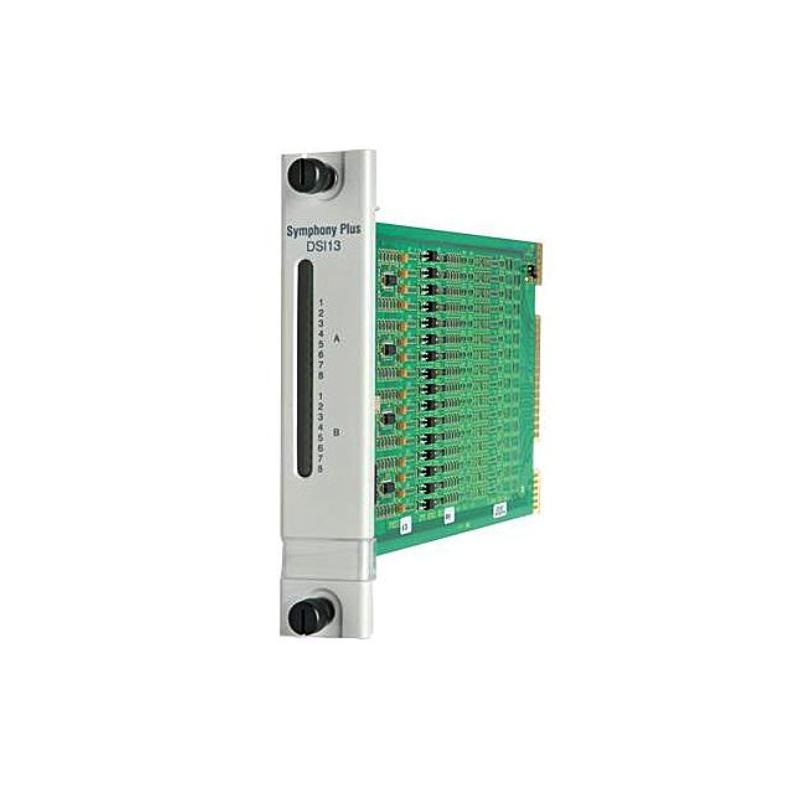
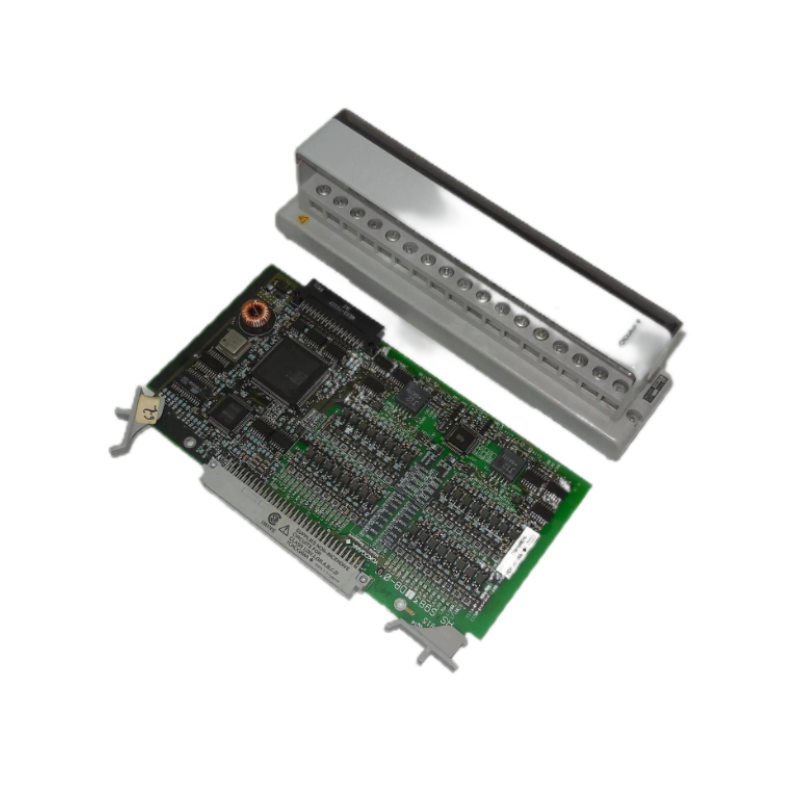
The ABB Bailey SPDSI13 Digital Input (DI) Module is a field I/O component used in ABB Bailey Infi 90 and Net 90 distributed control systems. It is designed to acquire discrete on/off signals from field devices such as switches, relays, limit sensors, and contact-based instrumentation, then transmit these signals to the control system for processing.
In industrial automation environments, the SPDSI13 plays a critical role in real-time status monitoring and process interlocking, helping ensure safe and coordinated plant operation. It is widely deployed in legacy ABB DCS installations where reliable digital signal acquisition is essential.
Technical Specifications
| Parameter | Specification |
|---|
| Manufacturer | ABB (Bailey Controls) |
| Model | SPDSI13 |
| Module Type | Digital Input (DI) Module |
| System Compatibility | ABB Bailey Infi 90 / Net 90 / Symphony |
| Input Channels | 16 digital input channels |
| Input Voltage Range | 24 VDC (typical), supports industrial signal levels |
| Signal Type | Dry contact / wet contact (system dependent) |
| Input Isolation | Channel-to-system optical isolation |
| Response Type | High-speed discrete signal acquisition |
| Power Supply | Backplane supplied (system dependent) |
| Mounting Type | Rack-mounted I/O module |
| Operating Temperature | -25°C to +60°C (industrial environment range) |
| Dimensions (approx.) | 270 × 96 × 73 mm |
| Weight | ~0.2 kg – 2 kg (varies by configuration) |
Application Scenarios
The SPDSI13 is widely used in process industries where reliable discrete signal acquisition is required:
-
Power plant auxiliary system monitoring
-
Oil & gas valve and interlock status detection
-
Petrochemical safety and alarm systems
-
Water treatment pump and valve control
-
Industrial machinery status monitoring in DCS systems
It is especially valuable in environments where system logic depends on accurate and timely detection of equipment state changes.
Engineering Advantages
The SPDSI13 is designed for high signal reliability and electrical isolation, ensuring stable performance even in electrically noisy industrial environments. Each input channel is typically isolated to reduce the risk of ground loops and signal interference.
Its multi-channel architecture (up to 16 DI points) allows efficient consolidation of field wiring into a single module, reducing cabinet complexity and improving maintainability.
Another key advantage is its tight integration with ABB Bailey Infi 90 architecture, enabling seamless communication with controllers and other I/O modules without additional interfacing hardware.
Additionally, its rugged industrial construction supports long-term operation in continuous-process environments where downtime must be minimized.
Technical FAQs
1. What is the main function of SPDSI13?
It collects digital on/off signals from field devices and sends them to the control system.
2. How many input channels does it support?
Typically up to 16 digital input channels.
3. What systems is it used in?
ABB Bailey Infi 90, Net 90, and Symphony DCS systems.
4. What type of signals does it accept?
Dry contact and 24 VDC industrial digital signals.
5. Is it an analog module?
No, it is strictly a digital input module.
6. What is its main industrial role?
Monitoring equipment status and process interlocks.
7. Is it electrically isolated?
Yes, it provides channel and system-level isolation.
8. What industries use it most?
Power generation, oil & gas, chemical, and water treatment industries.
9. Is it still used today?
Yes, mainly in legacy ABB DCS maintenance and upgrades.
10. Is it a standalone device?
No, it operates within an ABB rack-based control system.
 A DCS Q Co., Ltd. - PLC and DCS Industrial Control Equipment Wholesale