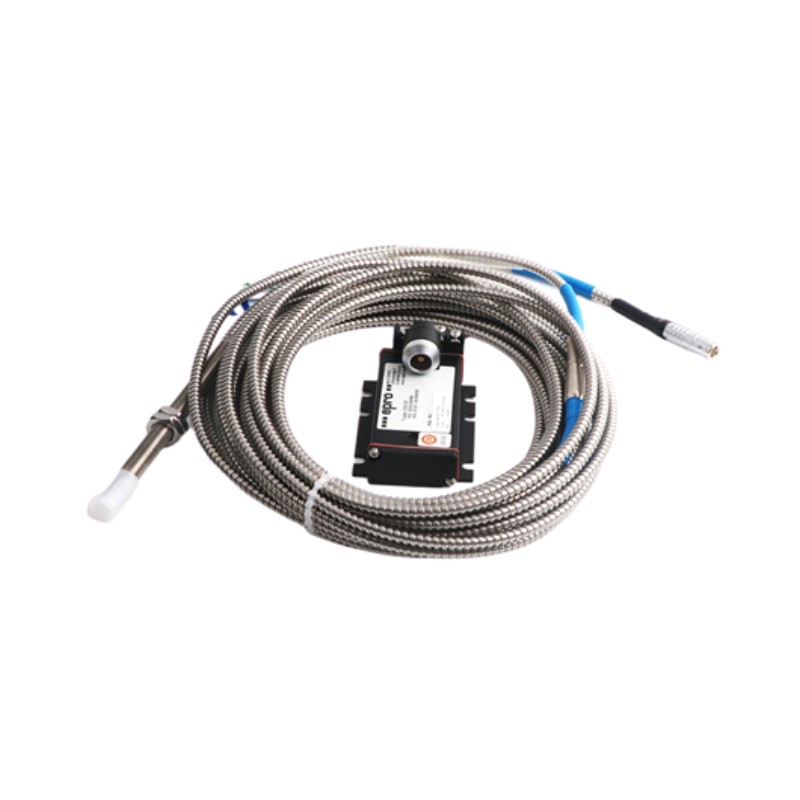
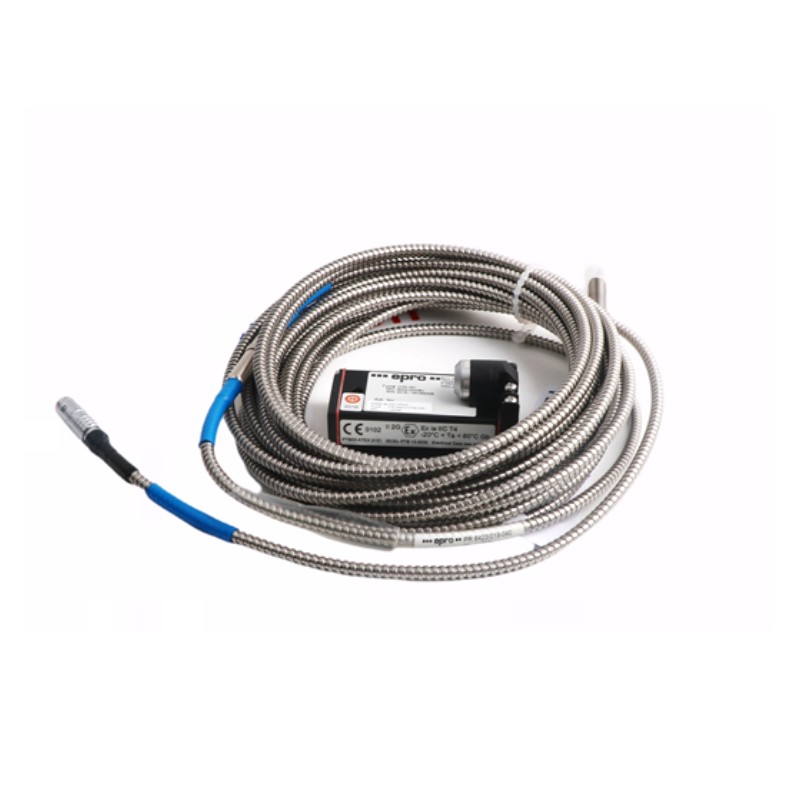
Technical Overview
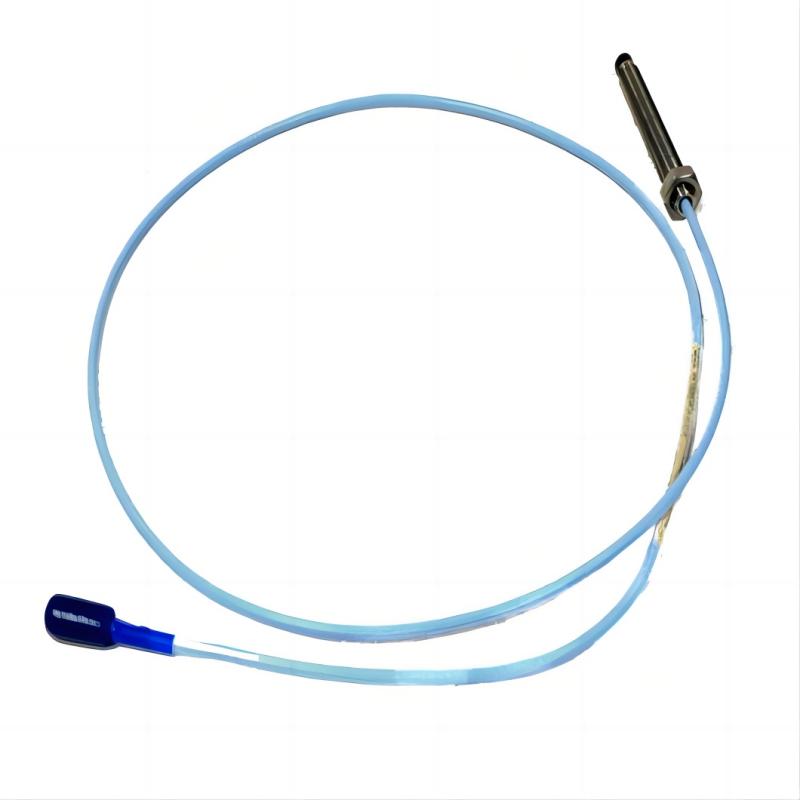
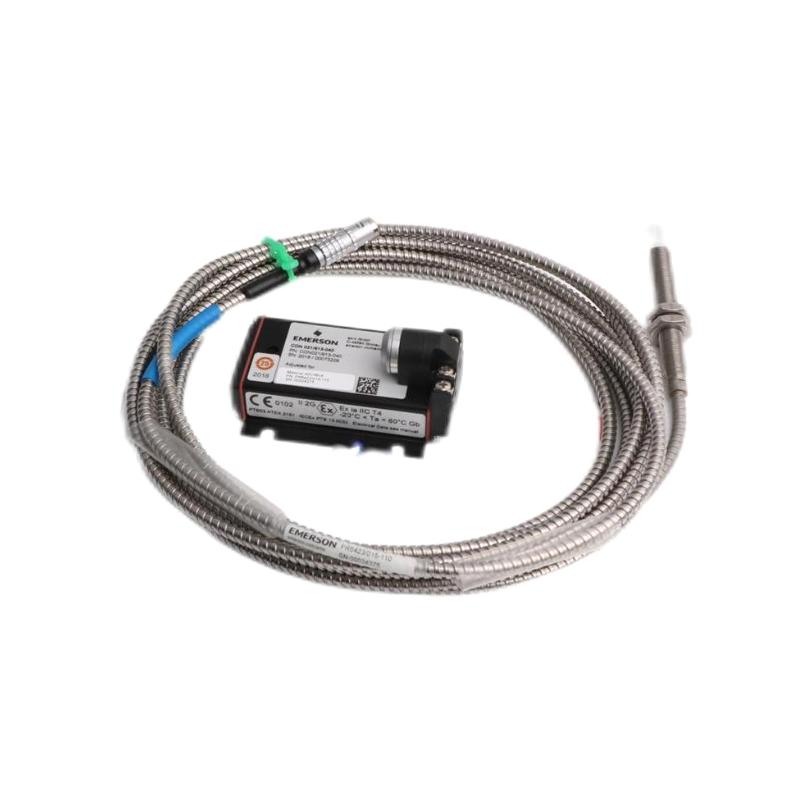
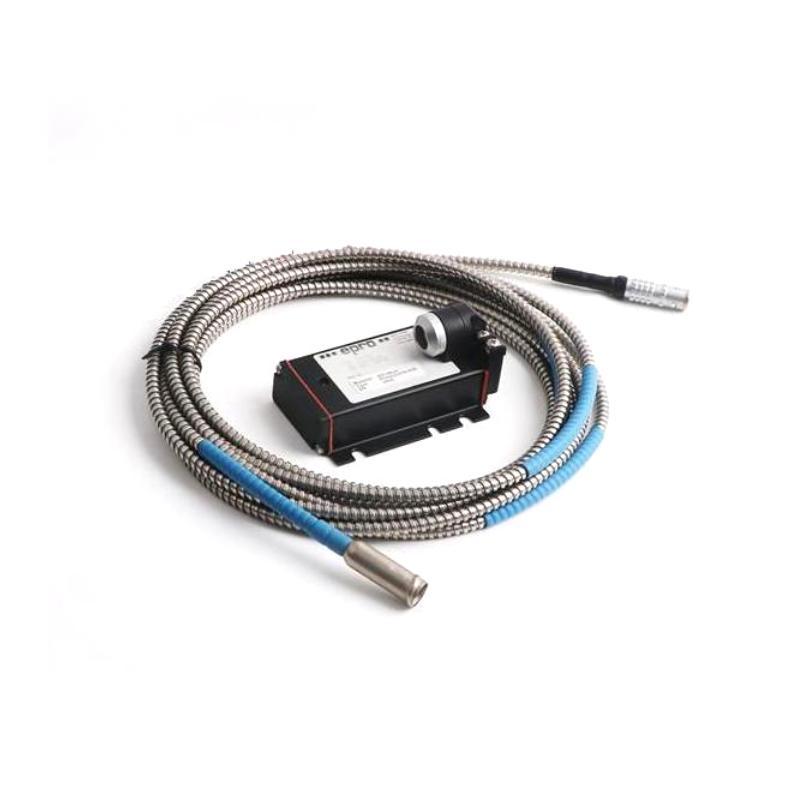
The PR6423/003-031-CN is part of Epro’s industrial eddy current sensor series, engineered for precision displacement and vibration measurement in critical machinery systems. Its compact 8 mm probe design allows flexible installation while maintaining high measurement accuracy.
It is widely used in machinery protection systems where reliability, long service life, and real-time monitoring are essential for preventing costly downtime and ensuring operational safety.
Technical Specifications
| Parameter | Specification |
|---|
| Model | PR6423/003-031-CN |
| Sensor Type | Eddy Current (Non-contact) |
| Probe Diameter | 8 mm |
| Measurement Principle | Eddy Current Induction |
| Compatible Materials | Conductive metals (steel shafts) |
| Measurement Function | Displacement, vibration, eccentricity |
| Operating Temperature | -35 to 180°C |
| Environmental Resistance | Oil, dust, vibration resistant |
| Mounting Type | Threaded installation |
| Cable Type | Shielded industrial cable |
| Dimensions (Sensor Head) | 8 mm diameter |
| Weight | 0.1 kg (0.220 lb) |
Application Context
The PR6423/003-031-CN is an 8 mm eddy current sensor designed for high-precision monitoring of rotating machinery in demanding industrial environments. It is widely applied in turbines, compressors, pumps, and gearbox systems where continuous shaft displacement and vibration measurement are essential for operational safety and efficiency.
In power plants and petrochemical facilities, it supports real-time condition monitoring of critical rotating assets. Engineers use it to detect early-stage mechanical issues such as shaft misalignment, imbalance, and bearing degradation. Its compact design makes it suitable for installations where space constraints exist but measurement accuracy cannot be compromised.
Engineering Advantages
A key strength of this model is its high-resolution non-contact measurement capability. It can detect extremely small shaft movements, enabling early fault detection before mechanical failure occurs.
The eddy current principle ensures no physical contact with the shaft, eliminating mechanical wear and significantly extending service life. This makes it ideal for continuous 24/7 monitoring applications in high-speed machinery.
Another important advantage is its strong environmental adaptability. The sensor maintains stable performance under high temperature, vibration, oil exposure, and electromagnetic interference, ensuring reliable signal output in harsh industrial conditions.
Additionally, it integrates seamlessly with standard Epro signal conditioning systems, enabling stable data transmission to PLC or protection systems without complex configuration.
Technical FAQs
1. What is the measurement principle of this sensor?
It uses eddy current induction to measure the distance between the probe and conductive target surfaces.
2. What types of targets can it measure?
It is designed for conductive metal surfaces, typically steel shafts.
3. What is the benefit of the CN version?
The CN variant typically refers to specific cable/connector configurations optimized for industrial installation.
4. Is it suitable for high-speed rotating equipment?
Yes, it is specifically designed for turbines and other high-speed rotating machinery.
5. Can it detect early-stage faults?
Yes, it can detect micro-level displacement changes associated with early mechanical degradation.
6. How does it perform in harsh environments?
It is resistant to oil, dust, vibration, and electromagnetic interference.
7. Does it require calibration?
Yes, periodic calibration is recommended to maintain measurement accuracy.
8. What kind of output system does it use?
It works with external signal converters for standardized industrial outputs.
9. Can it be used in continuous monitoring systems?
Yes, it is designed for continuous real-time condition monitoring.
10. Is installation position critical?
Yes, correct alignment and gap setup are essential for accurate readings.
 A DCS Q Co., Ltd. - PLC and DCS Industrial Control Equipment Wholesale