Product Technical Overview
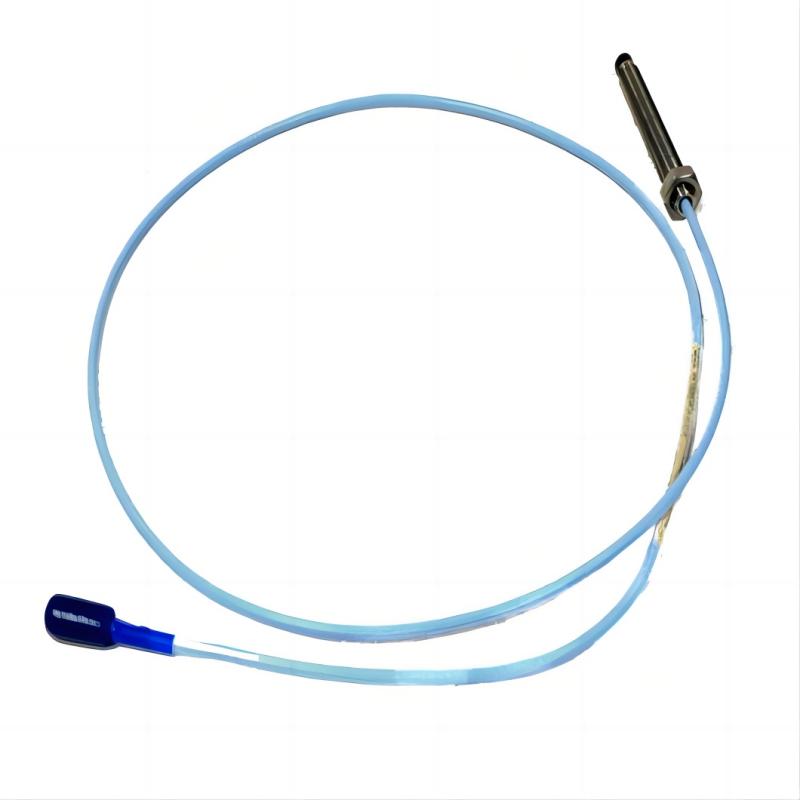
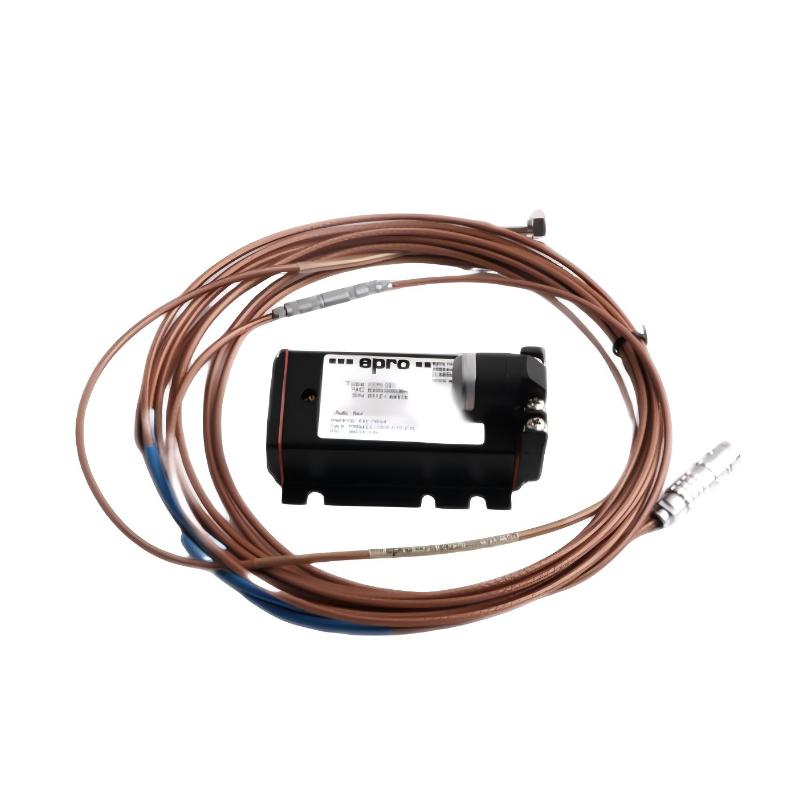
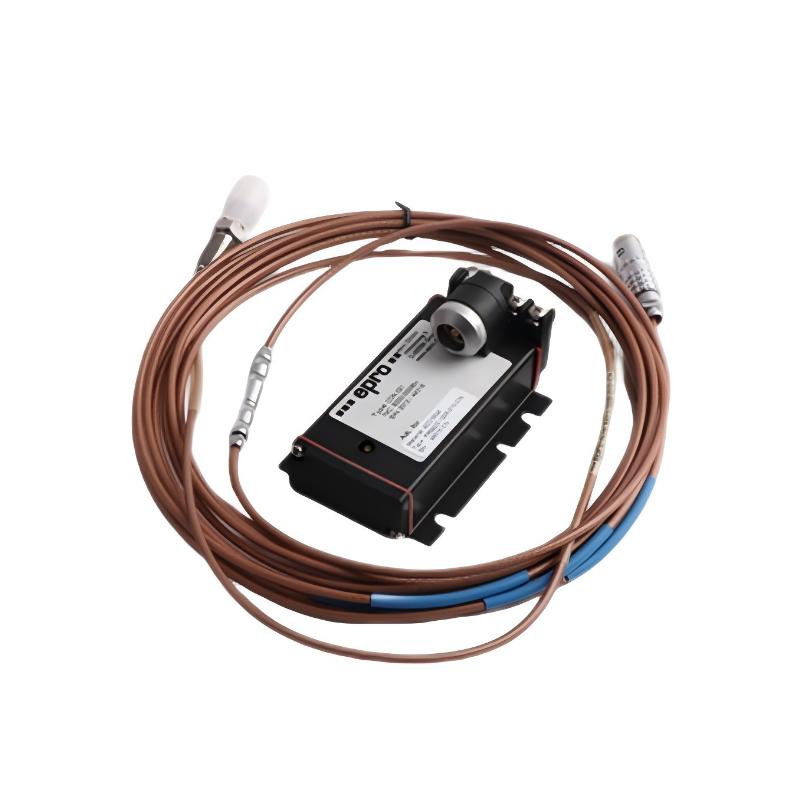
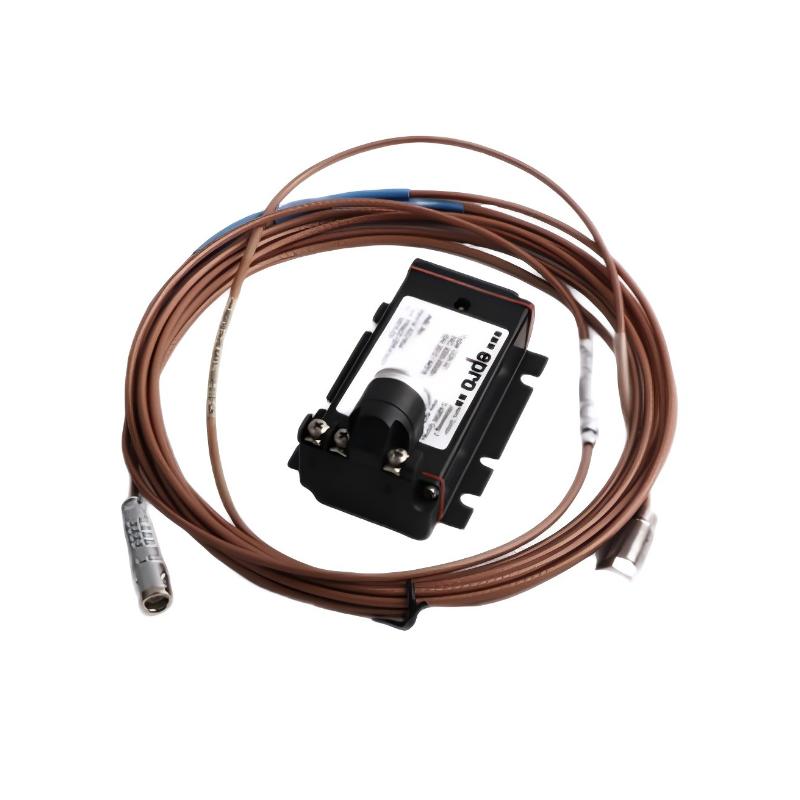
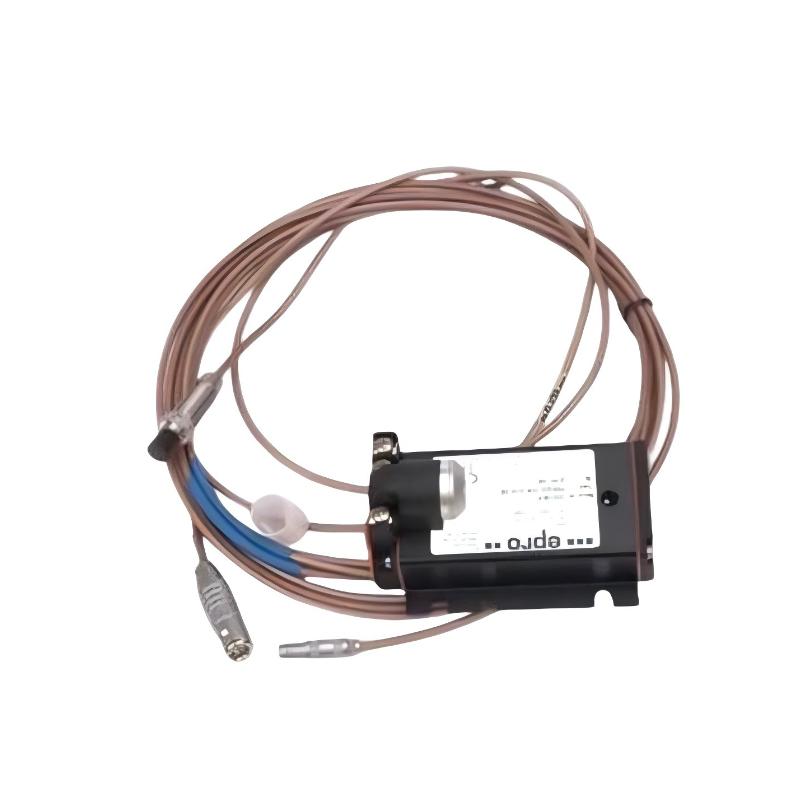
The PR6423/003-030-CN+CON021 is a complete eddy current sensing system combining a high-performance 8 mm probe with a dedicated signal converter. It is engineered for precision monitoring in turbomachinery applications where reliability, accuracy, and real-time feedback are critical.
Its modular architecture allows flexible installation while maintaining strong signal integrity. Engineers favor this system for its durability, measurement consistency, and compatibility with advanced monitoring and protection systems.
Technical Specifications
| Parameter | Specification |
|---|
| Model | PR6423/003-030-CN + CON021 |
| Sensor Type | Eddy Current (Non-contact) |
| Probe Diameter | 8 mm |
| Measurement Range | 2 – 3 mm |
| Sensitivity | 8 V/mm (±5%) |
| Frequency Response | 0 – 20,000 Hz |
| Rise Time | < 15 μs |
| Minimum Shaft Diameter | 25 mm |
| Output Signal | -4 to -20 V / 4–20 mA |
| Power Supply | -23 V to -32 V DC |
| Sensor Temperature Range | -35 to 200°C |
| Converter Temperature | -30 to 100°C |
| Protection Rating | IP66 (sensor), IP20 (converter) |
| Mounting | Threaded probe + external converter |
| Dimensions | 127.5 x 125.75 x 80 mm |
| Weight | 0.22 kg (0.485 lb) |
Application-Oriented Scenarios
The PR6423/003-030-CN combined with the CON021 signal converter is purpose-built for precision shaft monitoring in critical rotating machinery. It is widely used in steam turbines, gas turbines, compressors, and large industrial pumps where continuous displacement and vibration measurement are essential for safe operation.
In power generation and petrochemical industries, this sensor system enables accurate tracking of shaft position, eccentricity, and dynamic vibration behavior. Its ability to operate under extreme temperatures and harsh environments makes it ideal for high-reliability installations where equipment failure is not acceptable.
Performance & Design Advantages
A key strength of this configuration is the integrated measurement chain. The PR6423 probe captures high-resolution displacement data, while the CON021 converter ensures precise signal conditioning and stable output for control systems.
The system delivers excellent linearity and sensitivity (typically 8 V/mm), enabling detection of micron-level shaft movement. This is critical for early fault diagnosis such as imbalance or misalignment.
Its non-contact measurement principle eliminates mechanical wear, significantly extending service life and ensuring consistent accuracy over time. Additionally, the IP66-rated sensor design provides strong resistance to oil, dust, and industrial contaminants.
Another major advantage is its high-frequency response (up to 20 kHz), allowing accurate capture of fast transient events in high-speed rotating equipment.
Technical FAQs
1. What is the difference between the CN version and standard models?
The CN variant typically refers to specific cable or connector configurations tailored for certain installations.
2. What measurements can this system perform?
It measures shaft displacement, vibration, position, and eccentricity.
3. What is the linear measurement range?
Approximately 2–3 mm depending on calibration and setup.
4. What is the sensitivity of the sensor?
Typically 8 V/mm within the calibrated temperature range.
5. What type of output does the CON021 provide?
It converts signals into standardized voltage or 4–20 mA outputs.
6. Can it operate in hazardous areas?
Yes, it supports certifications such as ATEX and IECEx for intrinsic safety.
7. What is the operating temperature range?
Sensor: up to 200°C; Converter: up to 100°C.
8. What is the minimum shaft diameter requirement?
Typically 25 mm for accurate measurement.
9. How fast is the system response?
The converter provides a rise time of less than 15 μs.
10. Is the system resistant to electromagnetic interference?
Yes, it is designed with shielding and signal conditioning to minimize interference.
 A DCS Q Co., Ltd. - PLC and DCS Industrial Control Equipment Wholesale