System Overview
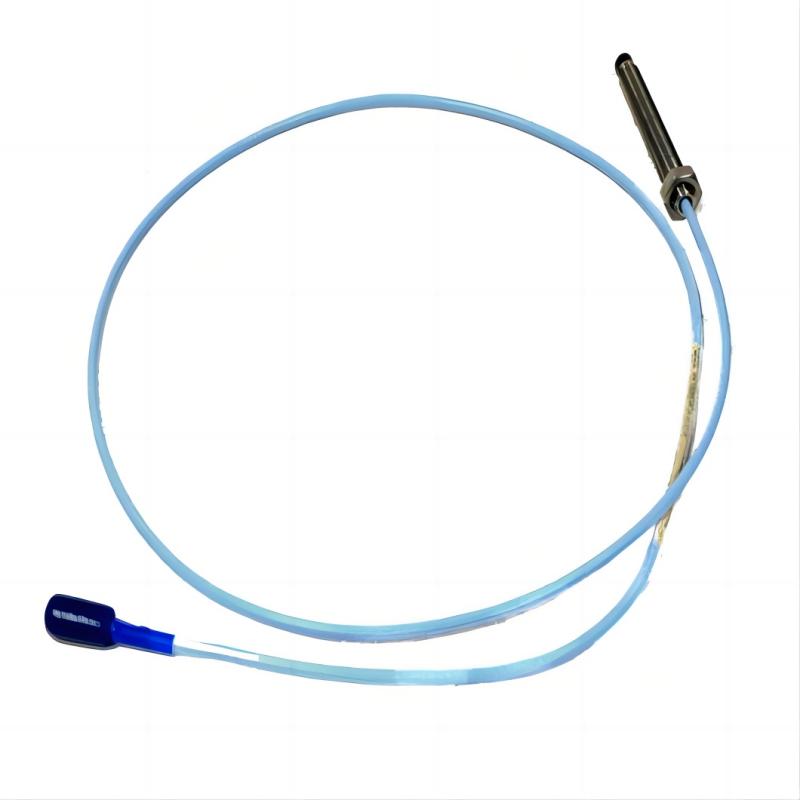
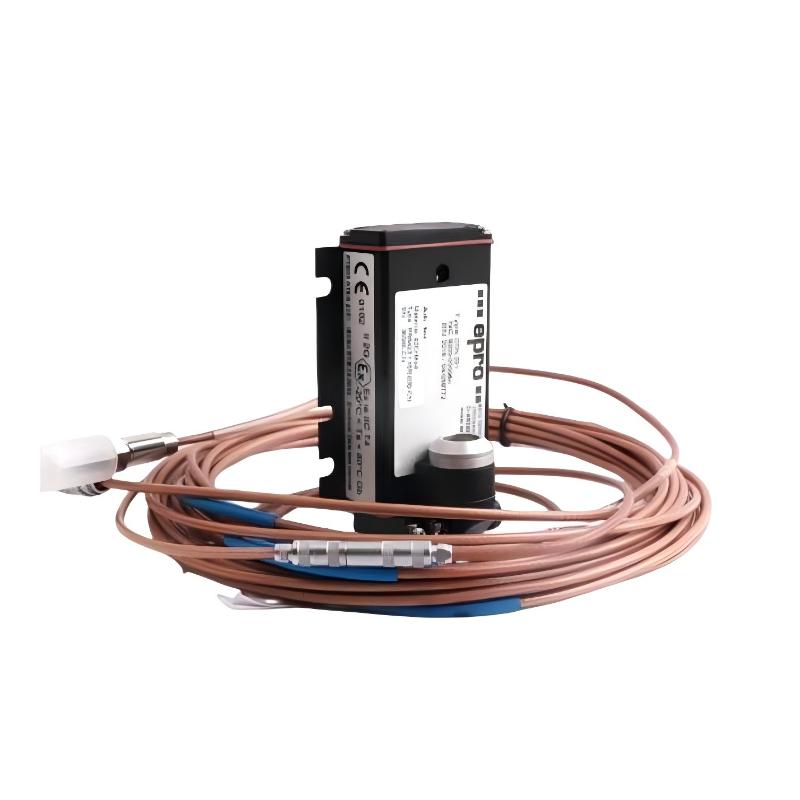
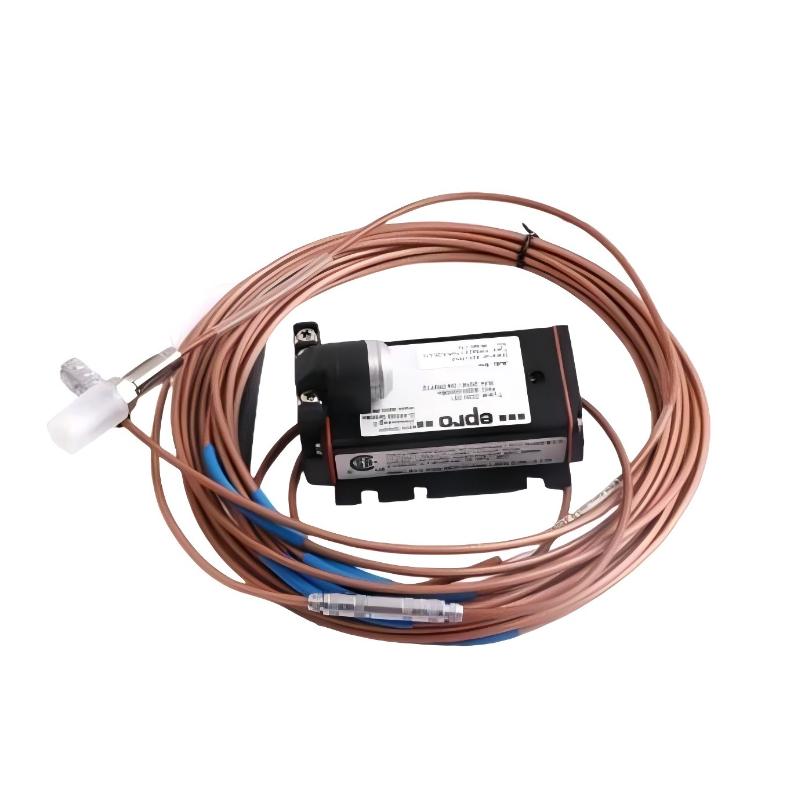
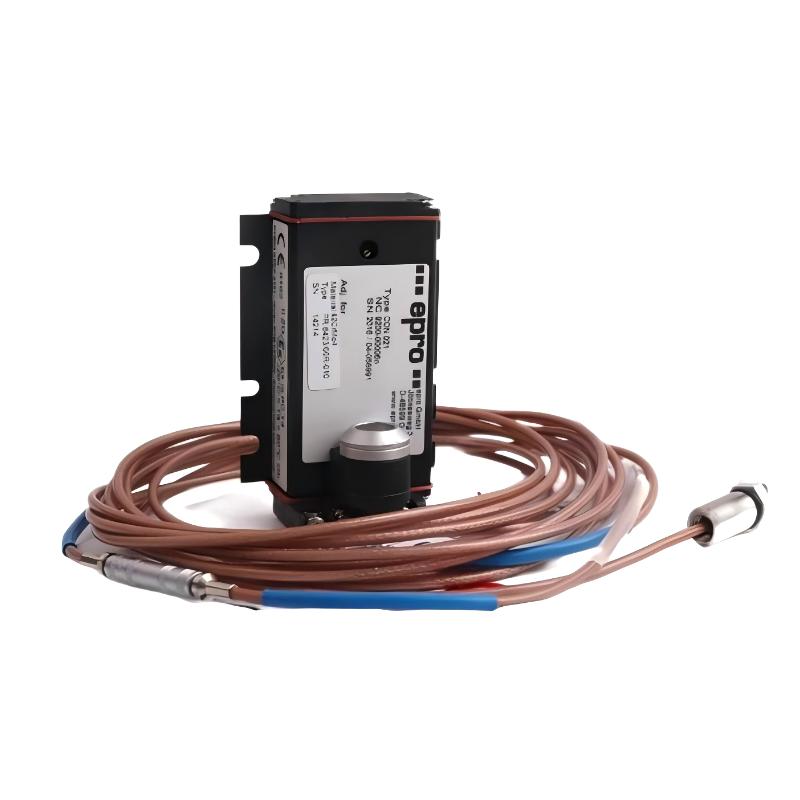
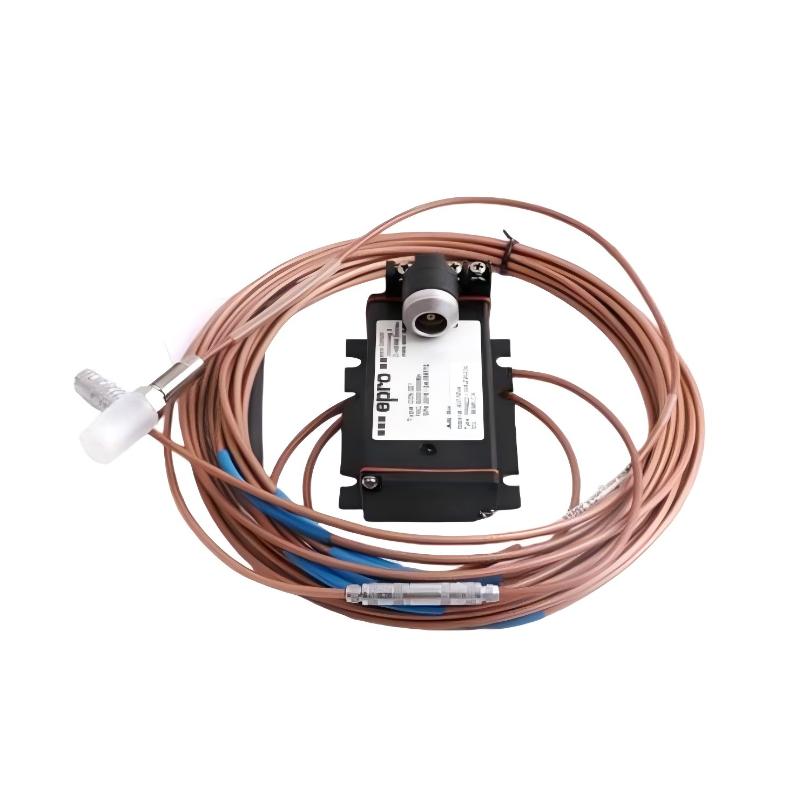
The PR6423/003-030+CON021 represents a fully integrated solution for precision shaft monitoring. By combining a high-performance eddy current probe with a dedicated signal converter, it ensures accurate, stable, and noise-resistant measurements in demanding industrial environments.
Its compact structure allows flexible installation, while its robust design ensures durability under continuous operation. This makes it a preferred choice for engineers focused on machinery protection and long-term reliability.
Technical Specifications
| Parameter | Specification |
|---|
| Model | PR6423/003-030 + CON021 |
| Sensor Type | Eddy Current (Non-contact) |
| Probe Diameter | 8 mm |
| Measurement Range | Up to 10 mm |
| Resolution | 1 μm |
| Frequency Response | 0 – 20,000 Hz |
| Rise Time | < 15 μs |
| Output Signal | -4 to -20 V / 4–20 mA |
| Power Supply | -23 V to -32 V DC |
| Operating Temperature | -30 to 100°C (converter) |
| Sensor Temperature Range | -35 to 180°C |
| Protection Rating | IP20 (converter) / IP66 (sensor) |
| Mounting | Threaded probe + panel converter |
| Dimensions | 127.5 x 125.75 x 80 mm |
| Weight | 0.22 kg (0.485 lb) |
Advanced Application Context
The PR6423/003-030 paired with the CON021 signal converter forms a complete eddy current measurement system, specifically engineered for high-speed rotating machinery. It is extensively utilized in steam turbines, gas turbines, compressors, and pumps where continuous shaft monitoring is essential for operational safety.
In critical process industries such as power generation and petrochemicals, this system provides real-time data on shaft vibration, displacement, and eccentricity. Its capability to operate across a wide frequency range makes it suitable for both steady-state monitoring and dynamic transient analysis.
Technical Strengths & Benefits
A major advantage of this configuration is the integration of sensor and signal converter, which ensures optimized signal conditioning and minimizes external interference. The CON021 unit amplifies and converts weak sensor signals into standardized outputs suitable for control systems.
The system delivers high-frequency response (up to 20 kHz), enabling accurate detection of fast dynamic changes in shaft behavior. This is particularly valuable in turbomachinery where rapid fault detection is critical.
Another key strength is its micron-level resolution and excellent repeatability, allowing precise measurement of very small displacements. This supports predictive maintenance strategies by identifying early-stage mechanical issues.
Additionally, the non-contact measurement principle eliminates wear, ensuring long service life and stable performance even in harsh environments with vibration, oil, and temperature fluctuations.
Technical FAQs
1. What does the CON021 converter do in the system?
It amplifies and converts the sensor signal into standardized voltage or current outputs for control systems.
2. What is the measurable frequency range?
The system supports a frequency range up to 20 kHz for dynamic monitoring.
3. What types of measurements are possible?
It measures shaft displacement, vibration, position, and eccentricity.
4. What is the resolution capability?
It can achieve resolution down to approximately 1 μm under proper calibration.
5. What output signals are available?
Typical outputs include analog voltage and 4–20 mA signals.
6. Is the system suitable for hazardous environments?
Yes, it supports certifications such as ATEX and IECEx depending on configuration.
7. How does it perform under temperature variations?
It maintains stable operation across a wide industrial temperature range.
8. Can it detect high-speed transient events?
Yes, due to its fast response time (<15 μs), it captures rapid changes effectively.
9. What is the typical measurement range?
It can measure up to approximately 10 mm depending on setup.
10. Is it compatible with other PR642x sensors?
Yes, the CON021 converter supports multiple sensor models within the PR642x series.
 A DCS Q Co., Ltd. - PLC and DCS Industrial Control Equipment Wholesale