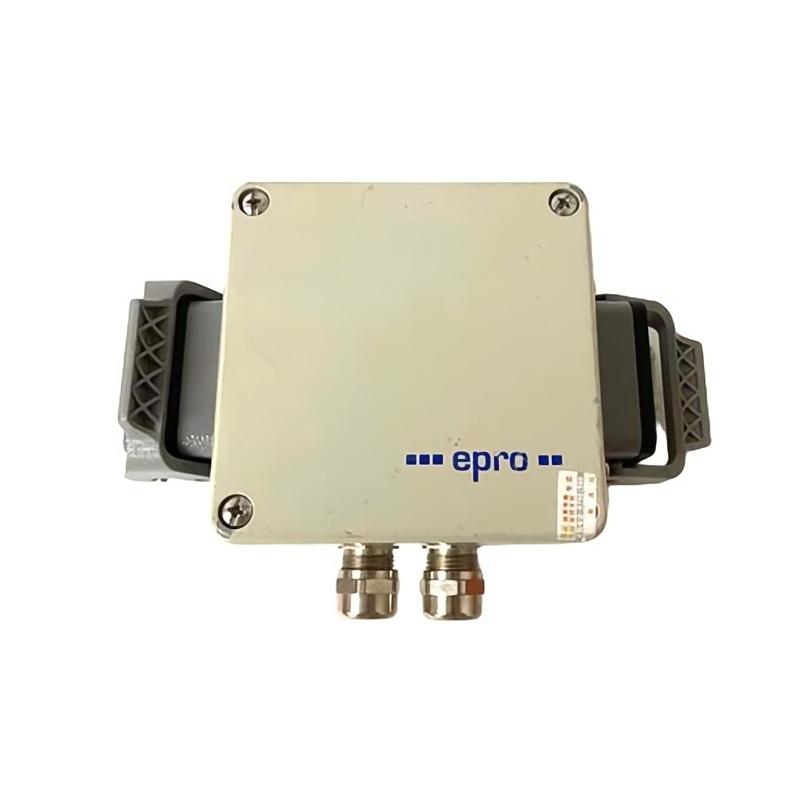
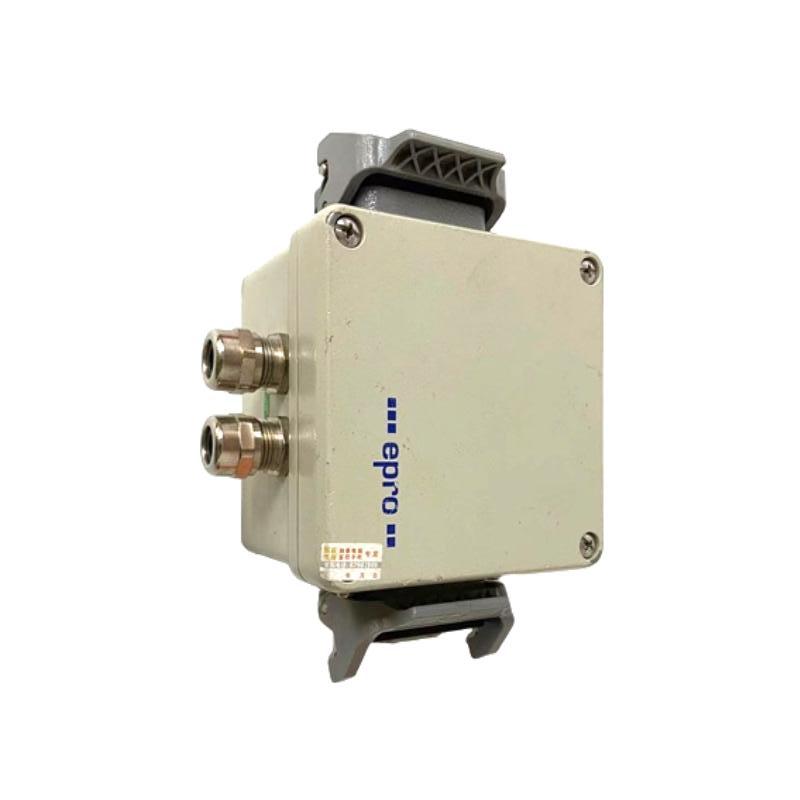
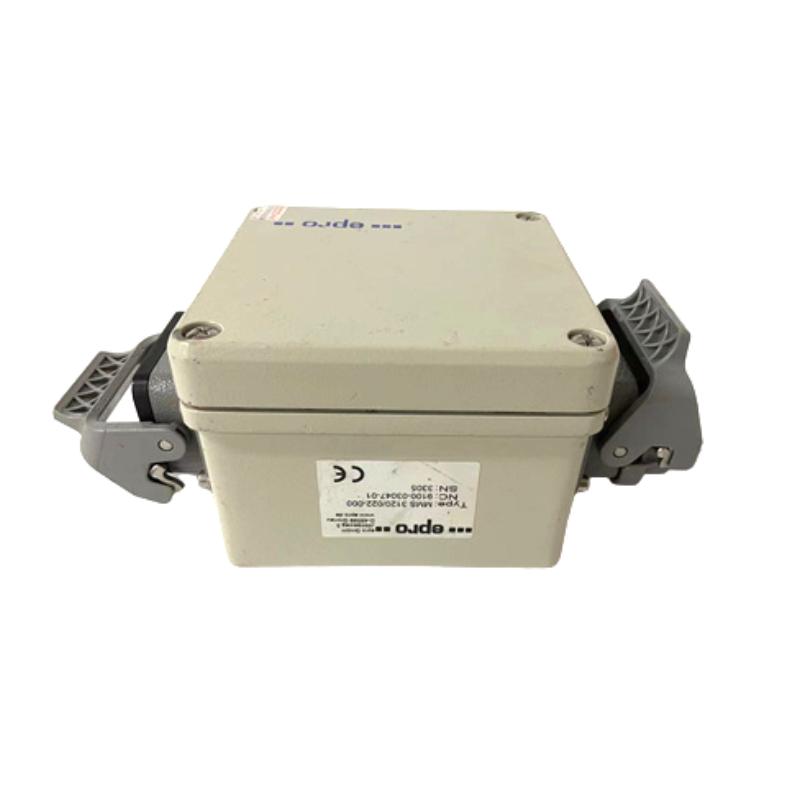
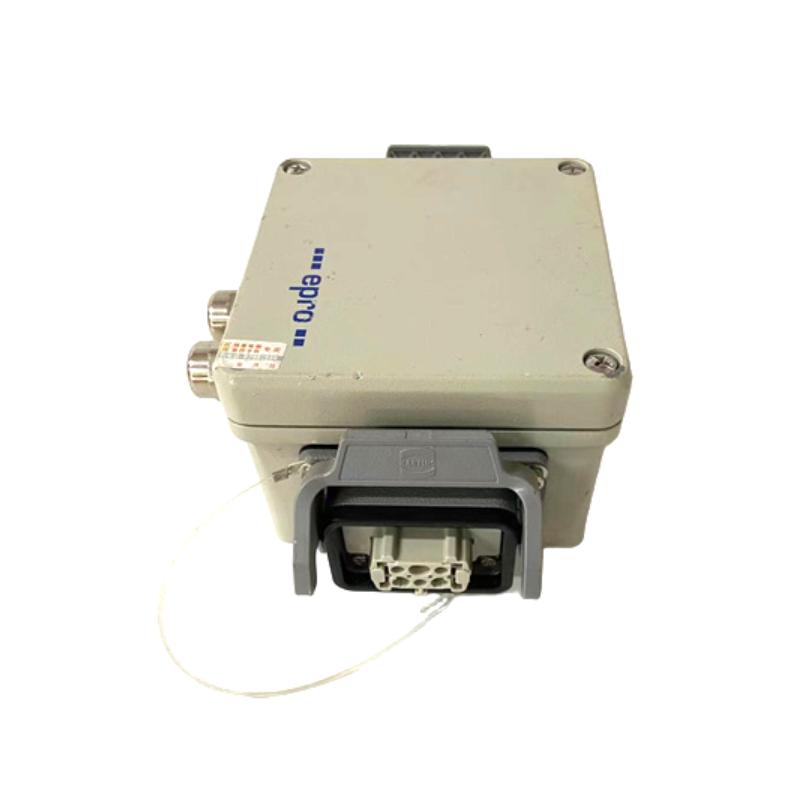
Product Overview
The MMS3110/011-000 is part of Epro’s advanced machinery protection portfolio, designed specifically for shaft vibration measurement in high-value rotating equipment. It combines precision sensing with industrial-grade durability, offering reliable data for maintenance and operational decision-making.
Its compact design allows installation in control cabinets or monitoring panels without occupying excessive space. With a focus on accuracy and long-term stability, this transmitter is well-suited for industries where equipment failure can result in significant operational losses.
Technical Specifications
| Parameter | Specification |
|---|
| Model | MMS3110/011-000 |
| Measurement Type | Shaft Vibration (Dual-Channel) |
| Input Type | Eddy Current Proximity Sensors |
| Output Signal | 4–20 mA (per channel) |
| Channels | 2 |
| Operating Temperature | -20 to 70°C |
| Storage Temperature | -40 to 85°C |
| Mounting Type | Panel / DIN Rail |
| Power Supply | 24 V DC |
| Signal Processing | Analog with filtering |
| Dimensions (H×W×D) | 127.5 x 125.75 x 80 mm |
| Weight | 1.3 kg (2.866 lb) |
Industrial Use Cases
The Epro MMS3110/011-000 is engineered for continuous vibration monitoring in rotating machinery, making it a core component in predictive maintenance strategies. It is extensively applied in steam and gas turbines, compressors, and large industrial pumps where shaft vibration must be precisely tracked to prevent mechanical failure.
In petrochemical facilities, the transmitter provides real-time condition monitoring for critical assets, helping engineers detect imbalance, misalignment, or bearing wear early. Power plants rely on this module to ensure turbine stability and to comply with strict operational safety standards. Its dual-channel capability makes it particularly suitable for redundant or comparative measurement setups.
Technical FAQs
1. What type of sensors can be connected to this transmitter?
It is compatible with eddy current proximity probes commonly used for shaft vibration measurement.
2. Does it support real-time monitoring?
Yes, it continuously processes and outputs vibration signals for real-time analysis.
3. How are the two channels configured?
Each channel operates independently and can be configured for different measurement points or parameters.
4. What output signals are available?
Typically, it provides analog outputs such as 4–20 mA for integration with control systems.
5. Can it detect early-stage mechanical faults?
Yes, its high sensitivity allows detection of subtle vibration changes indicating early faults.
6. Is calibration required?
Yes, periodic calibration ensures measurement accuracy and system reliability.
7. How does it handle electrical noise?
It includes signal filtering and shielding features to minimize interference.
8. Can it be integrated into DCS or PLC systems?
Yes, it interfaces easily with distributed control systems and PLCs via standard outputs.
9. What is the typical response time?
The module provides near-instantaneous signal processing suitable for dynamic monitoring.
10. Does it support redundancy in critical systems?
Yes, dual-channel functionality allows redundant monitoring configurations.
 A DCS Q Co., Ltd. - PLC and DCS Industrial Control Equipment Wholesale