Product Overview
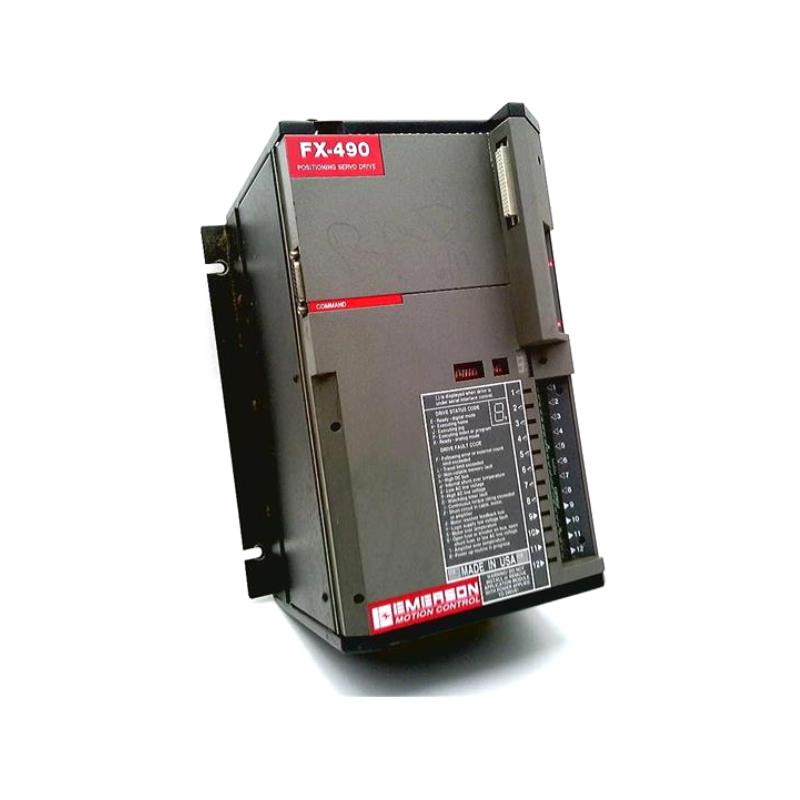
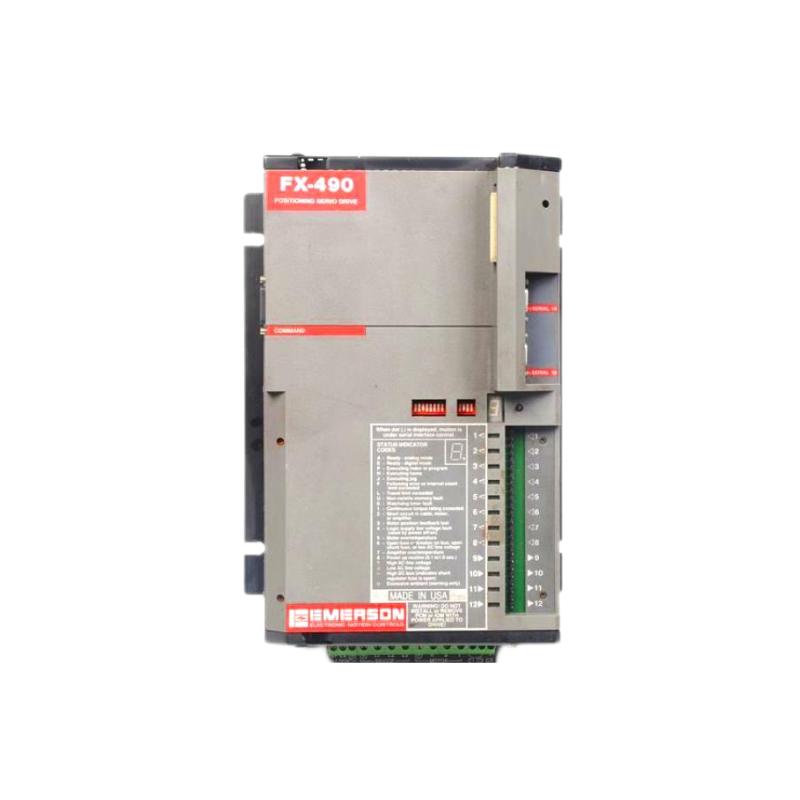
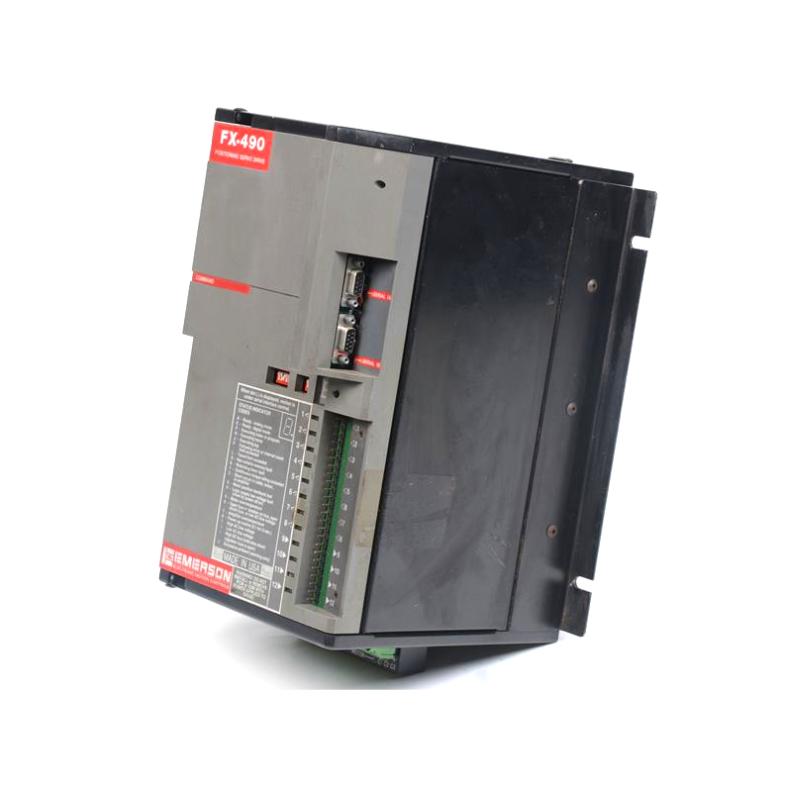
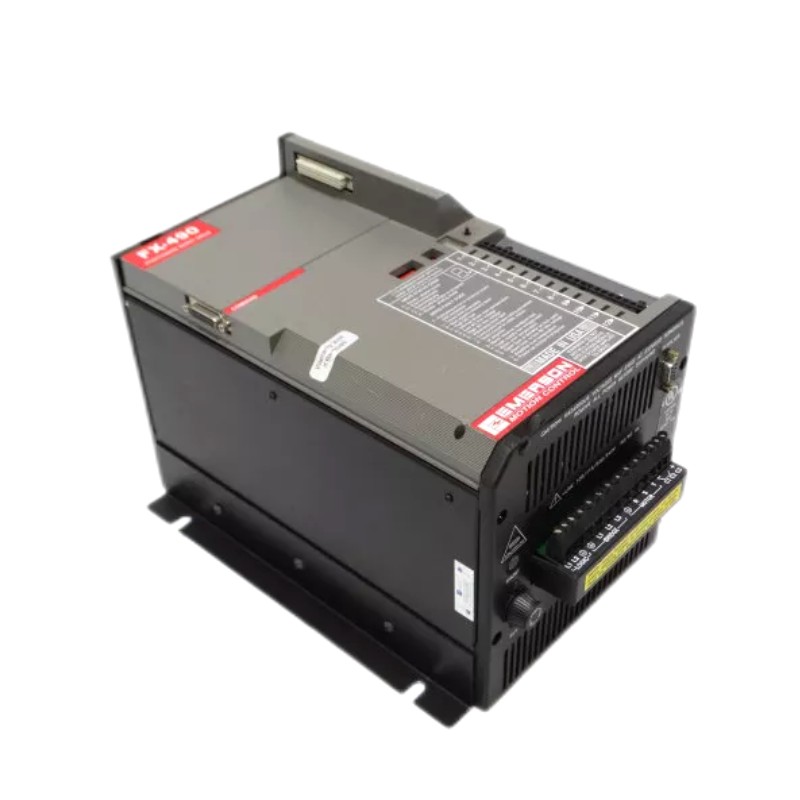
The Emerson FX-490 Positioning Servo Driver is a high-capacity motion control solution designed for demanding industrial environments. It combines precision positioning capabilities with the ability to manage high mechanical loads, making it ideal for applications where both strength and accuracy are required.
Its architecture supports advanced motion control strategies while maintaining operational stability in challenging conditions. Engineers value the FX-490 for its ability to deliver consistent performance in systems where mechanical stress and dynamic motion are inherent.
Technical Specifications
| Parameter | Details |
|---|
| Model | FX-490 |
| Module Type | Positioning Servo Driver |
| Control Modes | Position / Velocity / Torque |
| Feedback Support | Incremental / Absolute Encoder |
| Cooling Method | Forced Air Cooling |
| Protection Features | Overcurrent, Overvoltage, Thermal |
| Operating Temperature | 0°C to 50°C |
| Storage Temperature | -20°C to 70°C |
| Dimensions (H×W×D) | 217 × 240 × 349.4 mm |
| Weight | 9.98 kg (22.00 lb) |
Industrial Deployment Perspective
The FX-490 positioning servo driver is engineered for high-power motion control systems where precision must be maintained under substantial mechanical loads. It is widely implemented in heavy-duty CNC equipment, large-scale automated assembly systems, material forming machinery, and high-inertia conveying platforms.
In metal processing and fabrication environments, the FX-490 enables accurate tool positioning even during aggressive cutting or forming operations. It is also frequently used in gantry systems and multi-axis handling equipment, where synchronized motion across large structures is essential. Its capability to manage high torque demands makes it particularly effective in applications involving large rotating masses or extended mechanical linkages.
Additionally, the driver is suitable for energy-intensive motion systems such as press automation and high-load indexing tables, where maintaining positional integrity under stress directly impacts production quality and equipment longevity.
 A DCS Q Co., Ltd. - PLC and DCS Industrial Control Equipment Wholesale