Product Introduction
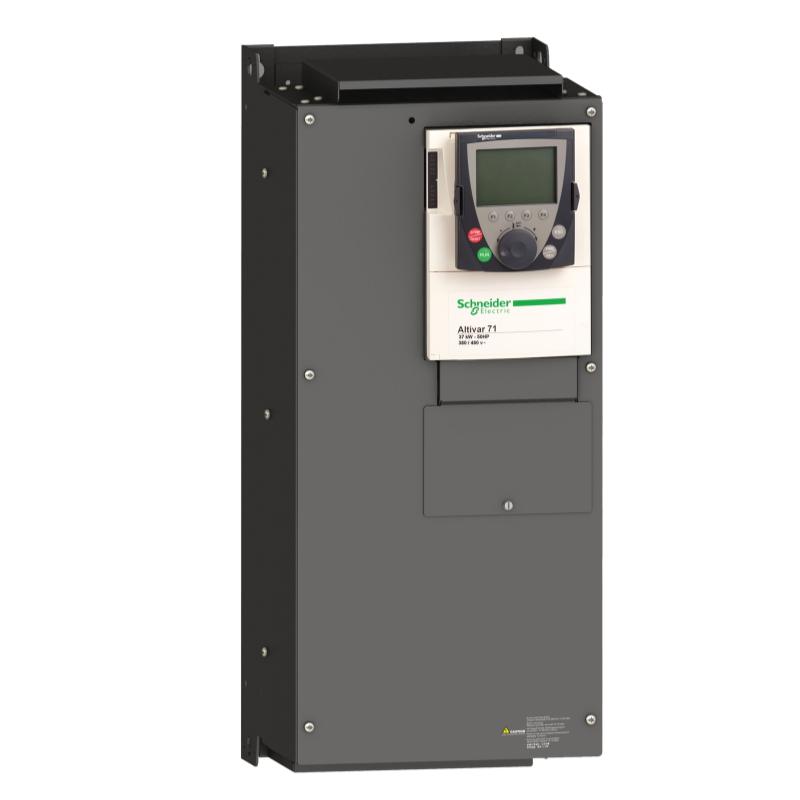
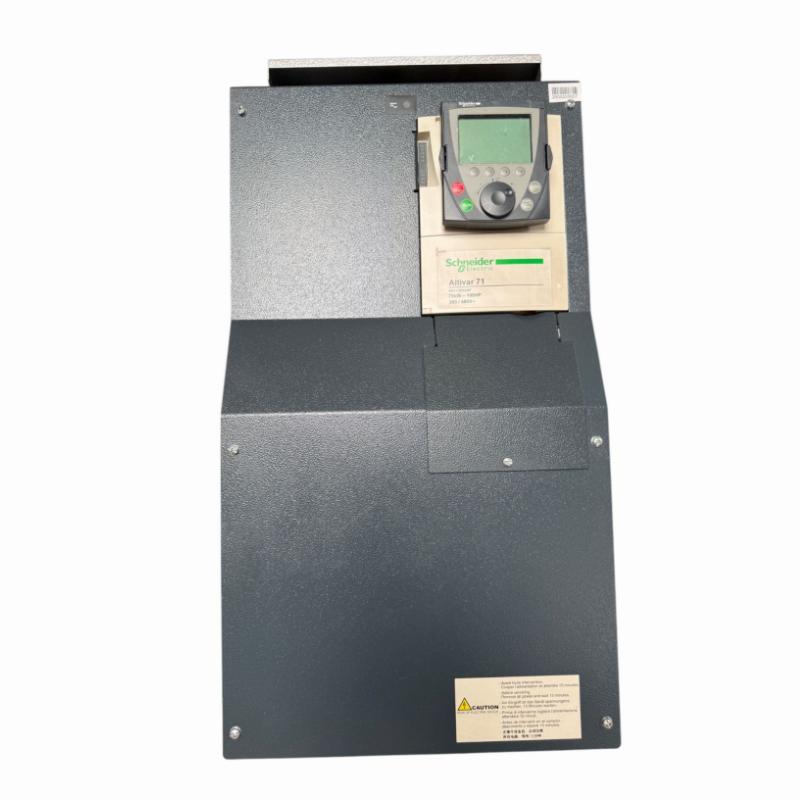
The Schneider ATV71HD75N4 Variable Speed Drive is part of the Altivar 71 series, developed for advanced motor control in demanding industrial environments. It combines high overload capability, flexible control algorithms, and integrated protection features in a compact panel-mount design.
Unlike standard drives intended only for basic speed adjustment, this model is built for systems where process repeatability, torque precision, and equipment protection are critical. Its control architecture helps improve machine responsiveness, reduce energy waste, and support long-term operating stability.
From a maintenance perspective, the ATV71HD75N4 also offers practical service benefits through clear diagnostics, straightforward commissioning tools, and dependable continuous-duty performance.
Technical Specifications
| Parameter | Specification |
|---|
| Product Type | Variable Speed Drive |
| Model | ATV71HD75N4 |
| Series | Altivar 71 |
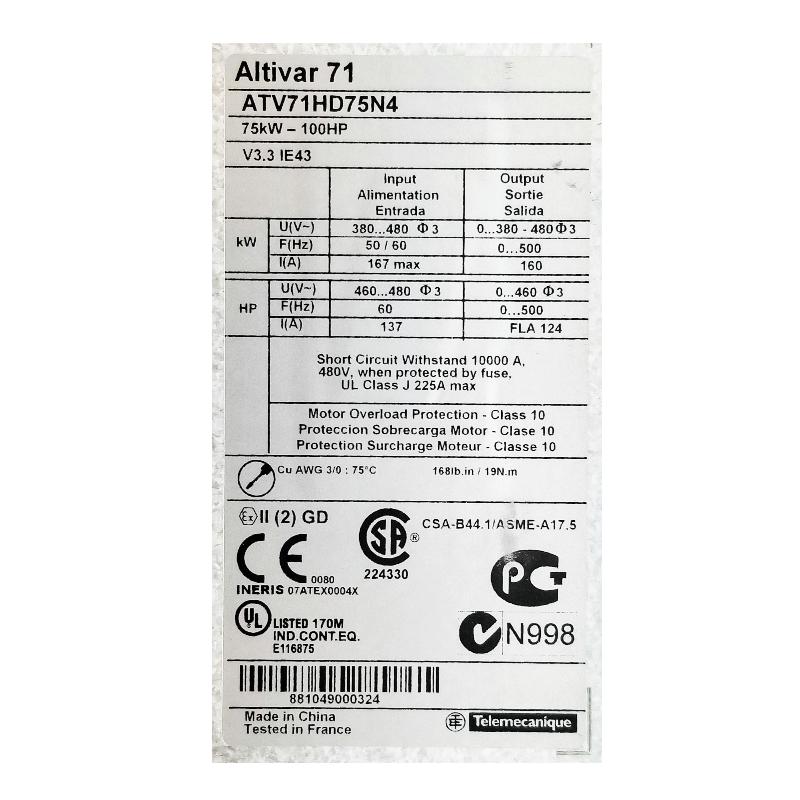
| Motor Power | 75 kW / 100 hp |
| Input Voltage | 380–480 V AC |
| Phase | 3 Phase |
| Line Current | 167 A at 380 V / 137 A at 480 V |
| Nominal Output Current | 160 A at 380 V / 124 A at 460 V |
| Maximum Transient Current | 240 A for 60 s / 264 A for 2 s |
| Output Frequency | 0.1–500 Hz |
| Switching Frequency | 1–16 kHz Adjustable |
| EMC Filter | Integrated |
| Protection Rating | IP20 |
| Mounting Type | Wall / Panel Mount |
| Dimensions | 630 × 290 × 320 mm |
| Weight | 44 kg (97.00 lb) |
Built for Heavy Industrial Motion Demands
The Schneider ATV71HD75N4 Variable Speed Drive is engineered for complex high-power applications where stable torque output, precise speed regulation, and long-term operational reliability are essential. It is commonly used in:
-
Heavy-duty conveyor and bulk material systems
-
Large centrifugal pumps and water transfer stations
-
Industrial compressors and ventilation equipment
-
Extruders and process production lines
-
Hoisting and lifting systems
-
High-inertia mixing and agitation machinery
Its design is especially suited for facilities where load fluctuations, motor protection, and uptime directly affect production efficiency.
Operational Advantages for Industrial Users
The ATV71HD75N4 is designed to deliver more than standard speed variation. It provides advanced control functions that help improve process stability, reduce mechanical wear, and simplify maintenance.
Main advantages
-
75 kW / 100 hp motor capacity for demanding industrial loads
-
Integrated EMC filter to reduce electrical interference
-
Sensorless flux vector control for stable low-speed torque
-
Wide output frequency range for flexible process tuning
-
Strong overload performance during startup and transient load changes
-
Support for asynchronous and synchronous motors
-
Adjustable switching frequency for optimized efficiency and noise control
-
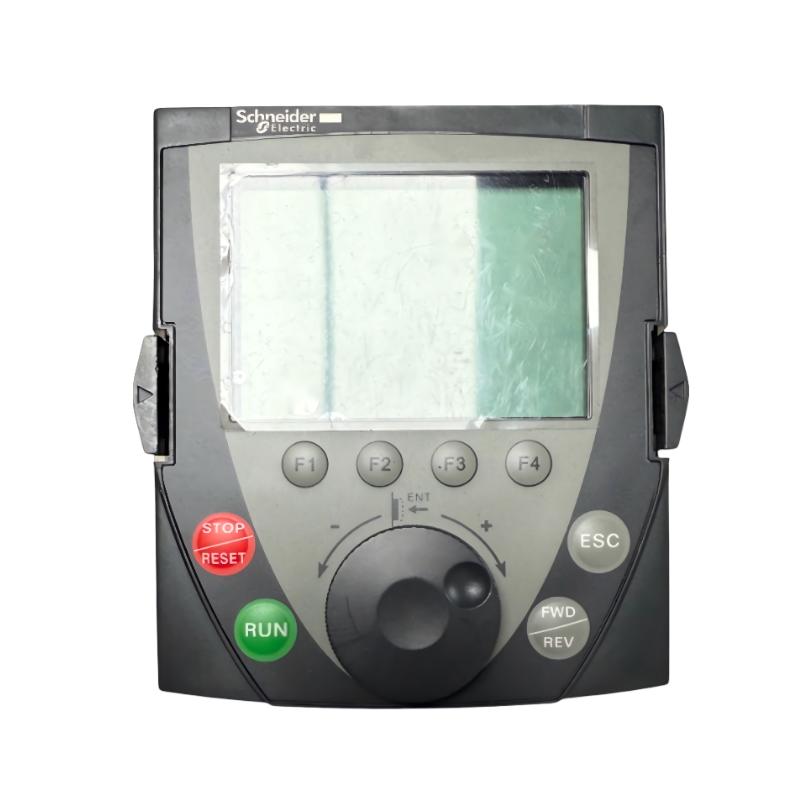
Integrated diagnostics and setup interface for faster commissioning
For plant engineers, one major advantage is its ability to maintain smooth motor response in high-inertia systems without placing unnecessary stress on couplings, bearings, or gearboxes.
Technical FAQs
1. What motor power is this drive rated for?
It is designed for 75 kW (100 hp) motors on 380–480 V three-phase systems.
2. Does it support vector control?
Yes. It supports both sensorless flux vector control and closed-loop vector control.
3. Is it suitable for high-inertia equipment?
Yes. It is specifically designed for complex, high-power machinery.
4. What is the output frequency range?
The drive supports output frequency from 0.1 Hz up to 500 Hz.
5. Is an EMC filter included?
Yes. The ATV71HD75N4 includes an integrated EMC filter.
6. Can it control synchronous motors?
Yes. It supports both synchronous and asynchronous motor applications.
7. What is the overload capability?
It can deliver up to 240 A for 60 seconds and 264 A for 2 seconds during transient conditions.
8. Does it support long motor cable runs?
Yes. It supports up to 100 m shielded cable and 200 m unshielded cable.
9. Is it suitable for process automation systems?
Yes. It is widely used in process plants and continuous-duty industrial applications.
10. How does it improve equipment lifespan?
Its ramp control, torque management, and protective diagnostics help reduce mechanical shock and unnecessary wear.
 A DCS Q Co., Ltd. - PLC and DCS Industrial Control Equipment Wholesale