Typical Industrial Applications
The PM554‑TP processor is suited for a wide range of automation roles where compact processing and dependable control are required:
-
Machine automation systems such as packaging, material handling, and assembly lines
-
Small to mid‑sized process control environments
-
Distributed control architectures with field‑bus communication
-
OEM machine integration and embedded automation designs
-
Retrofitting legacy PLC installations with modern AC500‑eCo CPUs
Its support for multiple I/O channels and option slots makes it flexible for varied industrial scenarios without over‑complexity.
Strategic Advantages and Module Benefits
The PM554‑TP stands out as a solid choice for industrial controllers that demand reliability and scalability without excessive engineering overhead:
-
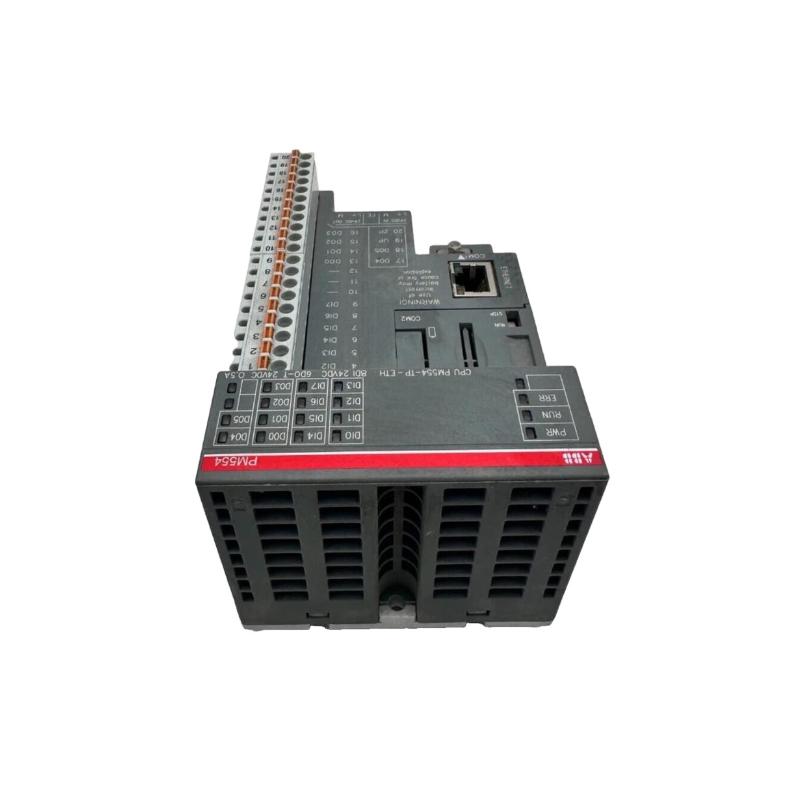
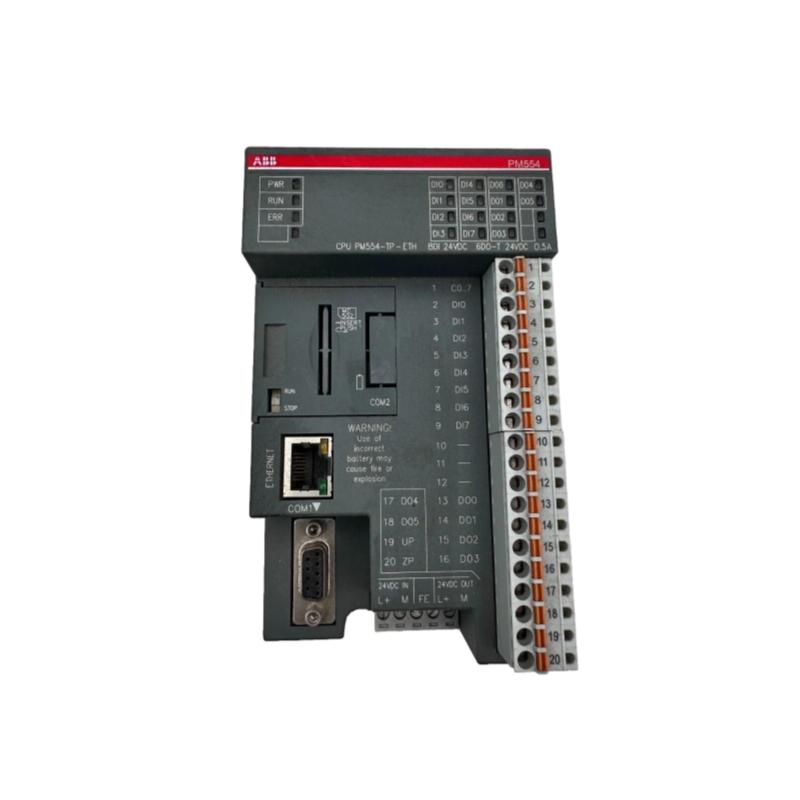
Integrated I/O support with 8 inputs and 6 transistor outputs for basic control tasks
-
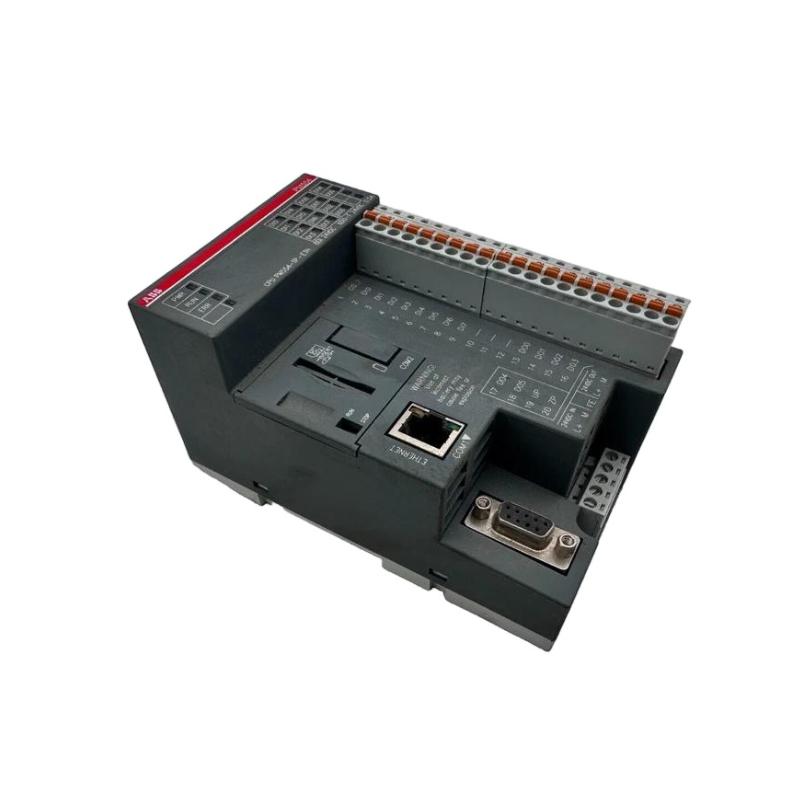
Compact form factor ideal for space‑efficient panels and modular racks
-
Flexible communication via RS‑485 and option slots for protocol adapters
-
Efficient power profile optimized for continuous operation in control cabinets
-
Consistent industrial reliability backed by ABB’s hardware design standards
These characteristics help reduce complexity in design, streamline deployment, and simplify maintenance in production environments.
Technical FAQs
1. What platform is this processor designed for?
It is designed for the ABB AC500‑eCo PLC series.
2. How much memory does it have?
It provides 128 kB of program memory.
3. What I/O does it support?
It includes 8 digital inputs and 6 transistor outputs.
4. What supply voltage is required?
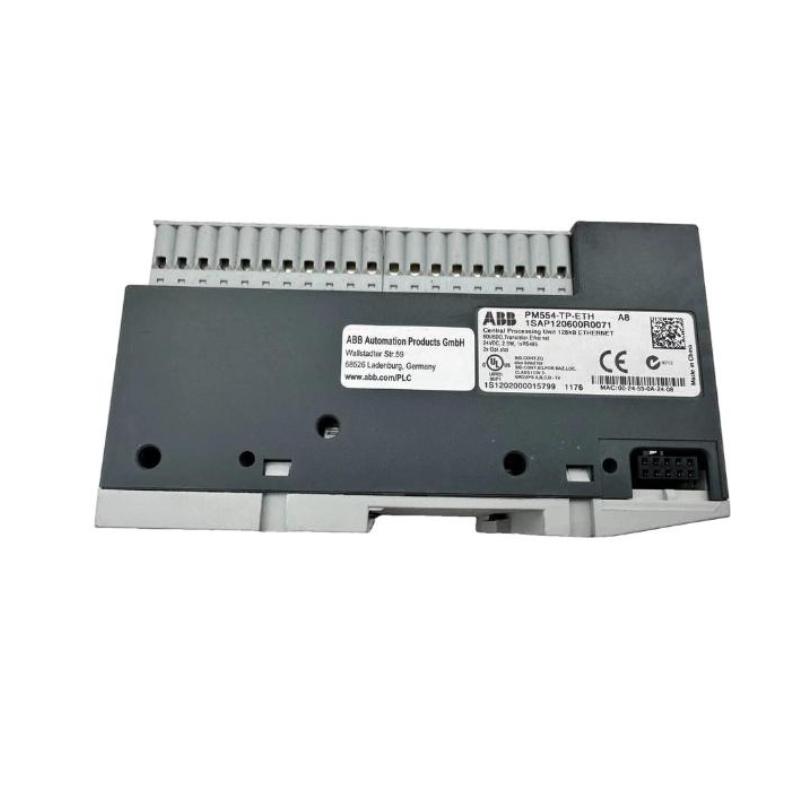
It operates on 24 V DC supply voltage.
5. What communication ports are available?
It has 1× RS‑485 port and two option slots for expansion modules.
6. Can it be expanded with additional modules?
Yes — option slots allow installation of communication or function expansion cards.
7. Is onboard Ethernet supported?
The base PM554‑TP does not include Ethernet — the PM554‑TP‑ETH variant adds onboard Ethernet.
8. What environments is it suitable for?
Industrial control cabinets with standard operating temperatures and wiring standards.
9. What programming environment is used?
Programming is typically done via ABB Automation Builder using IEC 61131‑3 languages.
10. How does this module support system integration?
Via RS‑485 and option slots for protocol adapters and fieldbus interfaces.
 A DCS Q Co., Ltd. - PLC and DCS Industrial Control Equipment Wholesale