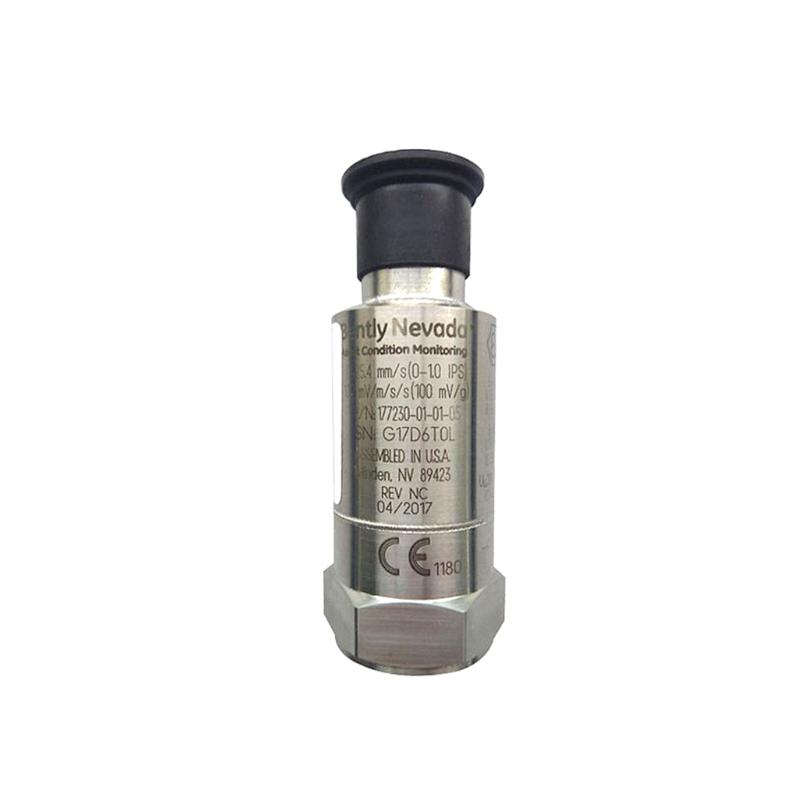
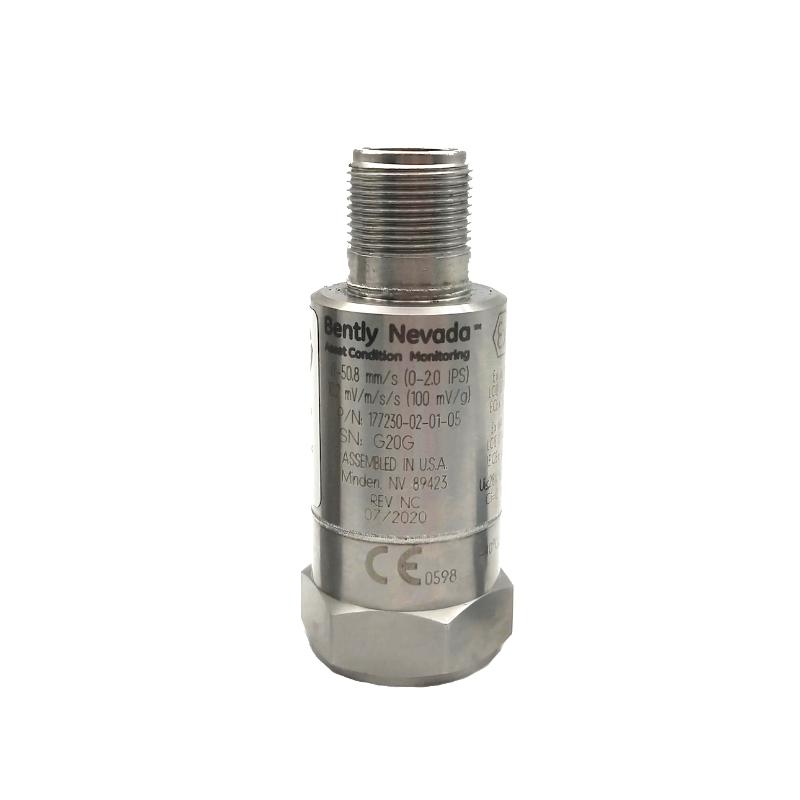
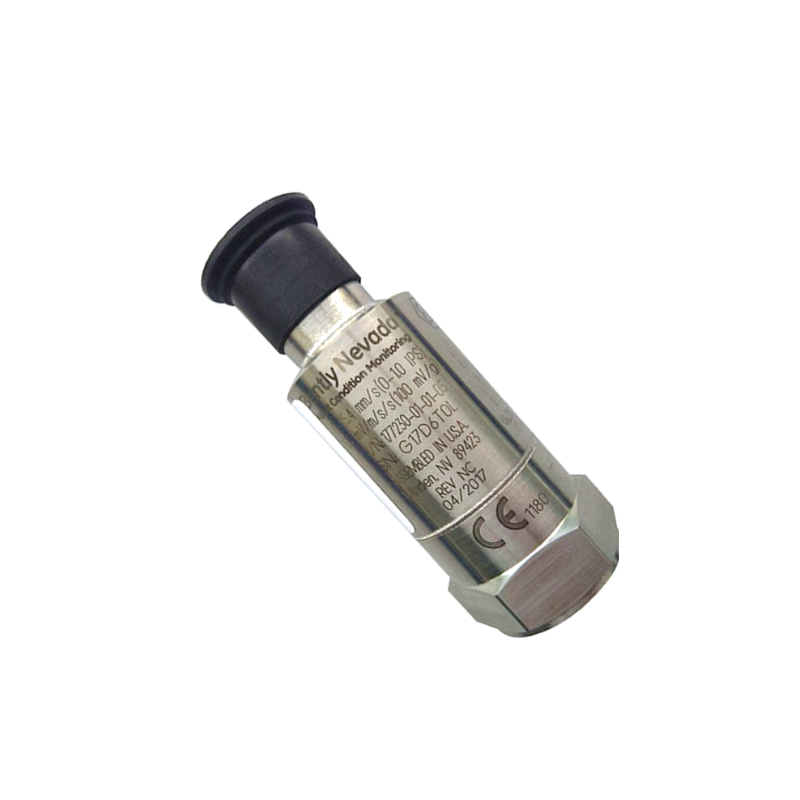
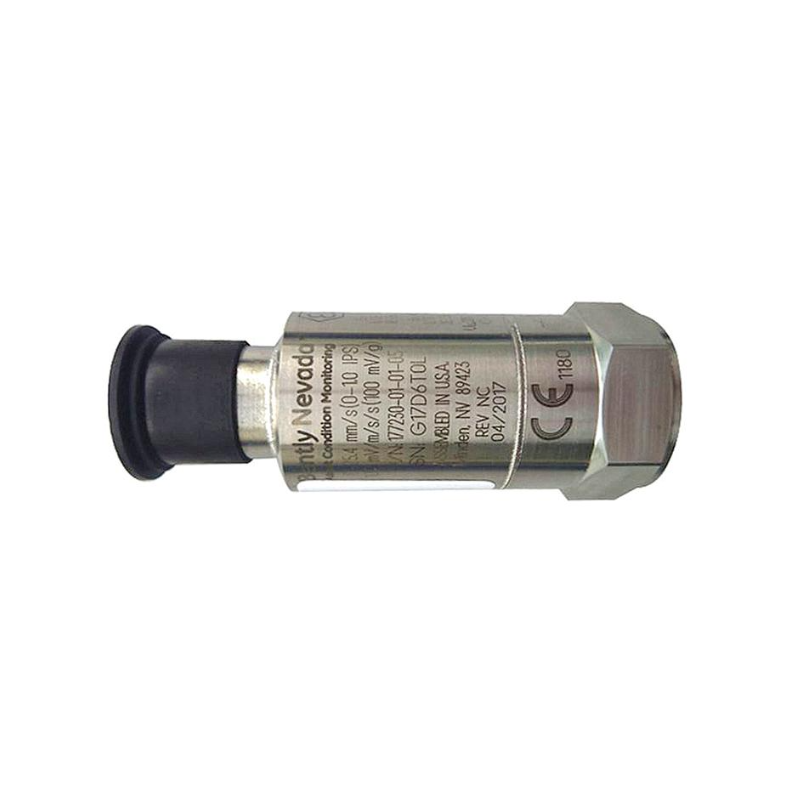
Engineering Overview
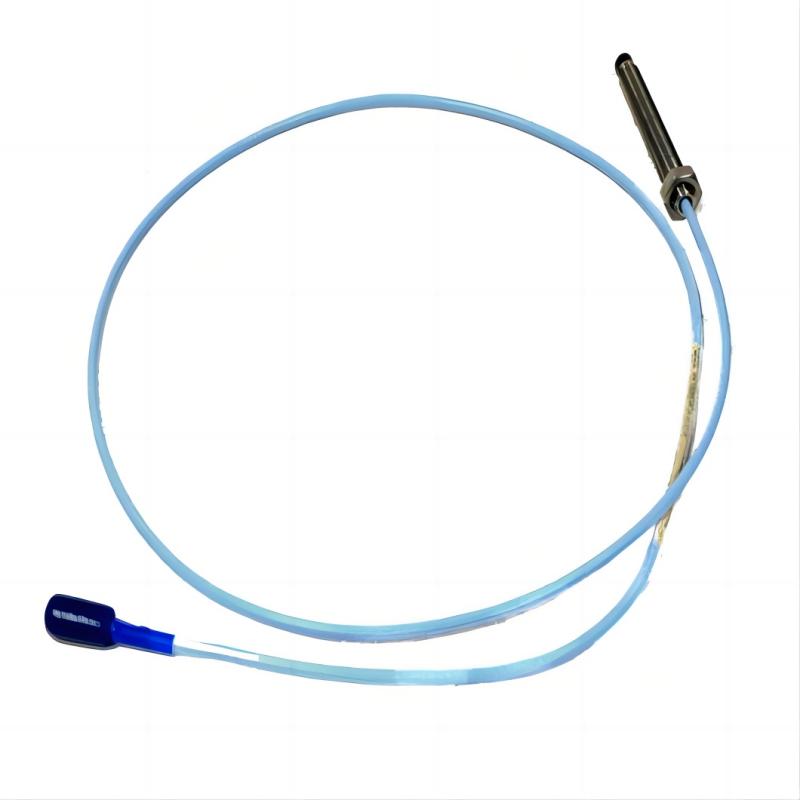
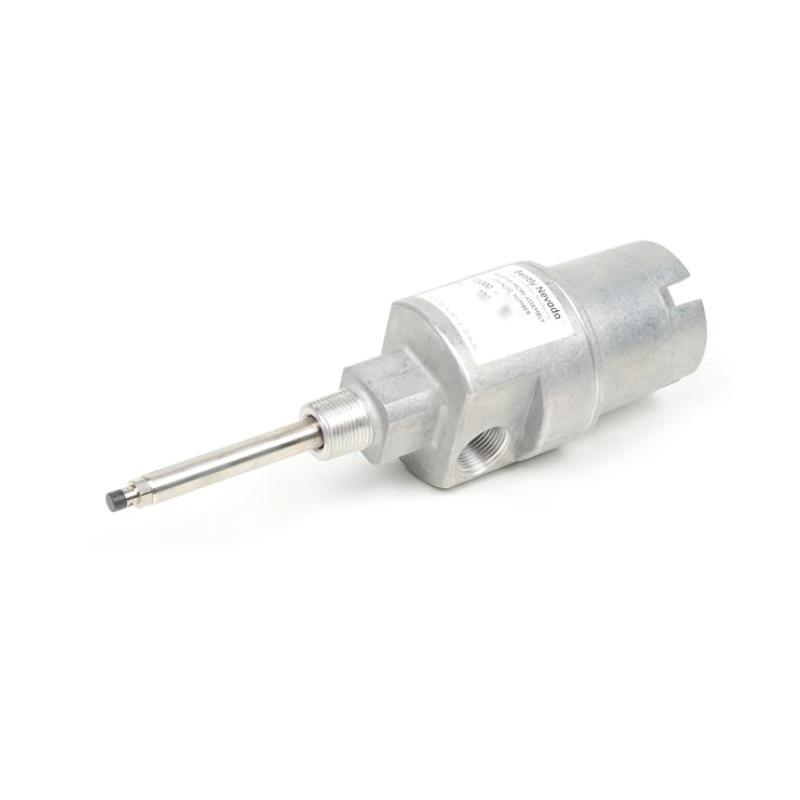
The Bently Nevada 177230-01-01-RU Seismic Sensor is a robust and reliable vibration monitoring device designed for industrial environments. By measuring vibration velocity directly at the machine casing, it provides valuable insight into overall equipment condition without requiring access to internal components.
Its rugged construction and consistent output make it ideal for long-term monitoring applications. Whether deployed in standalone systems or integrated into larger condition monitoring frameworks, this sensor supports accurate diagnostics and improves maintenance decision-making.
Technical Specifications
| Specification | Details |
|---|
| Product Type | Seismic Sensor |
| Model Number | 177230-01-01-RU |
| Measurement Type | Vibration velocity |
| Sensor Diameter | 25.4 mm |
| Output Signal | Velocity-based signal |
| Compatibility | Industrial monitoring and protection systems |
| Mounting | Surface-mounted installation |
| Construction | Industrial-grade housing |
| Dimensions | Standard compact form factor |
| Weight | 0.131 kg (0.29 lb) |
Operational Use Cases
The 177230-01-01-RU Seismic Sensor is developed for continuous monitoring of vibration velocity directly from machine structures. It is especially suited for applications where casing vibration provides the most practical and reliable indication of equipment condition.
Typical deployment scenarios include:
-
Monitoring vibration levels in industrial motors, pumps, and compressors
-
Structural vibration analysis in heavy machinery installations
-
Machinery protection systems in oil & gas, power generation, and manufacturing
-
Integration into distributed condition monitoring systems
-
Detection of abnormal vibration patterns in general-purpose rotating equipment
This sensor is widely adopted in environments where durability and stable signal output are essential.
Functional Advantages
-
Direct casing vibration measurement simplifies installation and setup
-
Stable velocity output for consistent condition monitoring
-
Reliable performance across a broad range of industrial applications
-
Designed to operate continuously in demanding environments
-
Compatible with standard vibration monitoring and protection systems
-
Helps identify early signs of mechanical degradation
In practical engineering use, it offers dependable performance without requiring complex configuration.
Technical FAQs
-
What type of measurement does this sensor provide?
It measures vibration velocity directly from the surface of the equipment.
-
What distinguishes this sensor from proximity probes?
It measures overall machine vibration rather than shaft displacement.
-
Is it suitable for low-speed machinery?
Yes, it performs effectively in low- to medium-speed applications.
-
Can it be used for continuous monitoring systems?
Yes, it is designed for 24/7 operation in industrial environments.
-
What is the recommended installation method?
Mounting on a rigid, clean surface ensures optimal signal transmission.
-
Is it resistant to environmental and electrical interference?
Yes, it is built to maintain stable performance under typical industrial conditions.
-
Can it be integrated into existing monitoring systems?
Yes, it works with a wide range of industrial monitoring and protection systems.
-
Does it support predictive maintenance strategies?
Yes, it provides reliable data for trend analysis and early fault detection.
-
What types of faults can it help identify?
Imbalance, misalignment, looseness, and bearing wear can be detected through vibration changes.
-
Is it suitable for structural vibration monitoring?
Yes, it can be used on both machinery and supporting structur
 A DCS Q Co., Ltd. - PLC and DCS Industrial Control Equipment Wholesale