Applications
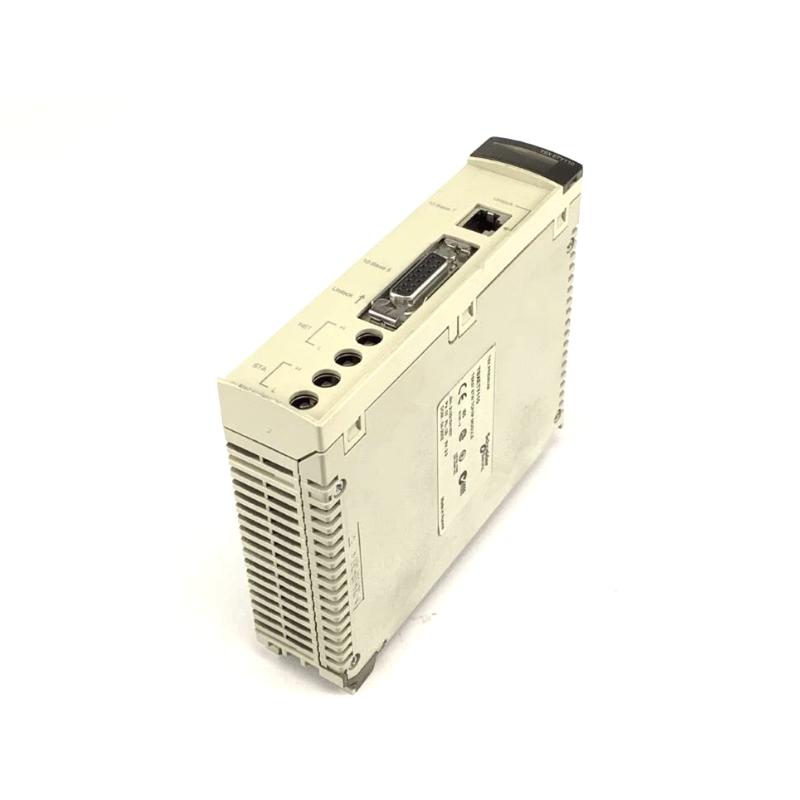
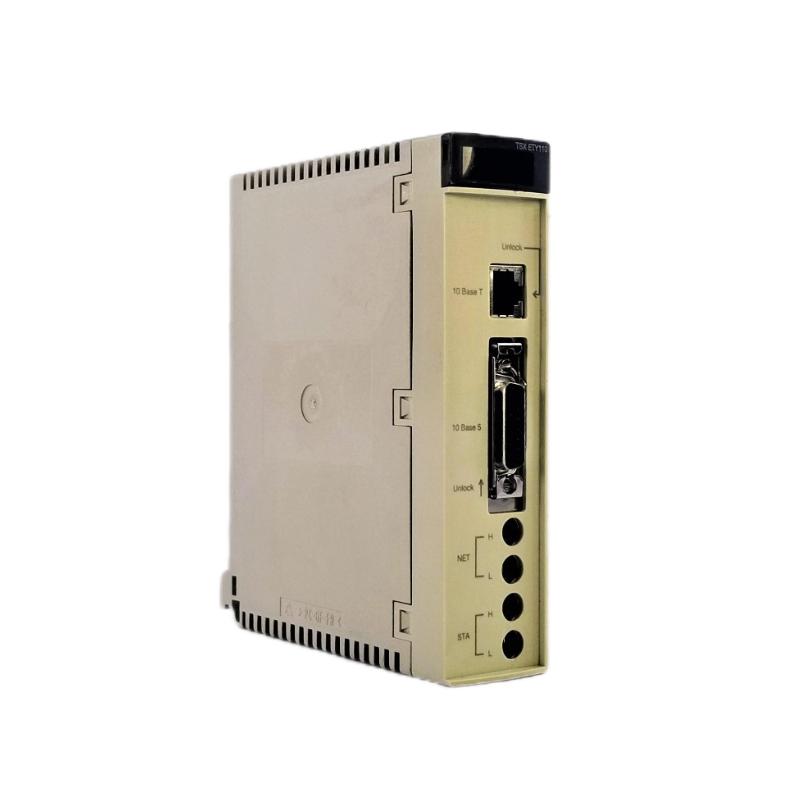
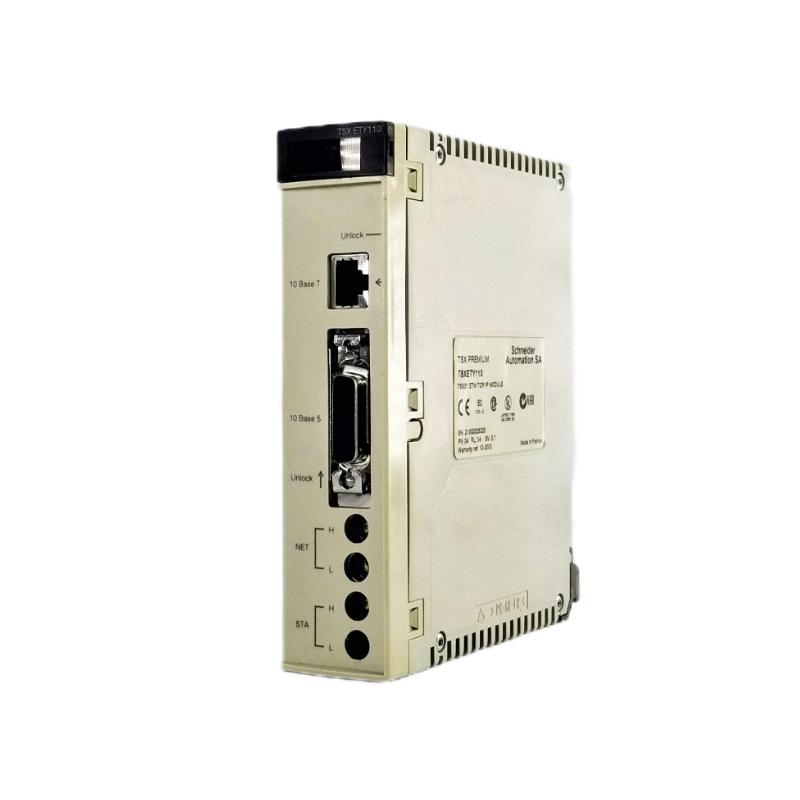
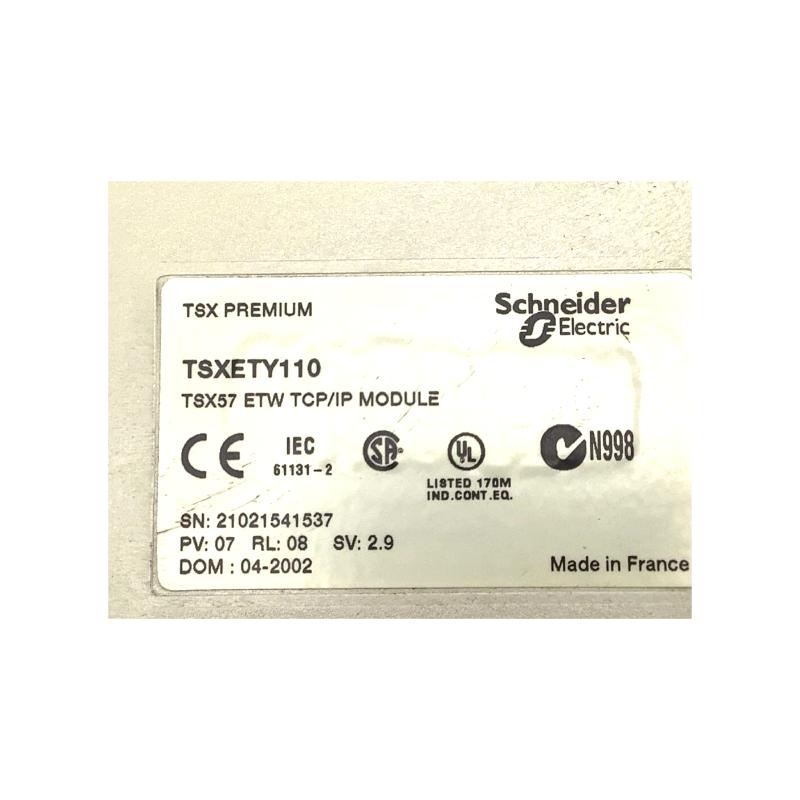
The TSXETY110 module enables seamless Ethernet connectivity for Modicon PLC systems in a variety of industrial applications:
-
Connecting PLCs to SCADA and HMI systems via Ethernet
-
Real‑time data sharing over plant network infrastructure
-
Integration with MES and enterprise systems
-
Remote PLC access for diagnostics and maintenance
-
Distributed automation in manufacturing, water treatment, and energy systems
This module allows industrial control systems to leverage modern TCP/IP communications while maintaining compatibility with legacy PLC hardware.
Advantages
-
Native Ethernet Connectivity: Provides direct TCP/IP network access for PLCs without intermediary converters.
-
High‑Speed Communication: Supports 10/100 Mbps Ethernet for fast data exchange and reduced latency.
-
Flexible Protocol Support: Compatible with common industrial protocols such as Modbus TCP and other IP‑based standards.
-
Robust Industrial Design: Galvanic isolation and industrial‑rated components ensure stable operation in electrically noisy environments.
-
LED Diagnostics: Built‑in status and link/activity LEDs provide immediate visual feedback for troubleshooting and network monitoring.
-
Seamless PLC Integration: Plug‑in design simplifies installation into existing PLC backplanes with minimal wiring.
These strengths make the TSXETY110 well suited for upgrading traditional PLC systems to modern, networked automation architectures.
Technical FAQs
1. What is the purpose of the TSXETY110?
It provides Ethernet TCP/IP communication for Schneider Modicon PLCs, enabling network connectivity and data exchange.
2. What protocols does it support?
Commonly supports TCP/IP, Modbus TCP, and additional Ethernet‑based protocols as configured.
3. What physical interface does the module use?
A 10/100 Mbps RJ‑45 Ethernet port with galvanic isolation.
4. Can it connect to SCADA systems?
Yes, it enables direct communication to SCADA and HMI systems over Ethernet networks.
5. Are there diagnostic indicators?
Yes, link/activity and status LEDs provide network condition feedback and module health status.
6. How is it installed?
It installs into the PLC’s backplane slot alongside other I/O and communication modules.
7. What environments does it support?
It is designed for industrial temperatures (approximately -10°C to +55°C).
8. Does it require separate power?
No, it is powered through the PLC backplane.
9. Is configuration software needed?
Configuration depends on system setup and may require Schneider communication configuration tools.
10. Can it be used for remote diagnostics?
Yes, Ethernet connectivity supports remote access and maintenance.
 A DCS Q Co., Ltd. - PLC and DCS Industrial Control Equipment Wholesale