High-Performance Transformer Protection Built for Secure Grid Operation
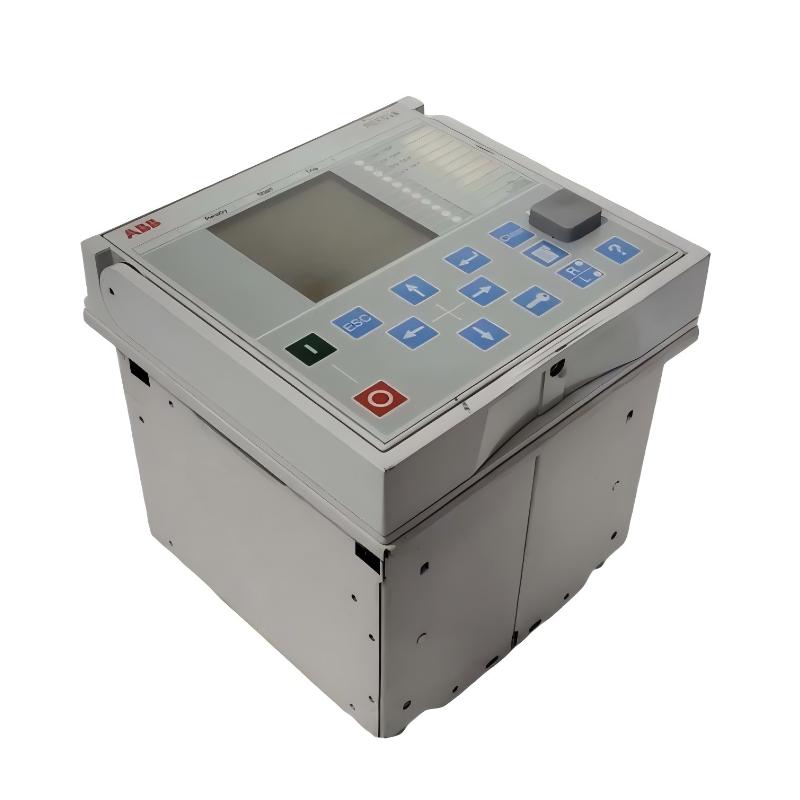
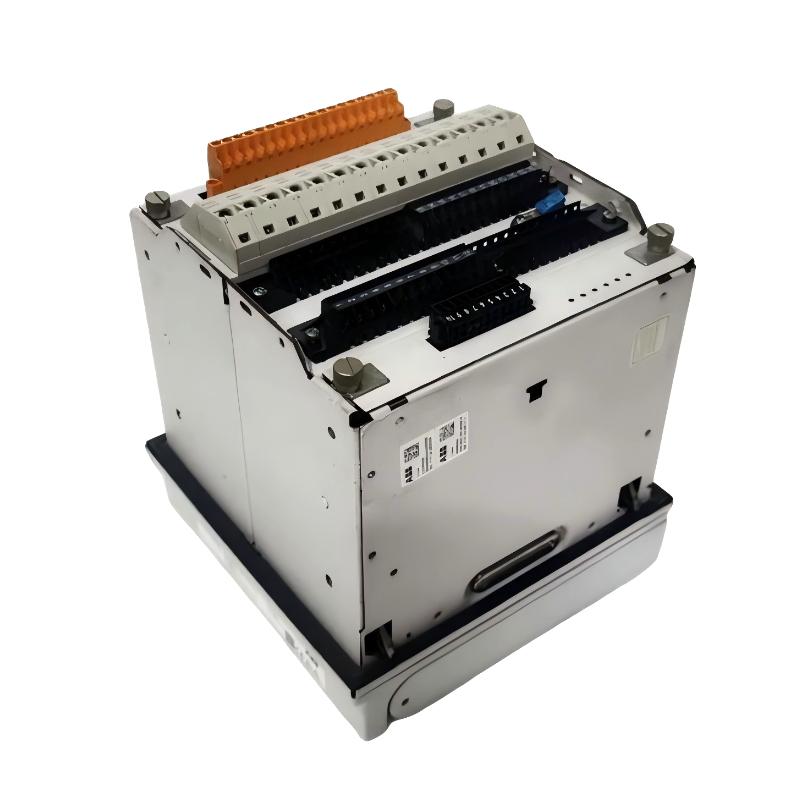
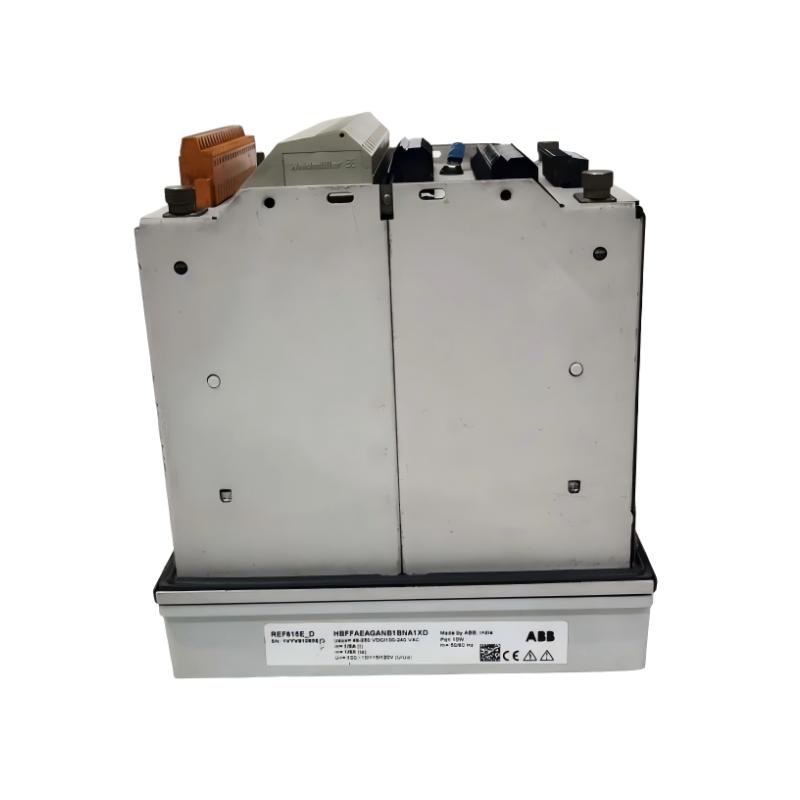
The ABB RET615E-1G (HBFBABACNDA1ANA11G) is a dedicated transformer protection and control relay from ABB’s Relion® 615 series, engineered for fast, selective, and highly reliable protection of power transformers in utility and industrial electrical networks. It integrates protection, control, measurement, and monitoring functions into a compact Intelligent Electronic Device (IED), enabling efficient operation of modern substations and switchgear systems.
Designed for two-winding transformer applications, this relay ensures rapid fault detection and isolation while supporting advanced communication standards used in digital substations.
Technical Specifications
| Parameter | Specification |
|---|
| Manufacturer | ABB |
| Product Series | Relion® 615 |
| Product Type | Transformer Protection & Control Relay (IED) |
| Model Number | RET615E-1G |
| Order Code | HBFBABACNDA1ANA11G |
| Function | Transformer protection, control, measurement, supervision |
| Application | 2-winding power transformers |
| Protection Functions | Differential protection (87T), overcurrent, earth fault, voltage & frequency protection |
| Control Functions | Circuit breaker control, isolator control, interlocking logic |
| Auxiliary Supply | 48–250 V DC / 100–240 V AC |
| CT Inputs | 1 A / 5 A configurable |
| Communication | IEC 61850, Modbus, DNP3, IEC 60870-5-103 (configuration dependent) |
| Time Synchronization | SNTP / IRIG-B (variant dependent) |
| Event Recording | Up to 1000 events with disturbance and waveform capture |
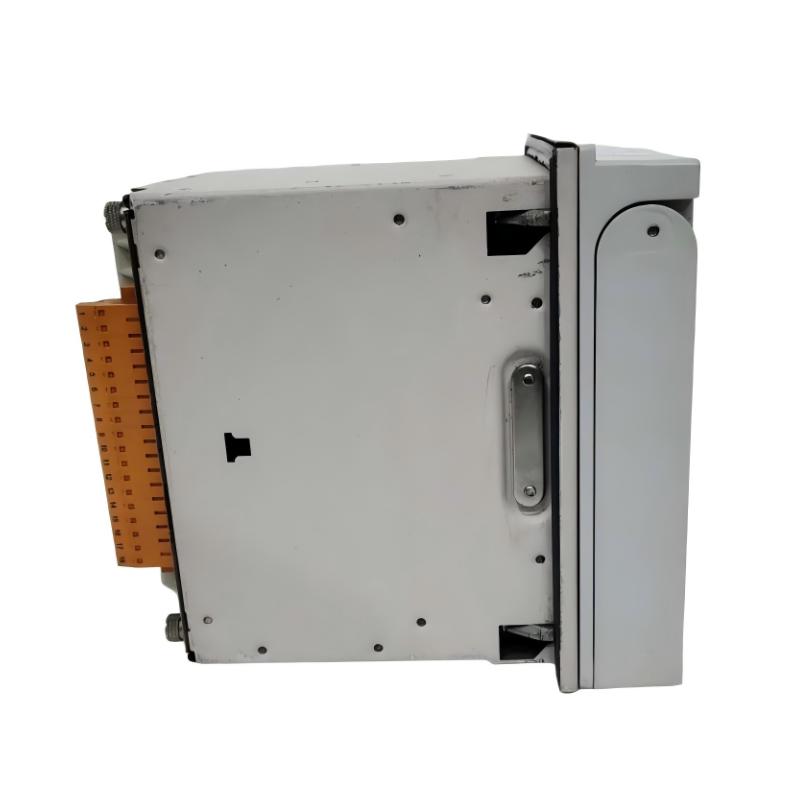
| Mounting | Flush/panel-mounted withdrawable unit |
| Operating Temperature | -25°C to +55°C |
| Dimensions | 177 × 214 × 270 mm |
| Weight | Approx. 4.1 kg |
Industrial Applications
The RET615E-1G is widely deployed across power generation, transmission, and industrial distribution systems:
-
Utility power substations
-
Step-up and step-down transformers
-
Industrial power distribution networks
-
Renewable energy plants (wind and solar substations)
-
Mining and heavy industrial electrical systems
-
Oil & gas and petrochemical facilities
-
Railway and traction substations
-
Smart grid and digital substation automation systems
Its flexibility allows it to operate in both grounded and ungrounded network configurations.
Key Advantages
High-Speed Differential Protection
Provides fast and selective fault clearance, reducing transformer damage risk.
Multi-Function Integration
Combines protection, control, measurement, and monitoring in a single device.
Digital Substation Ready
Supports IEC 61850 communication for modern automation architectures.
High Reliability Design
Engineered for harsh electrical environments with strong EMI resistance.
Flexible Configuration Logic
Adaptable protection schemes using ABB PCM600 engineering tools.
Reduced Downtime Risk
Fast fault isolation improves system stability and operational continuity.
Technical FAQs
1. What is the main function of the RET615E-1G?
It provides protection and control for two-winding power transformers in medium-voltage and high-voltage networks.
2. Is this relay suitable for transmission lines?
No. It is specifically designed for transformer protection, not line differential protection.
3. What happens during a transformer fault?
The relay detects abnormal differential current and issues a trip command to isolate the transformer.
4. Does it support IEC 61850 communication?
Yes, it supports IEC 61850 for digital substation integration (configuration dependent).
5. Can it be used in renewable energy systems?
Yes, it is commonly used in wind and solar substations.
6. Is it a PLC or control computer?
No. It is an Intelligent Electronic Device (IED) designed specifically for protection and control.
7. What voltage levels does it support?
It supports 48–250 V DC or 100–240 V AC auxiliary supply systems.
8. Can it record fault events?
Yes, it supports event logging and waveform disturbance recording.
9. Is configuration customizable?
Yes, settings and logic can be configured using ABB PCM600 software.
10. Is it still widely used today?
Yes, it remains a common relay in both new installations and retrofit projects.
 A DCS Q Co., Ltd. - PLC and DCS Industrial Control Equipment Wholesale