Intelligent Bay Control & Protection Solution for Medium Voltage Networks
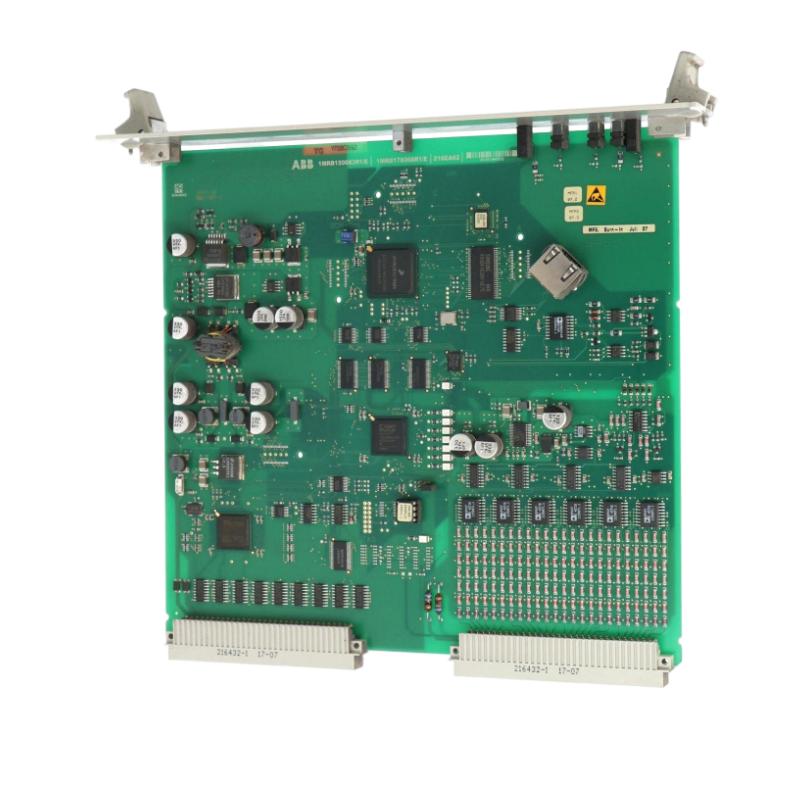
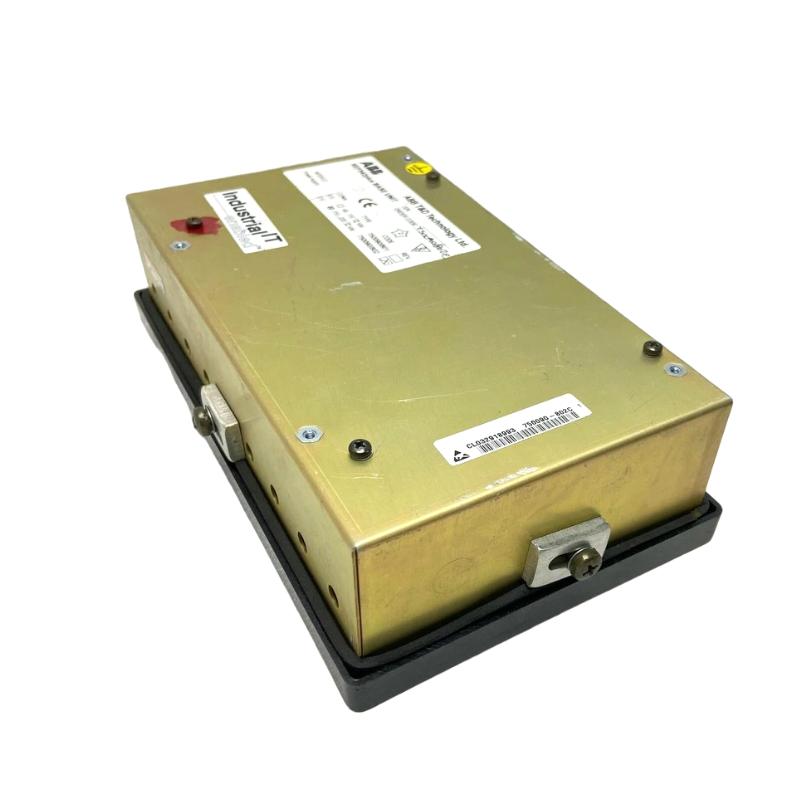
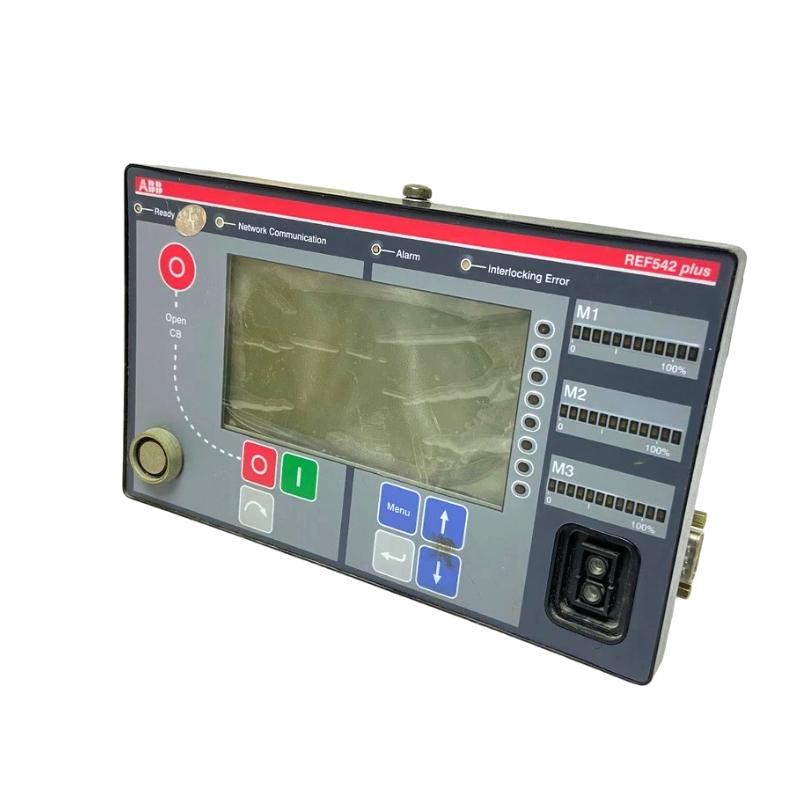
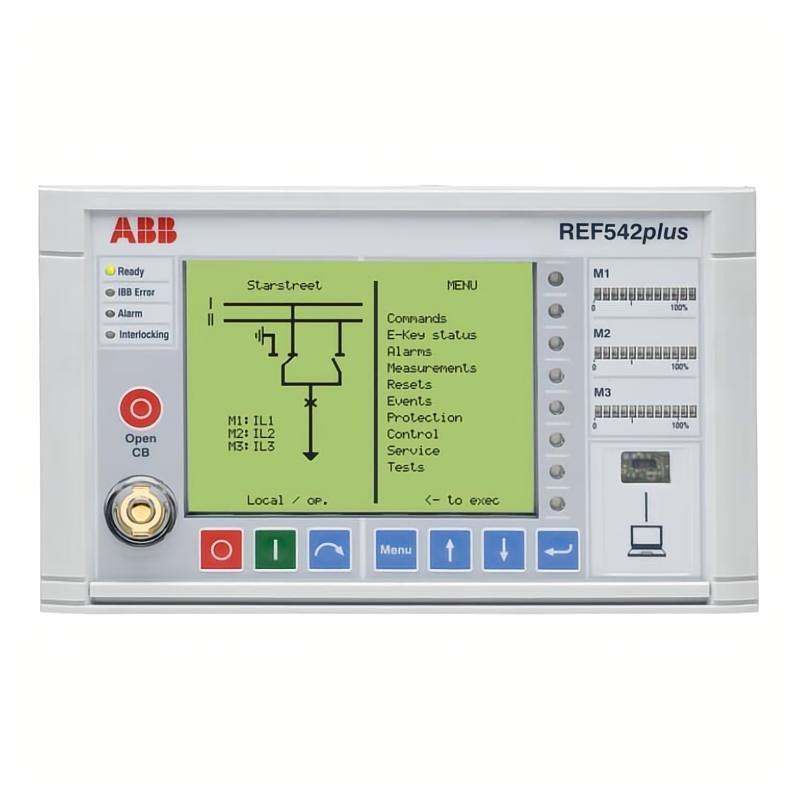
The ABB REF542PLUS 1VCF750090R0802 Feeder Terminal is a multifunctional digital bay control and protection unit designed for medium-voltage switchgear systems. It integrates protection, measurement, control, monitoring, and communication into a single compact device, enabling smarter and more reliable substation automation.
As part of ABB’s REF542plus platform, this feeder terminal is widely used in utility substations and industrial power distribution systems where operational continuity, fast fault detection, and system visibility are essential. Its modular architecture and communication capabilities make it suitable for both modern and legacy substation environments.
Technical Specifications
| Parameter | Specification |
|---|
| Manufacturer | ABB |
| Product Series | REF542plus |
| Product Type | Feeder Terminal / Bay Control Unit |
| Model Number | REF542PLUS 1VCF750090R0802 |
| Function | Feeder / transformer / motor protection & control |
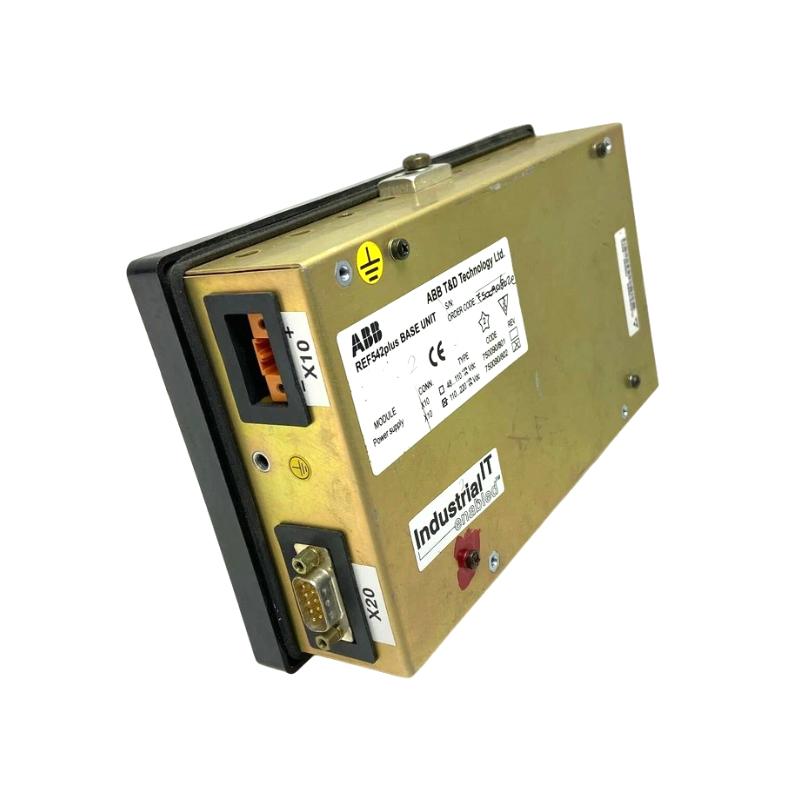
| Rated Auxiliary Voltage | 48–250 V DC or 100–240 V AC |
| Analog Inputs | Up to 8 channels (system dependent configuration) |
| Binary Inputs | Up to 24 inputs |
| Relay Outputs | Up to 14 outputs (up to 5A switching capability) |
| Communication | IEC-compatible substation protocols (RS-485 / CAN / Ethernet options) |
| Frequency | 50 / 60 Hz |
| Protection Functions | Overcurrent, earth fault, voltage protection, etc. |
| Mounting | Panel-mounted / rack system (bay control cabinet integration) |
| Dimensions | Approx. 225 × 175 × 150 mm |
| Weight | Approx. 1–2 kg |
Industrial Applications
The REF542PLUS feeder terminal is widely used across power and industrial infrastructure:
-
Utility distribution substations
-
Medium-voltage switchgear systems
-
Industrial power distribution networks
-
Renewable energy substations (wind and solar farms)
-
Oil and gas electrical distribution systems
-
Mining and heavy industry power control
-
Railway traction substations
-
Transformer and feeder protection panels
-
Motor control centers (MCCs)
-
Smart grid automation systems
Its flexibility allows it to be configured for feeder, transformer, or motor protection within the same platform.
Key Advantages
All-in-One Protection & Control
Combines protection, measurement, and control in a single bay terminal, reducing system complexity.
Fast Fault Response
Sub-millisecond to millisecond-level tripping improves system safety and reduces equipment damage risk.
High Communication Flexibility
Supports integration with ABB and third-party substation automation systems.
Scalable Architecture
Can be adapted for feeder, transformer, or motor protection applications.
Advanced Diagnostics
Built-in self-monitoring improves system reliability and simplifies maintenance.
Industrial Reliability
Designed for continuous operation in harsh electrical environments with high electromagnetic noise.
Technical FAQs
1. What is the main function of the REF542PLUS?
It provides protection, control, and monitoring for medium-voltage feeders, transformers, and motors.
2. Is it a relay or a PLC?
It is an Intelligent Electronic Device (IED), not a PLC, but it performs control and automation functions.
3. What voltage systems does it support?
Typically 48–250 V DC or 100–240 V AC auxiliary supply systems.
4. Can it be used in both feeder and transformer protection?
Yes, it is designed for multi-application use including feeders, transformers, and motors.
5. What happens during a fault condition?
It detects abnormal conditions and sends trip signals to circuit breakers.
6. Does it support SCADA systems?
Yes, it supports substation automation and communication with SCADA platforms.
7. Is it still widely used today?
Yes, especially in legacy and hybrid substation automation systems.
8. Can it be upgraded or reconfigured?
Yes, protection and control logic can be configured for different applications.
9. What industries use it most?
Utilities, heavy industry, mining, energy generation, and infrastructure sectors.
10. Is it suitable for modern smart grids?
Yes, it can integrate into smart grid systems, especially in hybrid architectures.
 A DCS Q Co., Ltd. - PLC and DCS Industrial Control Equipment Wholesale