Advanced Insulation Supervision for Safe Industrial Electrical Systems
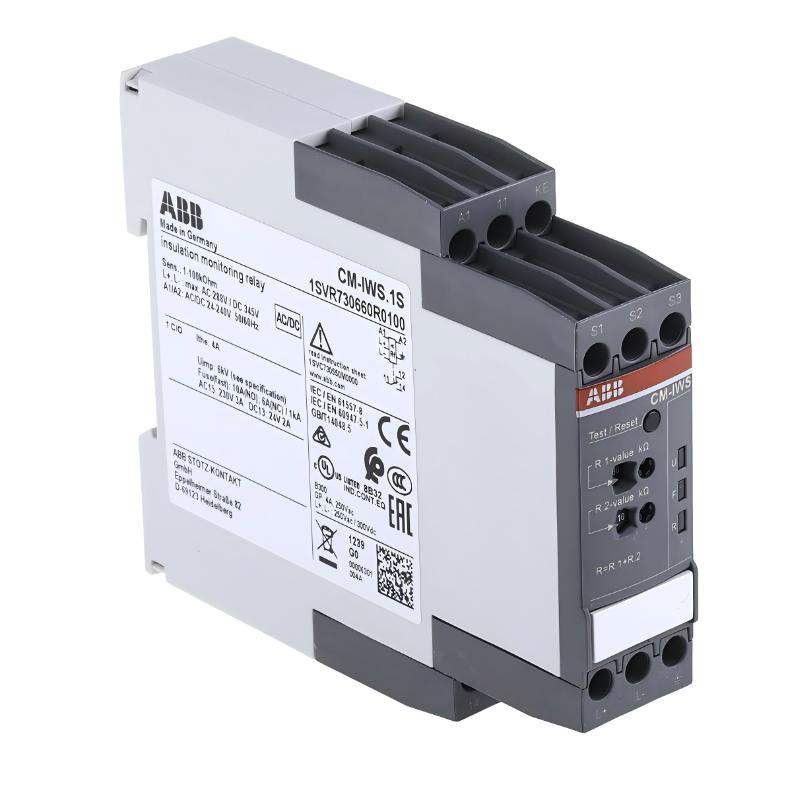
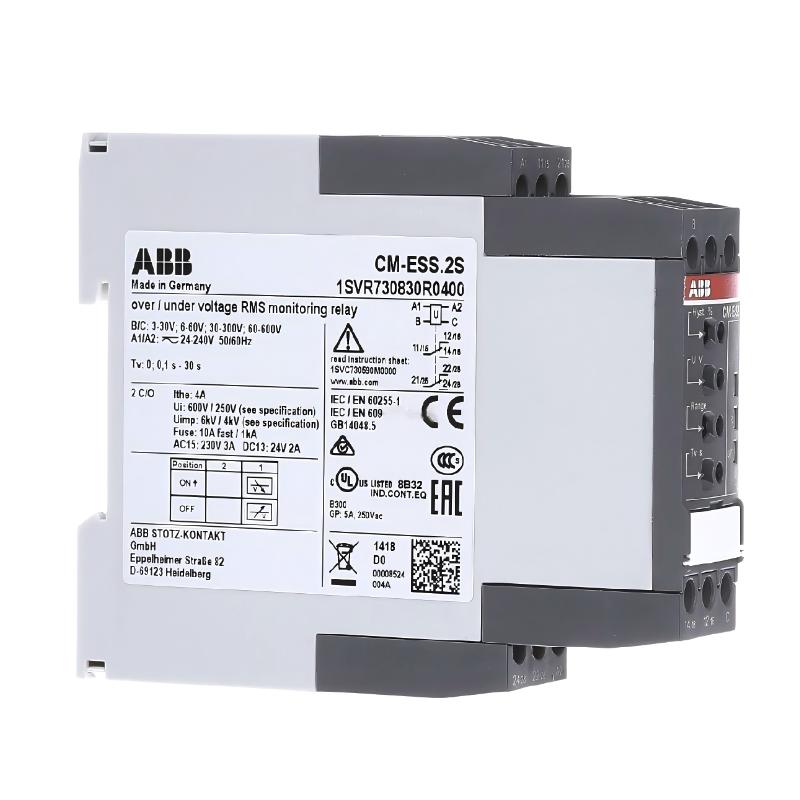
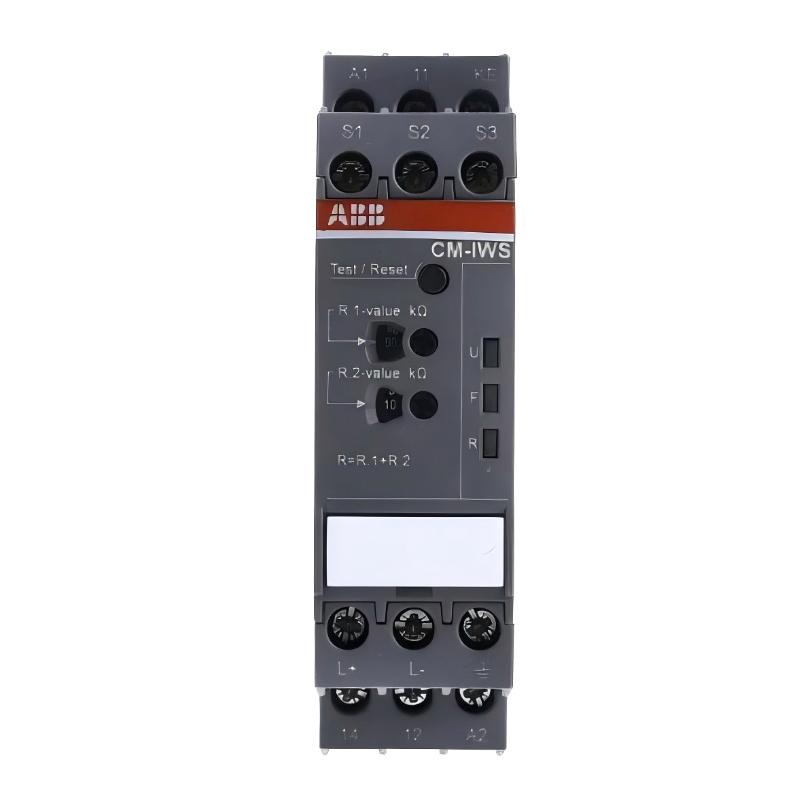
The ABB CM-IWS.1S Insulation Monitoring Relay is a precision protection device designed to continuously supervise insulation resistance in unearthed AC, DC, and mixed electrical systems. It plays a critical safety role by detecting early insulation degradation and alerting operators before faults escalate into system failures or hazardous conditions.
Built under ABB’s CM monitoring relay platform, this device is widely used in industrial automation, power distribution, marine systems, and critical infrastructure where uninterrupted operation and electrical safety are essential. Its compact DIN-rail design, wide supply voltage range, and high measurement accuracy make it a reliable solution for modern electrical protection systems.
Technical Specifications
| Parameter | Specification |
|---|
| Manufacturer | ABB |
| Product Series | CM-IWS |
| Product Type | Insulation Monitoring Relay |
| Model Number | CM-IWS.1S |
| Product Code | 1SVR730660R0100 |
| Function | Insulation resistance monitoring |
| Measuring Range | 1 kΩ – 100 kΩ |
| Supply Voltage | 24–240 V AC/DC |
| Output Contact | 1 SPDT (changeover relay) |
| Rated Output | 250 V AC / 4 A |
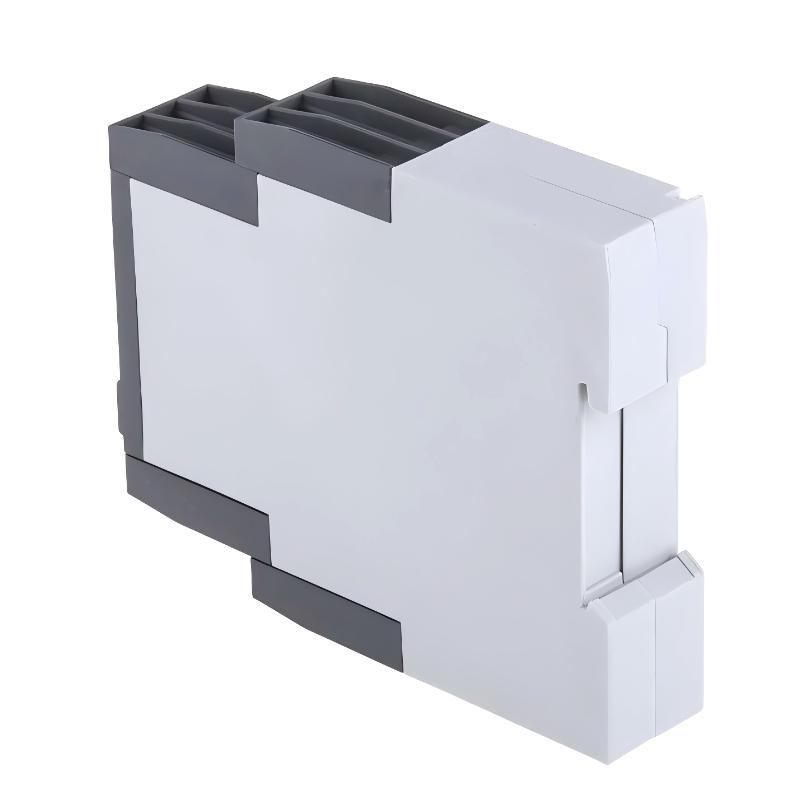
| Mounting Type | DIN rail (35 mm) |
| Terminals | Screw connection |
| Protection Class | IP20 (terminals/enclosure) |
| Operating Temperature | -25°C to +60°C |
| Storage Temperature | -40°C to +85°C |
| Dimensions | 22.5 × 85.6 × 103.7 mm |
| Weight | Approx. 0.15 kg |
Industrial Applications
The CM-IWS.1S is widely used in systems where electrical isolation must be continuously monitored to ensure operational safety and prevent unexpected downtime.
Typical applications include:
-
Industrial automation control panels
-
Medical IT power systems
-
Marine and offshore electrical systems
-
Data centers and UPS backup systems
-
Mining and heavy industry power networks
-
Chemical and process plants
-
Renewable energy installations
-
Critical infrastructure power distribution
-
Motor control centers (MCC)
-
Railway and transportation systems
Its ability to detect early-stage insulation faults makes it essential for safety-critical environments.
Key Advantages
Continuous Electrical Safety Monitoring
Provides real-time supervision of insulation resistance, reducing the risk of electrical faults and equipment damage.
Early Fault Detection
Identifies insulation deterioration before it leads to system shutdown or hazardous conditions.
Wide Voltage Compatibility
Operates across 24–240V AC/DC, making it suitable for diverse industrial installations.
Compact DIN-Rail Design
Space-saving form factor allows easy integration into standard control cabinets.
High Reliability in Critical Systems
Designed for continuous operation in demanding environments with minimal maintenance.
Standard-Compliant Protection
Built in accordance with international insulation monitoring standards for industrial safety systems.
Technical FAQs
1. What is the main function of the CM-IWS.1S relay?
It continuously monitors insulation resistance in unearthed electrical systems and triggers alarms when values drop below safe thresholds.
2. What type of systems can it monitor?
It is suitable for unearthed AC, DC, and mixed AC/DC IT power systems.
3. Is it a protection relay or a control relay?
It is a protection relay focused on insulation monitoring and fault detection.
4. What happens when insulation fault is detected?
The relay changes its output contact state to trigger alarms or shutdown signals.
5. Can it be used in grounded (TN/TT) systems?
No. It is specifically designed for unearthed IT systems.
6. What is the measuring range?
It monitors insulation resistance from 1 kΩ to 100 kΩ.
7. Does it require external power?
Yes. It operates on a wide auxiliary supply of 24–240 V AC/DC.
8. Is it suitable for harsh environments?
Yes. It is designed for industrial environments with temperatures from -25°C to +60°C.
9. Can it be mounted in any position?
Yes. DIN rail mounting allows flexible installation orientation inside cabinets.
10. Is this device still widely used?
Yes. It remains a standard component in modern and legacy insulation monitoring systems across industrial sectors.
 A DCS Q Co., Ltd. - PLC and DCS Industrial Control Equipment Wholesale