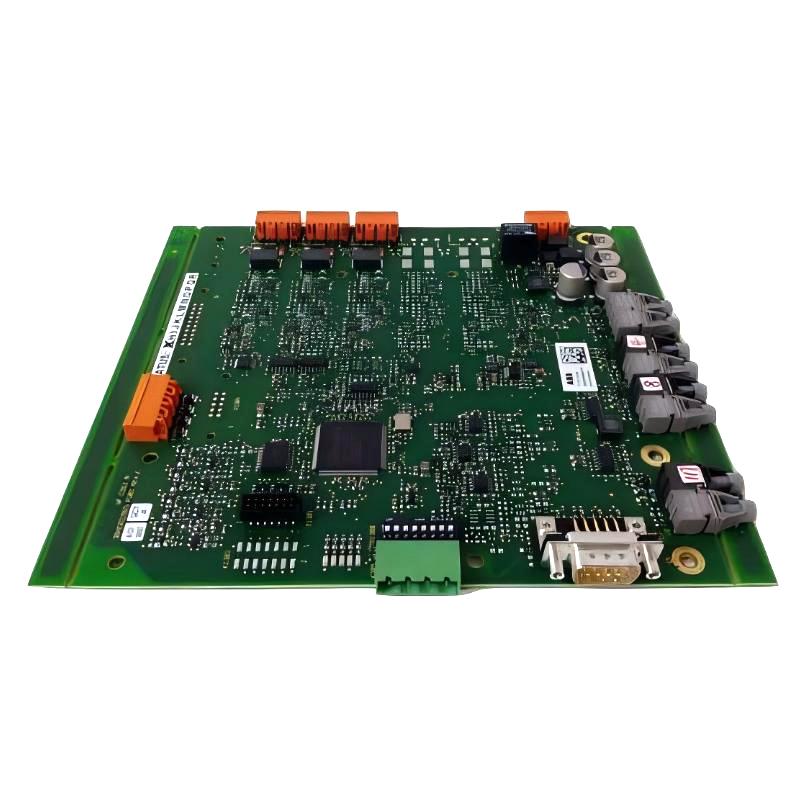
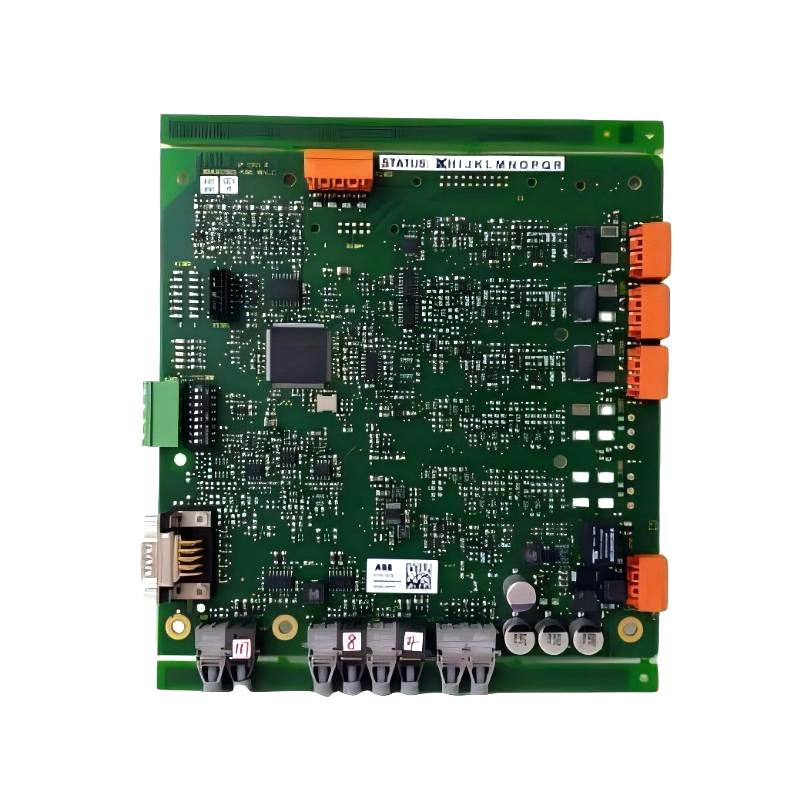
Advanced Industrial Communication Backbone for ABB Control Systems
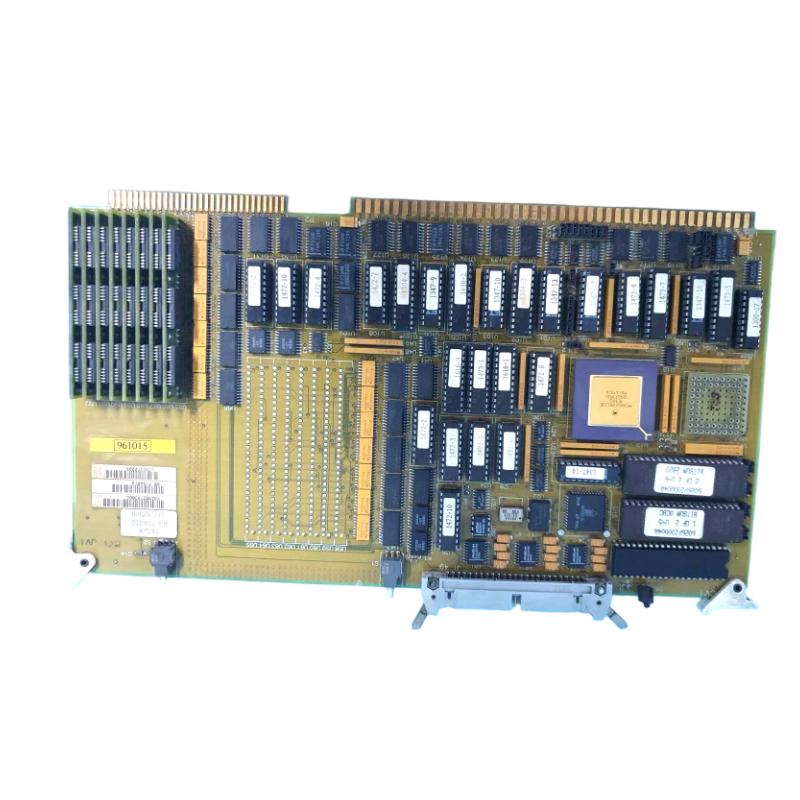
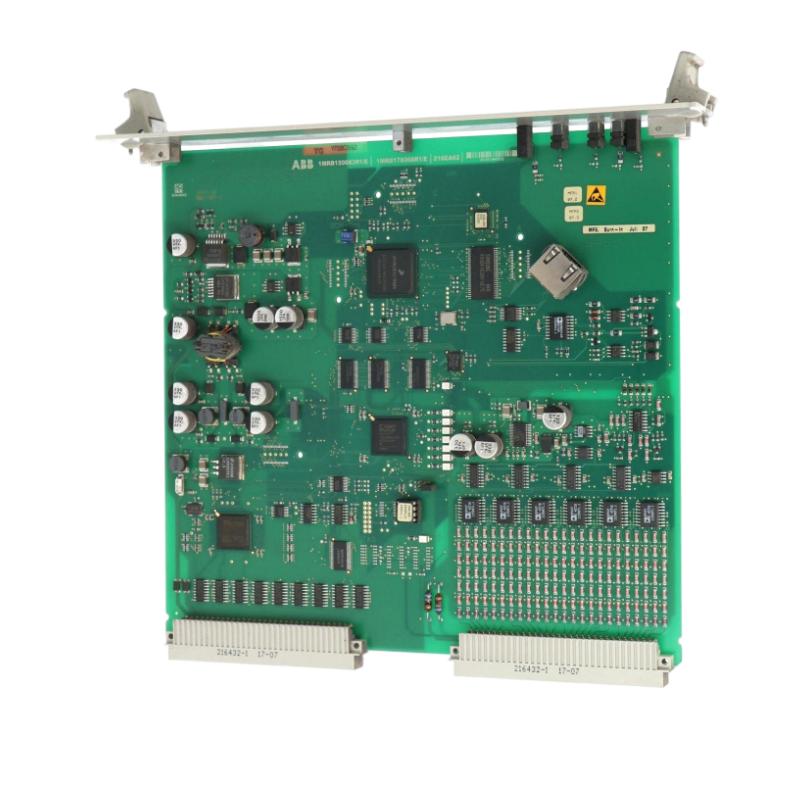
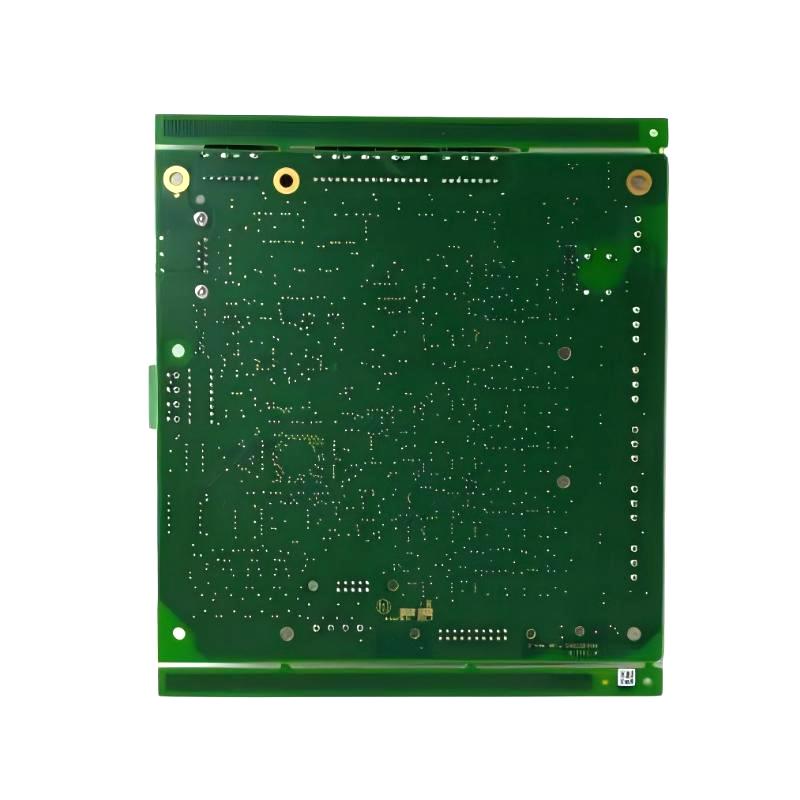
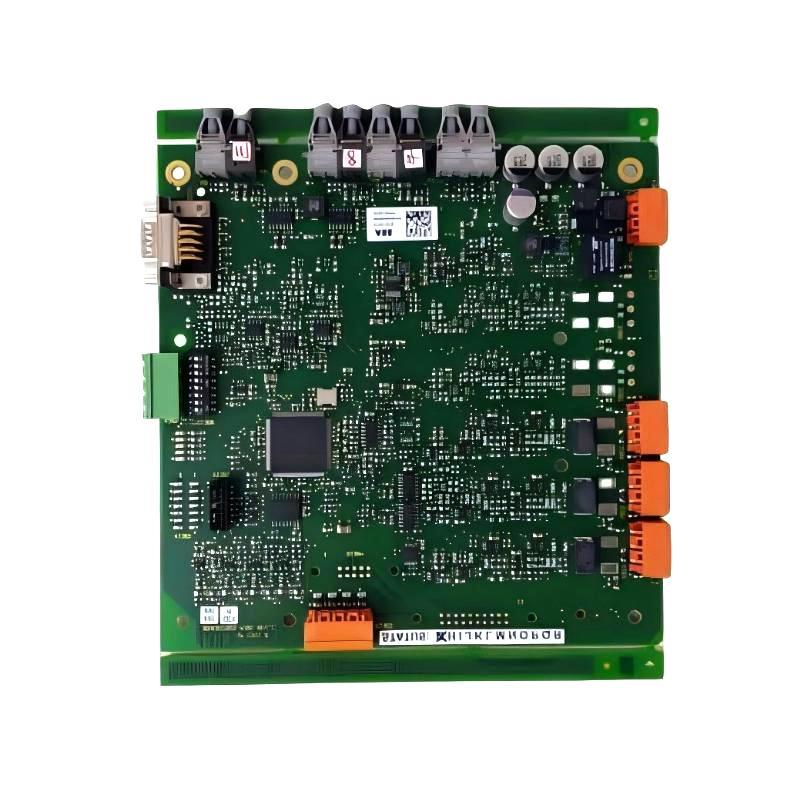
The ABB UF C911 B106 3BHE037864R0106 Communication Interface Module is a high-reliability industrial interface unit designed to enable seamless data exchange, system coordination, and control-level communication within ABB automation architectures. Built for demanding industrial environments, this module ensures stable signal transmission between CPU controllers, field devices, and distributed control systems.
Engineered with ABB’s precision automation standards, the UF C911 B106 plays a critical role in maintaining system connectivity integrity, improving communication efficiency, and supporting real-time industrial process coordination. It is widely used in complex control environments where uninterrupted data flow and system interoperability are essential.
Technical Specifications
| Parameter | Specification |
|---|
| Manufacturer | ABB |
| Model | UF C911 B106 |
| Part Number | 3BHE037864R0106 |
| Product Type | Communication Interface Module |
| Function | Industrial Data Communication & Signal Interface |
| System Role | Controller-to-Device / Module-to-Module Communication |
| Supported Integration | ABB Automation & Control Systems |
| Communication Protocols | Industrial Fieldbus / Ethernet-based Systems (system-dependent) |
| Installation Type | Rack / Control Cabinet Mounted |
| Operating Temperature | -20°C to +70°C |
| Storage Temperature | -40°C to +85°C |
| Humidity Range | 5%–95% (non-condensing) |
| Cooling Method | Passive Cooling Design |
| Material | Industrial-grade PCB assembly |
| Dimensions | Approx. 280 × 190 × 55 mm |
| Weight | Approx. 1.5 kg |
Industrial Applications
The ABB UF C911 B106 Communication Interface Module is widely used in industrial automation systems requiring reliable and continuous communication between control components. Typical applications include:
-
Distributed Control Systems (DCS)
-
Industrial automation platforms
-
Power generation control systems
-
Process control environments
-
Factory automation networks
-
Energy management systems
-
Drive and motion control systems
-
Substation and utility automation
Its stable communication capability ensures smooth coordination between high-level controllers and field-level devices.
Key Advantages
High-Reliability Communication Architecture
Designed to ensure stable and uninterrupted data exchange across industrial control networks, even under demanding operating conditions.
Seamless System Integration
Fully compatible with ABB automation ecosystems, enabling efficient integration with controllers, I/O modules, and field devices.
Enhanced Process Coordination
Supports synchronized communication between multiple system components, improving overall operational efficiency.
Industrial-Grade Durability
Built using rugged electronic components that resist vibration, electrical noise, and temperature variations.
Optimized Signal Integrity
Ensures accurate and stable transmission of control data across connected automation modules.
Efficient Maintenance Design
Modular structure simplifies diagnostics, replacement, and system maintenance operations.
Technical FAQs
1. What is the main function of the ABB UF C911 B106 module?
It serves as a communication interface module that enables data exchange between ABB control systems and connected industrial devices.
2. Where is this module typically used?
It is commonly used in DCS systems, automation platforms, power plants, and industrial process control environments.
3. Does it support real-time communication?
Yes, it is designed for stable and real-time industrial communication between control components.
4. Is it compatible with ABB automation systems?
Yes, it is specifically designed for integration within ABB industrial control architectures.
5. What type of communication does it handle?
It supports industrial communication protocols depending on system configuration, including fieldbus and Ethernet-based networks.
6. Can it operate in harsh environments?
Yes, it is engineered for industrial-grade durability and environmental resistance.
7. What is the operating temperature range?
It operates reliably between -20°C and +70°C.
8. Does it require active cooling?
No, it uses a passive cooling design for stable operation.
9. Is it suitable for continuous operation?
Yes, it is designed for long-term continuous industrial use.
10. Why is communication important in ABB systems?
Reliable communication ensures coordinated control, accurate data exchange, and stable operation across complex automation systems.
 A DCS Q Co., Ltd. - PLC and DCS Industrial Control Equipment Wholesale