Product Insight
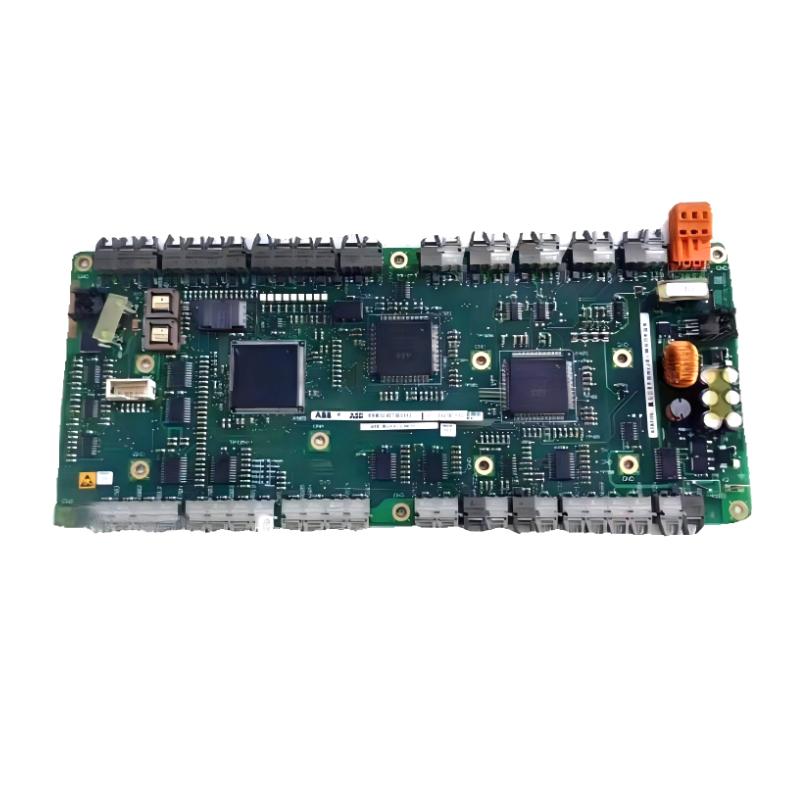
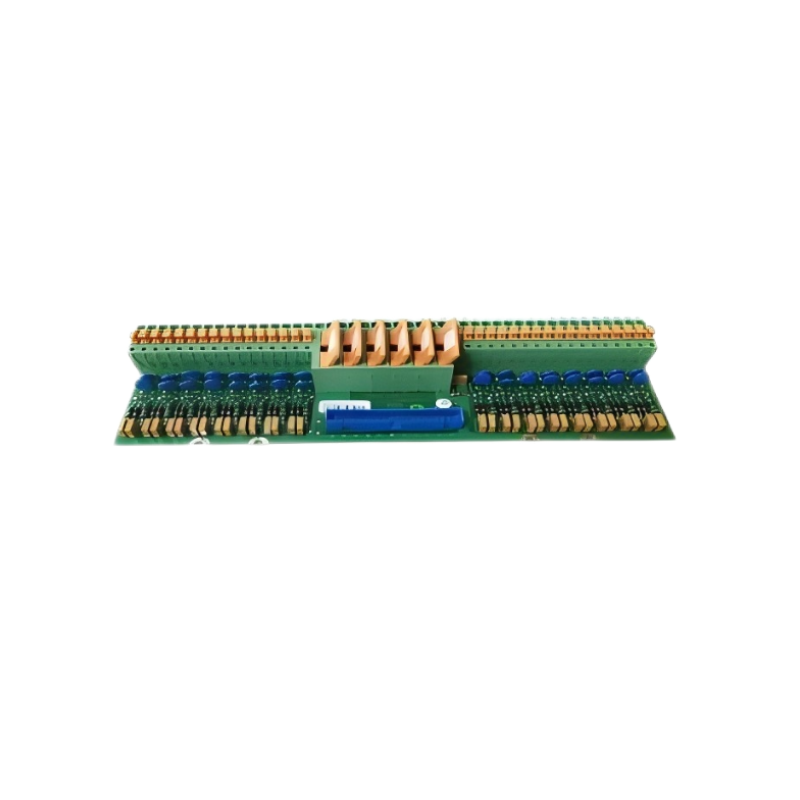
The ABB SDCS-MP-1 3BSE005635R0001 Test Pin Board is a precision-engineered diagnostic interface designed to support maintenance, testing, and troubleshooting within ABB drive systems. Acting as a bridge between internal circuitry and external test equipment, this board enables engineers to safely access critical signal points without interrupting system integrity.
Built for industrial reliability, the SDCS-MP-1 is widely recognized for simplifying fault detection and reducing downtime. Its robust construction and seamless compatibility with ABB control architectures make it an essential tool for service engineers and system integrators seeking efficient diagnostics.
Technical Specifications
| Parameter | Specification |
|---|
| Model | SDCS-MP-1 |
| Part Number | 3BSE005635R0001 |
| Module Type | Test Pin Board |
| Function | Circuit access, diagnostics, and testing |
| Compatibility | ABB drive and control systems |
| Installation | Plug-in PCB module |
| Access Points | Internal circuit test pins |
| Dimensions (Approx.) | 150 mm × 90 mm × 30 mm |
| Weight | 0.31 kg |
| Build Quality | Industrial-grade durable PCB |
| Operating Environment | Designed for industrial conditions |
Typical Applications
The SDCS-MP-1 Test Pin Board is widely used in scenarios where system diagnostics and maintenance efficiency are critical:
-
Industrial drive system troubleshooting
-
Preventive maintenance in automation systems
-
Commissioning and system validation
-
Electrical testing in manufacturing plants
-
Service operations for ABB DCS and drive platforms
It enables technicians to quickly identify faults and verify system performance without invasive procedures.
Technical FAQs
1. What is the primary function of the SDCS-MP-1 board?
It provides access to internal circuit points for testing and diagnostics.
2. Is this module required for daily operation?
No, it is mainly used during maintenance, testing, and troubleshooting.
3. Can it be used with all ABB systems?
It is designed for specific ABB drive and control platforms.
4. Does installation require system shutdown?
In most cases, safe installation procedures recommend powering down the system.
5. What kind of tests can be performed?
Voltage measurement, signal tracing, and fault diagnostics.
6. Is it reusable across multiple systems?
Yes, as long as compatibility requirements are met.
7. Does it include built-in protection components?
Its main role is access and diagnostics rather than protection.
8. How does it improve maintenance efficiency?
By allowing quick and safe access to test points without dismantling components.
9. What indicates a malfunctioning board?
Inconsistent readings or inability to access test points.
10. Is calibration required?
No calibration is typically needed.
 A DCS Q Co., Ltd. - PLC and DCS Industrial Control Equipment Wholesale