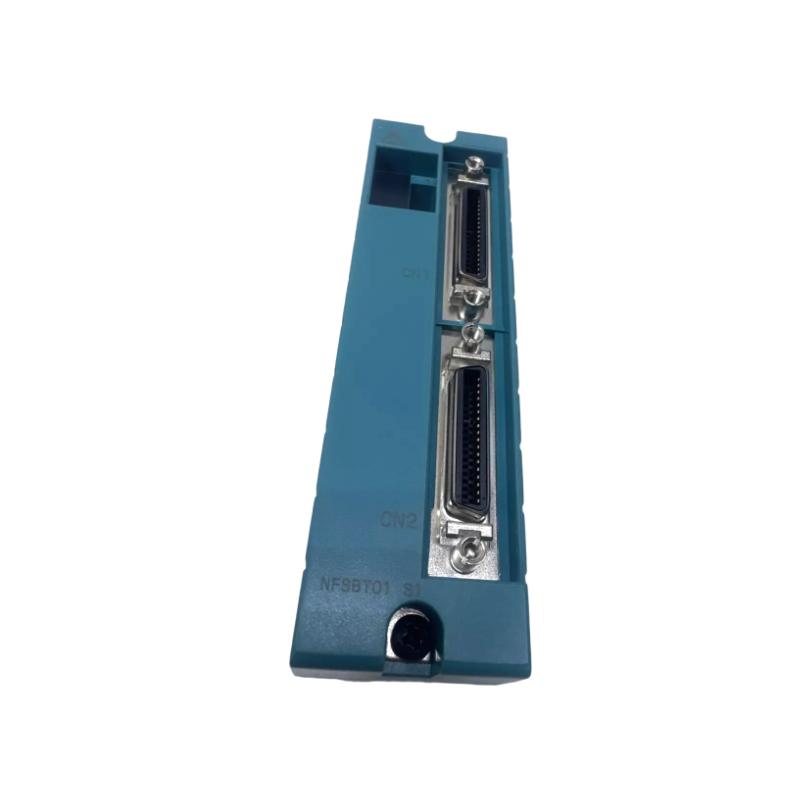
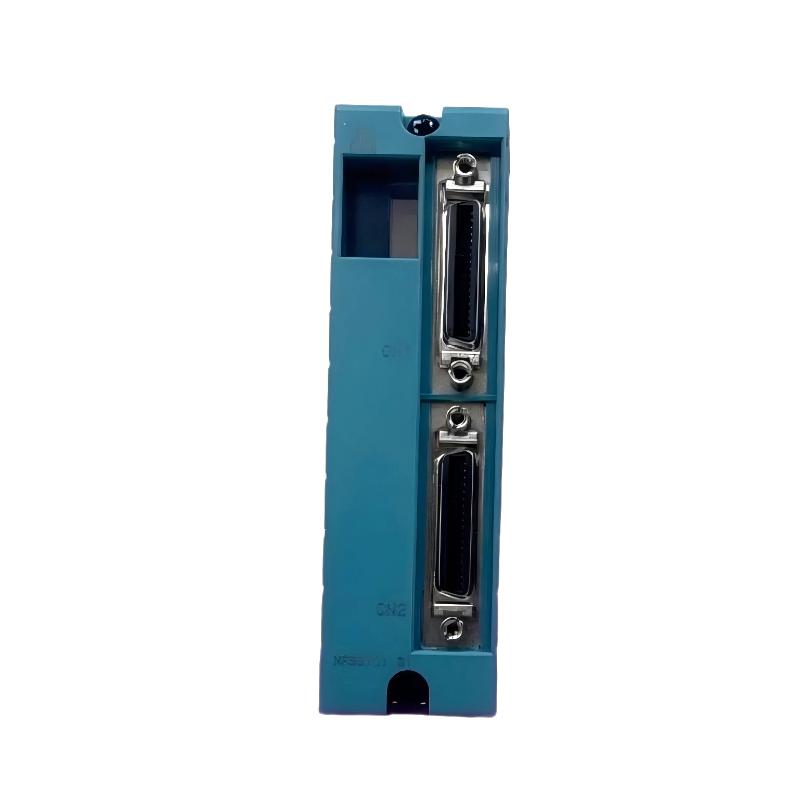
Compact and Reliable SB Bus Termination for Stable Distributed Control Networks
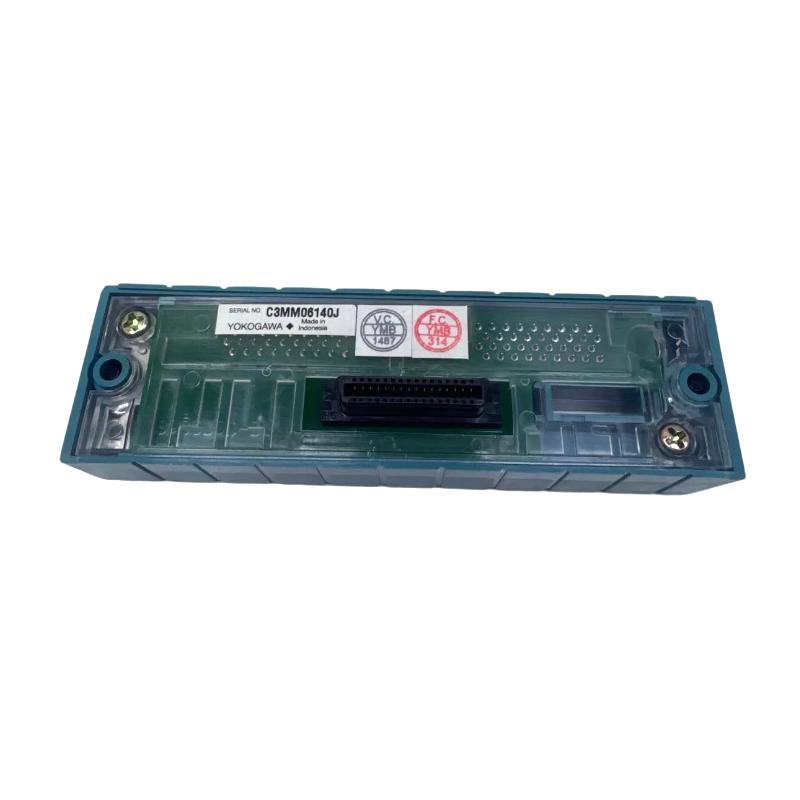
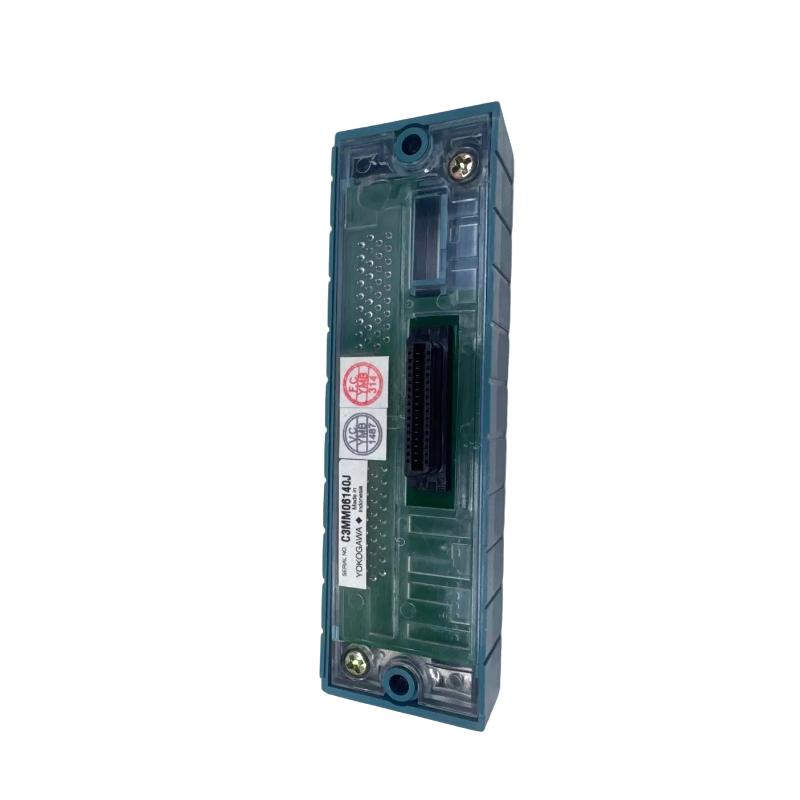
The Yokogawa NFSBT02 SB Bus T-joint With Built-in Terminator is a dedicated connection accessory used in Yokogawa STARDOM FCN/FCJ distributed control systems. It is designed to connect SB Bus cables in a T-branch configuration while simultaneously providing built-in line termination to ensure signal stability and reflection-free communication.
In SB Bus architectures, proper termination is essential for maintaining data integrity, especially in extended or redundant I/O configurations. The NFSBT02 simplifies installation by combining branching and termination in a single compact component.
Technical Specifications
| Parameter | Specification |
|---|
| Product Type | SB Bus T-joint with Built-in Terminator |
| Model | NFSBT02 |
| System Compatibility | Yokogawa STARDOM FCN / FCJ / SB Bus systems |
| Function | Signal branching + bus termination |
| Bus Type | SB (System Bus) |
| Transmission Support | High-speed SB Bus communication (FCN systems) |
| Connector Type | SB Bus dedicated connector interface |
| Termination Function | Built-in line terminator |
| Installation Method | Plug-in T-connection on SB Bus cable line |
| Material | Industrial-grade plastic housing + metal contacts |
| Operating Temperature | -10°C to +60°C |
| Storage Temperature | -40°C to +70°C |
| Protection Rating | IP20 |
| Weight | Approx. 0.1–0.2 kg |
| Dimensions | Approx. 32.6 × 112 × 20 mm (varies slightly) |
Industrial Applications
The NFSBT02 is used in a wide range of industrial automation environments where Yokogawa STARDOM systems are deployed:
-
Oil & gas production and pipeline control systems
-
Petrochemical and refining plants
-
Power generation and energy distribution systems
-
Water treatment and infrastructure automation
-
Large-scale process manufacturing facilities
Its role is essential in ensuring stable communication across distributed I/O architectures.
Engineering Advantages
Although simple in structure, the NFSBT02 provides significant engineering value in system stability and installation efficiency.
Key advantages include:
-
Integrated termination design reduces wiring errors and installation time
-
Stable SB Bus signal integrity by minimizing reflection effects
-
Compact T-joint structure for space-efficient panel design
-
High compatibility with FCN/FCJ SB Bus architectures
-
Reduced commissioning complexity in distributed I/O systems
-
Industrial-grade durability for long-term operation
These characteristics make it a small but essential component in Yokogawa distributed control system design.
Technical FAQs
1. What is the main function of NFSBT02?
It connects SB Bus cables in a T-branch and provides built-in termination for signal stability.
2. Does it process signals?
No, it is a passive connection and termination component.
3. Where is it used in a system?
In SB Bus networks between FCU and I/O extension units.
4. Why is termination important?
It prevents signal reflections and ensures stable communication.
5. Is it compatible with all Yokogawa systems?
It is specifically designed for STARDOM FCN/FCJ SB Bus architectures.
6. What is the difference between NFSBT01 and NFSBT02?
NFSBT02 includes a built-in terminator, while NFSBT01 does not.
7. What is its typical weight?
Approximately 0.1–0.2 kg depending on configuration.
8. Does it require power?
No, it is a passive mechanical and electrical component.
9. Where is it installed?
At SB Bus branching points and network ends.
10. What is its key benefit in system design?
It ensures reliable communication by maintaining proper bus termination.
 A DCS Q Co., Ltd. - PLC and DCS Industrial Control Equipment Wholesale