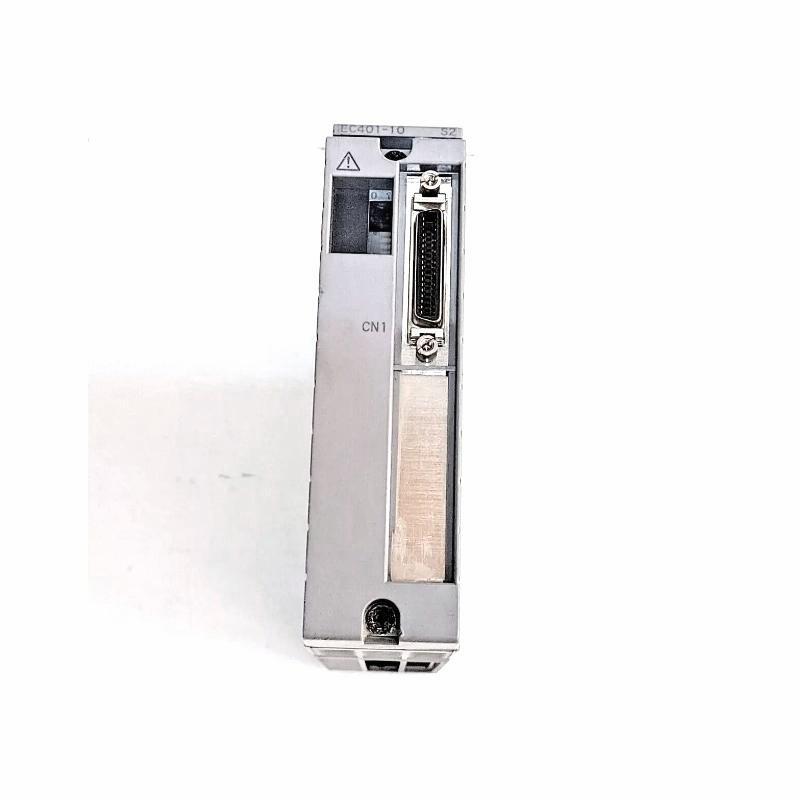
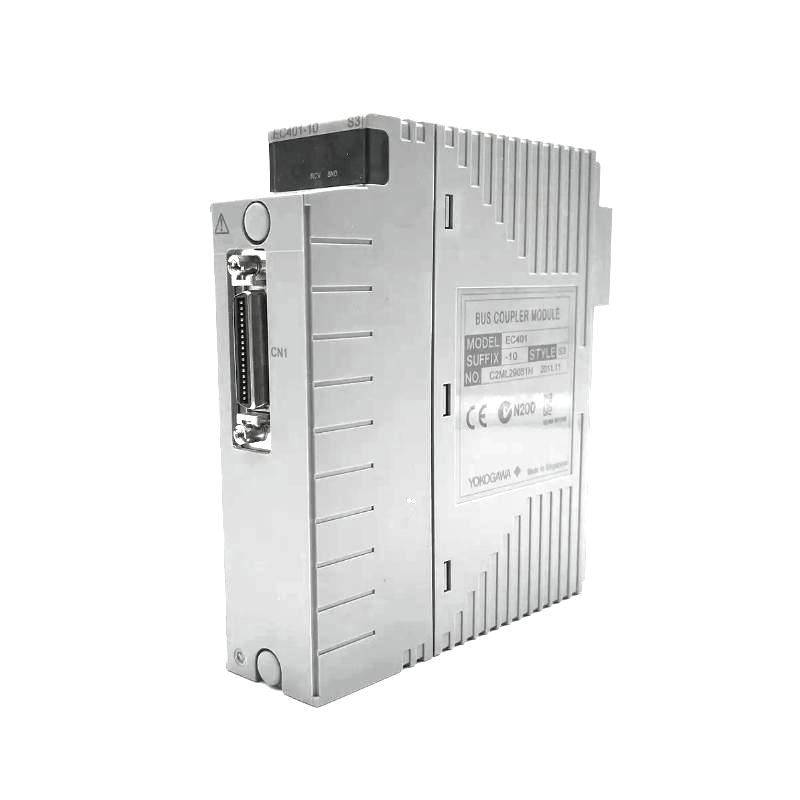
High-Performance ESB Bus Interface for Reliable DCS Connectivity
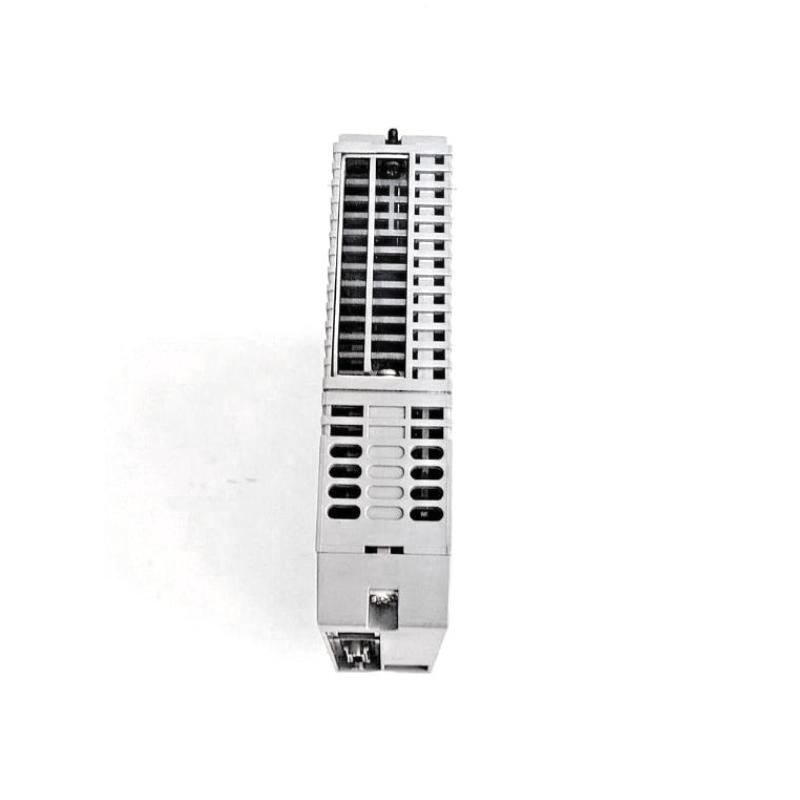
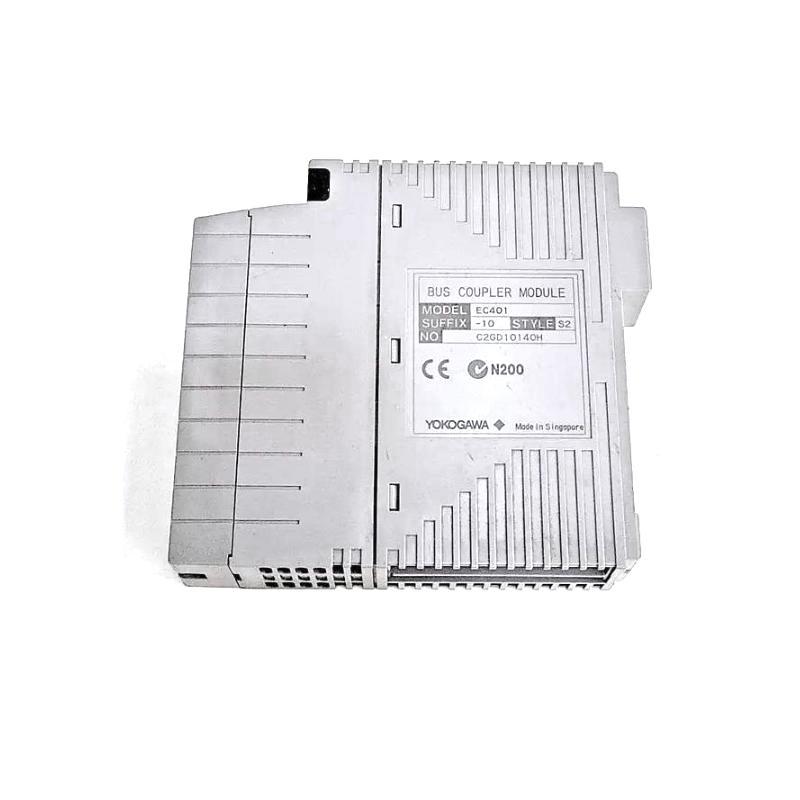
The Yokogawa EC401-10 S2 ESB Bus Coupler Module is a core communication interface designed for Yokogawa CENTUM and FCS (Field Control Station) systems. It enables high-speed, deterministic data exchange between the Field Control Unit (FCU) and multiple I/O node units through the ESB bus architecture.
As a widely used coupler in distributed control systems, it ensures stable real-time communication, redundancy support, and scalable system expansion in large industrial automation environments.
Technical Specifications
| Parameter | Details |
|---|
| Model | EC401-10 S2 |
| Product Type | ESB Bus Coupler Module |
| Function | ESB bus interface between FCU and I/O nodes |
| System Compatibility | Yokogawa CENTUM VP / CS / FIO systems |
| Communication Bus | ESB Bus (I/O communication backbone) |
| Transmission Speed | 128 Mbps (I/O data transmission) |
| Max Connectable Units | Up to 9 nodes per line |
| Transmission Distance | Up to 10 m |
| Redundancy | Dual-redundant configuration supported |
| Current Consumption | Approx. 0.5 A |
| Weight | Approx. 0.24 kg |
| Installation Slot | FCU slot 7 & 8 (redundant pairing) |
| Coupler Type | Master interface module |
Application Areas
The EC401-10 S2 is widely deployed in industrial automation systems requiring high-speed and reliable field communication:
-
Oil & gas production and refinery control systems
-
Petrochemical and chemical processing plants
-
Power generation and turbine control systems
-
Water and wastewater treatment facilities
-
Large-scale distributed control systems (DCS)
-
Industrial SCADA and process automation networks
It acts as the communication backbone for connecting controllers with distributed I/O subsystems.
Key Advantages
The EC401-10 S2 delivers high-speed deterministic communication, strong system scalability, and robust redundancy architecture support. It enables stable data exchange between FCUs and multiple node units, ensuring synchronized control across complex industrial systems.
Its dual-redundant design improves system availability and reduces downtime risk, which is critical for continuous process industries. The module also supports flexible system expansion, allowing additional I/O nodes to be integrated without major redesign.
With its compact form factor and proven Yokogawa engineering reliability, it remains a trusted solution in both legacy and modern DCS installations.
Technical FAQs
1. What is the main function of this module?
It connects FCUs with ESB bus I/O node units for system communication.
2. What is the transmission speed?
Up to 128 Mbps for I/O data communication.
3. How many nodes can it support?
Up to 9 nodes per communication line.
4. Is it a control or I/O module?
It is a communication interface (bus coupler), not a signal processing module.
5. Does it support redundancy?
Yes, dual-redundant ESB bus configuration is supported.
6. What is the maximum transmission distance?
Approximately 10 meters per ESB segment.
7. Where is it installed?
In FCU rack slots (typically slot 7 and 8 for redundancy).
8. What industries use it most?
Oil & gas, chemical, power generation, and utilities.
9. What is its key advantage?
Stable high-speed communication with redundant system architecture.
10. Why is it important in DCS systems?
It ensures synchronized and reliable data flow between controllers and field I/O.
 A DCS Q Co., Ltd. - PLC and DCS Industrial Control Equipment Wholesale