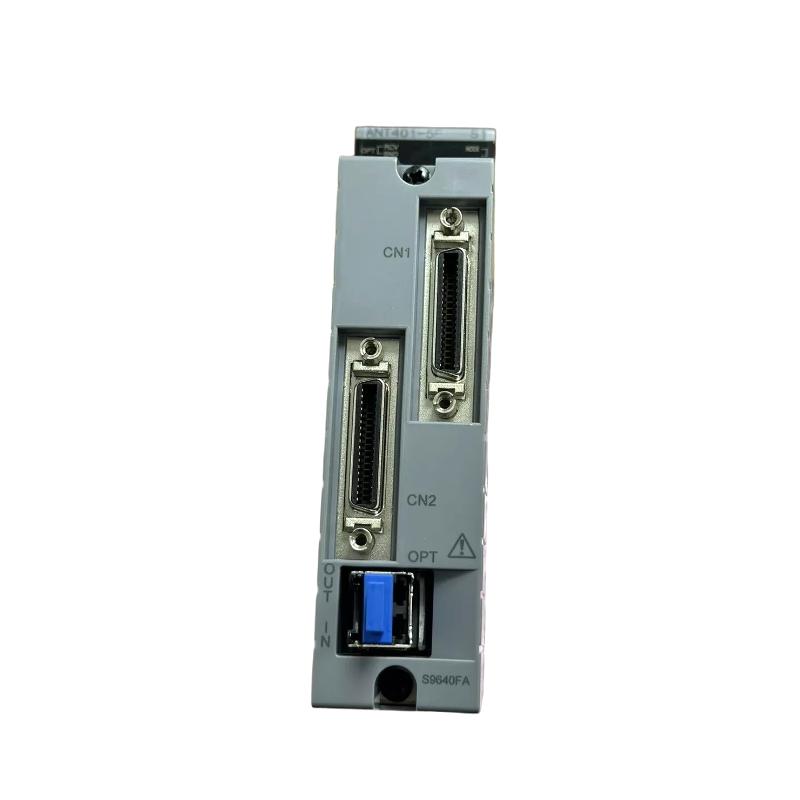
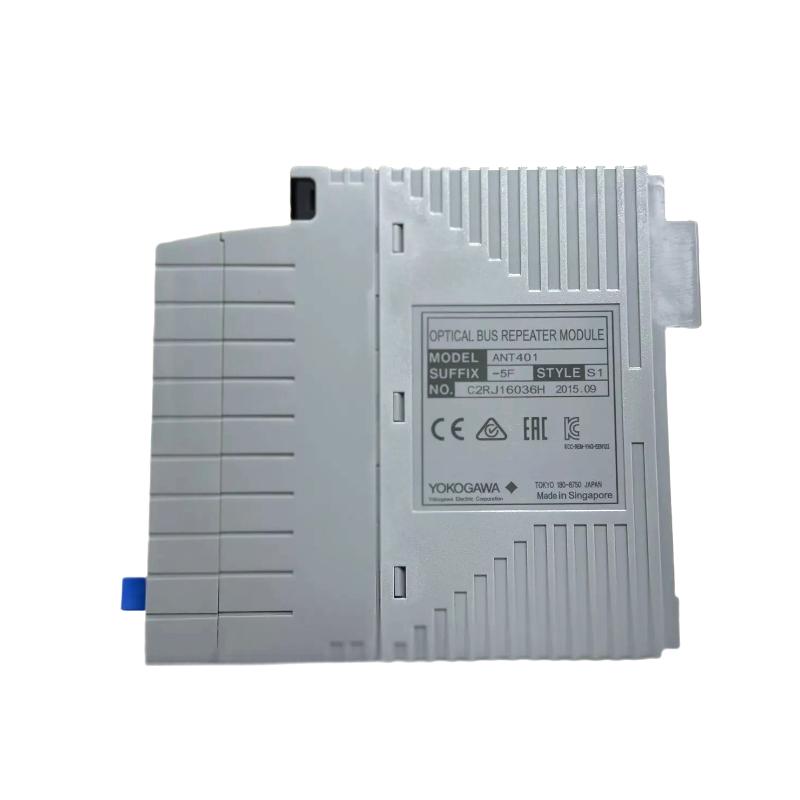
Product Introduction
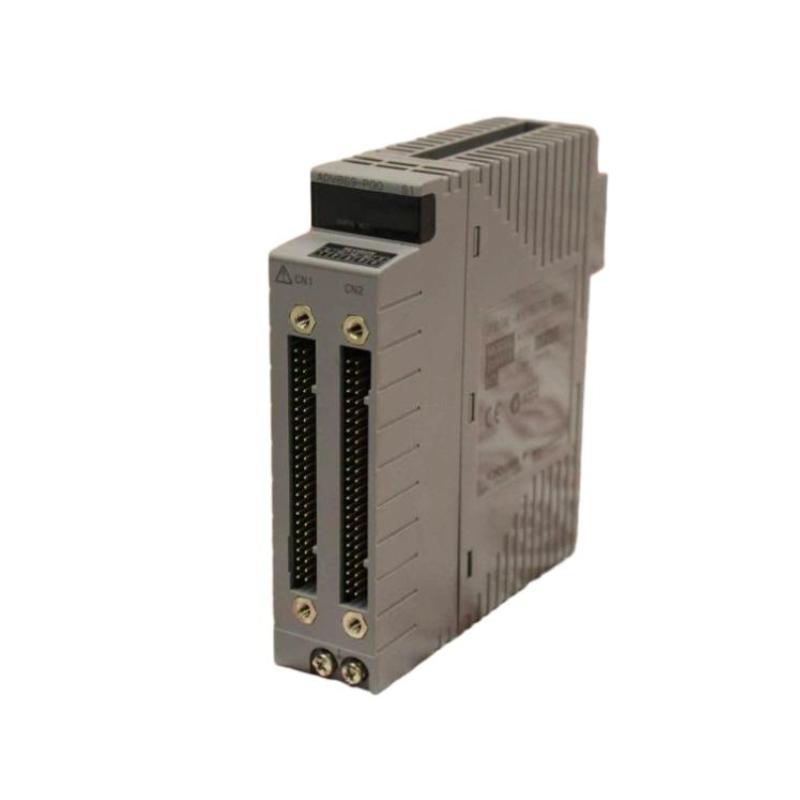
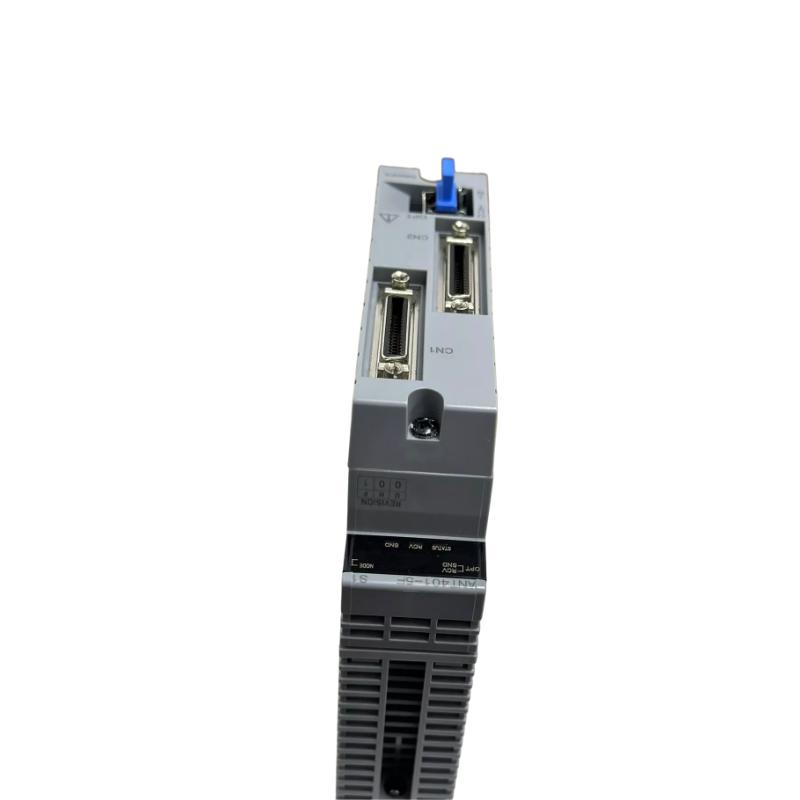
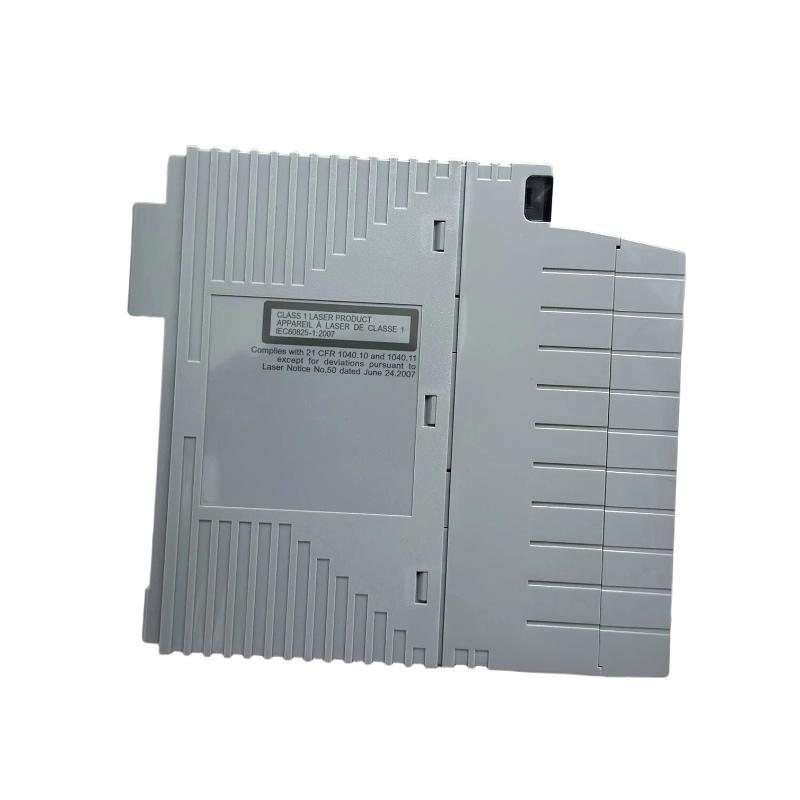
The Yokogawa ANT401-5E/A2EE2AT Optical ESB Bus Repeater Master Module is a high-reliability communication interface designed for Yokogawa distributed control systems (DCS), enabling long-distance ESB bus transmission via optical fiber. It serves as the master-side repeater unit, converting electrical ESB signals into optical signals to maintain stable communication across remote field control and I/O networks.
This model is widely applied in large-scale industrial automation environments where signal integrity, network expansion, and electromagnetic interference resistance are critical. It is typically used together with matching slave modules to form a complete optical ESB communication link for CENTUM-based systems.
Technical Specifications
| Parameter | Details |
|---|
| Manufacturer | Yokogawa |
| Model | ANT401-5E/A2EE2AT |
| Module Type | Optical ESB Bus Repeater Master Module |
| Function | ESB electrical-to-optical signal conversion |
| Communication System | ESB Bus (CENTUM / FCS architecture) |
| Transmission Distance | Up to 5 km (system dependent) |
| Network Topology | Chain type / Star type |
| Max Connection Stages | Up to 2 stages (chain configuration) |
| Max Connections | Up to 8 paired modules |
| Current Consumption | ~0.5 A |
| Weight | Approx. 0.25–0.3 kg |
| Fiber Type | Single-mode optical fiber |
| Connector Type | LC optical interface |
| Installation | Field Control Unit / Node Unit / Repeater Unit |
System Function Overview
The ANT401-5E/A2EE2AT is responsible for maintaining high-speed, deterministic ESB communication across distributed industrial systems. Its core functions include:
-
Converting ESB electrical signals into optical transmission
-
Extending communication distance up to 5 km
-
Ensuring stable data transfer in electrically noisy environments
-
Supporting scalable distributed control system architecture
-
Enabling reliable communication between field control units and remote nodes
When paired with compatible slave modules, it forms a robust optical backbone for Yokogawa DCS networks.
Key Advantages
-
Extended Communication Range: Supports long-distance ESB transmission up to 5 km
-
High Noise Immunity: Optical fiber eliminates electromagnetic interference in industrial environments
-
Stable DCS Integration: Designed for seamless operation within CENTUM VP and related systems
-
Flexible Network Design: Supports both chain and star topology configurations
-
Compact Industrial Design: Lightweight module suitable for dense control cabinet installation
-
Reliable System Expansion: Enables scalable architecture for large distributed automation plants
This makes it a strong fit for mission-critical industrial control systems requiring continuous and stable communication performance.
Technical FAQs
1. What is the main function of ANT401-5E/A2EE2AT?
It converts ESB bus electrical signals into optical signals for long-distance transmission.
2. What is the maximum transmission distance?
Up to 5 km depending on system configuration and fiber conditions.
3. What systems is it used with?
Yokogawa CENTUM VP and ESB-based distributed control systems.
4. Does it require a slave module?
Yes, it is typically paired with an ANT502 optical ESB slave module.
5. What network topologies are supported?
Chain and star configurations.
6. How many modules can be connected?
Up to 8 paired master-slave connections.
7. What type of fiber is used?
Single-mode optical fiber with LC connectors.
8. What is the current consumption?
Approximately 0.5 A.
9. Where is it installed?
In field control units, node units, or optical repeater racks.
10. Why is optical ESB communication important?
It improves signal reliability, eliminates electrical noise interference, and enables long-distance system expansion.
 A DCS Q Co., Ltd. - PLC and DCS Industrial Control Equipment Wholesale