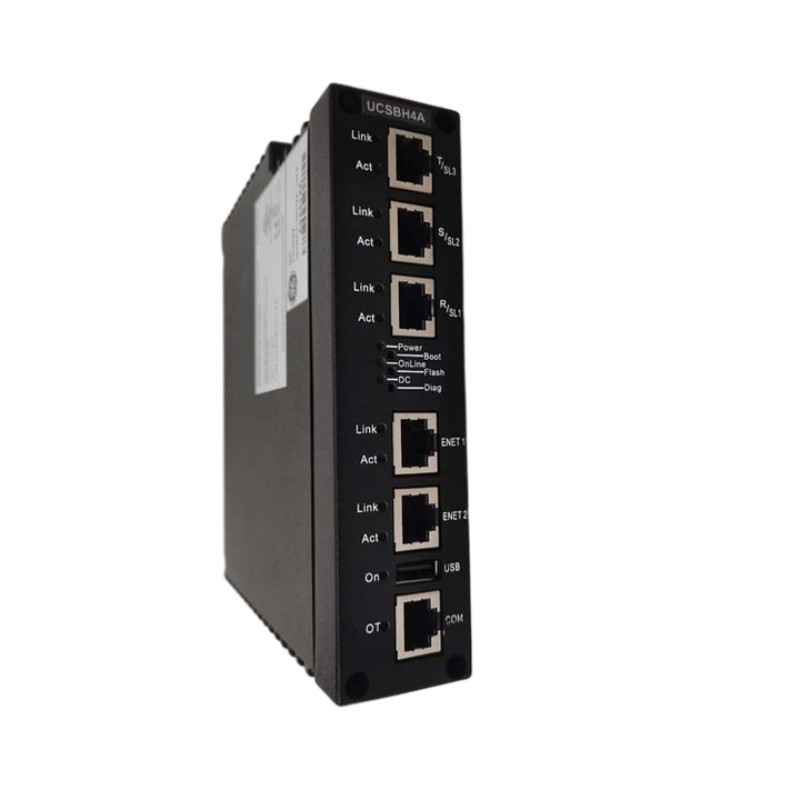
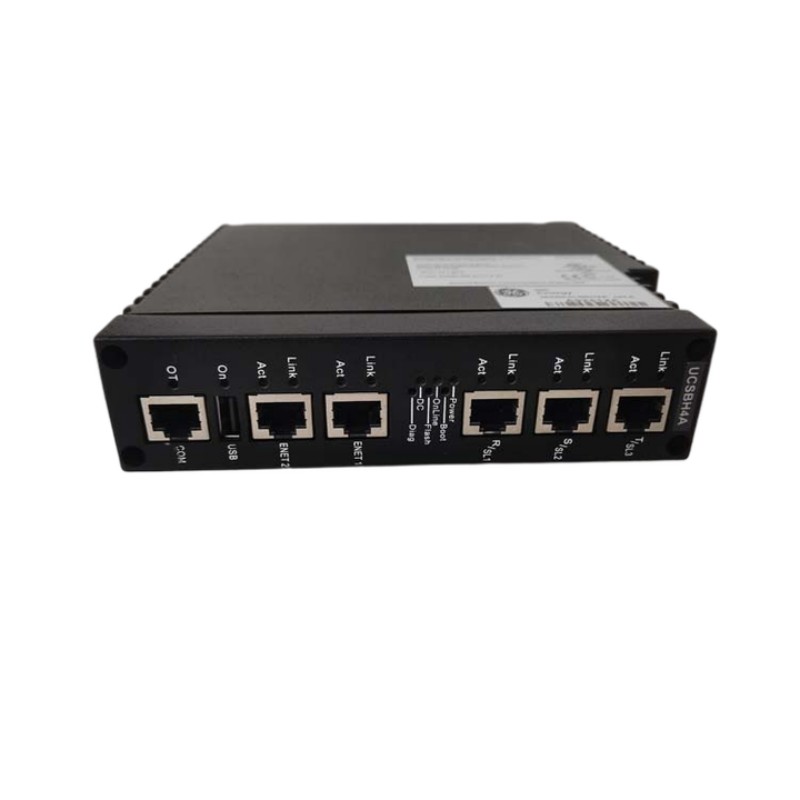
Product Overview
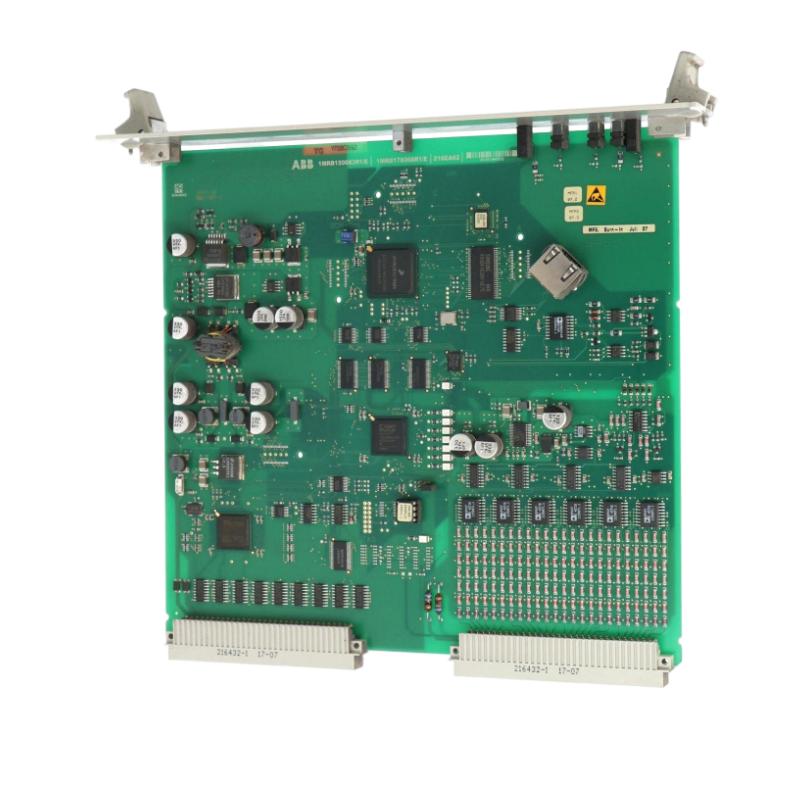
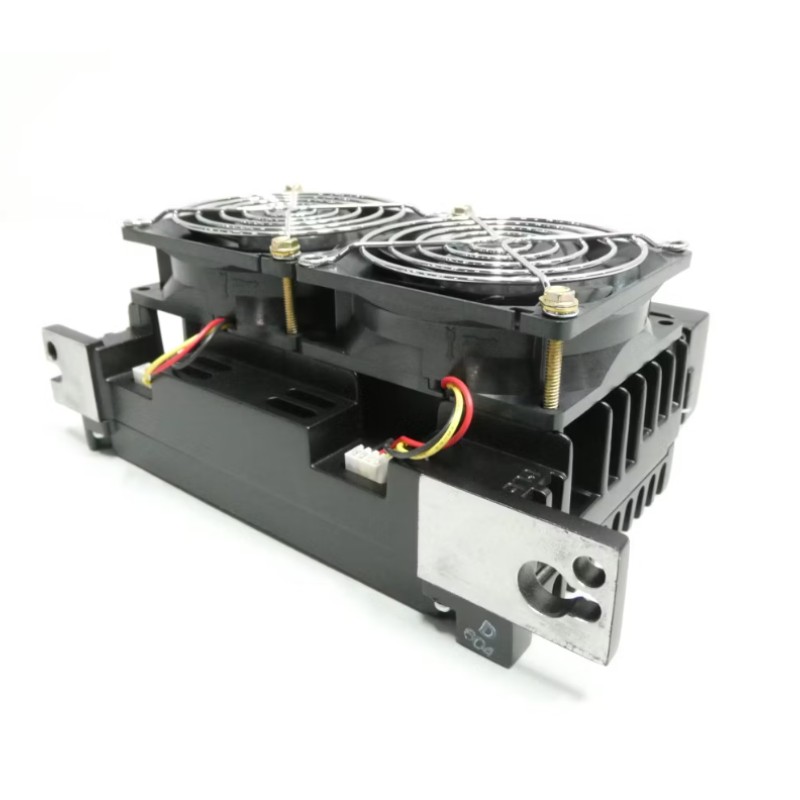
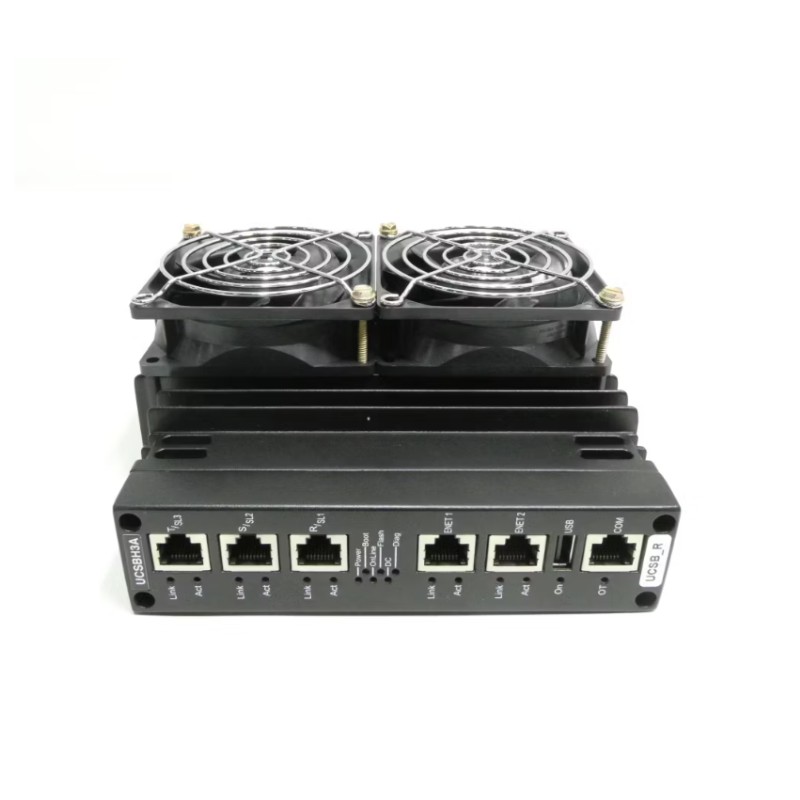
The GE IS420UCSBH3A UCSB Controller Module is a high-performance standalone controller designed for the Mark VIe control platform. It combines robust processing power with deterministic I/O communication, making it ideal for mission-critical turbine and industrial automation applications.
With its compact, fanless design and integrated redundancy support, the IS420UCSBH3A ensures long-term reliability and minimal maintenance, delivering precise control and rapid response for complex industrial systems.
Technical Specifications
| Parameter | Specification |
|---|
| Model | IS420UCSBH3A |
| Product Type | UCSB Controller Module |
| Series | Mark VIe / EX2100e / LS2100e |
| Processor | Intel EP80579, 800 MHz |
| Memory | 512 MB DDR2 RAM (ECC) / 4 GB NAND Flash |
| Operating System | QNX Neutrino RTOS |
| Communication Interface | IONet Industrial Ethernet |
| Synchronization | IEEE 1588 (≤50 μs accuracy) |
| Power Supply | 18–32 V DC (nominal 24–28 V DC) |
| Max Current | 1.5 A |
| Cooling | Passive (fanless) |
| Mounting | Panel-mounted module |
| Operating Temperature | -30°C to +65°C |
| Dimensions (HxWxD) | 90 × 120 × 35 mm |
| Weight | Approx. 1.2 kg |
Applications
The IS420UCSBH3A is widely used in industries requiring high reliability, deterministic control, and advanced network integration:
-
Gas and steam turbine control systems
-
Power generation and energy management plants
-
Oil & gas process automation
-
Safety-critical industrial applications (SIL2/SIL3)
-
Distributed control systems (DCS) with networked I/O
Its robust design and precise synchronization capabilities make it ideal for both new installations and retrofits, allowing seamless integration with existing Mark VIe infrastructures.
Technical FAQs
1. What makes UCSB controllers different from traditional PLCs?
They are standalone computing controllers without direct I/O hosting, relying on networked I/O for flexibility.
2. Which systems is the IS420UCSBH3A compatible with?
Mark VIe, EX2100e, and LS2100e control systems.
3. What processor is used?
Intel EP80579 embedded processor running at 800 MHz.
4. Does it support real-time synchronization?
Yes, using IEEE 1588 with microsecond-level accuracy.
5. Which operating system does it use?
QNX Neutrino real-time operating system.
6. Is redundancy supported?
Yes, it supports dual and Triple Modular Redundancy (TMR).
7. Does it have built-in I/O?
No, it communicates with distributed I/O modules via IONet.
8. What are the power requirements?
18–32 V DC, typically 24–28 V DC.
9. Can it operate in harsh environments?
Yes, it supports wide temperature ranges and industrial-grade conditions.
10. How is maintenance handled?
Fanless and battery-free design minimizes maintenance; firmware updates are performed via flash memory.
 A DCS Q Co., Ltd. - PLC and DCS Industrial Control Equipment Wholesale