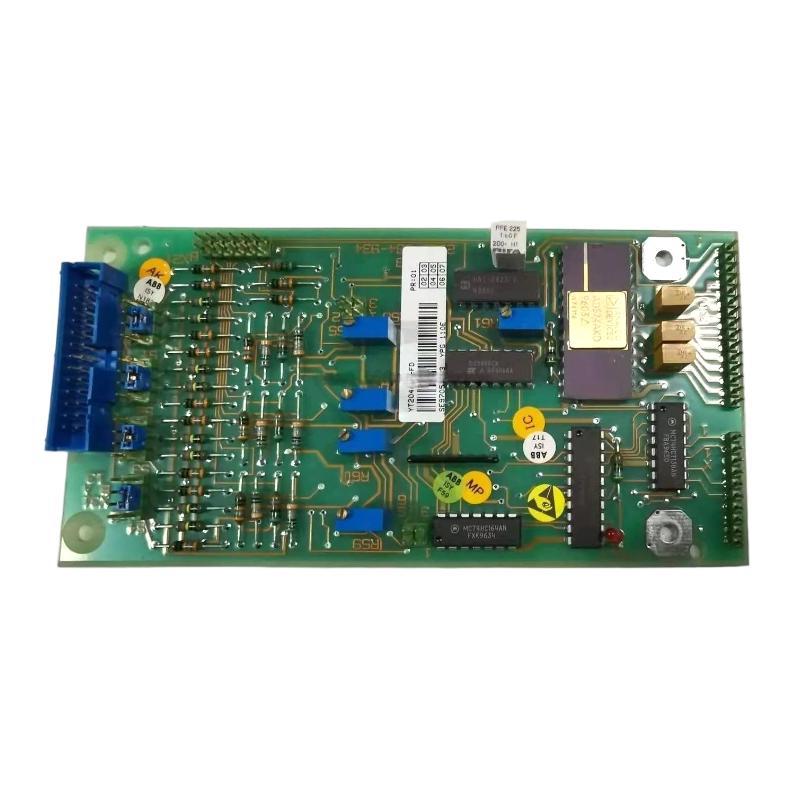
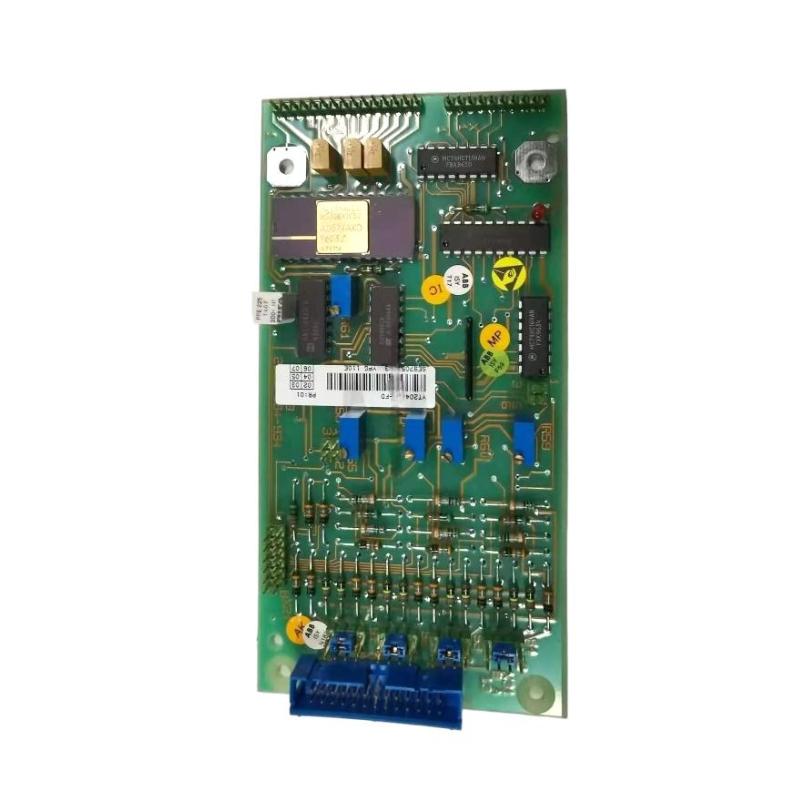
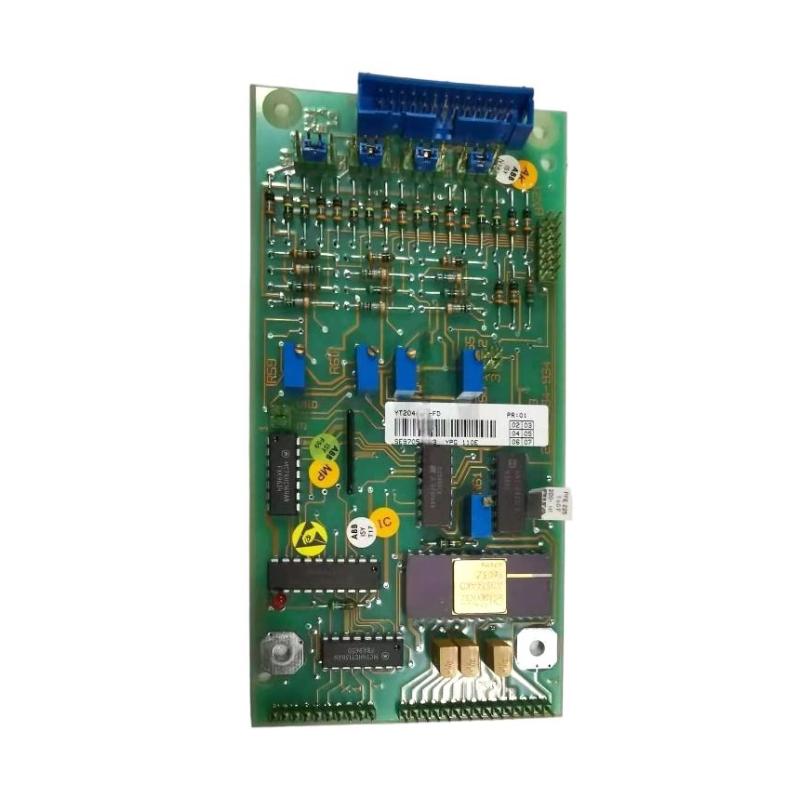
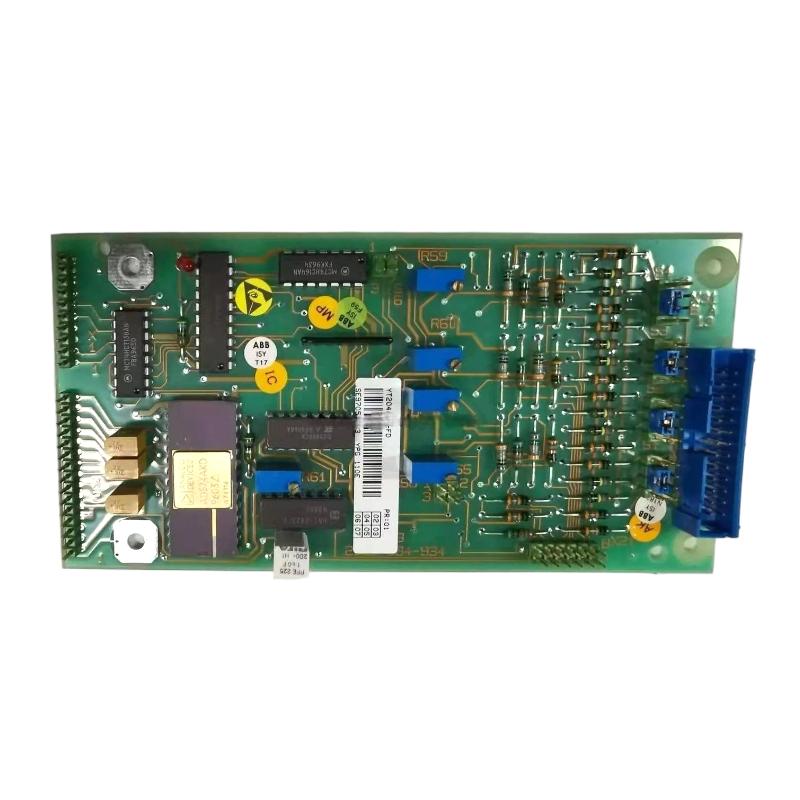
High-Speed Industrial Data Exchange Module for Distributed ABB Control Systems
The ABB YPC 104E YT204001-FH Parallel Bus Communication Slave Module is an industrial communication interface designed to support fast and reliable data exchange within ABB automation and distributed control architectures. It operates as a slave node in parallel bus systems, enabling synchronized communication between controllers, I/O modules, and field-level devices in complex industrial environments.
Engineered for stable and deterministic data transmission, this module is widely used in legacy ABB control platforms and high-reliability industrial systems where consistent communication timing and system coordination are essential.
Technical Specifications
| Parameter | Specification |
|---|
| Manufacturer | ABB |
| Model | YPC 104E |
| Part Number | YT204001-FH |
| Product Type | Parallel Bus Communication Slave Module |
| Communication Type | Parallel bus industrial communication |
| System Role | Slave node in distributed control network |
| Integration | ABB DCS / PLC / automation systems |
| Data Handling | Real-time synchronized signal exchange |
| Electrical Interface | Industrial backplane / bus connection |
| Isolation Design | High industrial electrical isolation |
| Response Performance | Deterministic low-latency communication |
| Installation Type | Rack-mounted / control cabinet slot |
| Operating Temperature | -20°C to +70°C |
| Storage Temperature | -40°C to +85°C |
| Environmental Design | Industrial-grade EMI resistance |
Industrial Applications
The ABB YPC 104E parallel bus slave module is designed for industrial automation environments that require fast, synchronized communication between multiple control nodes. It ensures reliable data exchange across distributed systems, helping maintain process coordination and operational stability.
Typical applications include:
-
ABB distributed control systems (DCS)
-
Industrial automation communication backplanes
-
Power plant control systems
-
Process manufacturing control networks
-
SCADA system integration layers
-
Oil & gas automation infrastructure
-
Water treatment control systems
-
Legacy ABB system upgrades and maintenance
Its deterministic communication behavior makes it suitable for time-critical industrial control architectures.
Key Advantages
Deterministic Parallel Communication
Ensures synchronized and predictable data transfer across industrial control systems.
Stable Slave Node Operation
Functions reliably as a communication endpoint within ABB bus architectures.
Strong Electrical Isolation
Protects control systems from noise and interference in industrial environments.
High System Compatibility
Designed for integration into ABB automation and legacy distributed control platforms.
Compact Modular Architecture
Space-efficient design enables easy installation in control cabinets and racks.
Reliable Industrial Performance
Built for continuous operation in harsh and electrically noisy environments.
Technical FAQs
1. What is the main function of the ABB YPC 104E FH module?
It acts as a slave communication module in parallel bus industrial control systems.
2. Where is this module commonly used?
It is used in ABB distributed control systems, automation networks, and industrial communication backplanes.
3. What does “slave module” mean in this context?
It means the module responds to commands from a master controller within the bus system.
4. Is it suitable for real-time applications?
Yes, it is designed for deterministic and synchronized industrial communication.
5. Can it be used in legacy ABB systems?
Yes, it is commonly used in maintenance and upgrade of existing ABB architectures.
6. Does it support harsh industrial environments?
Yes, it is engineered for electrical noise and temperature variations.
7. Is installation complex?
No, it is designed for standard rack or cabinet integration.
8. Does it improve system communication stability?
Yes, it ensures reliable and consistent data exchange across control nodes.
9. What industries use this module?
Power generation, manufacturing, oil & gas, and utility industries.
10. Does it require frequent maintenance?
No, it is built for long-term industrial operation with minimal maintenance.
 A DCS Q Co., Ltd. - PLC and DCS Industrial Control Equipment Wholesale