Introduction
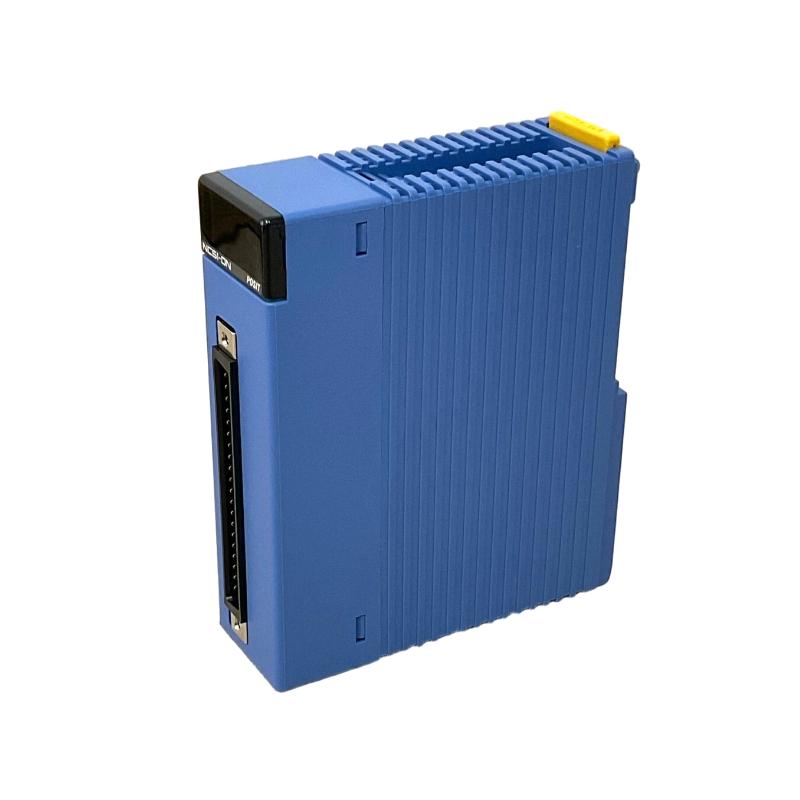
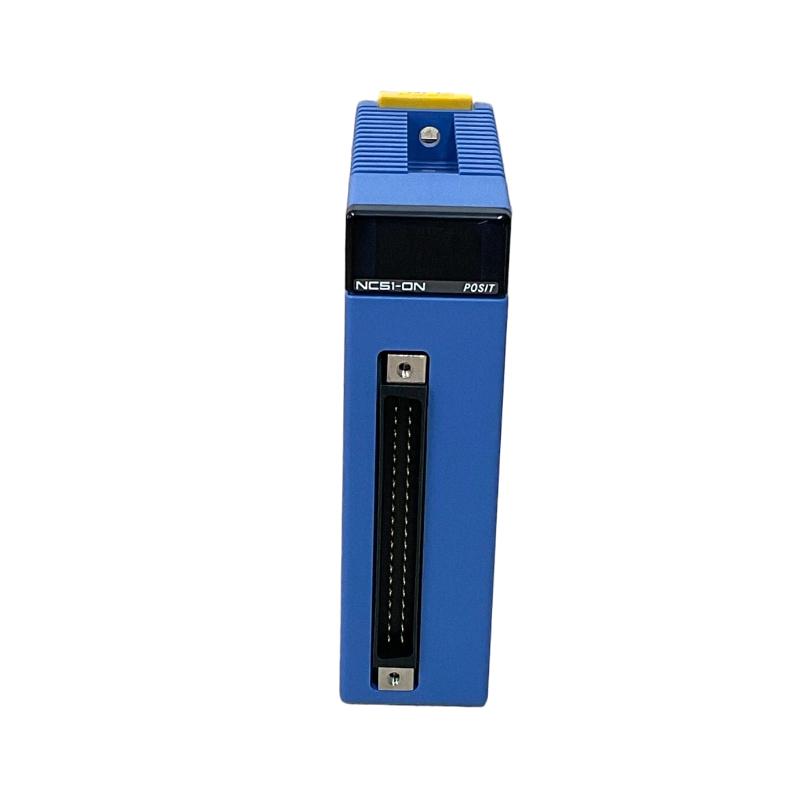
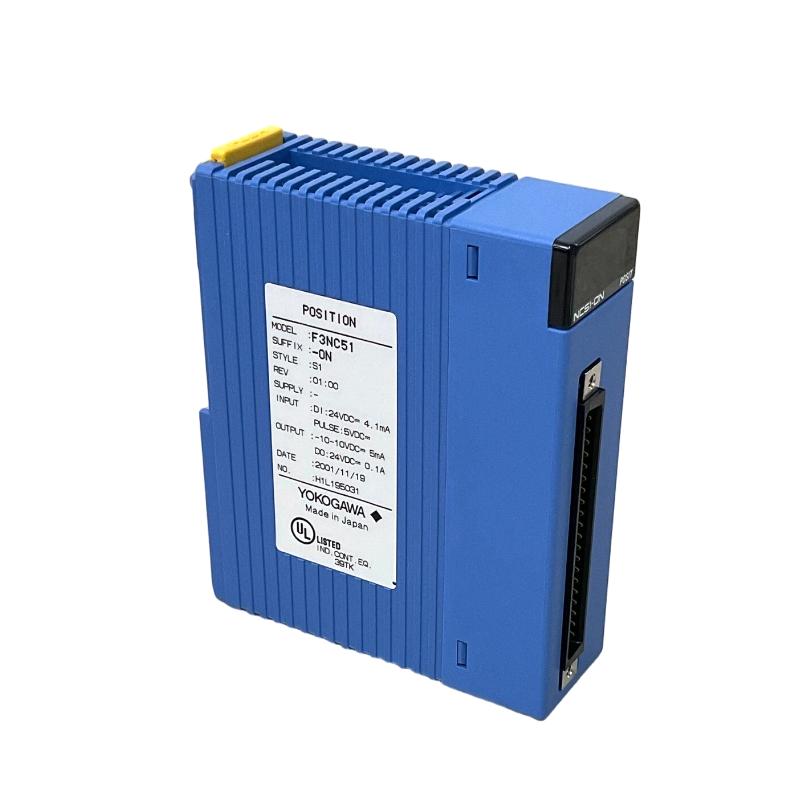
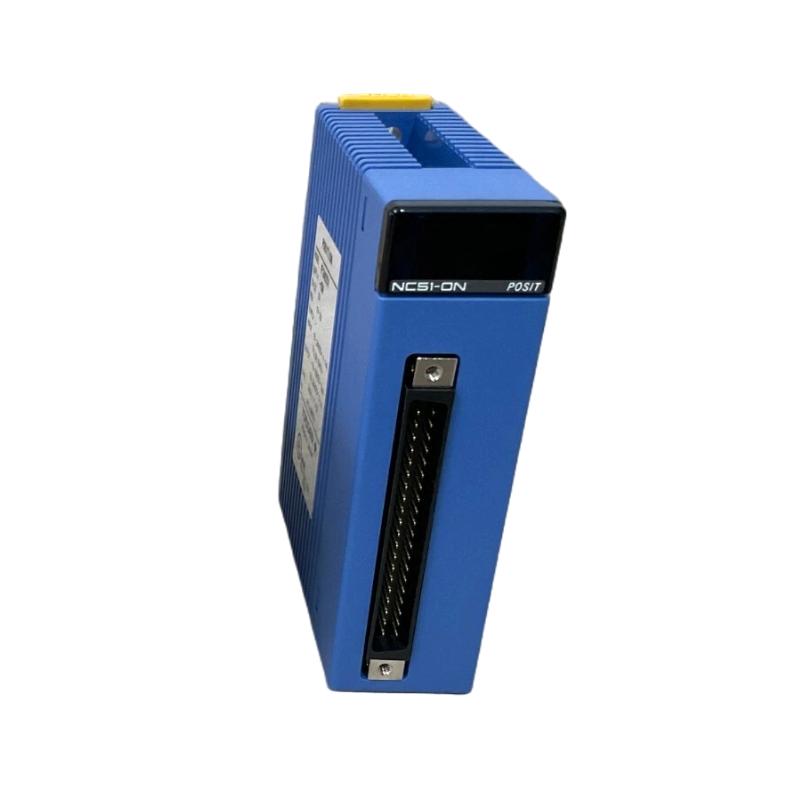
The Yokogawa F3NC51-0N Positioning Module is a precision motion control unit designed for FA-M3 PLC systems, providing high-performance single-axis positioning and velocity control through analog voltage output. It is engineered for servo-driven applications that require smooth motion profiles, high responsiveness, and fine-tuned speed regulation.
Unlike pulse-output positioning modules, this model uses a ±10 V analog velocity reference signal, making it especially suitable for servo amplifiers that operate in semi-closed loop control systems. It is widely adopted in compact yet high-precision automation equipment where stability and motion smoothness are critical.
Technical Specifications
| Parameter | Specification |
|---|
| Model | F3NC51-0N |
| Module Type | Positioning Module (Analog Voltage Output) |
| Series | FA-M3 |
| Control Axis | 1 axis |
| Output Type | ±10 V DC analog velocity command |
| Control Method | Semi-closed loop (encoder feedback) |
| Encoder Support | Incremental / absolute encoders |
| Max Encoder Input | Up to 2 Mpps (A/B phase, differential) |
| Position Control Range | -134,217,728 to +134,217,727 pulses |
| Velocity Range | 0.1 to 2,000,000 pulses/sec equivalent |
| Control Modes | Position / speed / position-speed switching |
| Motion Profiles | Trapezoidal, 2-step linear, S-curve |
| Interpolation | CPU-based multi-axis linear & arc control |
| Startup Time | Max 6 ms |
| External Inputs | Servo ON, reset, brake OFF, limit signals |
| External Outputs | Alarm, limit, origin, emergency stop |
| Power Consumption | Approx. 390 mA @ 5 V DC |
| Mounting | FA-M3 base unit slot |
| Operating Temperature | 0°C to 55°C |
| Storage Temperature | -20°C to 75°C |
| Humidity | 10–90% RH (non-condensing) |
| Dimensions (W × H × D) | 28.9 × 100 × 83.2 mm |
| Weight | Approx. 0.13 kg |
Applications
The F3NC51-0N is widely used in motion systems that require smooth analog-driven servo control and high-precision positioning. Typical applications include:
-
High-speed packaging machinery
-
Semiconductor manufacturing equipment
-
Labeling and filling automation lines
-
Precision inspection and measurement systems
-
Light-duty CNC auxiliary positioning systems
-
Robotics with smooth trajectory control
Its analog control architecture makes it particularly effective for applications prioritizing motion smoothness over discrete pulse stepping.
Advantages
One of the key strengths of the F3NC51-0N is its analog velocity control output, which allows smoother motor response compared to traditional pulse-based positioning systems.
It supports semi-closed loop control using encoder feedback, ensuring accurate positioning while maintaining stable speed regulation.
The module features multiple motion modes (position, speed, and hybrid control), allowing engineers to adapt control strategies to different machine requirements without hardware changes.
Its S-curve acceleration profile support significantly reduces mechanical shock, improving machine lifespan and reducing vibration in high-speed operations.
Additionally, integration within the FA-M3 ecosystem enables seamless coordination with CPU, communication, and I/O modules for unified automation control.
Technical FAQs
1. What type of output does the F3NC51-0N use?
It uses a ±10 V analog voltage output for velocity control.
2. How many axes does it support?
It supports 1-axis motion control.
3. Does it support encoder feedback?
Yes, it supports both incremental and absolute encoders.
4. What control methods are available?
Position control, speed control, and hybrid position-speed control.
5. Is it suitable for servo systems?
Yes, it is designed for servo amplifier integration in semi-closed loop systems.
6. What is the maximum response speed?
Startup time is as fast as 6 ms.
7. Does it support multi-axis coordination?
Yes, via CPU-based interpolation functions.
8. What motion profiles are supported?
Trapezoidal, linear, and S-curve acceleration profiles.
9. What PLC system is it compatible with?
It is designed for Yokogawa FA-M3 PLC platforms.
10. Where is it typically used?
It is used in precision automation, packaging, and semiconductor equipment.
 A DCS Q Co., Ltd. - PLC and DCS Industrial Control Equipment Wholesale