Introduction
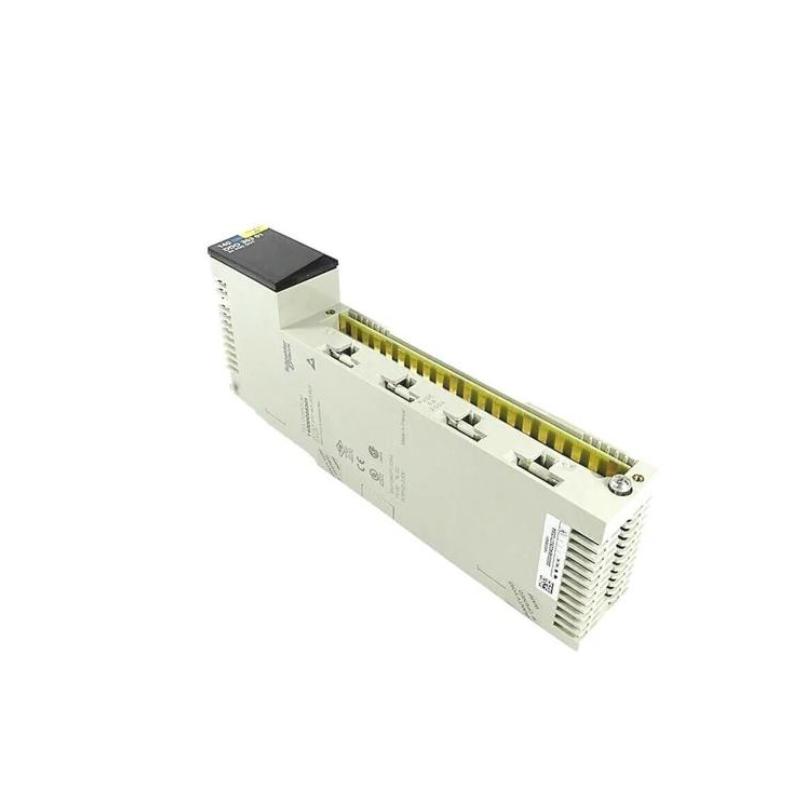
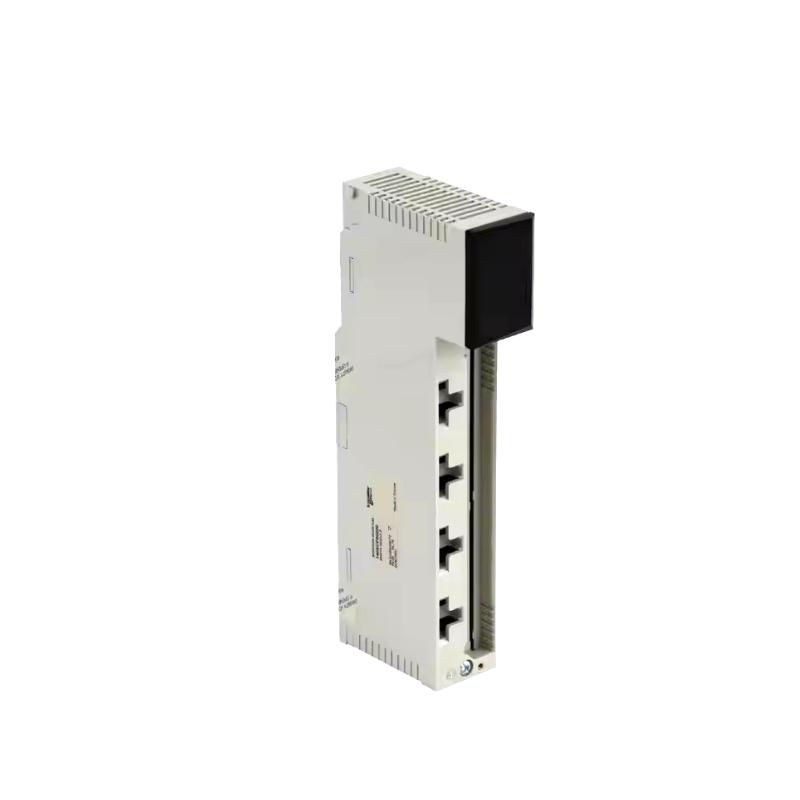
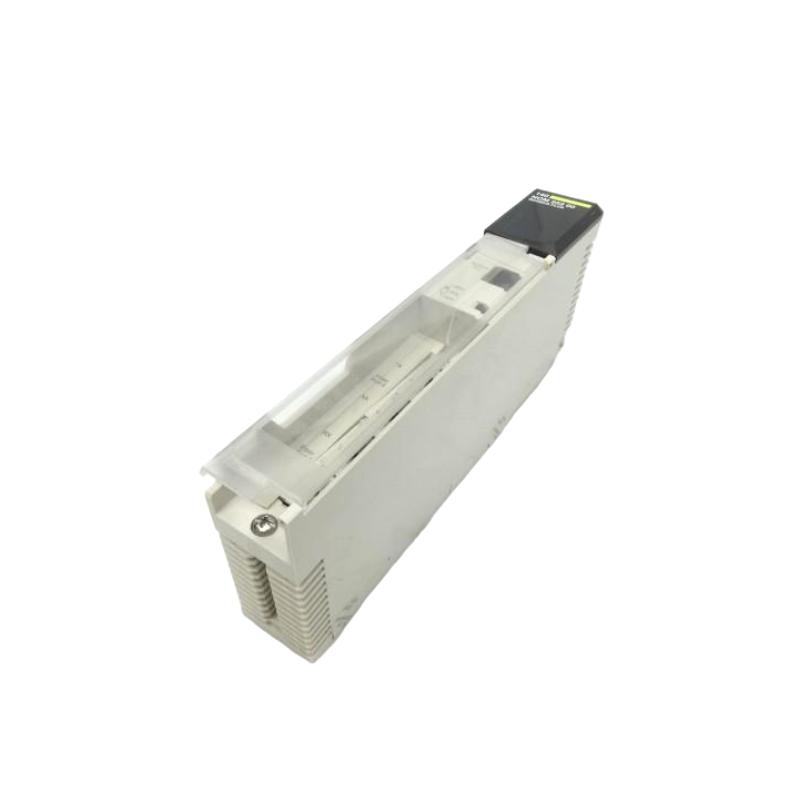
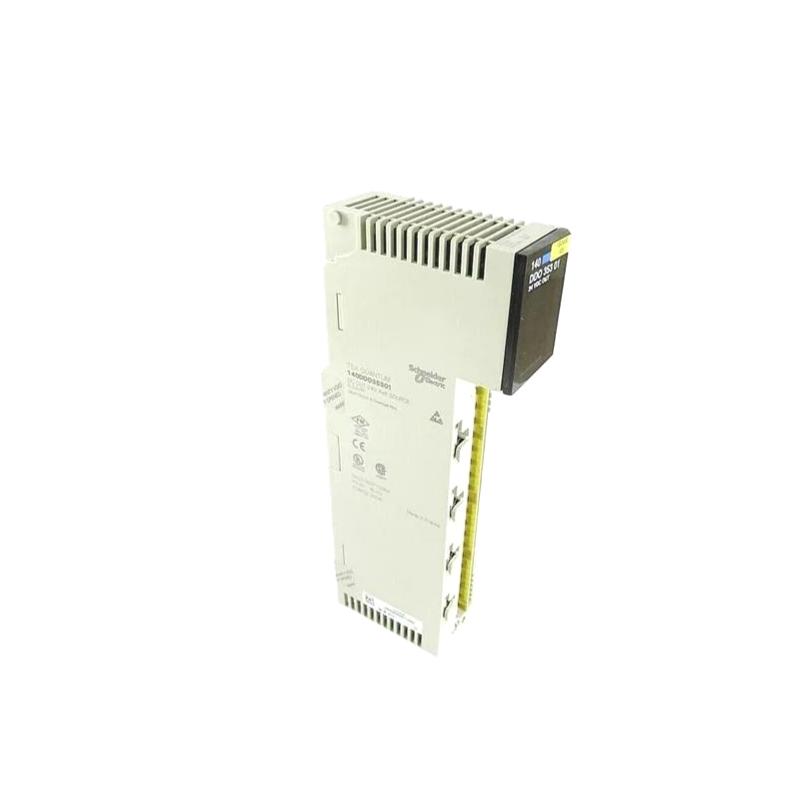
The Schneider 140NOM25200 DIO Head-End Adaptor is a high-performance interface module developed for the Modicon Quantum automation platform. It serves as the central communication hub between distributed discrete I/O systems and the main PLC, ensuring fast, structured, and reliable data exchange across industrial networks.
Designed with both fiber optic and copper communication capabilities, this module offers enhanced flexibility for complex industrial infrastructures. It is particularly suited for applications requiring long-distance communication, high noise immunity, and seamless integration of remote I/O stations into centralized control systems.
Technical Specifications
| Parameter | Specification |
|---|
| Product Type | DIO Head-End Adaptor Module |
| Platform | Modicon Quantum |
| Communication Ports | 1 × Modbus Plus (fiber optic + single copper), 1 × Modbus RS232 |
| Transmission Rate | 1 Mbit/s |
| Electrical Connection | 1 × RJ45, 2 × TX/RX fiber connectors |
| I/O Capacity | 30 input words / 32 output words |
| Communication Function | Distributed I/O data exchange |
| Diagnostics | RAM, processor, checksum, address monitoring |
| Power Dissipation | ~4 W |
| Bus Current | ~750 mA |
| Optical Wavelength | ~820 nm |
| Power Loss Budget | Multiple fiber standards supported |
| Operating Temperature | 0°C to 60°C |
| Storage Temperature | -40°C to 85°C |
| Humidity | Up to 95% non-condensing |
Applications
The 140NOM25200 is widely used in distributed automation systems where remote I/O communication is essential. Its hybrid fiber and copper support makes it ideal for diverse industrial environments. Typical applications include:
-
Large manufacturing facilities with distributed I/O architecture
-
Power generation and substation automation
-
Oil & gas process control systems
-
Water and wastewater treatment plants
-
Industrial transportation and material handling systems
-
Remote field device integration over long distances
It is especially valuable in installations where electromagnetic interference is a concern and fiber optic communication is preferred.
Advantages
The 140NOM25200 stands out for its hybrid communication capability, combining fiber optic and copper connectivity in a single module. This allows engineers to design flexible network topologies while maintaining high signal integrity over long distances.
Its support for Modbus Plus communication ensures reliable and deterministic data exchange, which is essential for distributed control systems. The module efficiently manages up to 30 input and 32 output words, providing structured data handling for complex automation processes.
Another key advantage is its robust diagnostic system, which continuously monitors processor status, memory integrity, and communication health. This helps reduce downtime and simplifies maintenance.
With its industrial-grade design and seamless integration into the Quantum rack, the module delivers long-term operational stability in demanding environments.
Technical FAQs
1. What is the primary function of the 140NOM25200?
It connects distributed DIO systems to a central PLC for data communication.
2. What communication interfaces are available?
One Modbus Plus fiber/copper port and one Modbus RS232 port.
3. What is the transmission speed?
Up to 1 Mbit/s for reliable industrial communication.
4. How many I/O words does it support?
30 input words and 32 output words.
5. Does it support fiber optic communication?
Yes, it includes fiber optic TX/RX connectors for long-distance communication.
6. What is the benefit of fiber connectivity?
Improved noise immunity and extended communication distance.
7. How is it powered?
Through the Modicon Quantum rack backplane.
8. What diagnostics are included?
Processor, RAM, checksum, and communication monitoring.
9. What industries use this module?
Manufacturing, energy, utilities, oil & gas, and process automation.
10. Is it suitable for distributed control systems?
Yes, it is specifically designed for remote I/O communication in distributed architectures.
 A DCS Q Co., Ltd. - PLC and DCS Industrial Control Equipment Wholesale