Application Scenarios
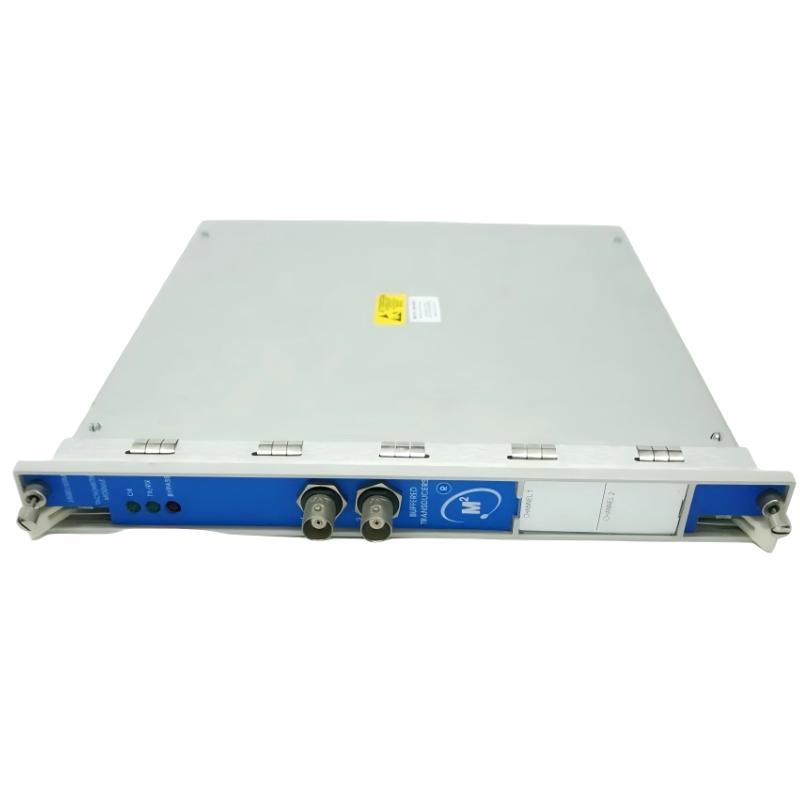
The 140ESI06210 is widely used in industrial systems requiring simple, reliable serial communication. It is commonly deployed in production lines for connecting PLCs to barcode scanners, operator terminals, laboratory instruments, weighing systems, and legacy RS-232 devices. In many factories, it serves as a bridge between modern automation systems and older ASCII-based equipment, ensuring continued usability without costly system replacement.
Advantages
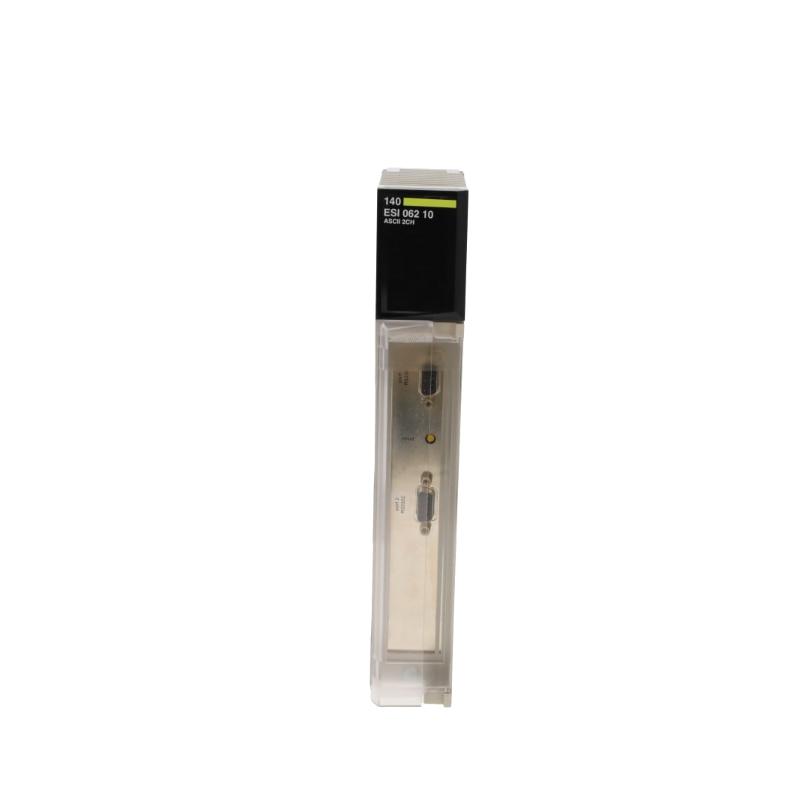
This module delivers a practical and cost-effective communication solution for mixed-technology environments. Its dual RS-232C ports allow simultaneous device connections, improving system flexibility. The ASCII protocol support ensures compatibility with a wide range of industrial and third-party devices, making integration straightforward even in legacy setups.
Its structured message handling system (up to 255 messages with nested processing) allows organized data exchange, while built-in buffering improves communication stability during high-load operations. The integrated calendar clock enhances data timestamping and logging capabilities. Compact design and standard Quantum rack compatibility ensure easy installation without modifying existing architectures.
Overall, it is a reliable choice for engineers who need stable serial communication rather than high-speed network protocols.
Technical FAQs
1. What is the main function of the 140ESI06210?
It enables ASCII serial communication between a Quantum PLC and external devices.
2. How many serial ports does it have?
It has 2 RS-232C ports.
3. What is the communication protocol used?
It uses ASCII-based asynchronous serial communication.
4. What is the transmission speed?
19.2 kbit/s.
5. What devices can it connect to?
Printers, barcode readers, HMIs, scales, and other serial devices.
6. Does it support message buffering?
Yes, with 255 input and output byte buffers.
7. Can it store messages internally?
Yes, it supports up to 255 messages with structured handling.
8. What is the maximum cable length?
Up to 20 meters.
9. Is it suitable for modern Ethernet systems?
It is mainly used for legacy or hybrid serial communication environments.
10. What programming environments support it?
Unity Pro, Concept, and ProWORX software suites.
 A DCS Q Co., Ltd. - PLC and DCS Industrial Control Equipment Wholesale