Introduction
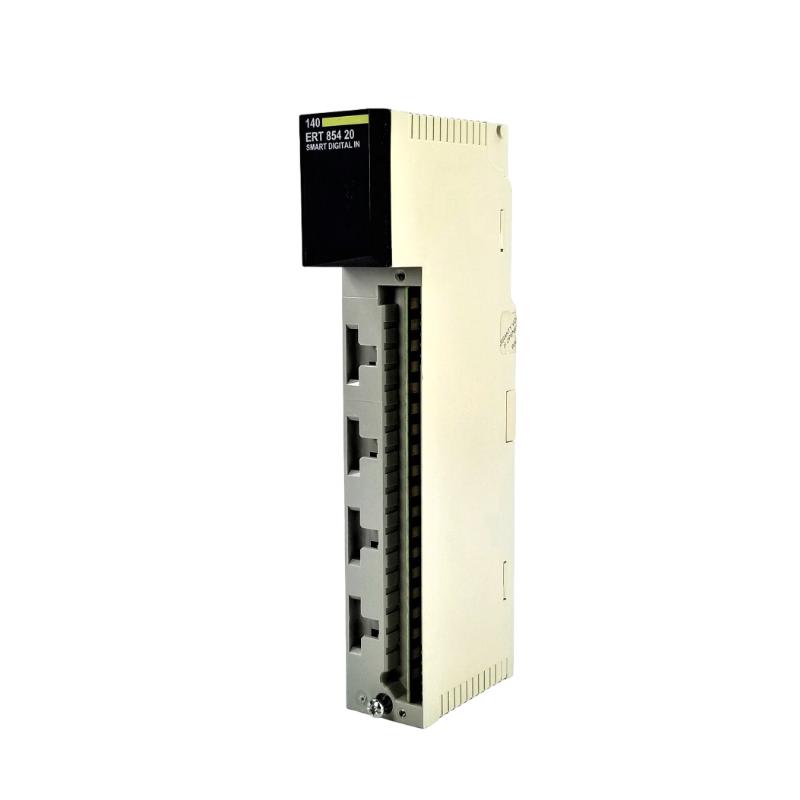
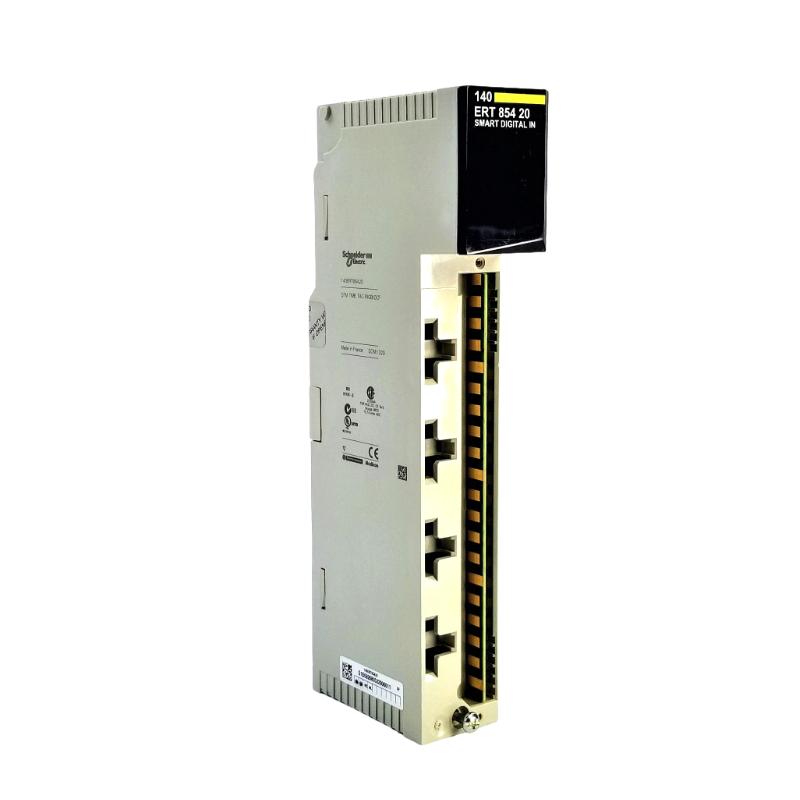
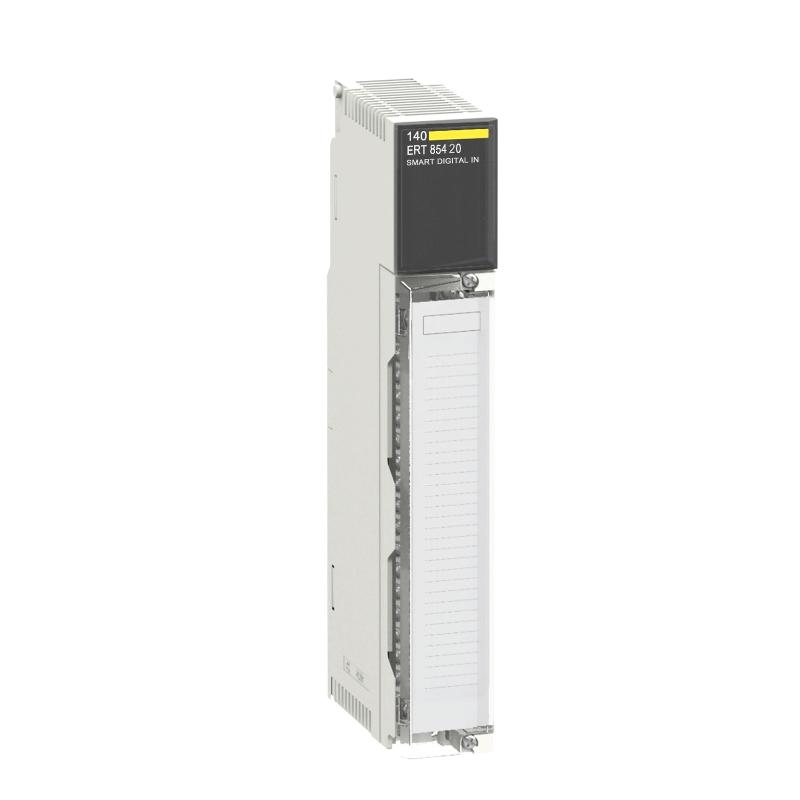
The Schneider 140ERT85420 Multifunction Input Module is a high-reliability Sequence of Events (SOE) and time-synchronized input solution designed for the Modicon Quantum automation platform. It is built to capture, log, and synchronize discrete input changes with precise time stamping, making it a critical component in systems where event traceability and operational transparency are essential. With support for industrial time protocols and high-density input processing, it is widely used in mission-critical automation environments requiring accurate diagnostics and event reconstruction.
Technical Specifications
| Parameter | Specification |
|---|
| Product Type | Multifunction Input Module (SOE) |
| Platform | Modicon Quantum |
| Input Channels | 32 discrete inputs |
| Channel Groups | 2 × 16 input groups |
| Additional Input | 1 × 24 V DC clock signal input |
| Input Voltage Range | 24–125 V DC |
| Switching Voltage Levels | 24 V / 48 V / 60 V / 125 V (configurable thresholds) |
| Event Function | Time & date stamped event logging |
| Status Monitoring | Continuous discrete input monitoring |
| Counting Frequency | Up to 500 Hz |
| Time Synchronization | DCF77 / IRIG-B protocols |
| Input Filtering | Configurable 0–255 ms anti-bounce |
| Isolation | Optocoupler (channel & group separation) |
| Power Consumption | ≤ 7.5 W |
| Bus Current | ~300 mA at 5 V DC |
| External Supply | 24–125 V DC |
| Communication | Quantum backplane |
| Operating Temperature | 0°C to 60°C |
| Storage Temperature | -40°C to 85°C |
Applications
This module is widely deployed in industries where precise event tracking is essential for system safety, diagnostics, and compliance. Typical applications include electrical power distribution systems, substation automation, oil & gas monitoring, transportation signaling systems, and large-scale manufacturing lines. Its ability to log time-stamped state changes makes it especially valuable for fault analysis and sequence-of-events reconstruction in complex distributed control architectures.
Advantages
The 140ERT85420 is designed for high-precision event intelligence rather than simple signal acquisition. Its strongest advantage lies in its ability to record every input transition with synchronized time accuracy, enabling engineers to reconstruct system behavior down to the millisecond level.
Dual-channel grouping improves wiring structure and reduces installation complexity, while optocoupler isolation ensures strong immunity to electrical noise and interference. The configurable anti-bounce filtering allows it to adapt to both fast and slow mechanical inputs, improving signal reliability in mixed industrial environments.
Support for DCF77 and IRIG-B synchronization ensures consistent time alignment across distributed systems, which is essential in multi-site operations. Diagnostic LEDs and self-check functions provide immediate feedback on module status, improving maintenance efficiency and reducing downtime risk. Overall, it delivers a strong combination of precision, robustness, and system-level visibility.
Technical FAQs
1. What is the main function of the 140ERT85420?
It records and time-stamps discrete input events for Sequence of Events (SOE) monitoring.
2. How many inputs does it support?
It supports 32 process inputs plus 1 clock input.
3. What is its input voltage range?
It supports 24–125 V DC process inputs.
4. What time synchronization methods are used?
It supports DCF77 and IRIG-B synchronization protocols.
5. What is the event logging capability?
It logs status changes with precise time and date stamps.
6. What is the maximum counting frequency?
Up to 500 Hz for status monitoring.
7. Does it include electrical isolation?
Yes, optocoupler isolation between channels and groups.
8. Can input signals be filtered?
Yes, anti-bounce filtering is configurable from 0 to 255 ms.
9. What is its power consumption?
Approximately 7.5 W maximum.
10. What industries typically use this module?
Power systems, industrial automation, utilities, and process control environments.
 A DCS Q Co., Ltd. - PLC and DCS Industrial Control Equipment Wholesale