Core Communication Interface for Distributed Control Architecture
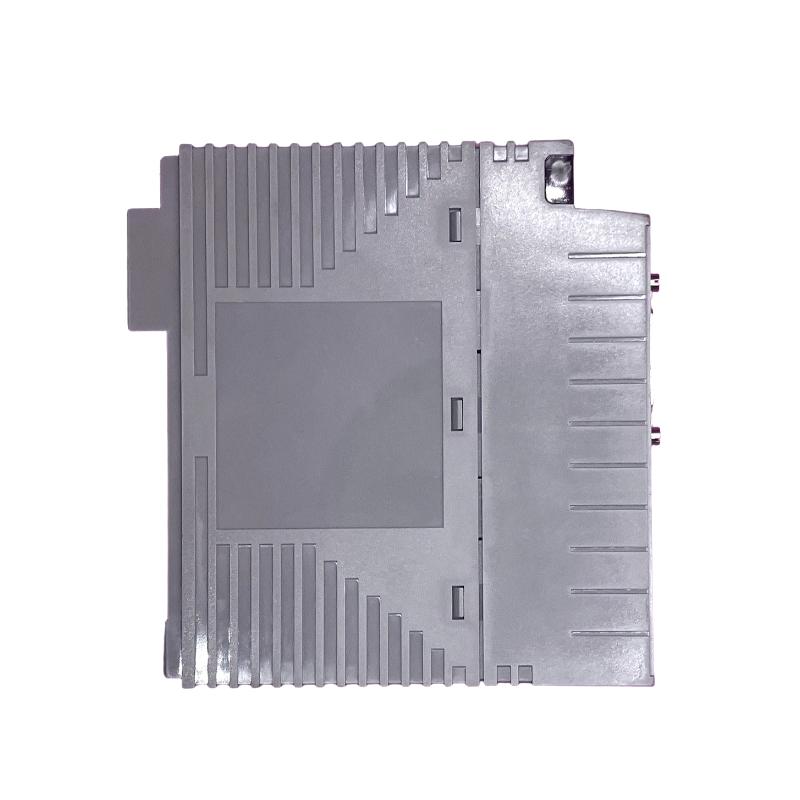
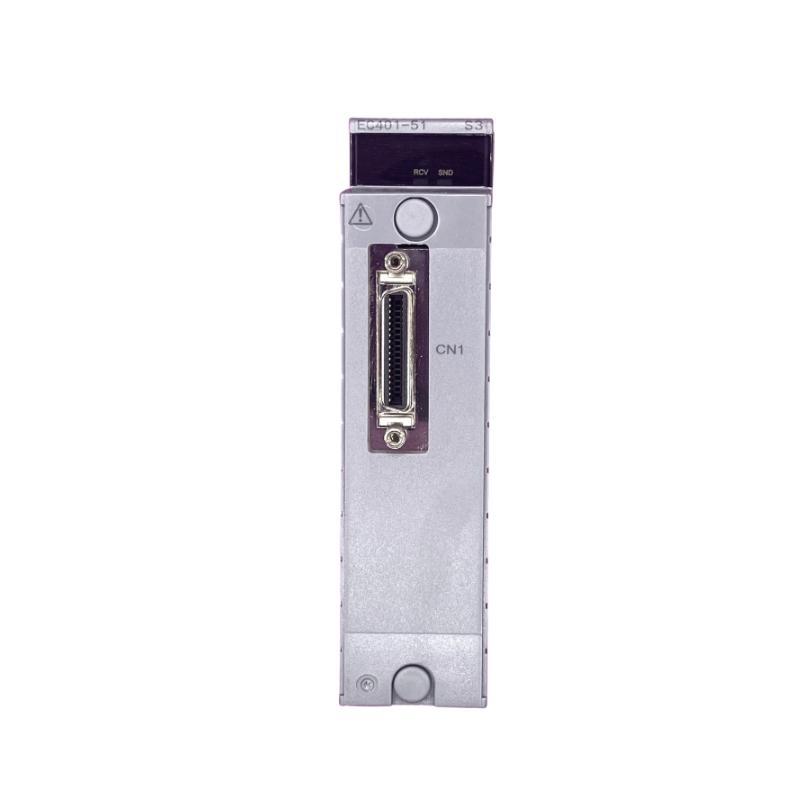
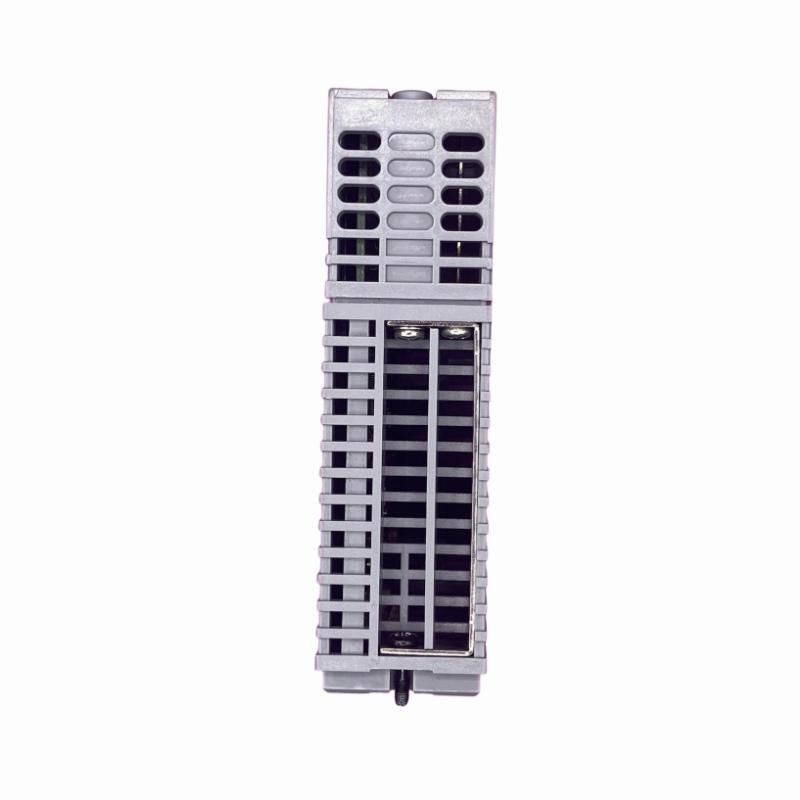
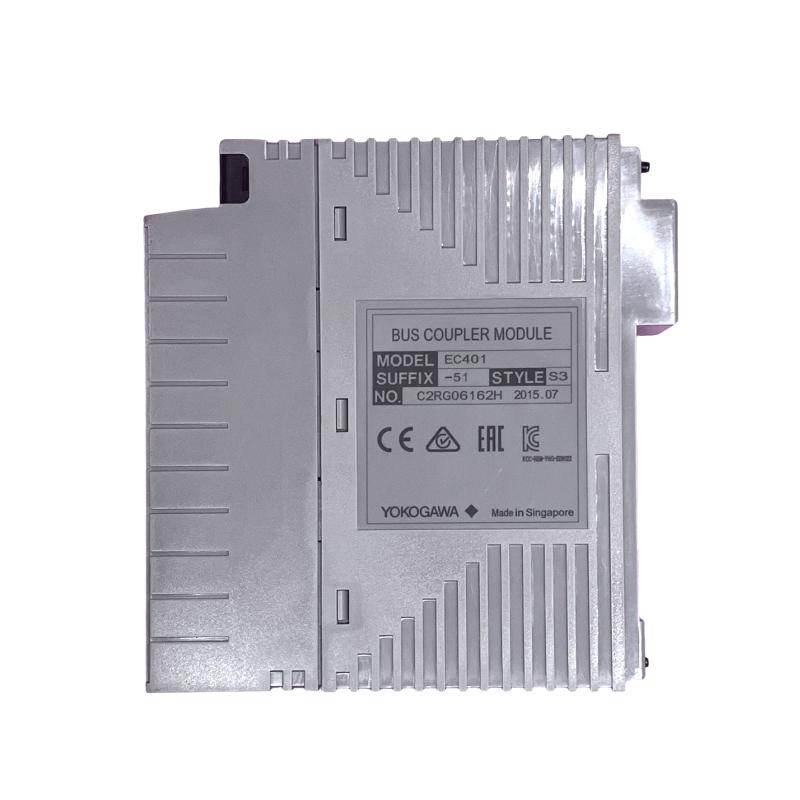
The Yokogawa EC401 ESB Bus Coupler Module is a key communication component used in Yokogawa CENTUM VP and related distributed control systems. It functions as a bridge between the Field Control Unit (FCU) and Node Units, enabling high-speed and stable data exchange across the ESB (Extended System Bus) network.
Designed for scalable industrial automation, the EC401 allows remote I/O expansion while maintaining deterministic communication performance. It plays a critical role in enabling modular plant architectures where control and field devices are distributed across large industrial sites.
Technical Specifications
| Parameter | Specification |
|---|
| Product Type | ESB Bus Coupler Module |
| Model | EC401 |
| System Compatibility | Yokogawa CENTUM VP / CS 3000 / FIO systems |
| Function | FCU to Node Unit communication interface |
| Bus Type | ESB (Extended System Bus) |
| Transmission Speed | 128 Mbps |
| Max Connectable Nodes | Up to 9 units |
| Transmission Distance | Max 10 m |
| Power Consumption | ~0.5 A |
| Weight | Approx. 0.24 kg |
| Mounting Location | Field Control Unit (FCS/FCU rack slot) |
| Redundancy Support | Yes (dual-redundant configuration supported) |
| Operating Temperature | Industrial range (typically -10°C to +55°C) |
| Storage Temperature | -40°C to +70°C |
| Humidity Range | 5% to 95% non-condensing |
Industrial Applications
The EC401 is widely used in large-scale process industries where distributed control is essential:
-
Oil & gas production and offshore platforms
-
Petrochemical and refining plants
-
Power generation facilities
-
Chemical processing industries
-
Large-scale manufacturing automation systems
Its architecture is especially valuable for plants requiring reliable long-distance I/O communication with minimal signal degradation.
Engineering Advantages
The EC401 ESB Bus Coupler is designed to enhance system scalability and communication efficiency while reducing wiring complexity.
Key advantages include:
-
High-speed deterministic communication (128 Mbps) for stable process control
-
Supports up to 9 connected node units per module for flexible expansion
-
Dual-redundant capability for improved system reliability
-
Compact rack-mounted design for efficient control cabinet integration
-
Reduced field wiring requirements through distributed architecture
These features make it a core enabler of Yokogawa’s modular control strategy in modern industrial automation.
Technical FAQs
1. What is the main function of EC401?
It connects the Field Control Unit to Node Units via the ESB bus.
2. What systems is it compatible with?
CENTUM VP, CS 3000, and FIO-based control systems.
3. How many nodes can it support?
Up to 9 ESB-connected node units per module.
4. What is the communication speed?
128 Mbps for I/O data transmission.
5. What is the maximum transmission distance?
Approximately 10 meters within the ESB architecture.
6. Does it support redundancy?
Yes, dual EC401 modules can be used for redundant communication paths.
7. Where is it installed?
Inside the Field Control Unit rack (specific FCU slots).
8. What is its main advantage in system design?
It enables distributed I/O architecture with minimal wiring.
9. What industries use it most?
Oil & gas, chemical, power generation, and manufacturing.
10. Why is it called a bus coupler?
Because it couples (connects) FCU systems with ESB network nodes.
 A DCS Q Co., Ltd. - PLC and DCS Industrial Control Equipment Wholesale