Centralized Power Distribution for Ovation Control Systems
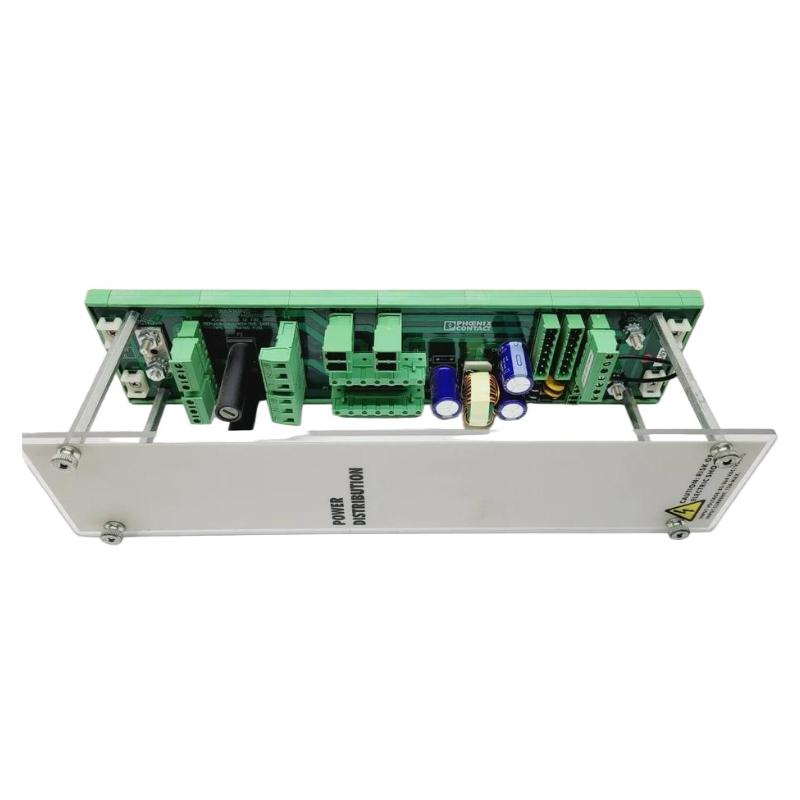
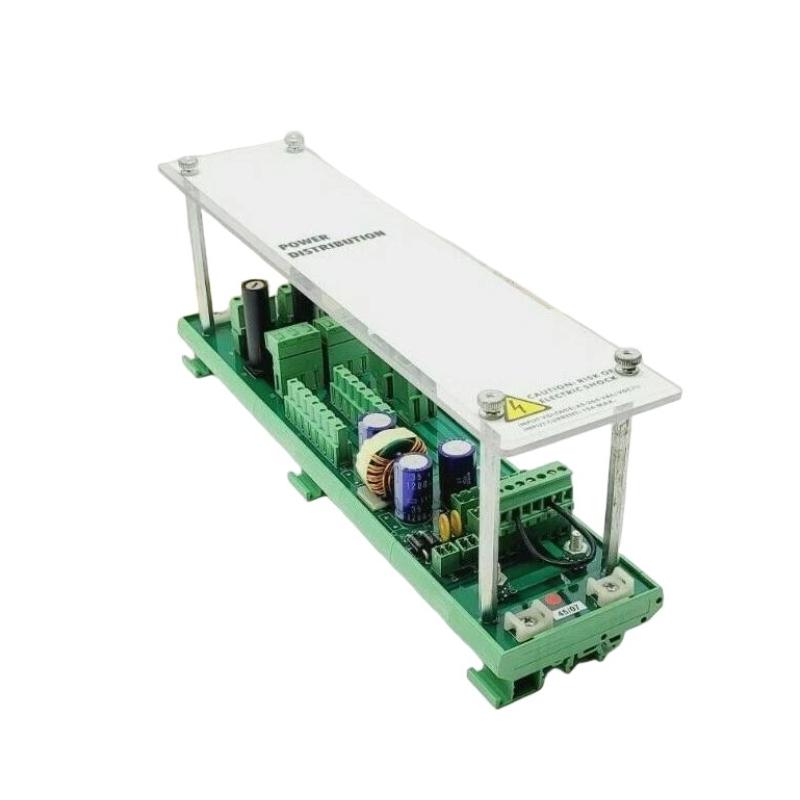
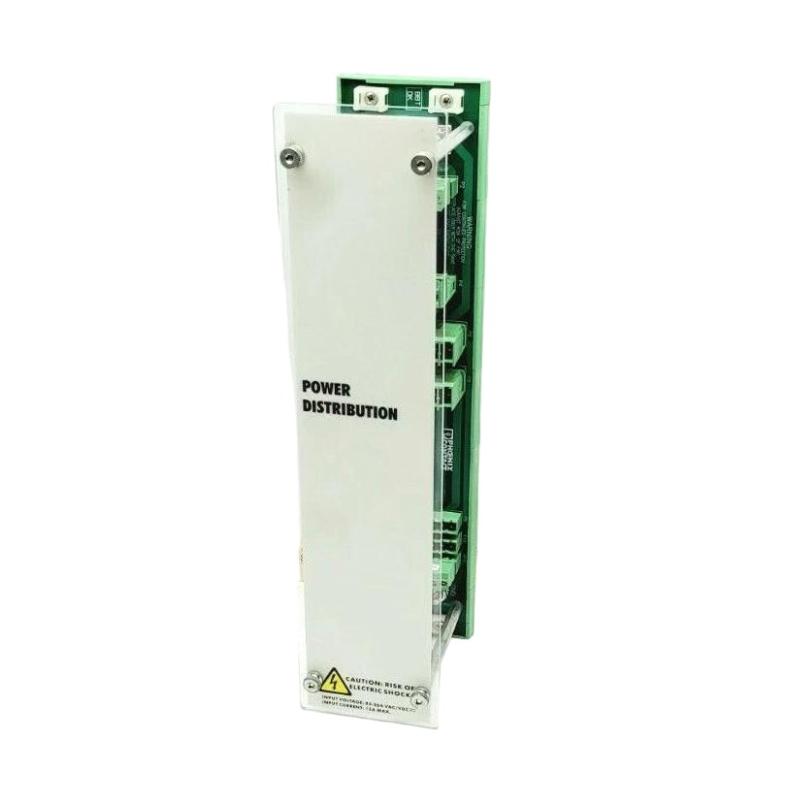
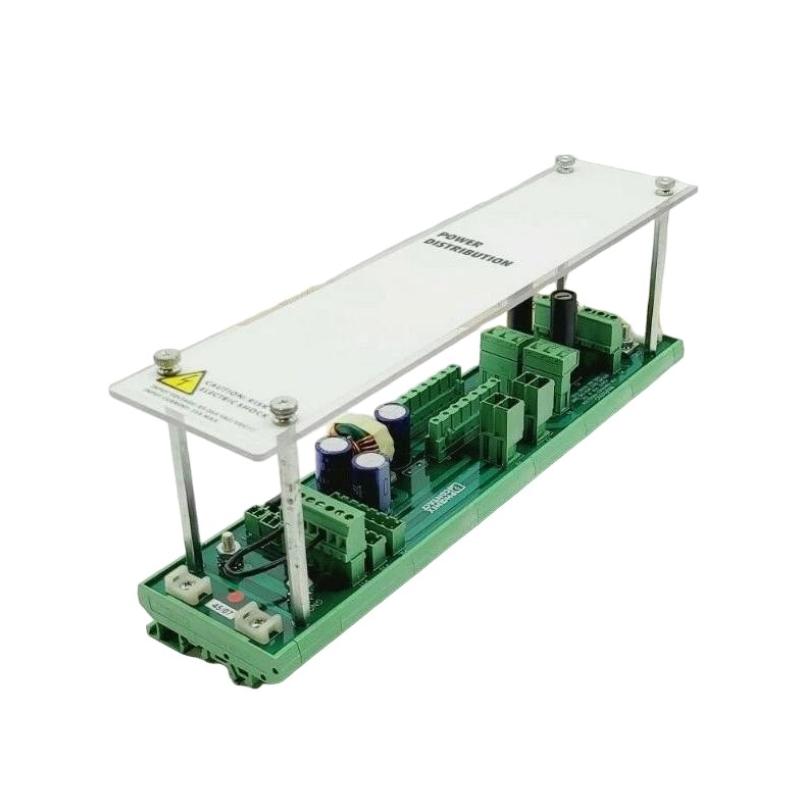
The Ovation 1X00102H01 Distribution Board is a key infrastructure component designed to manage and distribute power within Emerson’s Ovation Distributed Control System (DCS). It provides structured power routing, circuit organization, and reliable connections for power‑sensitive control modules, I/O racks, and system peripherals.
This distribution board simplifies electrical layout, enhances serviceability, and improves system reliability by grouping power feeds and protections in a centralized assembly. It supports stable operation in demanding industrial environments where uptime and electrical integrity are critical.
Technical Specifications
| Parameter | Specification |
|---|
| Manufacturer | Emerson Ovation |
| Model | 1X00102H01 |
| Module Type | Distribution Board |
| Function | Power distribution and circuit management |
| Input Power | Configurable multi‑input AC or DC feeds |
| Output Power | Multi‑circuit DC outputs to Ovation racks and modules |
| Protective Features | Breakers/fuses for circuit protection |
| Contact Interface | Terminal bus bars and labeled terminals |
| Mounting Type | Panel or cabinet mount |
| Operating Temperature | 0 °C to 55 °C |
| Storage Temperature | –40 °C to 70 °C |
| Humidity | Up to 95 % non‑condensing |
| Dimensions (HxWxD) | Approx. 300 × 450 × 150 mm |
| Weight | Approx. 4.2 kg |
| Regulatory Standards | Industrial electrical safety compliance |
Applications
The 1X00102H01 Distribution Board is used in industrial control environments where structured power distribution and protection are required:
-
Centralized power routing for Ovation racks and I/O modules
-
Power feed segregation in control cabinets
-
Integration points for redundant power supplies
-
Structured power management for distributed automation systems
-
Industrial plants requiring organized circuit protection and monitoring
Technical FAQs
1. What is the purpose of the distribution board?
It distributes and organizes power feeds to Ovation racks and modules, improving safety and reliability.
2. What type of power feeds does it accept?
It accepts configurable AC or DC inputs based on application requirements.
3. How are outputs protected?
Individual circuits are protected by labeled breakers or fuses.
4. Can it support redundant power systems?
Yes—multiple input feeds and circuit segregation allow integration with redundant power supplies.
5. Is it designed for harsh environments?
Yes, within rated temperature and humidity ranges.
6. How is wiring organized?
Terminal bus bars and labeled endpoints provide clear routing and service access.
7. Where is it installed?
Mounted inside control panels or dedicated cabinets.
8. Does it include surge protection?
Surge protection can be integrated based on system design; consult electrical standards.
9. What safety precautions are recommended?
Follow electrical isolation, lock‑out/tag‑out procedures, and plant safety standards during maintenance.
10. What are the approximate dimensions?
Approx. 300 × 450 × 150 mm; ~4.2 kg.
 A DCS Q Co., Ltd. - PLC and DCS Industrial Control Equipment Wholesale