Machine-Level Automation Applications
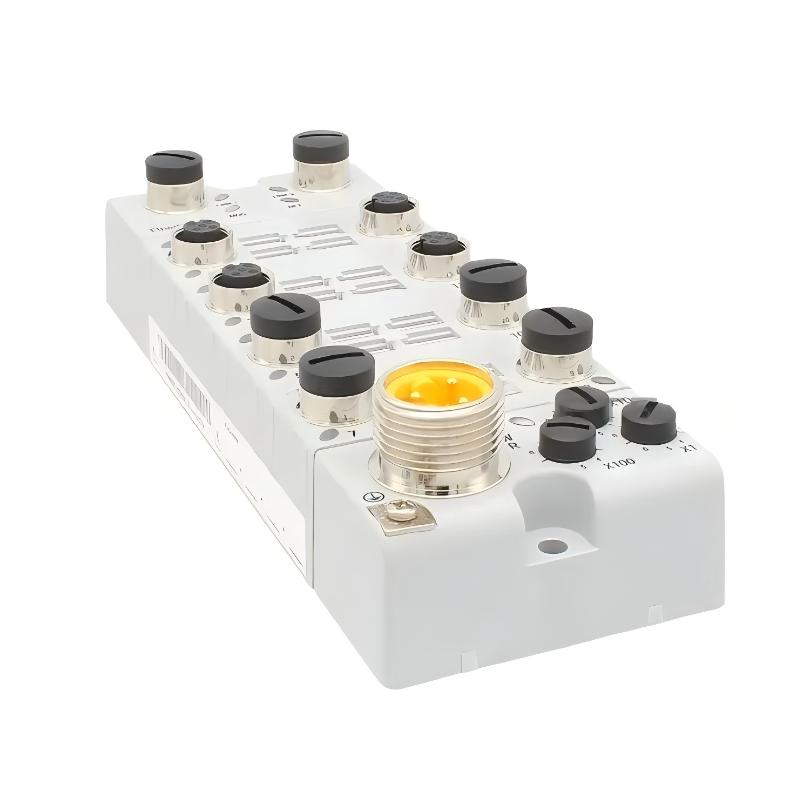
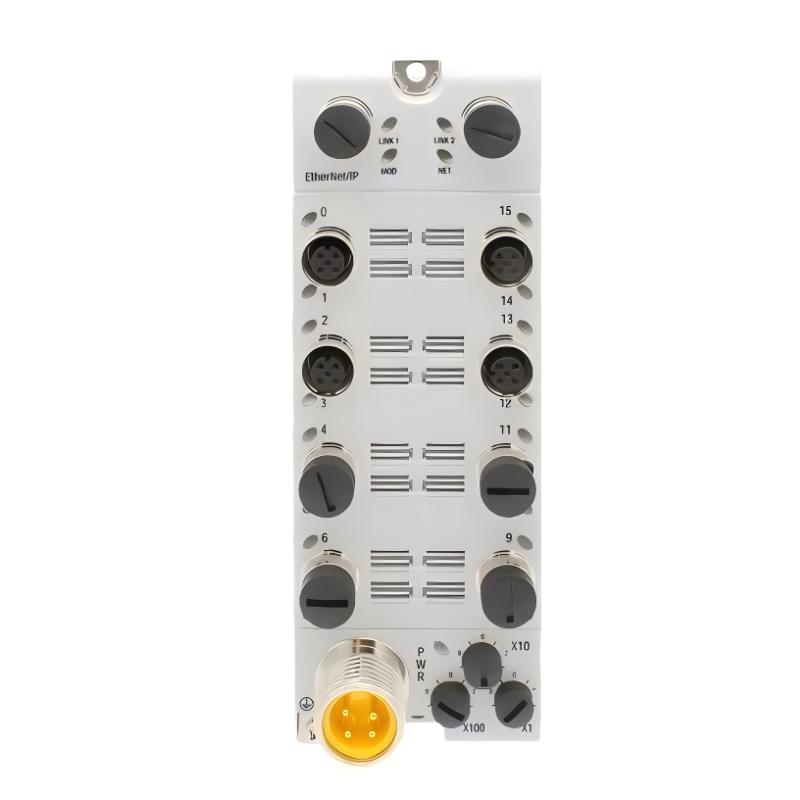
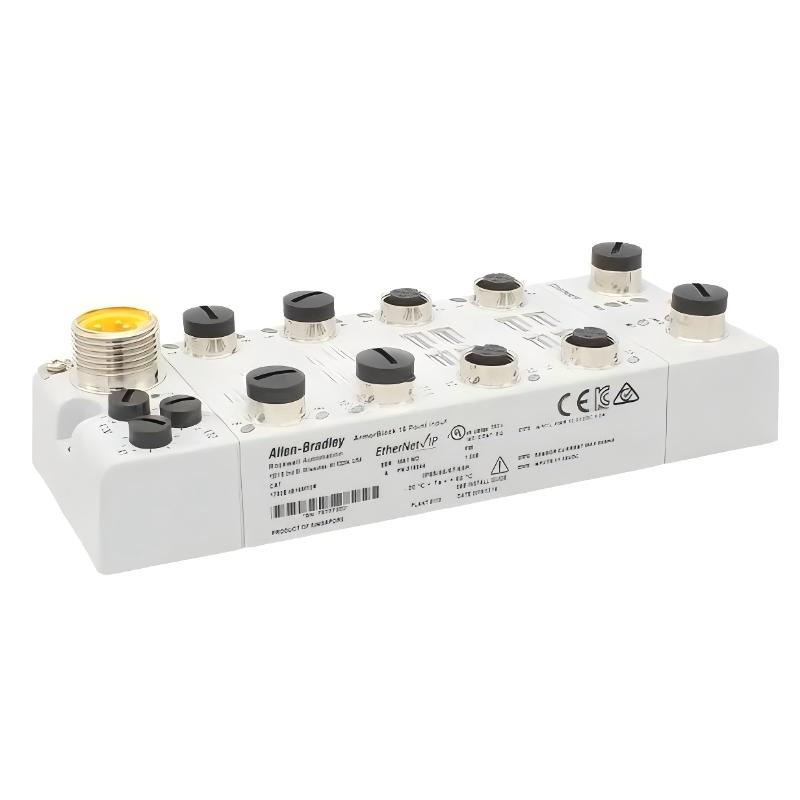
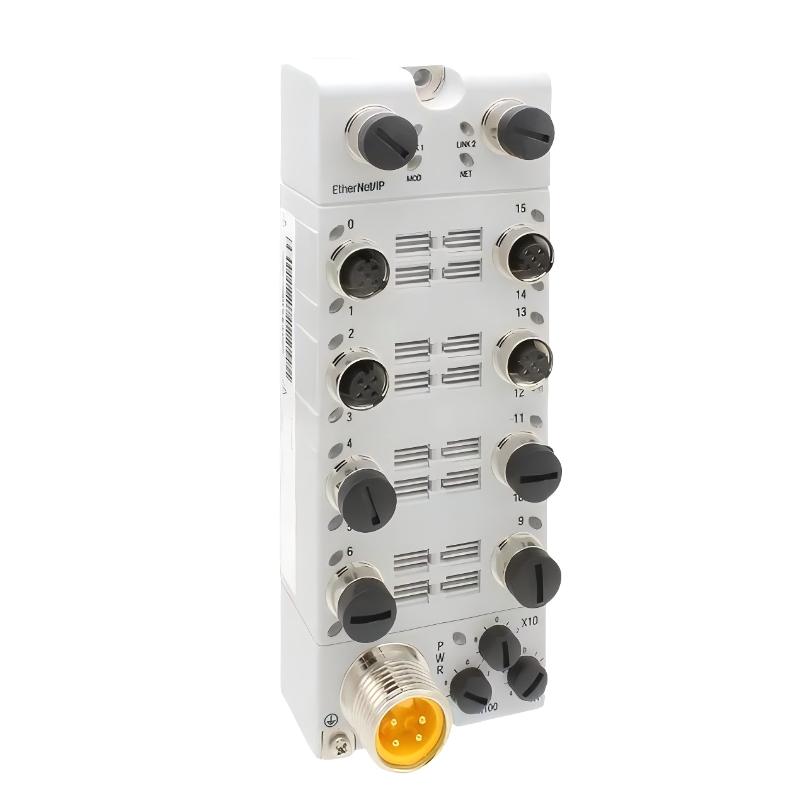
The Allen Bradley 1732E-IB16 Digital Input I/O Module is designed to collect discrete input signals from field devices and transmit them to industrial controllers through a distributed I/O architecture. As part of machine-mounted automation systems, this module enables sensors and switches to connect directly to the control network without requiring extensive wiring back to a central control cabinet.
Equipped with sixteen digital input channels, the module allows control systems to monitor the operational state of multiple devices simultaneously. It plays a critical role in gathering real-time machine data, allowing PLCs and automation platforms to execute control logic and respond to equipment conditions.
Typical industrial use cases include:
-
Monitoring limit switches and proximity sensors in manufacturing machines
-
Detecting safety interlock signals in automated production lines
-
Collecting machine status signals in packaging and assembly equipment
-
Sensor integration in robotic automation systems
-
Conveyor system monitoring in logistics and material handling facilities
-
Distributed I/O deployment in modular machine architectures
By placing input modules closer to field devices, automation engineers can reduce cable complexity and improve signal acquisition efficiency.
Key Operational Advantages
16 Digital Input Channels
Provides multiple input points for collecting discrete signals from sensors and switches.
Efficient Signal Monitoring
Allows control systems to receive accurate machine status information in real time.
Distributed I/O Capability
Supports decentralized automation architectures that reduce panel wiring.
Machine-Level Installation
Can be mounted near equipment to shorten cable runs and simplify system layouts.
Industrial Durability
Designed for reliable operation in demanding factory and production environments.
Technical FAQs
1. What is the primary function of the 1732E-IB16 module?
It collects digital input signals from field devices and transmits them to the control system.
2. How many input channels are available?
The module provides 16 digital input channels.
3. What types of field devices connect to the module?
Limit switches, proximity sensors, push buttons, safety contacts, and other digital sensors.
4. Where is the module typically installed?
It is installed near machinery as part of a distributed I/O system.
5. What type of signals does the module detect?
It detects binary signals representing ON/OFF or TRUE/FALSE states.
6. Why are distributed I/O modules beneficial in automation systems?
They reduce wiring complexity and allow field devices to connect closer to the network infrastructure.
7. What industries commonly use machine-mounted I/O modules?
Automotive manufacturing, packaging automation, robotics systems, and material handling operations.
8. How does the module support machine monitoring?
It provides real-time equipment status data to PLCs and industrial controllers.
9. Can the module operate continuously in industrial environments?
Yes, it is built for continuous operation in factory automation systems.
10. What problems could occur if digital input signals are not properly captured?
The control system may lose visibility of equipment states, potentially causing operational disruptions.
 A DCS Q Co., Ltd. - PLC and DCS Industrial Control Equipment Wholesale