Industrial Signal Acquisition Environments
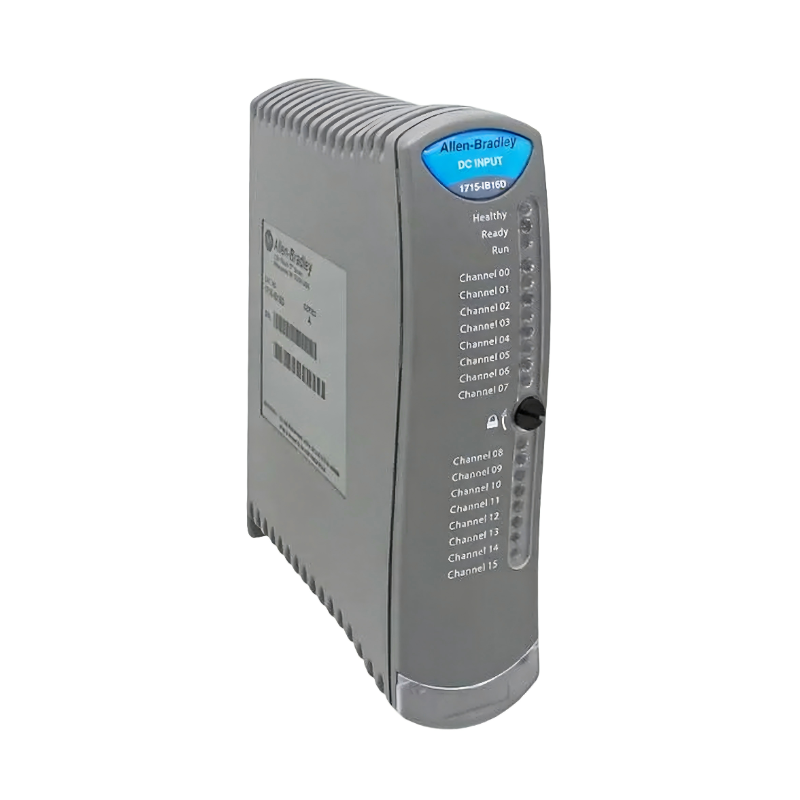
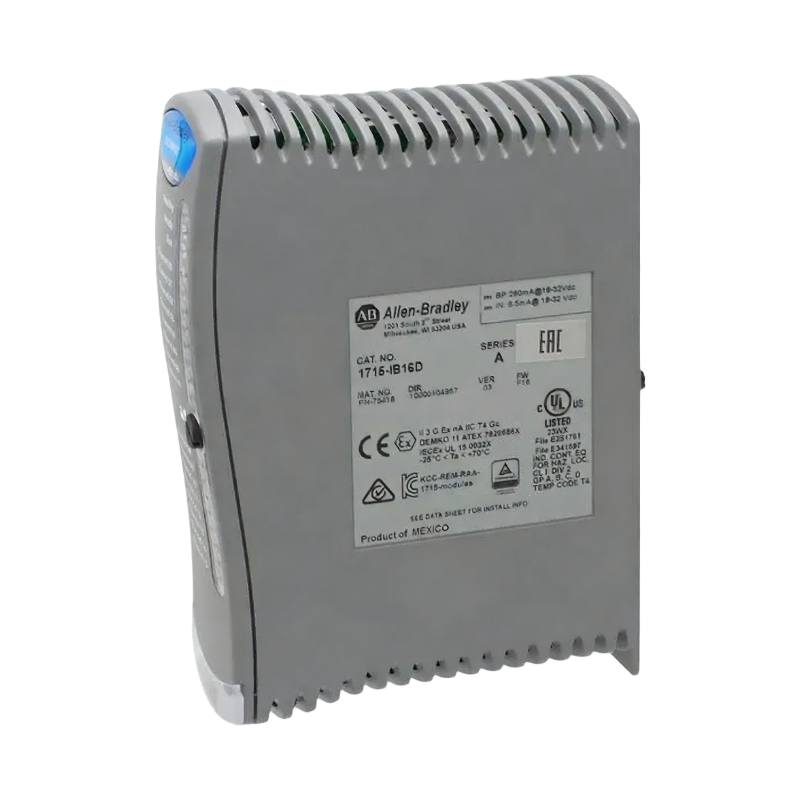
The Allen Bradley 1715-IB16D 16-Channel Digital Input Module is engineered to collect discrete field signals from industrial equipment and transmit them to a control system for monitoring and automation logic execution. Digital input modules play a key role in distributed control architectures by detecting binary signals generated by sensors, switches, and protection devices.
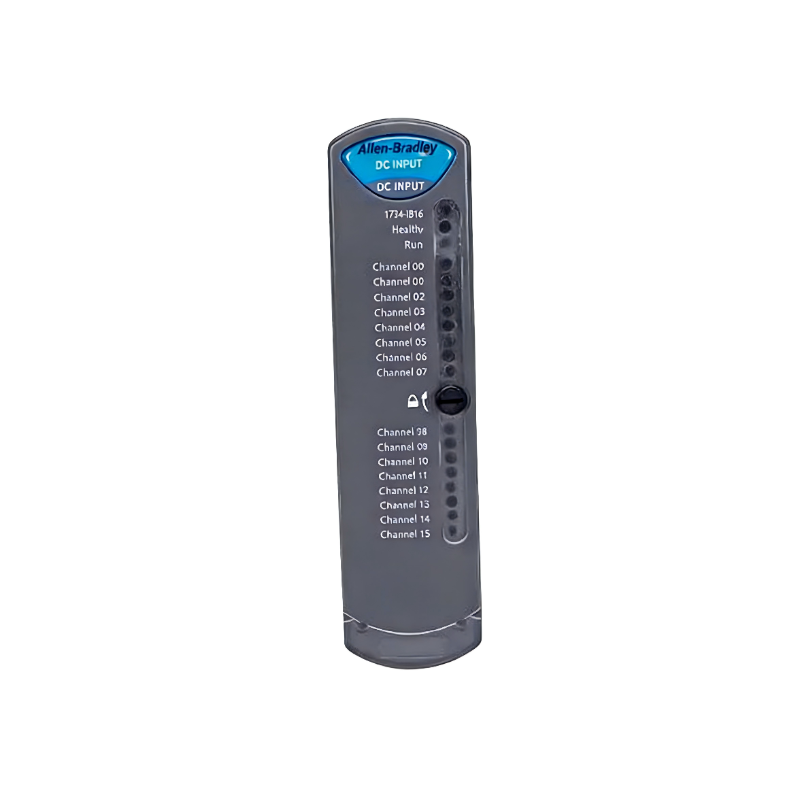
With sixteen independent input channels, this module allows automation systems to monitor multiple field devices simultaneously. Each channel receives ON/OFF signals that represent equipment status, alarm conditions, or operator commands, enabling the control system to make real-time decisions.
Typical industrial deployments include:
-
Monitoring limit switches and proximity sensors on production machinery
-
Capturing safety interlock signals in process plants
-
Receiving equipment status signals in turbine and generator control systems
-
Supervising push-button and selector switch inputs in operator stations
-
Integrating discrete field signals into PLC and distributed I/O networks
-
Detecting alarm conditions in industrial safety and protection systems
By enabling reliable acquisition of digital signals, the module ensures that the control platform maintains accurate visibility of field equipment conditions.
Operational Strengths
16 Independent Input Channels
Allows simultaneous monitoring of multiple field devices from a single module.
Reliable Discrete Signal Detection
Captures binary signals from sensors, switches, and relays with stable performance.
Integration with Distributed I/O Systems
Designed to function within modern distributed automation architectures.
Compact Cabinet Installation
Efficient module size supports high-density control panel layouts.
Industrial-Grade Reliability
Engineered for continuous operation in demanding manufacturing and process environments.
Technical FAQs
1. What is the main purpose of the 1715-IB16D module?
It collects digital input signals from field devices and sends them to the control system.
2. How many input channels does the module provide?
The module supports 16 independent digital input channels.
3. What types of devices typically connect to this module?
Limit switches, proximity sensors, push buttons, relay contacts, and safety switches.
4. What type of signal does the module detect?
It detects discrete binary signals representing ON/OFF states.
5. Where is the module typically installed?
Inside distributed I/O racks or industrial control cabinets.
6. How does a digital input module support automation logic?
It provides real-time equipment status signals that PLC programs use to make control decisions.
7. Which industries commonly use digital input modules?
Manufacturing automation, power generation, oil and gas processing, and infrastructure control systems.
8. Can the module operate continuously in industrial environments?
Yes, it is designed for continuous monitoring in automation systems.
9. How does the module contribute to system safety?
By detecting interlocks, alarms, and equipment status signals that influence protective control logic.
10. What happens if digital input signals are not properly monitored?
The control system may lose visibility of equipment conditions, potentially leading to operational faults.
 A DCS Q Co., Ltd. - PLC and DCS Industrial Control Equipment Wholesale