Introduction
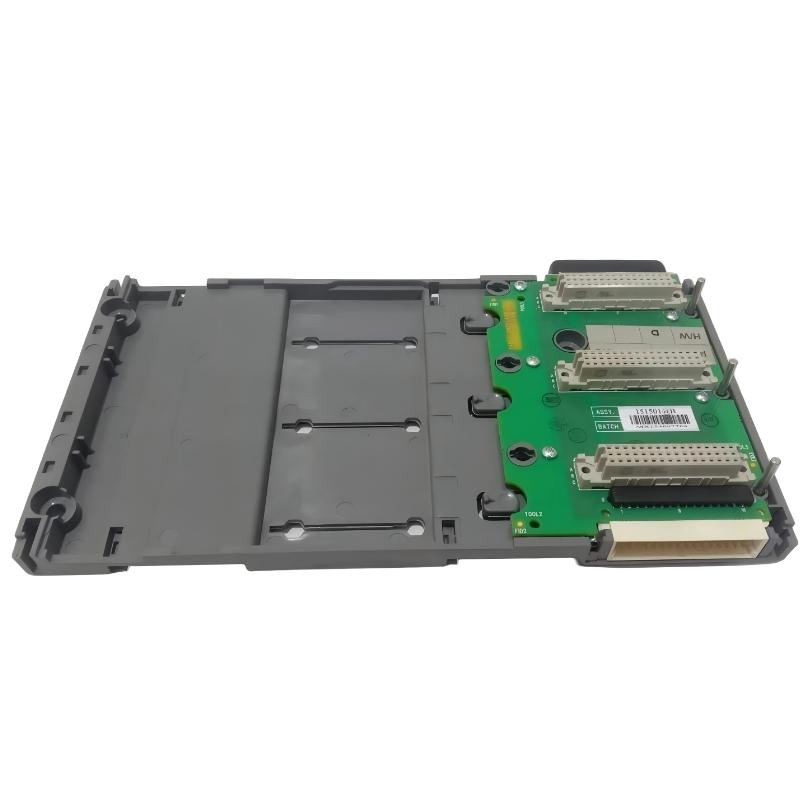
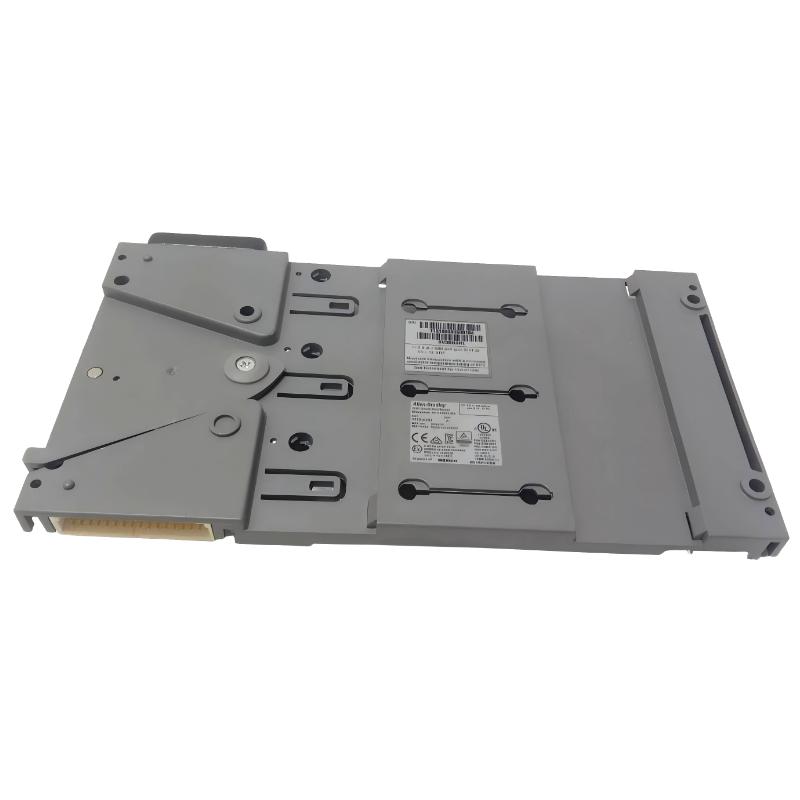
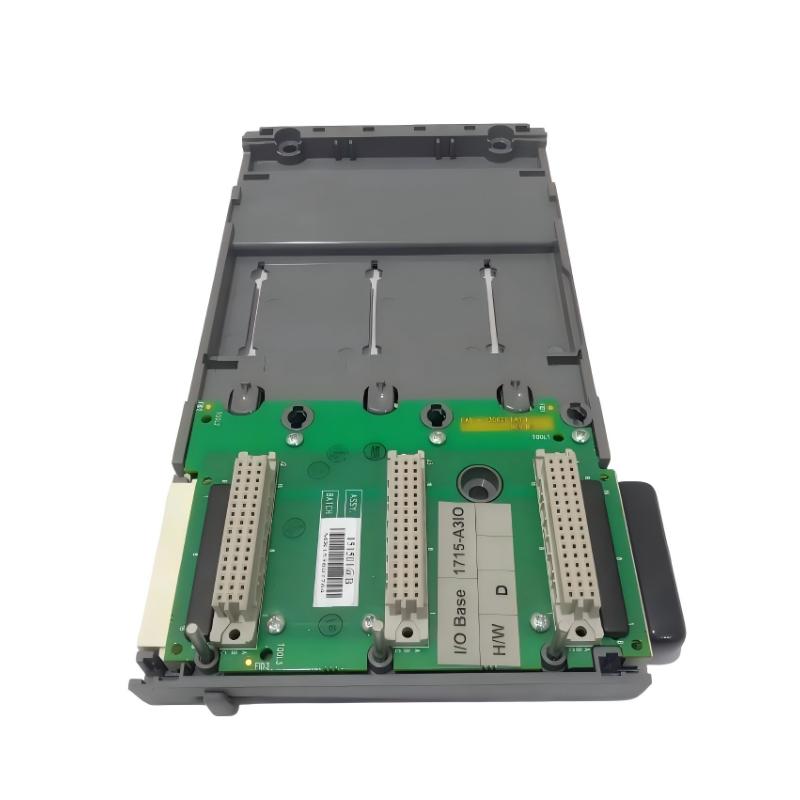
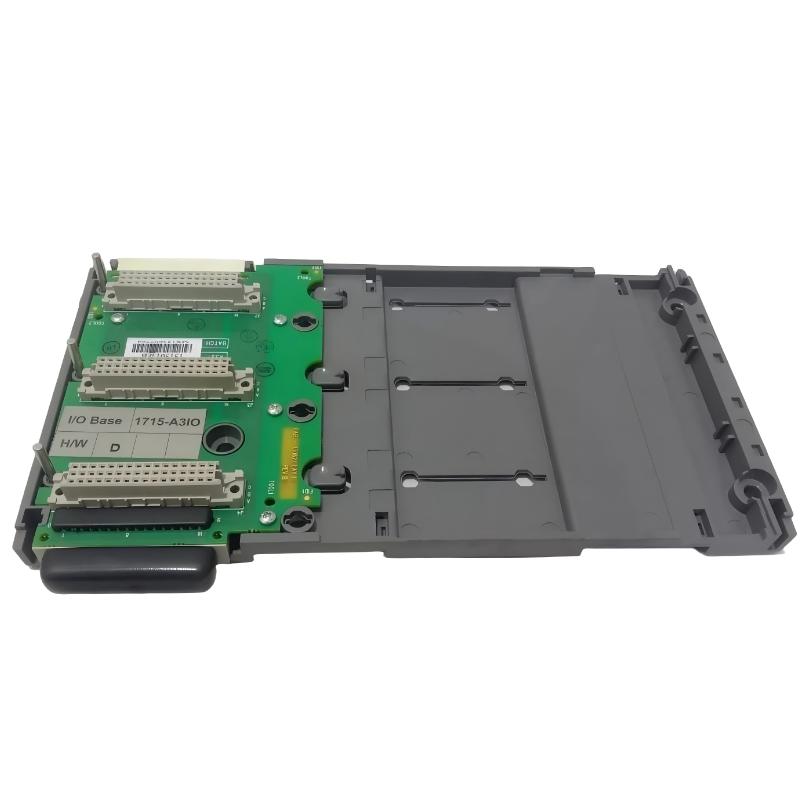
The Allen Bradley 1715-A3IO Redundant I/O Module Base is an essential component in automation systems that require fault-tolerant I/O architectures. In industries where equipment downtime can lead to safety risks or production losses, redundant control structures provide an extra layer of reliability.
This module base allows two I/O modules to operate together within a redundant configuration. If one module experiences a failure, the backup module can continue processing signals, ensuring uninterrupted system operation.
Its compact mechanical design allows integration into high-density control cabinets while maintaining reliable electrical connectivity. As part of a redundant automation framework, the 1715-A3IO module base helps maintain operational continuity in critical industrial systems.
Technical Specifications
| Parameter | Specification |
|---|
| Manufacturer | Allen Bradley |
| Model | 1715-A3IO |
| Module Type | Redundant I/O Module Base |
| Function | Mounting and electrical interface for redundant I/O modules |
| Application | High-availability industrial automation systems |
| Installation | Control cabinet / automation rack |
| System Architecture | Redundant I/O support |
| Operating Mode | Continuous industrial operation |
| Dimensions | 233 × 126 × 18 mm |
| Weight | 0.22 kg (0.49 lb) |
Industrial System Deployment Context
The Allen Bradley 1715-A3IO Redundant I/O Module Base serves as a mounting and connectivity platform within high-availability I/O architectures. It is designed for use in systems where redundancy and continuous operation are critical, particularly in industrial processes that cannot tolerate downtime.
This module base forms the physical and electrical interface for redundant I/O modules, enabling the installation of paired I/O components that operate in parallel for fault tolerance. By supporting redundant signal paths and synchronized module operation, the base contributes to improved system reliability and availability.
Typical industrial applications include:
-
High-availability distributed control systems (DCS)
-
Safety-critical process automation in oil and gas facilities
-
Power generation control systems
-
Chemical and petrochemical production plants
-
Continuous manufacturing processes with zero-downtime requirements
-
Infrastructure control systems requiring redundant architectures
Through its design, the module base supports stable mechanical mounting and electrical connectivity while enabling redundant module operation.
Engineering Advantages
Redundant System Architecture Support
Allows installation of redundant I/O modules that operate simultaneously for improved reliability.
Stable Mechanical and Electrical Interface
Provides secure module mounting and reliable signal connections within the control system.
Optimized for High-Availability Systems
Designed for environments where continuous system operation is essential.
Compact Control Cabinet Integration
Slim form factor allows efficient use of panel space in industrial automation cabinets.
Industrial-Grade Construction
Built to operate reliably in demanding automation environments.
Technical FAQs
1. What is the primary function of the 1715-A3IO module base?
It provides the mechanical mounting and electrical interface for redundant I/O modules.
2. Why are redundant I/O systems used in industrial automation?
Redundancy ensures system availability by allowing backup modules to take over if one fails.
3. What types of modules are installed on this base?
Redundant I/O modules used in high-availability automation systems.
4. In which environments is this module base commonly used?
Industries requiring continuous operation such as power plants, oil and gas facilities, and process manufacturing plants.
5. How does redundancy improve system reliability?
It ensures that if one module experiences a fault, another module can maintain system operation.
6. Where is the module base installed?
Inside industrial control cabinets or automation system racks.
7. Does the module base process signals directly?
No, it serves as a platform for mounting and connecting I/O modules that handle the signal processing.
8. What role does it play in system maintenance?
It helps simplify module replacement and system upgrades without affecting the overall architecture.
9. Can redundant module bases be used in safety systems?
Yes, they are often used in safety-critical automation infrastructures.
10. Why is a dedicated module base necessary for redundant I/O modules?
Because it ensures proper electrical routing, synchronization, and mechanical support for redundant modules.
 A DCS Q Co., Ltd. - PLC and DCS Industrial Control Equipment Wholesale