Product Introduction
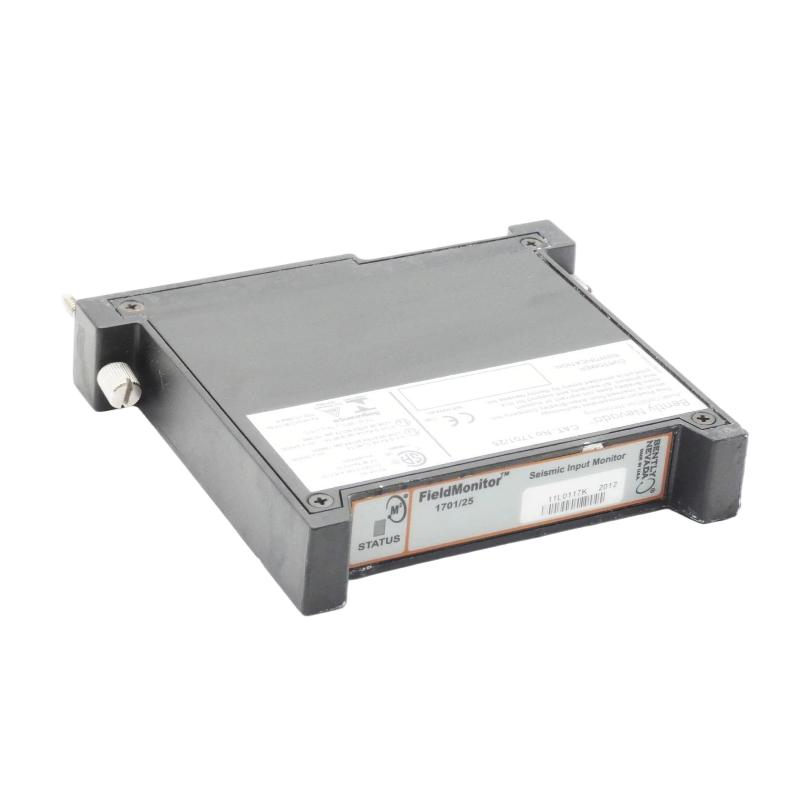
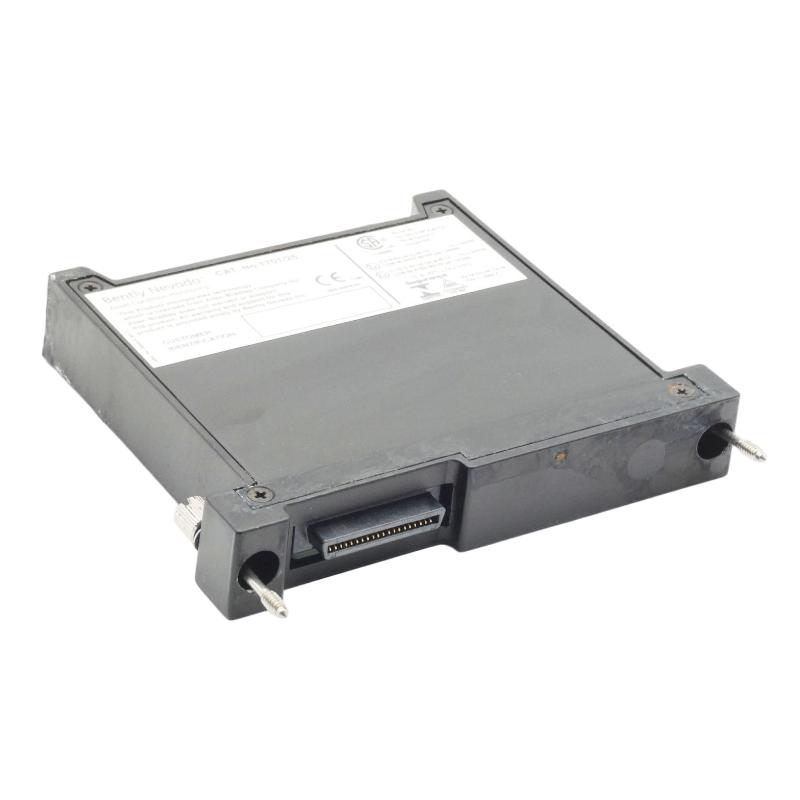
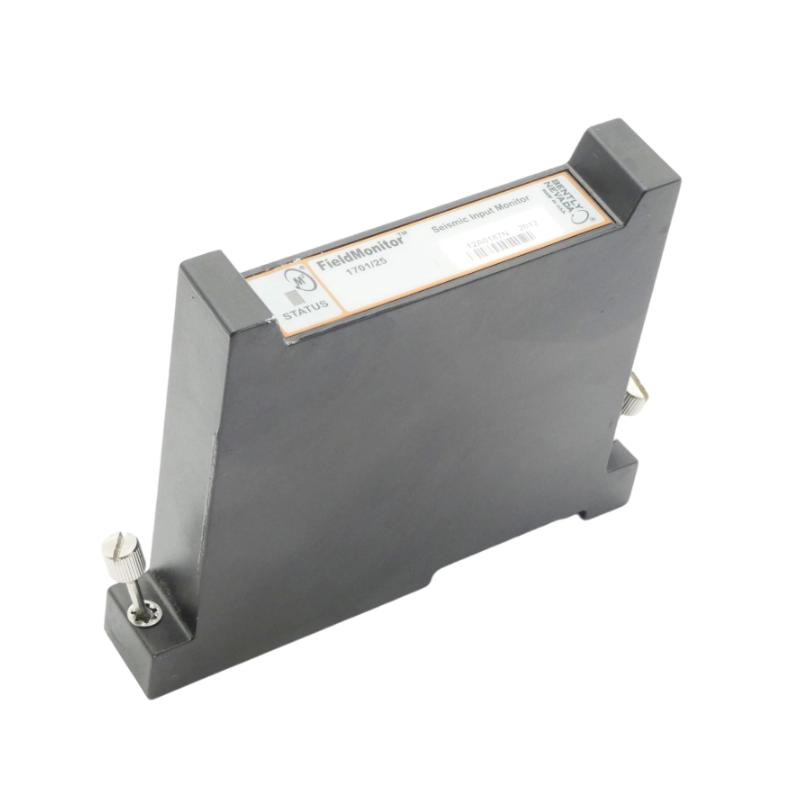
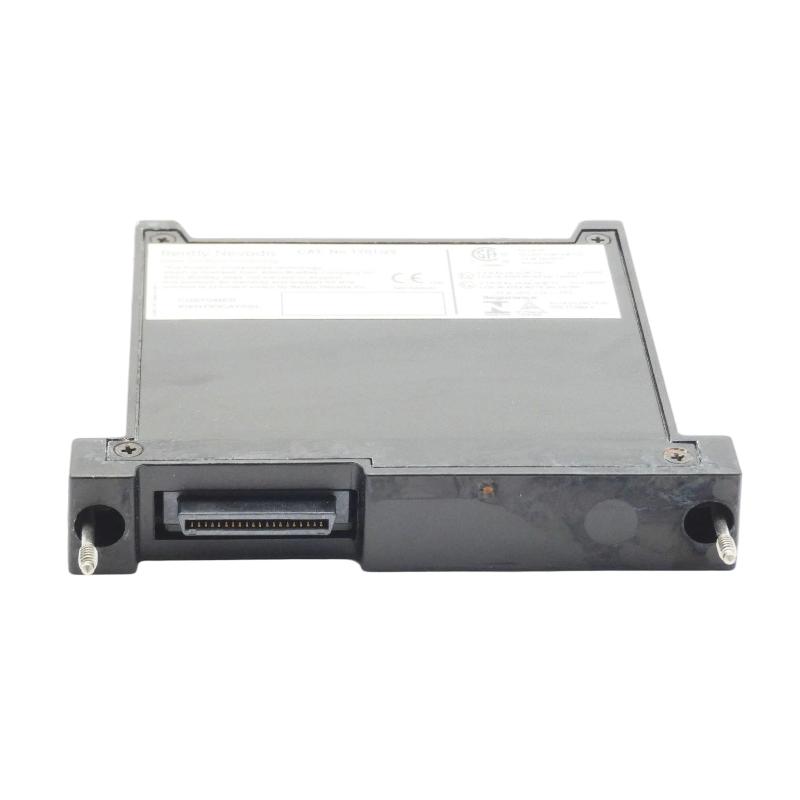
The Bently Nevada 1701/25 (161141-01) Field Monitor Earthquake Input Monitor is a rugged and reliable signal conditioning device designed to ensure that dynamic inputs from vibration and seismic sensors reach monitoring and protection systems with high integrity. By boosting weak signals and filtering noise, it helps protect critical machinery and provides valuable data for condition-based maintenance strategies.
This module is suitable for industrial environments where precision monitoring of vibration and shock events is essential to operational reliability and asset preservation.
Technical Specifications
| Parameter | Specification |
|---|
| Product Type | Field Monitor / Preamplifier Input Monitor |
| Model | 1701/25 (161141-01) |
| Function | Amplification and conditioning of dynamic input signals |
| Sensor Compatibility | Accelerometers, vibration/shock probes |
| Installation | Field or panel mounting near sensors |
| Application | Machinery vibration monitoring, earthquake/transient detection |
| Dimensions (H × W × D) | 127 × 21.6 × 105 mm |
| Net Weight | 0.314 kg (approx. 0.69 lb) |
Application in Vibration and Seismic Monitoring Systems
The Bently Nevada 1701/25 (161141-01) Field Monitor Earthquake Input Monitor is a precision signal conditioning module engineered to interface with high-sensitivity vibration and shock sensors. Its primary role is to amplify, stabilize, and condition dynamic input signals from sensors such as accelerometers or proximity probes before those signals are transmitted to monitoring, diagnostic, or machine protection systems.
This type of module is widely used in:
-
Rotating machinery protection (turbines, compressors, generators)
-
Earthquake and transient shock detection systems in industrial plants
-
High-performance condition monitoring installations
-
Power generation and petrochemical machine monitoring
-
Metric vibration capture for predictive maintenance
Reliable conditioning at the field level ensures that critical event data — including fast transients and steady vibration — is preserved with fidelity.
Engineering Advantages and Functional Benefits
From an engineer’s perspective, accurate and clean signal conditioning at the source delivers multiple operational benefits:
High-Fidelity Signal Conditioning
Amplifies low-level sensor signals so they remain robust against noise and loss.
Support for Transient & Dynamic Events
Designed to preserve the integrity of both continuous vibration and sudden shock (earthquake) inputs.
Noise-Resistant Operation
Signal conditioning circuitry suppresses electrical interference common in industrial environments.
Field-Ready Mechanical Package
Compact, rugged form factor supports installation near sensors or in machinery enclosures.
Improved Data Transmission Quality
Local amplification helps maintain signal integrity over long cable runs to instrumentation racks.
Technical FAQs
-
What is the primary function of this module?
It conditions and amplifies vibration or shock sensor outputs for accurate transmission to monitoring systems.
-
Which types of sensors are typically used with it?
It is compatible with vibration transducers like accelerometers and seismic sensors.
-
Is it suitable for transient events like earthquakes?
Yes, it is specifically designed to capture both steady-state vibration and transient shock signals.
-
Does it improve signal quality over distance?
Yes, by conditioning the signal at the source, it helps minimize degradation over long cable runs.
-
Can it operate in electrically noisy industrial environments?
Yes, the module’s design reduces the impact of electromagnetic interference.
-
Where is it usually mounted?
It is typically mounted near the sensor or on a nearby panel to keep the signal path short.
-
Does it require external power?
It generally draws power from the connected monitor or system’s power bus.
-
How does it support machine protection systems?
By delivering clean, amplified signals to protection logic, it enables faster and more accurate fault detection.
-
Is calibration required?
Calibration depends on the specific sensor and monitoring system requirements.
-
Can it be used on multiple sensor axes?
Yes, multiple modules are often used to capture multi-axis vibration and shock data.
 A DCS Q Co., Ltd. - PLC and DCS Industrial Control Equipment Wholesale