Introduction
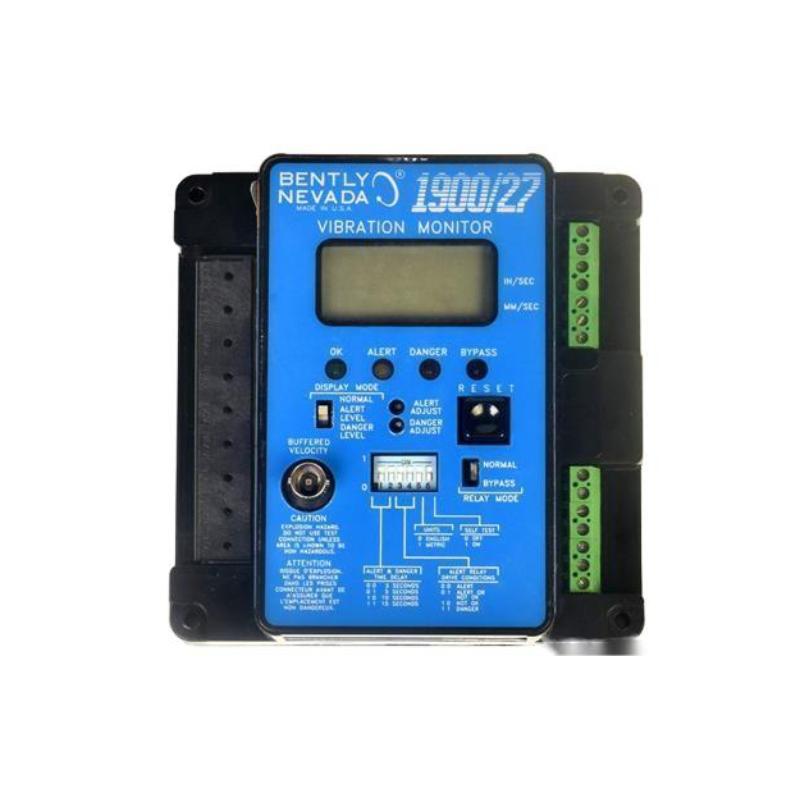
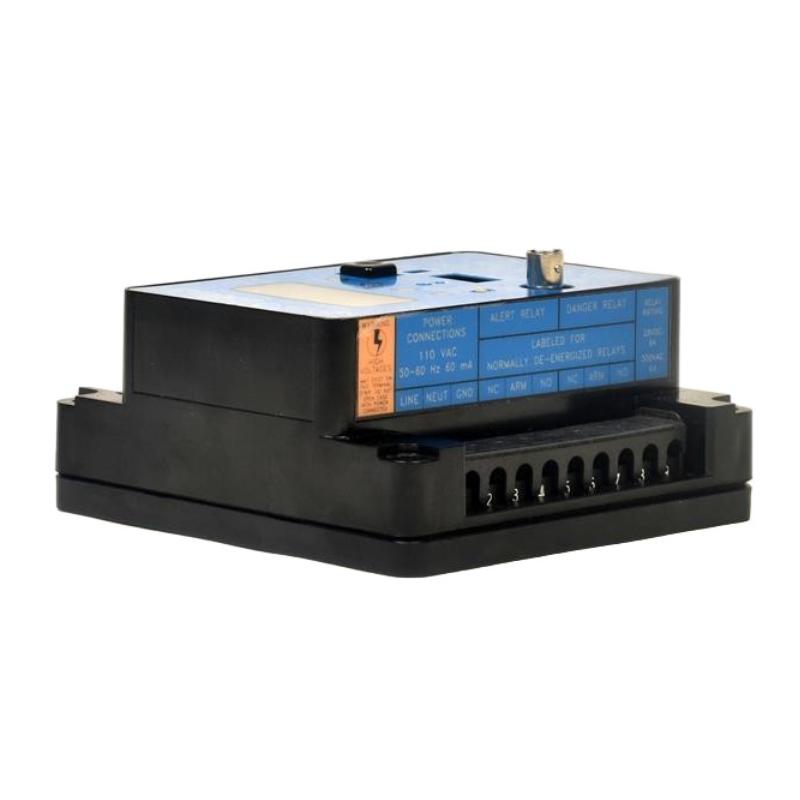
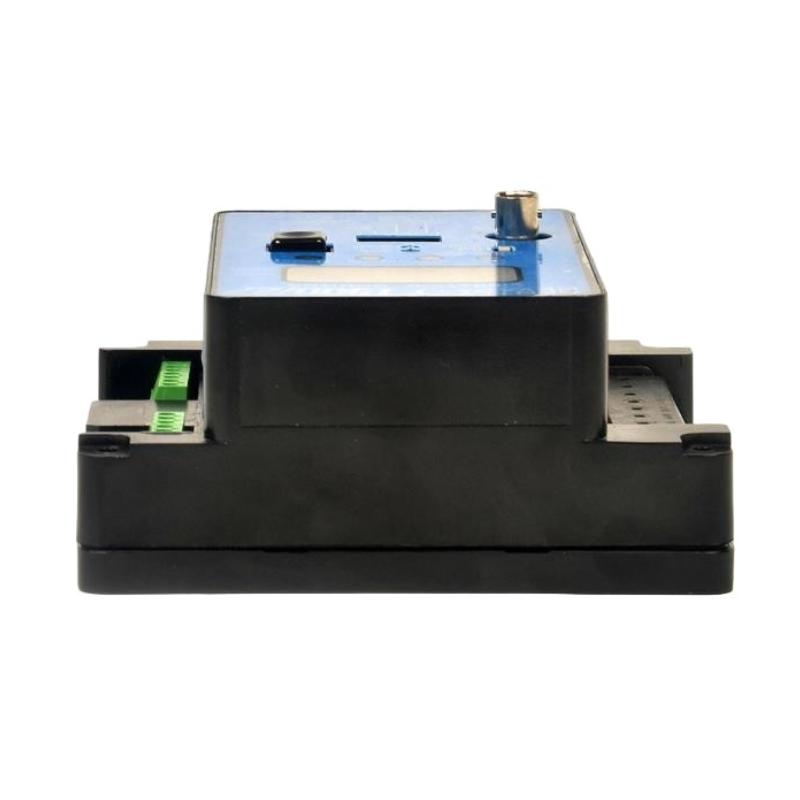
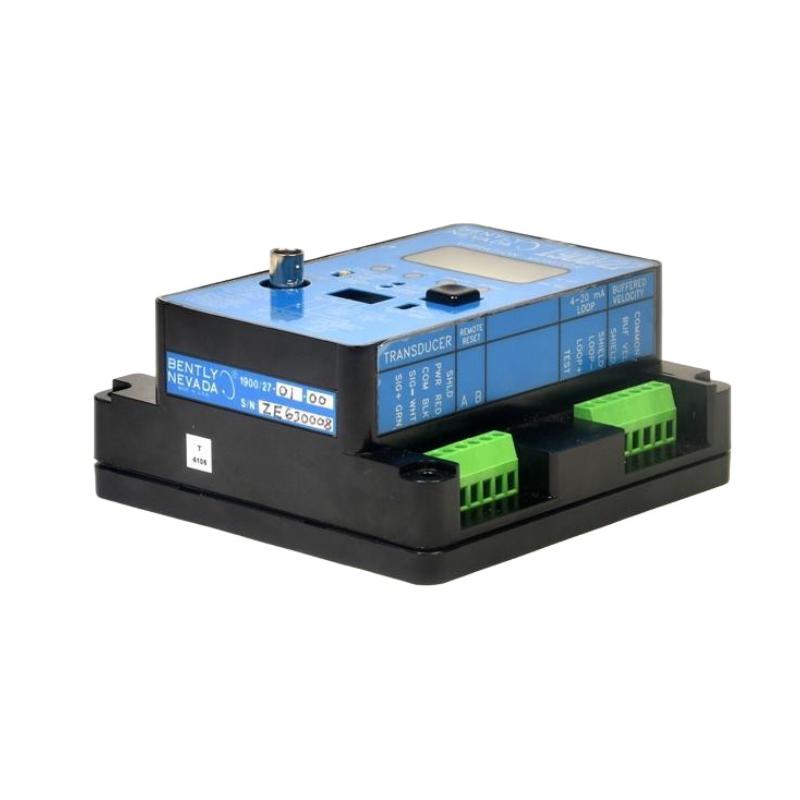
The Bently Nevada 1900/27‑01 Vibration Monitor is a rugged, industrial‑grade vibration measurement device designed to deliver reliable, continuous monitoring of mechanical vibration on rotating and reciprocating machinery. As part of the field‑proven Bently Nevada 1900 series, it provides essential protection and predictive diagnostics by detecting vibration levels and trends before they become critical failures.
Engineered for harsh environments and heavy‑duty applications, the 1900/27‑01 is a cornerstone component in condition monitoring systems where uptime, asset protection, and maintenance optimization are priorities. Its analog and discrete outputs make it versatile for integration with machine protection systems, PLCs, and SCADA.
Technical Specifications
| Specification | Details |
|---|
| Manufacturer | Bently Nevada |
| Model | 1900/27‑01 |
| Product Type | Vibration Monitor |
| Measurement | Velocity or displacement (model variant dependent) |
| Input Type | Accelerometer / seismic sensor inputs |
| Outputs | Analog and discrete status/alarm outputs |
| Supply Voltage | Standard industrial DC supply (e.g., 18–32 V DC) |
| Operating Temp. | Industrial ambient range |
| Storage Temp. | Extended industrial storage range |
| Mounting | Panel or rack mount compatible |
| Environmental Rating | Industrial enclosure suitability |
| Weight | Approx. 0.3 kg |
| Dimensions | Compact industrial module form factor |
Applications
The 1900/27‑01 Vibration Monitor plays a key role in condition‑based protection and early warning systems across industries such as:
-
Power generation turbines and generators
-
Compressors and gas turbine packages
-
Large pumps in petrochemical and refinery plants
-
Heavy industrial motors and gearboxes
-
Reciprocating engines and compressors
-
Rotating equipment in manufacturing and mining
It can be deployed as part of standalone vibration monitoring or integrated into broader asset protection infrastructures for continuous surveillance, alarming, and data logging.
Advantages
-
Early Fault Detection – Detects abnormal vibration before mechanical failure occurs.
-
Industrial Reliability – Designed for continuous operation under tough ambient conditions.
-
Versatile Integration – Analog and discrete outputs support connection to control and protection systems.
-
Flexible Sensor Support – Works with accelerometers and seismic sensors for varied vibration measurement needs.
-
Clear Alarm Logic – Built‑in thresholds and status outputs simplify protective action initiation.
These attributes make the 1900/27‑01 an effective solution for machinery protection and maintenance strategies aimed at reducing unplanned downtime.
Technical FAQs
1. What does the 1900/27‑01 monitor measure?
It measures vibration, typically in velocity or displacement, based on the connected sensor type.
2. What sensors can be connected?
It supports industrial vibration sensors such as accelerometers or seismic probes compatible with the monitor’s input.
3. How are alerts provided?
Alerts are delivered via discrete alarm outputs and can also be interfaced with external control systems.
4. What supply voltage is required?
It operates on a standard industrial DC supply, commonly 18–32 V DC.
5. Can it interface with PLC systems?
Yes — both analog outputs and discrete signals allow integration with PLC, DCS, or machine protection systems.
6. Is it suitable for harsh environments?
Yes — designed for continuous industrial operation and vibration‑prone locations.
7. Does it require calibration?
Periodic calibration or verification is recommended to ensure measurement accuracy and threshold fidelity.
8. Can it be rack or panel mounted?
Yes — its form factor supports standard industrial panel or rack installations.
9. Does it have adjustable alarm thresholds?
Typical configurations allow threshold setting for alarm and danger levels based on the monitored parameter.
10. Can it log historical data?
Some installations may pair the unit with external data loggers or systems to capture trends, though the monitor itself focuses on real‑time measurement and alarm outputs.
 A DCS Q Co., Ltd. - PLC and DCS Industrial Control Equipment Wholesale