Introduction
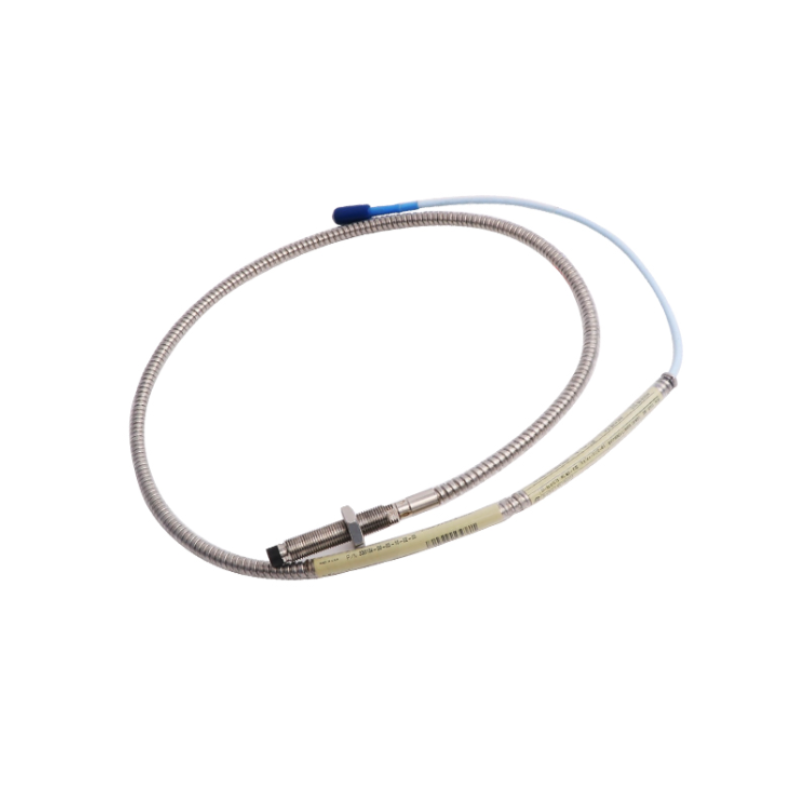
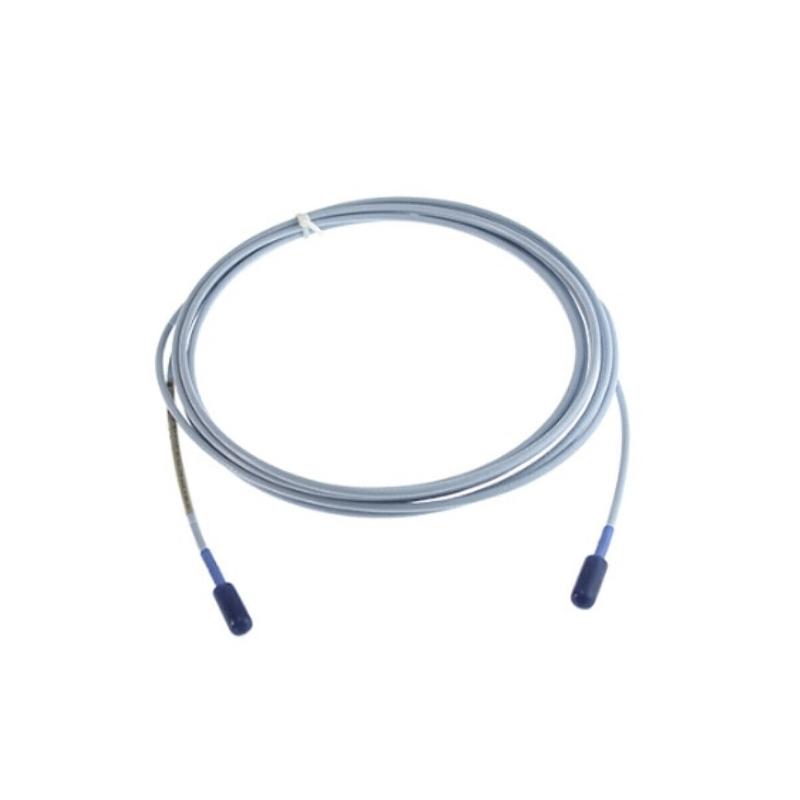
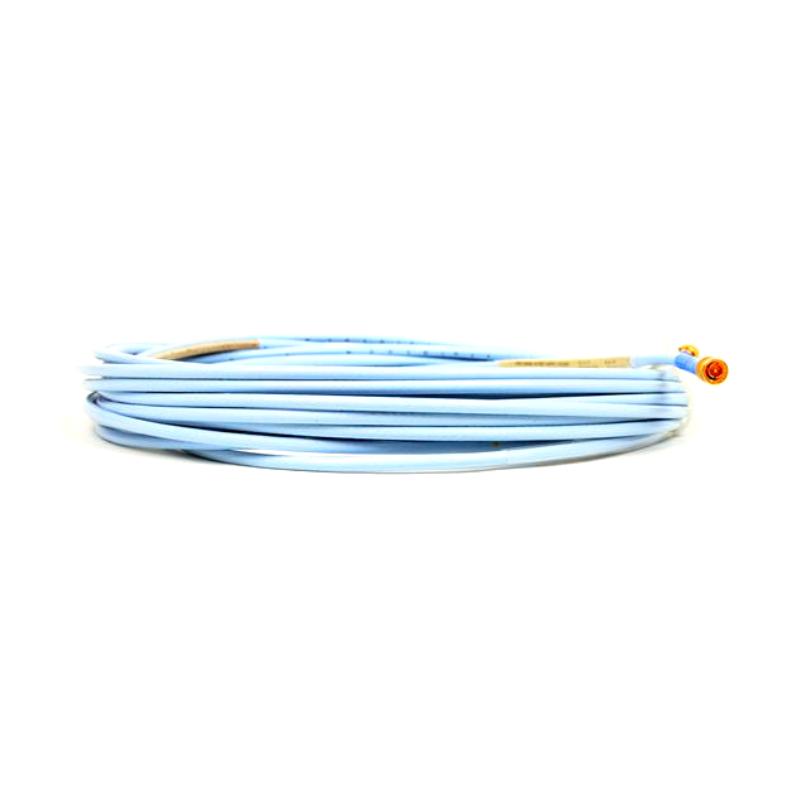
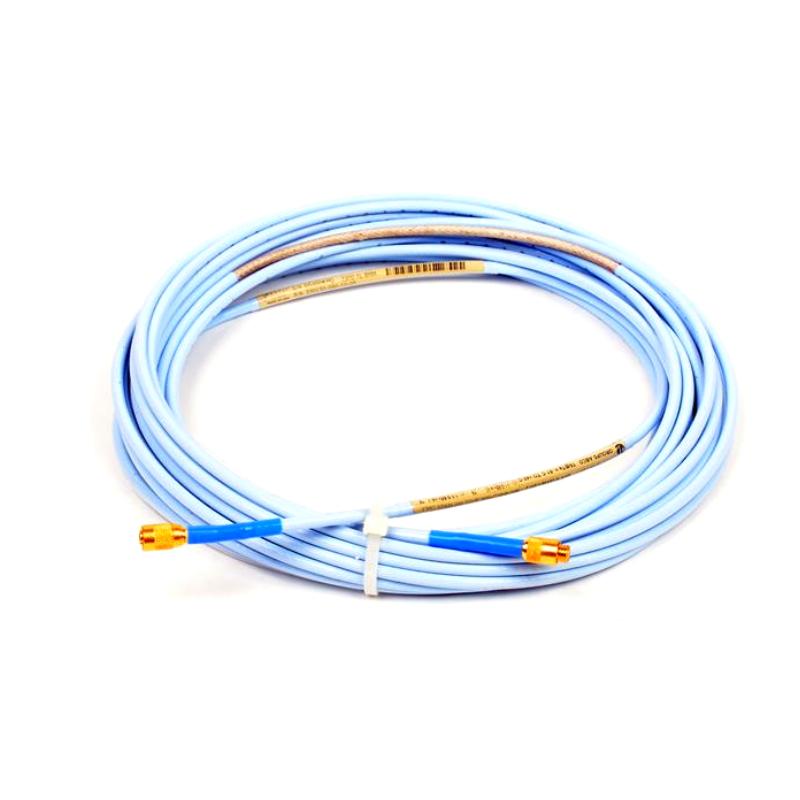
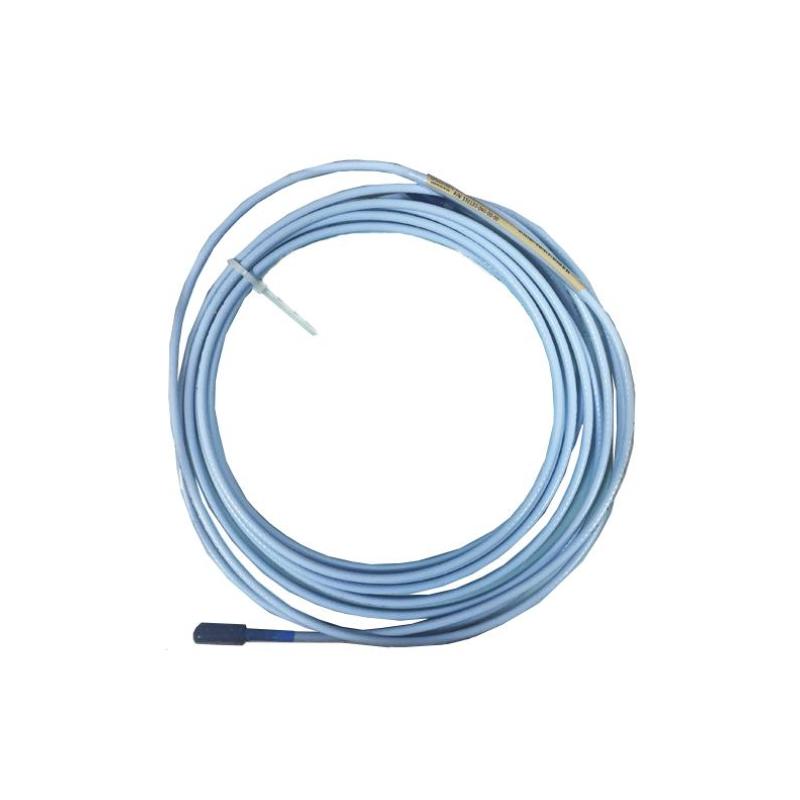
The Bently Nevada 330130-085-10-CN is an 8.5-meter 3300 XL Standard Extension Cable configured with a FluidLoc cable design and the CN approval option. It is intended for compatible 3300 XL proximity transducer systems, providing the extended connection between a proximity probe and Proximitor Sensor while addressing one of the more demanding installation concerns in rotating machinery: fluid migration through the cable.
The 10 configuration identifies the FluidLoc cable option, which is designed to help prevent oil and other liquids from traveling through the interior of the cable from the machine toward the instrumentation area. The CN suffix identifies the country-specific approval configuration, including ATEX/IECEx and Chinese NEPSI hazardous-area marking.
With an 8.5-meter reach, 75Ω triaxial construction, FEP insulation, and a specialized FluidLoc configuration, the 330130-085-10-CN is a strong choice for critical machinery monitoring installations where cable routing, environmental protection, and hazardous-area requirements all need to be considered together.
Technical Specifications
| Parameter | Specification |
|---|
| Manufacturer | Bently Nevada |
| Model | 330130-085-10-CN |
| Product Family | 3300 XL |
| Product Type | Standard Extension Cable |
| System | 3300 XL Proximity Transducer System |
| Cable Length | 8.5 m (27.9 ft) |
| Cable Length Option | 085 |
| Cable / Protector Option | 10 – FluidLoc cable |
| Agency Approval Option | CN |
| Approval Configuration | ATEX/IECEx and Chinese NEPSI hazardous-area marking |
| Cable Construction | 75Ω triaxial |
| Insulation | FEP |
| Typical Capacitance | 69.9 pF/m (21.3 pF/ft) |
| Operating Temperature | Approximately -51°C to +177°C |
| Storage Temperature | Approximately -51°C to +177°C |
| Cable Weight | Approximately 0.30 kg |
| Listed Shipping Weight | Approximately 2 kg |
| Product Dimensions | Flexible cable assembly; no fixed rectangular product dimensions |
| Country of Origin | USA |
| Typical Application | Proximity, vibration, shaft-position, and machinery protection |
Applications
Steam and Gas Turbine Monitoring
The 330130-085-10-CN can be integrated into compatible 3300 XL proximity measurement systems used on steam and gas turbines. Its 8.5-meter length gives engineers useful freedom when routing the connection between machine-mounted probes and instrumentation.
Compressor Machinery
Large compressors often require proximity probes to be installed close to bearings or shafts while the Proximitor Sensor is positioned in a more accessible instrumentation area. The extended cable length supports this type of installation arrangement.
Oil-Exposed Machinery
FluidLoc is the defining feature of this model. It is designed to help prevent oil and other liquids from migrating through the cable interior and escaping from the machine through the cable path. This makes the configuration particularly valuable around machinery where oil exposure is a significant installation concern.
Pumps and Rotating Equipment
The cable can be used as part of compatible proximity-based monitoring arrangements for industrial pumps, motors, and other rotating equipment where shaft vibration and position measurements are important to machinery protection.
Petrochemical and Process Plants
The CN approval configuration makes this model relevant to projects requiring the applicable ATEX/IECEx and Chinese NEPSI hazardous-area marking. The complete installation must still meet the certification and system requirements applicable to the specific hazardous location.
Retrofit and Maintenance Projects
For an existing 3300 XL installation that specifically requires an 8.5-meter FluidLoc cable with the CN approval configuration, the 330130-085-10-CN provides a direct and clearly identifiable replacement configuration.
Advantages
FluidLoc Technology
The primary advantage of the -10 configuration is FluidLoc protection. By addressing fluid migration through the cable interior, it provides an important layer of environmental protection for machinery installations where oil or other liquids are present.
Long 8.5-Meter Reach
The 8.5-meter length offers substantial routing flexibility around large rotating machinery. It allows the Proximitor Sensor and related instrumentation to be located at a practical distance from the sensing point.
75Ω Triaxial Construction
The 75Ω triaxial cable construction is designed for the electrical characteristics required by the 3300 XL proximity measurement system. A controlled cable configuration helps maintain predictable signal behavior across the probe-to-Proximitor connection.
FEP Insulation
FEP insulation provides durable electrical isolation and is well suited to industrial instrumentation applications where temperature and environmental resistance are important considerations.
CN Hazardous-Area Configuration
The CN approval option provides a configuration associated with ATEX/IECEx and Chinese NEPSI hazardous-area marking. This makes the cable particularly useful for projects where country-specific hazardous-area requirements need to be addressed.
Purpose-Built for 3300 XL Systems
This is not simply a generic extension lead. The 330130 series is part of the 3300 XL proximity measurement architecture, allowing maintenance teams to specify a cable configuration intended for the associated system.
Environmental Protection Without Standard Armor
The FluidLoc option serves a different purpose from conventional armored cable. Where fluid migration is the primary environmental concern, the -10 configuration offers a focused protection strategy without selecting an armored cable solely for mechanical protection.
Suitable for Critical Machinery
For turbines, compressors, pumps, generators, and other rotating equipment, the extension cable forms part of the measurement chain carrying important vibration and position information. Choosing the correct cable configuration helps support reliable long-term operation.
Technical FAQs
1. What is the Bently Nevada 330130-085-10-CN?
The 330130-085-10-CN is a 3300 XL Standard Extension Cable with an 8.5-meter length, FluidLoc cable configuration, and CN country-specific approval option.
2. How long is the 330130-085-10-CN?
The cable length is 8.5 meters (27.9 feet).
3. What does “085” mean?
The 085 designation identifies the 8.5-meter cable-length option in the 330130 series.
4. What does “10” mean?
The 10 designation identifies the FluidLoc cable configuration. FluidLoc is intended to help prevent oil and other liquids from migrating through the cable interior.
5. What does “CN” indicate?
The CN suffix identifies the country-specific agency approval configuration. Available specifications identify it with ATEX/IECEx and Chinese NEPSI hazardous-area marking.
6. Why would a FluidLoc cable be selected?
FluidLoc is useful when the cable passes from a machinery area where oil or other liquids may be present toward an external instrumentation area. Its purpose is to help limit liquid migration through the cable.
7. What type of cable construction is used?
The extension cable uses a 75Ω triaxial construction with FEP insulation and a typical capacitance of approximately 69.9 pF/m.
8. What is the approximate weight?
A product listing gives a physical weight of approximately 300 g, while other listings specify approximately 2 kg shipping weight. The larger shipping figure includes packaging and should not be interpreted as the bare cable weight.
9. What are the product dimensions?
Because the 330130-085-10-CN is a flexible cable assembly, a fixed length and cable diameter are more meaningful installation parameters than a rectangular product dimension. Published shipping information may provide package dimensions, but those should not be treated as the physical dimensions of the installed cable.
10. How does the 330130-085-10-CN differ from 330130-085-10-05?
Both use the 8.5-meter FluidLoc configuration, but the approval suffix is different. The -CN version uses the country-specific approval option associated with ATEX/IECEx and Chinese NEPSI hazardous-area marking, while the -05 version corresponds to the CSA, ATEX, and IECEx approval configuration. The correct choice should be based on the certification requirements of the actual installation.
 A DCS Q Co., Ltd. - PLC and DCS Industrial Control Equipment Wholesale