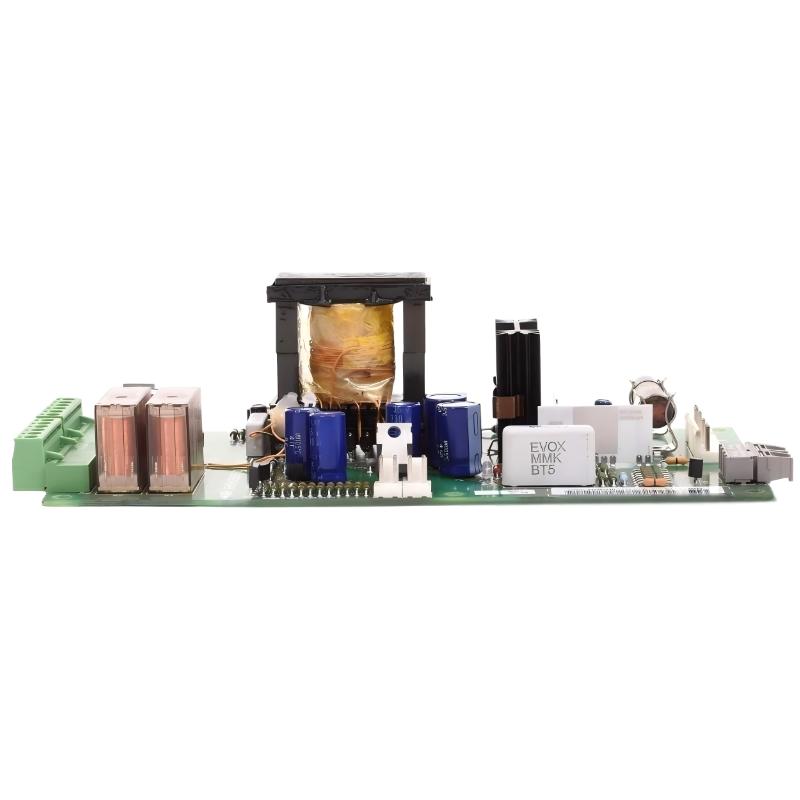
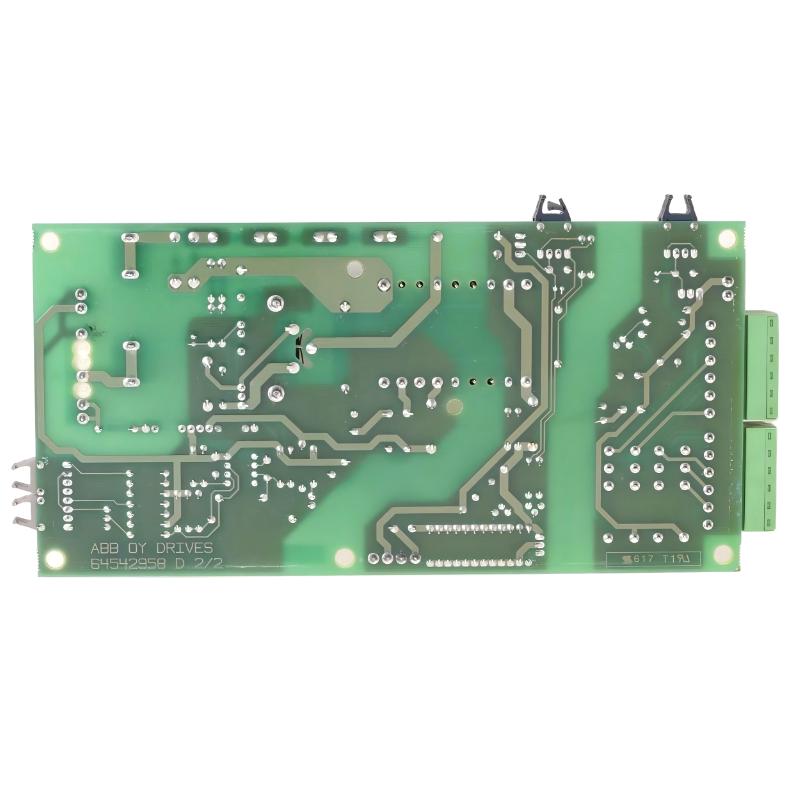
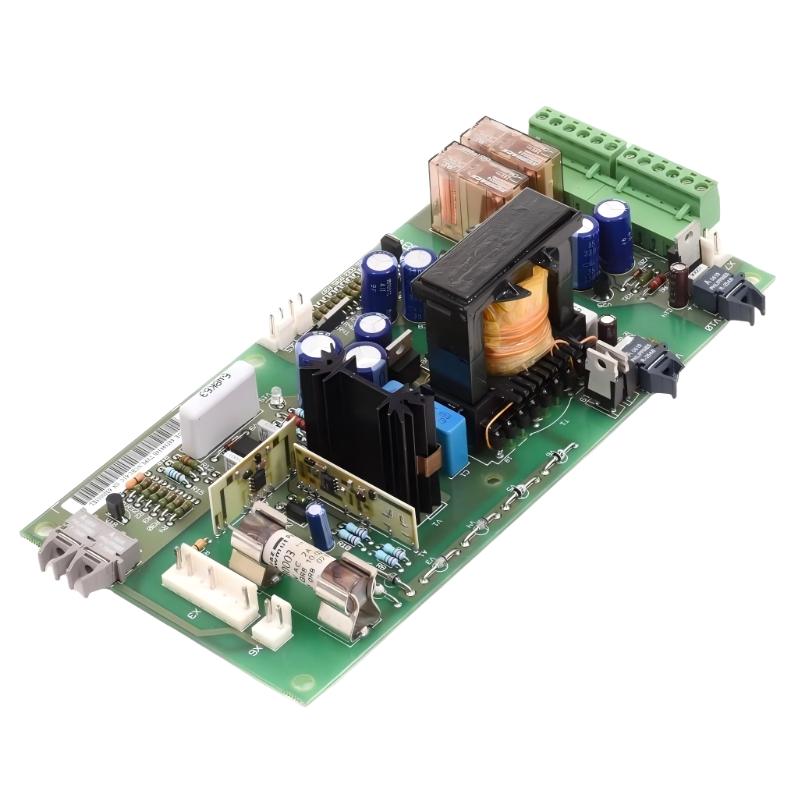
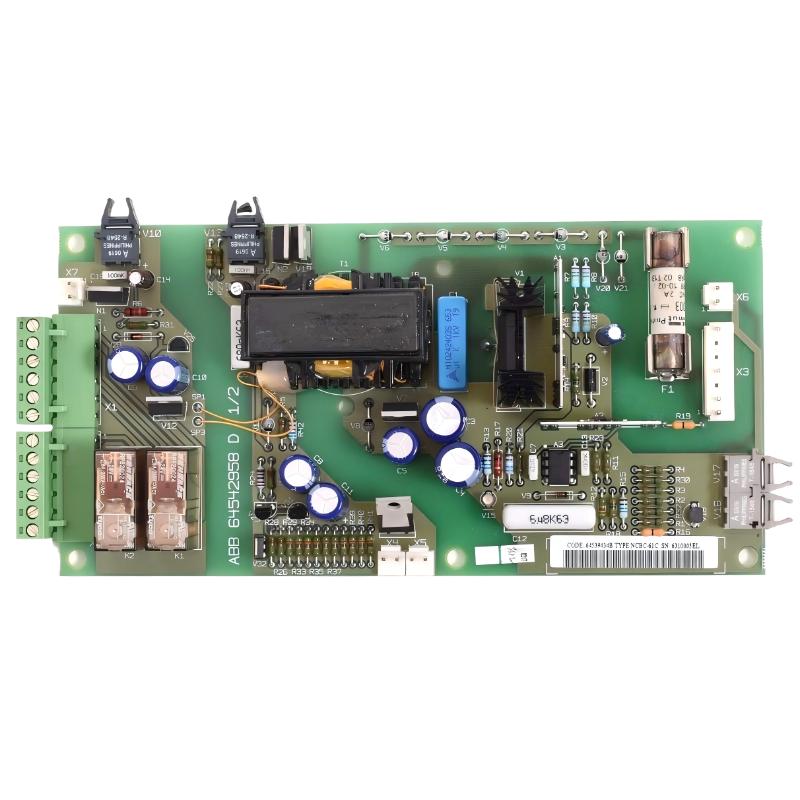
High-Integrity Power and Control Interface for ABB Industrial Drive Systems
The ABB NCBC-61C 64539434 Drive Control / Power Board is a critical internal module designed for ABB ACS800 series frequency converters. It functions as a central interface between the drive’s power stage and control architecture, ensuring stable energy distribution, precise signal coordination, and reliable inverter operation in demanding industrial environments.
Engineered for high-power industrial applications, this board integrates rectification control, auxiliary power routing, and signal management for gate drive systems. It is commonly used in ACS800-01, ACS800-04, and related ABB drive platforms where continuous uptime and electrical stability are essential.
Technical Specifications
| Parameter | Specification |
|---|
| Manufacturer | ABB |
| Product Type | Drive Control / Power Board |
| Model Number | NCBC-61C |
| Product ID | 64539434 |
| Alternative Part Codes | 64539434A / 64539434E (variant dependent) |
| Compatible Drive Series | ABB ACS800 |
| Function | Power distribution + control signal interface |
| Operating Voltage | 230–400 V AC system dependent |
| Control Supply | 24 V DC internal auxiliary supply |
| Power Handling | Up to ~1 kW auxiliary/control power distribution |
| Communication Role | Internal drive signal routing (no external protocol) |
| Protection Class | IP20 (installed inside drive enclosure) |
| Operating Temperature | -20°C to +55°C |
| Mounting Type | Internal PCB / drive-mounted board |
| Cooling Method | Enclosure-assisted airflow |
| Dimensions | Approx. 178 × 100 × 51 mm |
| Weight | Approx. 0.9–1.5 kg |
SIndustrial Application Areas
This board is widely used in high-demand automation and power control environments:
-
ABB ACS800 industrial drive systems
-
Heavy-duty conveyor systems
-
Pumping and fluid handling stations
-
Industrial HVAC and ventilation systems
-
Mining and metallurgy equipment
-
Marine propulsion and auxiliary systems
-
Paper and pulp production lines
-
Steel and cement manufacturing plants
-
Retrofit and repair of legacy ABB drives
-
Continuous-process automation systems
Its reliability makes it a key component in mission-critical industrial infrastructure.
Key Advantages
Stable Power Distribution Architecture
Ensures consistent internal voltage supply to sensitive control and gate driver circuits.
High System Reliability
Designed for long operational cycles in harsh industrial environments with minimal failure rates.
Tight Integration with ACS800 Platform
Optimized specifically for ABB ACS800 series power electronics architecture.
Improved Drive Uptime
Reduces risk of unexpected shutdowns caused by internal signal or power instability.
Modular Serviceability
Easily replaceable in maintenance scenarios, supporting fast drive restoration.
Industrial-Grade Design
Built to withstand electrical noise, thermal stress, and continuous vibration environments.
Technical FAQs
1. What is the main function of the NCBC-61C board?
It manages internal power distribution and control signal coordination within ABB ACS800 drive systems.
2. Can it be used outside ABB drives?
No. It is strictly designed for ABB ACS800-series internal architecture.
3. Is this a complete drive?
No. It is only a power/control board, not a full variable frequency drive.
4. What happens if the board fails?
The drive may lose control functionality or shut down due to missing internal power or signals.
5. Is it interchangeable with NCBC-71C?
They are closely related but may differ by configuration and drive type compatibility.
6. Does it handle motor power directly?
No. It does not switch motor power; it supports internal control and auxiliary circuits.
7. Is installation complex?
Yes. It requires installation inside ABB drive assemblies by qualified technicians.
8. Can it be repaired?
In most cases, replacement is preferred due to PCB-level complexity.
9. What industries commonly use it?
Heavy industry, manufacturing, energy systems, marine, and process automation.
10. Is it still used in modern systems?
It is mainly used in ACS800 legacy systems and ongoing industrial maintenance.
 A DCS Q Co., Ltd. - PLC and DCS Industrial Control Equipment Wholesale