Product Overview (Introduction)
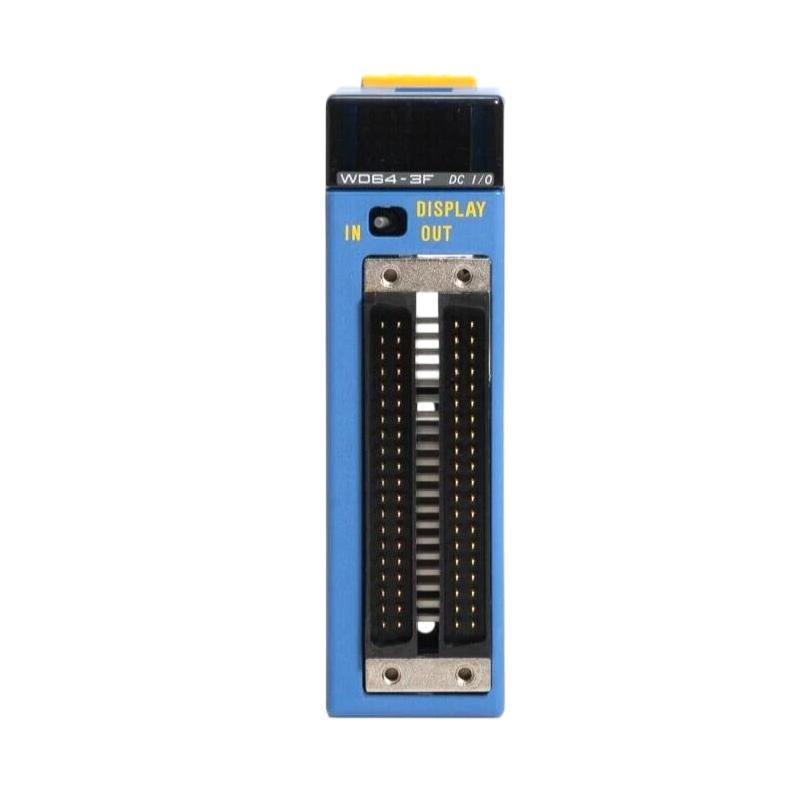
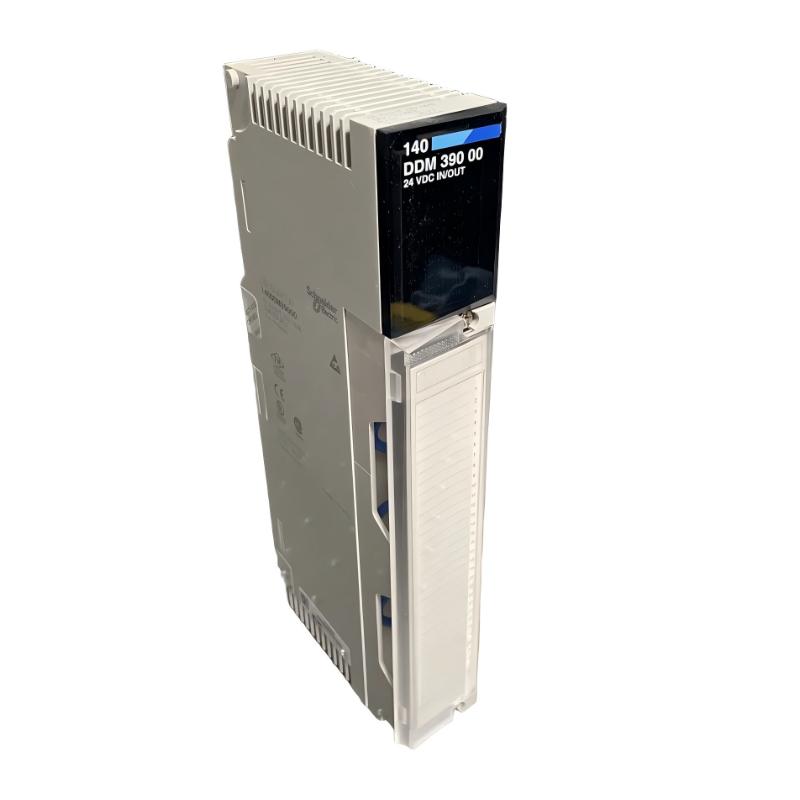
The Schneider 140DDM39000 Discrete I/O Module is a versatile module for industrial automation systems, enabling both the monitoring of digital inputs and control of outputs. It captures signals from sensors, switches, and other field devices, while simultaneously transmitting commands to actuators or relays.
This module plays a central role in distributed Modicon automation systems, ensuring reliable communication between field-level devices and the main controller. Its compact and robust design allows integration into dense control cabinets while providing dependable performance under harsh industrial conditions.
The 140DDM39000 supports scalable and modular control architectures, making it an ideal solution for facilities requiring accurate and responsive discrete signal handling.
Technical Specifications
| Specification | Details |
|---|
| Manufacturer | Schneider Electric |
| Model Number | 140DDM39000 |
| Module Type | Discrete I/O Module |
| System Role | Digital Input/Output Signal Management |
| System Compatibility | Modicon Distributed Control Systems |
| Installation | Control System Rack Mount |
| Operating Temperature | 0°C to 60°C |
| Storage Temperature | -40°C to 85°C |
| Dimensions | 103.9 mm × 40.3 mm × 250 mm |
| Weight | 0.3 kg |
Applications in Industrial Control and Automation (Applications)
The Schneider 140DDM39000 Discrete I/O Module is designed to handle both digital input and output signals within Modicon automation systems. It enables real-time monitoring and control of industrial equipment by collecting discrete input signals from field devices and transmitting output commands to actuators, relays, and other controlled devices.
Typical deployment scenarios include:
-
Automated production lines requiring coordinated input/output control
-
Power generation facilities monitoring equipment status and sending control signals
-
Oil and gas operations integrating field-level sensors and actuators
-
Water and wastewater treatment plants controlling pumps, valves, and alarms
-
Chemical processing plants managing digital safety and process control signals
-
Industrial automation systems with distributed I/O architectures
By providing accurate and timely signal processing, the module ensures seamless integration between field devices and the central controller.
Key Advantages (Advantages)
Bidirectional Signal Handling
Supports both digital input collection and output command execution for flexible control.
Reliable Process Control
Ensures accurate monitoring of equipment status and timely actuation of connected devices.
Modicon System Integration
Fully compatible with Schneider Electric Modicon distributed automation platforms.
Compact Rack-Mount Design
Efficiently fits into automation cabinets, supporting high-density I/O installations.
Industrial-Grade Reliability
Designed to operate continuously under electrical noise, vibration, and temperature fluctuations.
Technical FAQs (Technical FAQs)
-
What is the primary function of the 140DDM39000 module?
It manages discrete digital input and output signals for industrial automation systems.
-
Which devices can connect to this module?
Sensors, switches, relays, and actuators requiring discrete control signals.
-
Is the module compatible with Modicon automation platforms?
Yes, it is fully compatible with Schneider Electric Modicon systems.
-
Can it handle multiple I/O signals simultaneously?
Yes, it supports multiple discrete input and output channels.
-
Is it suitable for continuous industrial operations?
Yes, it is built for reliable long-term operation in industrial environments.
-
How is the module installed?
It is mounted in a control rack and connected to field devices and the automation controller.
-
Does it support system diagnostics?
Yes, it allows monitoring of I/O status and operational conditions.
-
Can it be used in safety monitoring applications?
Yes, it can manage safety-related signals depending on system design.
-
Which industries typically deploy this module?
Manufacturing, utilities, oil and gas, water treatment, and chemical processing industries.
-
How does discrete I/O integration benefit automation systems?
It enables controllers to monitor equipment status and control devices efficiently in real time.
 A DCS Q Co., Ltd. - PLC and DCS Industrial Control Equipment Wholesale