Product Overview (Introduction)
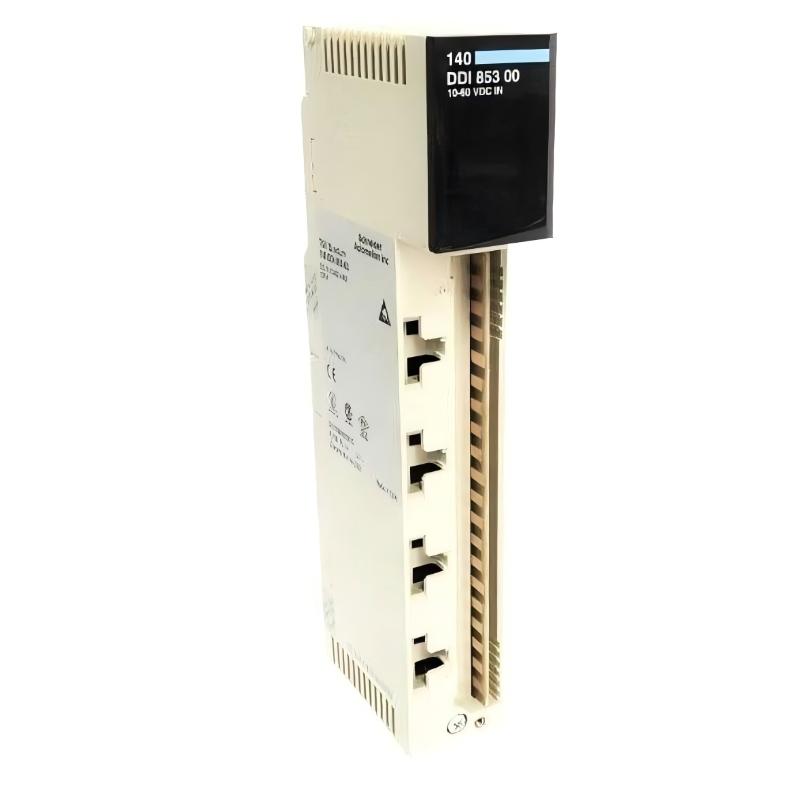
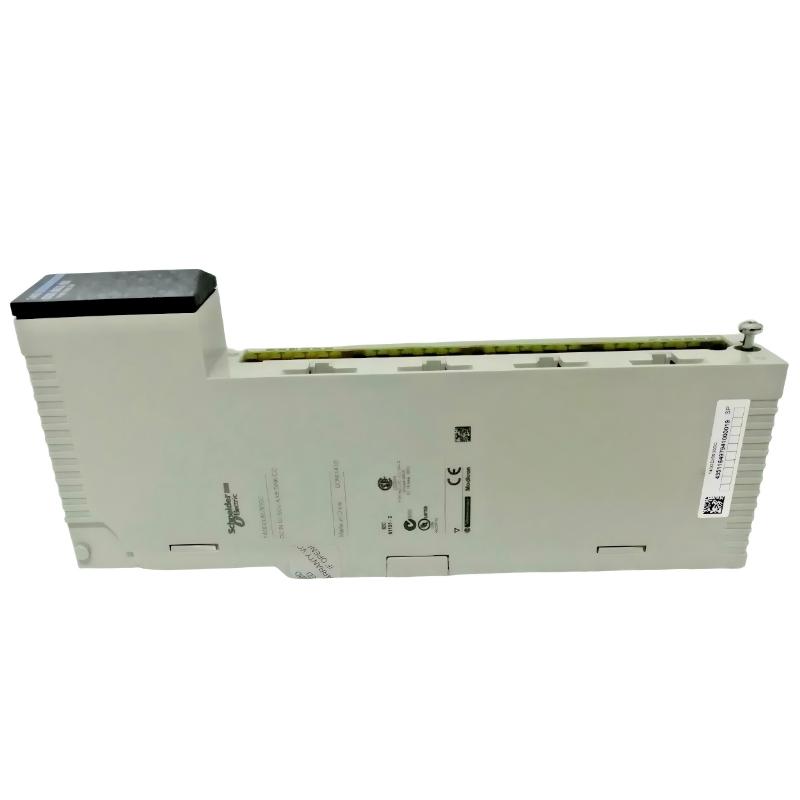
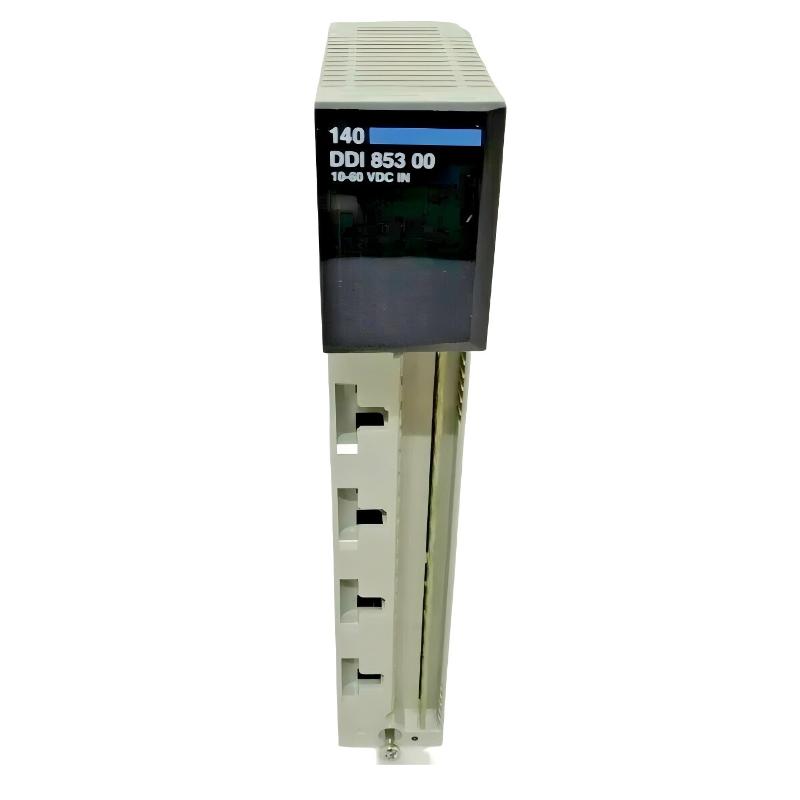
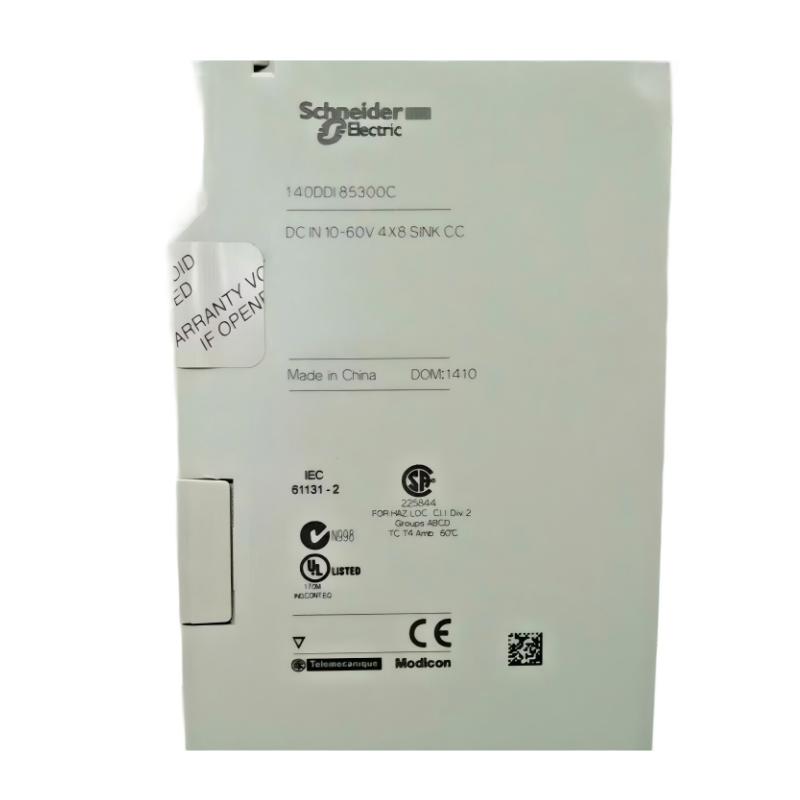
The Schneider 140DDI85300C Discrete Input Module is an important component used in industrial automation systems where monitoring digital signals is essential for process control. Many field devices in industrial plants generate simple on/off signals that indicate equipment status, alarms, or operational states. This module captures those signals and ensures they are transmitted reliably to the control processor.
As part of the Modicon automation ecosystem, the module supports distributed control architectures where multiple I/O modules operate together within a coordinated system. Its design ensures stable communication and accurate signal acquisition, which are essential for maintaining safe and efficient plant operations.
With its compact form factor and dependable industrial performance, the 140DDI85300C is well suited for automation cabinets where efficient digital input monitoring is required.
Technical Specifications
| Specification | Details |
|---|
| Manufacturer | Schneider Electric |
| Model Number | 140DDI85300C |
| Module Type | Discrete Input Module |
| System Role | Digital Signal Acquisition Interface |
| System Compatibility | Modicon Distributed Control Systems |
| Installation | Control System Rack Mount |
| Operating Temperature | 0°C to 60°C |
| Storage Temperature | -40°C to 85°C |
| Dimensions | 103.9 mm × 40.3 mm × 250 mm |
| Weight | 0.295 kg |
Industrial Application Contexts for Digital Input Acquisition (Applications)
The Schneider 140DDI85300C Discrete Input Module is designed to capture on/off signals from field equipment and transmit them to the central automation controller within Modicon-based systems. In industrial environments, many devices operate through discrete status signals, and this module ensures those signals are accurately detected and processed for system control and monitoring.
Common application scenarios include:
-
Automated manufacturing lines tracking machine readiness and safety conditions
-
Power plants monitoring operational and protection signals from equipment
-
Oil and gas facilities supervising digital field instrumentation
-
Water and wastewater treatment systems monitoring pumps, valves, and alarms
-
Chemical production plants integrating digital process and safety signals
-
Industrial control systems requiring stable and scalable digital input monitoring
By providing reliable digital signal acquisition, the module supports real-time control decisions and improved system coordination.
Key Operational Benefits (Advantages)
Reliable Signal Detection
Accurately captures discrete input signals from sensors, switches, and relays.
Continuous Equipment Monitoring
Enables real-time tracking of machine states, alarms, and process events.
Designed for Modicon Automation Platforms
Integrates seamlessly within Schneider Electric distributed control systems.
Space-Efficient Module Structure
Compact dimensions support installation in dense automation racks.
Consistent Industrial Performance
Maintains stable operation in environments with electrical noise and continuous system operation.
Technical FAQs (Technical FAQs)
-
What is the main purpose of the 140DDI85300C module?
It collects discrete input signals from field devices and sends them to the automation controller.
-
What types of signals does this module process?
It processes digital on/off signals generated by sensors, switches, and relay contacts.
-
Is the module compatible with Modicon automation systems?
Yes, it is designed to work within Schneider Electric Modicon-based control architectures.
-
Can it monitor multiple digital inputs simultaneously?
Yes, it is capable of handling multiple discrete input channels within the system.
-
Is it suitable for continuous industrial processes?
Yes, the module is designed for stable long-term operation in industrial environments.
-
How is the module installed in the control system?
It is installed in a rack-mounted automation system and connected to field wiring and the controller.
-
Does the module support diagnostic monitoring?
Yes, it allows system-level monitoring of input status and operational conditions.
-
Which industries commonly use this module?
Manufacturing, energy, oil and gas, water treatment, and process industries.
-
How does discrete input monitoring improve system performance?
It allows controllers to respond quickly to equipment status changes and process events.
-
What role does this module play in a distributed control system?
It acts as a signal interface between field-level digital devices and the central control processor.
 A DCS Q Co., Ltd. - PLC and DCS Industrial Control Equipment Wholesale