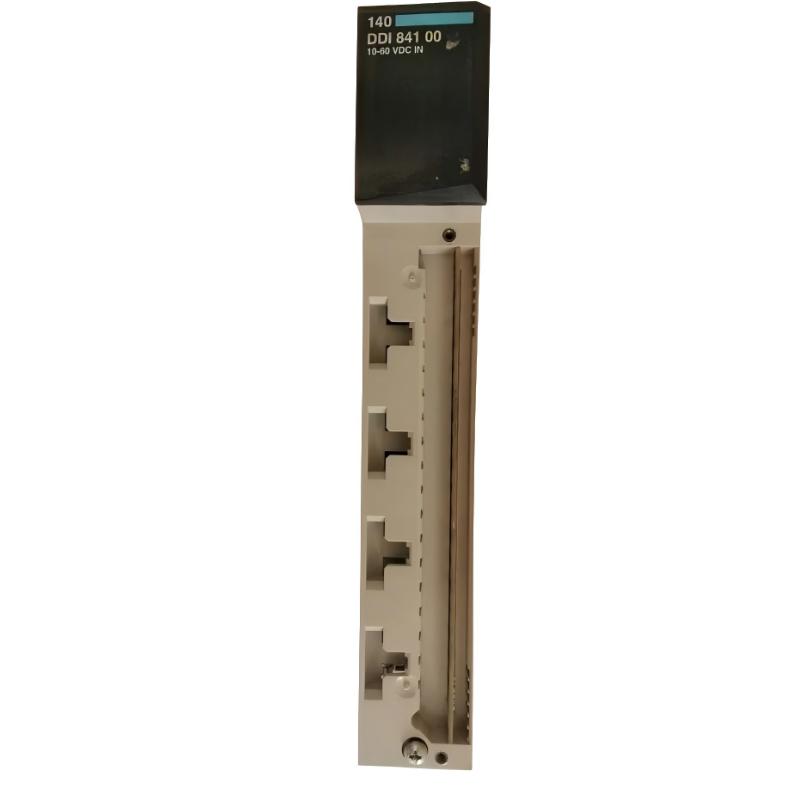
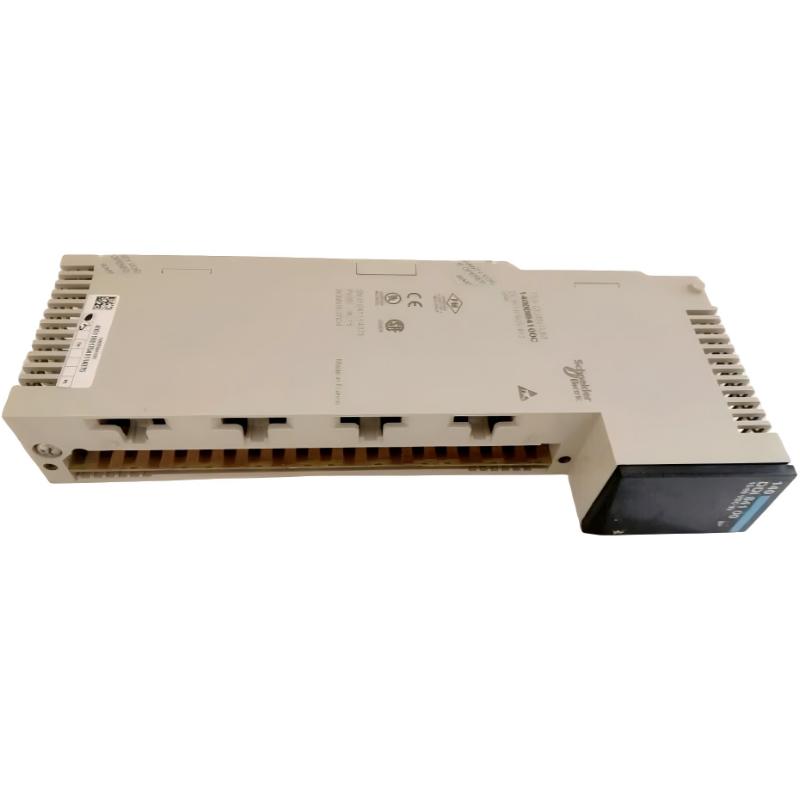
Product Overview (Introduction)
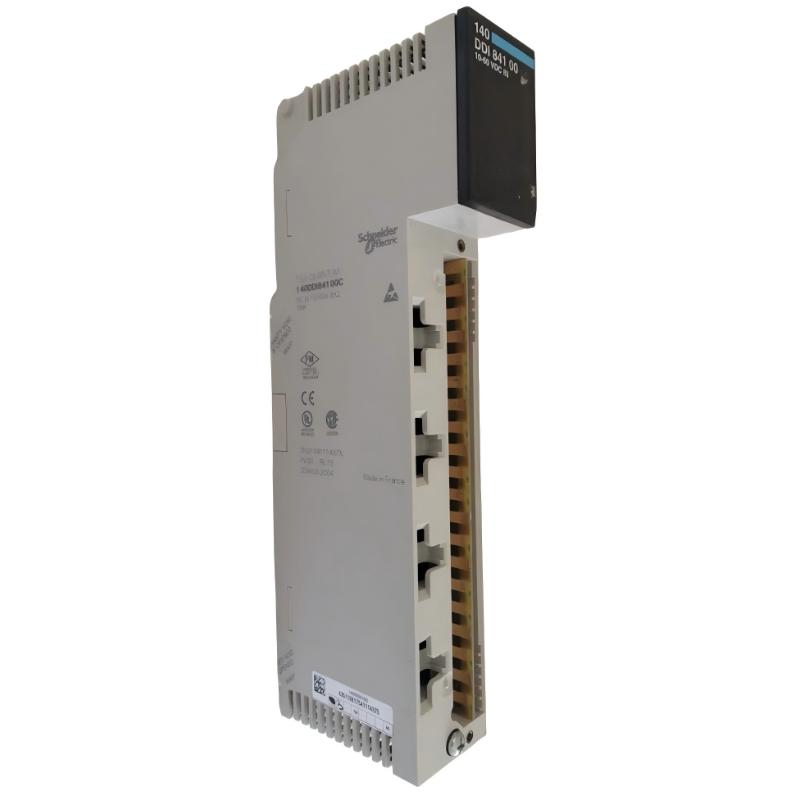
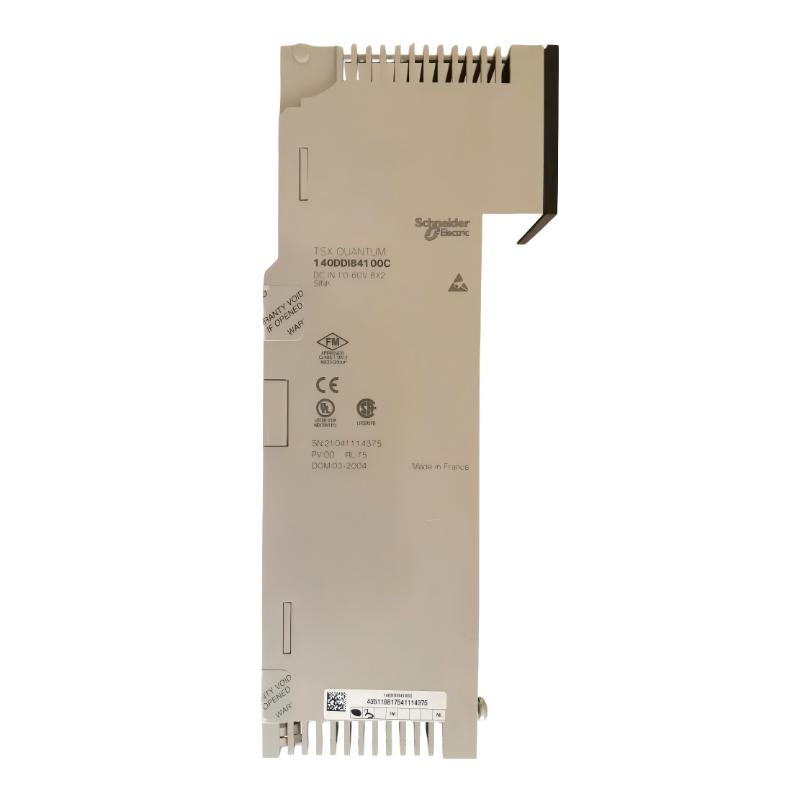
The Schneider 140DDI84100C Discrete Input Module is a key interface component that enables automation systems to monitor digital signals from field equipment. In industrial environments, many devices communicate using simple on/off signals that represent operational status, alarms, or control conditions. This module collects those signals and ensures they are accurately transmitted to the central controller.
As part of the Modicon automation ecosystem, the module supports scalable distributed control architectures where multiple I/O modules operate together within a coordinated system. Its design focuses on reliable signal acquisition and stable communication, which are essential for maintaining efficient plant operations.
With a compact and durable construction, the 140DDI84100C is suitable for installation in industrial control cabinets where dependable digital signal monitoring is required.
Technical Specifications
| Specification | Details |
|---|
| Manufacturer | Schneider Electric |
| Model Number | 140DDI84100C |
| Module Type | Discrete Input Module |
| System Role | Digital Input Signal Acquisition |
| System Compatibility | Modicon Distributed Automation Systems |
| Installation | Control System Rack Mount |
| Operating Temperature | 0°C to 60°C |
| Storage Temperature | -40°C to 85°C |
| Dimensions | 103.9 mm × 40.3 mm × 250 mm |
| Weight | 0.3 kg |
Industrial Use Cases for Digital Status Monitoring (Applications)
The Schneider 140DDI84100C Discrete Input Module is designed to capture digital signals from field devices and transmit them to Modicon automation controllers for processing. In distributed industrial systems, equipment such as sensors, pushbuttons, relays, and limit switches generate discrete signals that indicate operating conditions. This module enables those signals to be reliably monitored and integrated into the control system.
Typical application scenarios include:
-
Automated production lines tracking machine state and safety signals
-
Power generation facilities monitoring equipment protection signals
-
Oil and gas installations supervising field device status
-
Water and wastewater plants monitoring pumps, valves, and alarms
-
Chemical plants integrating digital safety and process signals
-
Industrial automation systems requiring dependable digital signal acquisition
By ensuring accurate signal input to the control processor, the module helps maintain safe and coordinated plant operations.
Operational Advantages in Automation Systems (Advantages)
Precise Discrete Signal Collection
Captures digital input signals from field equipment and delivers them to the automation controller for processing.
Reliable Process Monitoring
Supports continuous supervision of operational states such as equipment start/stop conditions and alarms.
Designed for Modicon Platforms
Fully compatible with Schneider Electric distributed control systems based on Modicon architecture.
Space-Efficient Hardware Format
Compact design enables efficient installation in high-density automation racks.
Industrial-Grade Stability
Engineered to maintain consistent performance in demanding industrial environments.
Technical FAQs (Technical FAQs)
-
What is the primary function of the 140DDI84100C module?
It receives discrete digital signals from field devices and transmits them to the controller for monitoring and control.
-
What types of devices can connect to this module?
Digital sensors, switches, relays, pushbuttons, and other discrete signal sources.
-
Is the module compatible with Modicon automation systems?
Yes, it is designed for integration within Schneider Electric Modicon-based control platforms.
-
Can the module monitor multiple digital signals simultaneously?
Yes, it is designed to handle multiple discrete input channels within an automation system.
-
Does the module support continuous industrial operations?
Yes, it is built for reliable operation in systems that run continuously.
-
How is the module installed in the control system?
It is mounted in a control rack and connected to field wiring and the automation processor.
-
Can it be used in safety monitoring applications?
Yes, it can be used to monitor safety-related digital signals depending on system design.
-
Does the module support system diagnostics?
Yes, it allows monitoring of input status and communication within the automation system.
-
Which industries typically deploy this module?
Manufacturing, utilities, oil and gas, water treatment, and process industries.
-
Why are discrete input modules important in automation systems?
They enable controllers to detect real-time equipment states and respond quickly to process changes.
 A DCS Q Co., Ltd. - PLC and DCS Industrial Control Equipment Wholesale